Gallaghers Boxty House sits in the heart of Temple Bar, making the case that Irish traditional cooking deserves the same critical attention as any European regional cuisine. The kitchen anchors its menu around boxty, the potato pancake that runs deep through Irish culinary history, treating it as a platform for serious cookery rather than heritage theatre. For visitors and locals alike, it is one of Dublin's clearest arguments for indigenous technique over borrowed trend.
Pearl is the En Primeur Club membership app — saves, bookings, and concierge access live there. Same editors, same standards.
- Address
- 20-21, Temple Bar, Dublin 2, D02 ET66, Ireland
- Phone
- +35316772762
- Website
- boxtyhouse.ie
- Directions
- Get directions
 Saves & bookings on Pearl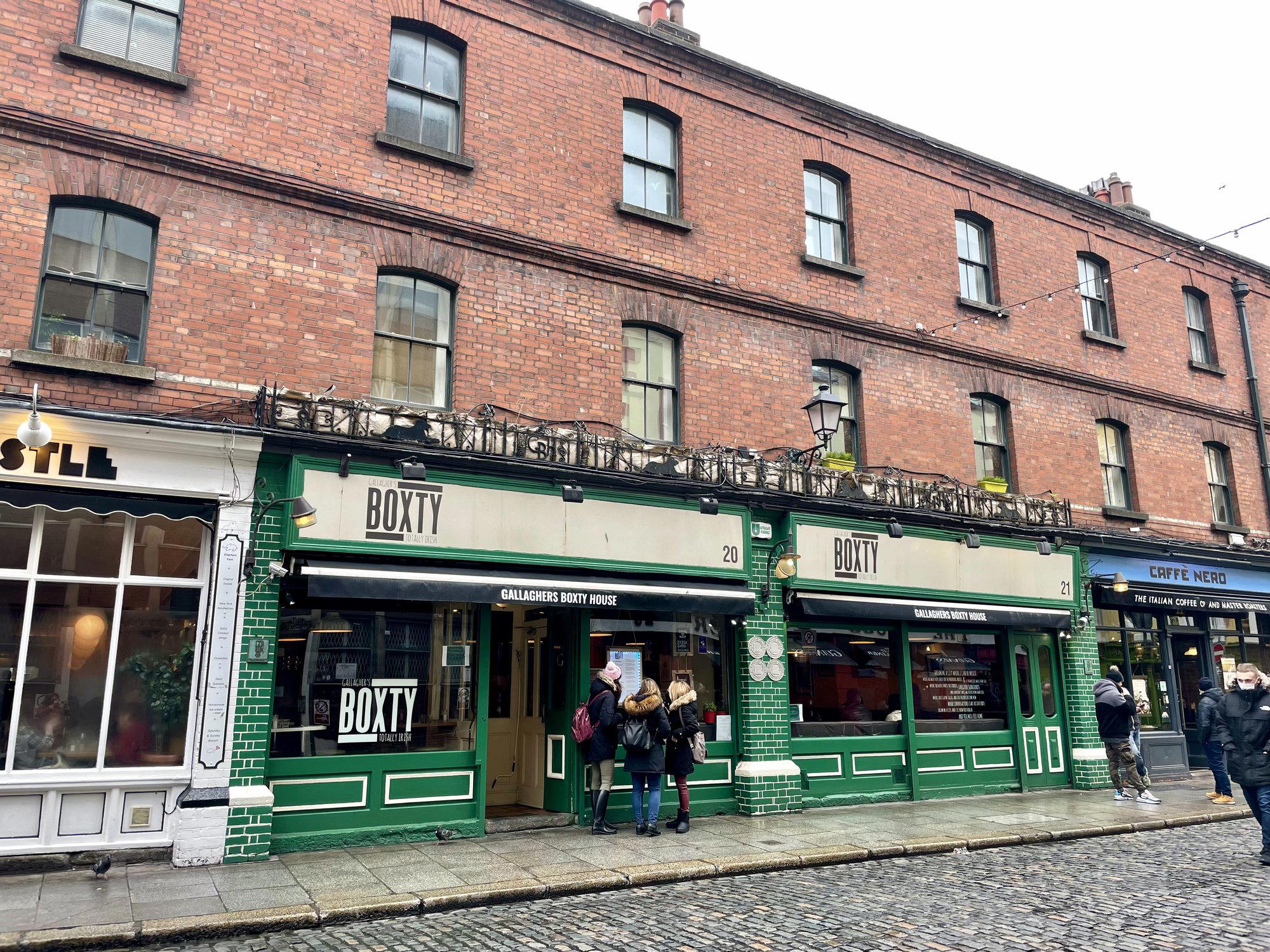
Temple Bar and the Question of What Irish Food Actually Is
Walking into Temple Bar on a Dublin evening, you pass a lot of places making claims about Irish hospitality. Most of them are performing it. Gallaghers Boxty House, at 20-21 Temple Bar, operates differently: it takes a specific, historically grounded product and builds an entire culinary identity around it. That product is boxty, the traditional Irish potato pancake, and the kitchen's commitment to it puts the restaurant inside a broader conversation about whether indigenous Irish technique can hold its own against the country's growing stable of fine-dining rooms.
Dublin's restaurant culture has split, as it has in most European capitals, between the internationally credentialed and the locally rooted. At one end sit rooms like Chapter One by Mickael Viljanen and Patrick Guilbaud, where the cooking is Irish in ingredient and French or Nordic in method. At the other end, Gallaghers occupies a position that is rarer than it looks: a kitchen that treats a vernacular Irish form as the primary vehicle, not a footnote.
Boxty as Culinary Architecture
Boxty's origins lie in the subsistence cooking of rural Ireland, particularly the north midlands and west, where potato was grated, mixed with flour and buttermilk, and cooked on a griddle. The resulting pancake, dense and yielding at once, proved more adaptable than its peasant origins suggested. Where mashed potato cooks are constrained by softness, boxty can absorb heat and carry weight, functioning as a structural element on the plate rather than merely a comfort component.
This is where the editorial angle on Gallaghers becomes interesting. The kitchen's approach places it within a pattern visible across serious food cities globally: using a local or indigenous form as the technical foundation and then applying disciplined, often internationally informed cookery on top of it. The model is not unlike what dede in Baltimore does with Turkish Aegean technique and local Chesapeake produce, or what Lazy Bear in San Francisco does with American vernacular formats and high-technique execution. The local form becomes the grammar; the global method becomes the vocabulary.
In Ireland specifically, this approach has found strong expression in county kitchens as much as city ones. Aniar in Galway anchors its menu in foraged and sourced western Irish produce. Bastion in Kinsale and Chestnut in Ballydehob both use west Cork's larder as a point of differentiation within Irish fine dining. What distinguishes Gallaghers is that it makes this argument not through produce sourcing alone but through a specific preparation, one most Irish kitchens quietly retired decades ago.
Where Temple Bar Fits into the Dining Picture
Temple Bar carries a complicated reputation among Dublin regulars. It is a tourist district in direct sense: dense, loud, photographed. The serious dining rooms in Dublin tend to pull westward toward Portobello and the South Circular Road, where Bastible has built one of the city's most considered modern Irish menus, or northward toward Parnell Square, where Chapter One holds two Michelin stars. Newer openings like D'Olier Street and Glovers Alley have shifted attention toward different parts of the city centre.
Gallaghers, then, operates against expectation. A kitchen serious about a traditional Irish product, located in the city's most trafficked tourist zone, could easily slide into heritage pastiche. That it has maintained a reputation among food-aware visitors as a genuine destination rather than a convenience stop says something about the consistency of its proposition. The room itself, warm and well-worn, reads as deliberately non-theatrical, a contrast to the street outside.
The Broader Irish Tradition It Represents
Potato cookery in Ireland has been undervalued as a subject of culinary analysis. Post-Famine, the potato became culturally ambivalent: essential but freighted. Serious Irish kitchens spent much of the late twentieth century moving away from it, toward more internationally legible forms. The current generation, represented by rooms like Liath in Blackrock and Terre in Castlemartyr, has begun returning to Irish staples, but typically through a fine-dining prism where the ingredient is present in small, refined forms.
Gallaghers takes a different position: boxty is the main event, not a garnish or a reference. This is closer to the approach found in the leading regional European restaurants, where a single product carries the full weight of the menu's identity. Think of the role that chestnut plays in certain Corsican kitchens, or polenta in the Veneto, or socca along the Ligurian coast. The vernacular starch becomes the platform, and the skill of the kitchen is measured by how much it can accomplish within that constraint.
For Irish food culture specifically, this matters because it offers an alternative path to quality. Restaurants like Campagne in Kilkenny, Homestead Cottage in Doolin, and The Morrison Room in Maynooth each make their case through sourcing, technique, or setting. Gallaghers makes its case through form: the potato pancake as the primary argument for why Irish cooking deserves serious attention.
The comparison with internationally framed Irish cooking is instructive. Rooms building menus around French or Nordic technique, whether it is the classical French rigour at Patrick Guilbaud or the produce-first approach of Bastible, draw on imported frameworks applied to Irish ingredients. The boxty kitchen inverts that: the indigenous form is fixed, and the cooking built around it draws from wherever it needs to. It is a more confident position than it might appear from the street.
Gallaghers sits within that picture not as a novelty but as evidence that the vernacular and the serious are not mutually exclusive categories in Irish cooking.
Price and Positioning
Comparable venues nearby, for context on price, style, and recognition.
| Venue | Cuisine | Price | Notes |
|---|---|---|---|
| Gallaghers Boxty HouseThis venue — the venue you are viewing | Not listed | $$ | Not listed |
| McGettigan's D9 | Not listed | $$ | Whitehall D, Irish Pub with International & Italian Cuisine |
| Jay Kays Cafe | Not listed | $$ | North City, Irish Breakfast & Brunch Café |
| The Carriage | Not listed | $$ | Mansion House A, Contemporary Irish Gastropub |
| Rotana City | Rotunda B, Authentic Lebanese | $$ | Not listed |
| 1900 Restaurant | Not listed | $$$ | Saint Kevin'S, Irish Cuisine with French Influence |
Continue exploring
More in Dublin
Restaurants in Dublin
Browse all →
Bars in Dublin
Browse all →
Hotels in Dublin
Browse all →
Wineries in Dublin
Browse all →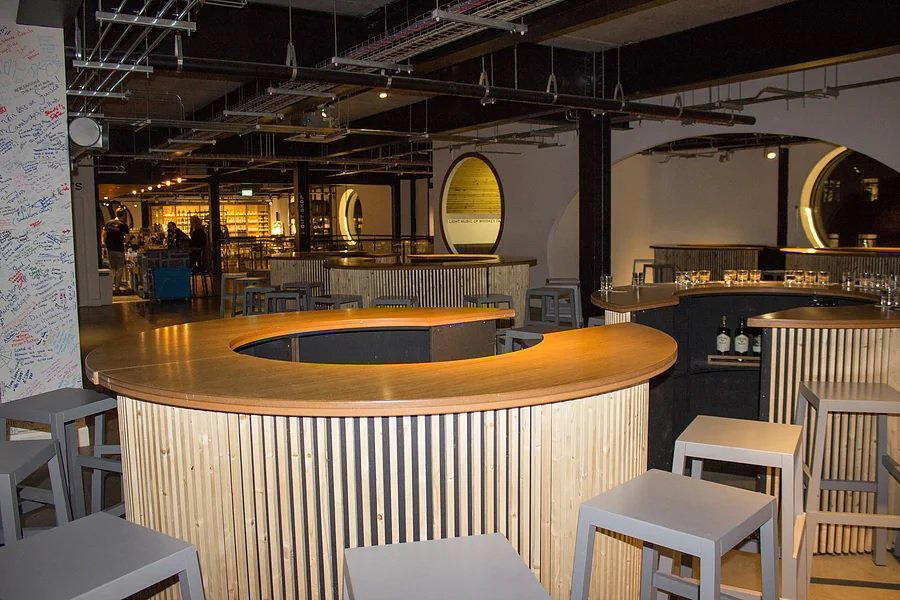
At a Glance
- Cozy
- Classic
- Rustic
- Casual Hangout
- Family
- Historic Building
- Beer Program
Current opening hours
- Monday
- 9 AM–10 PM
- Tuesday
- 9 AM–10 PM
- Wednesday
- 9 AM–10 PM
- Thursday
- 9 AM–10 PM
- Friday
- 9 AM–10 PM
- Saturday
- 9 AM–10 PM
- Sunday
- 9 AM–10 PM
Hours can change for holidays and private events. Last verified .
Relaxed, warm atmosphere reminiscent of a country kitchen, busy with crowds and conducive to easy conversation.