Zambala Lodge & Restaurant
Zambala Lodge & Restaurant sits in Khumbu Pasanglhamu Rural Municipality, the high-altitude gateway region to Everest Base Camp. Lodge accommodation in this zone occupies a distinct tier from Kathmandu's city hotels, built around trekker practicality and mountain views rather than resort amenity. For those moving through the Khumbu circuit, Zambala represents a local rest point in one of Nepal's most demanding and rewarding corridors.
 Discover on Pearl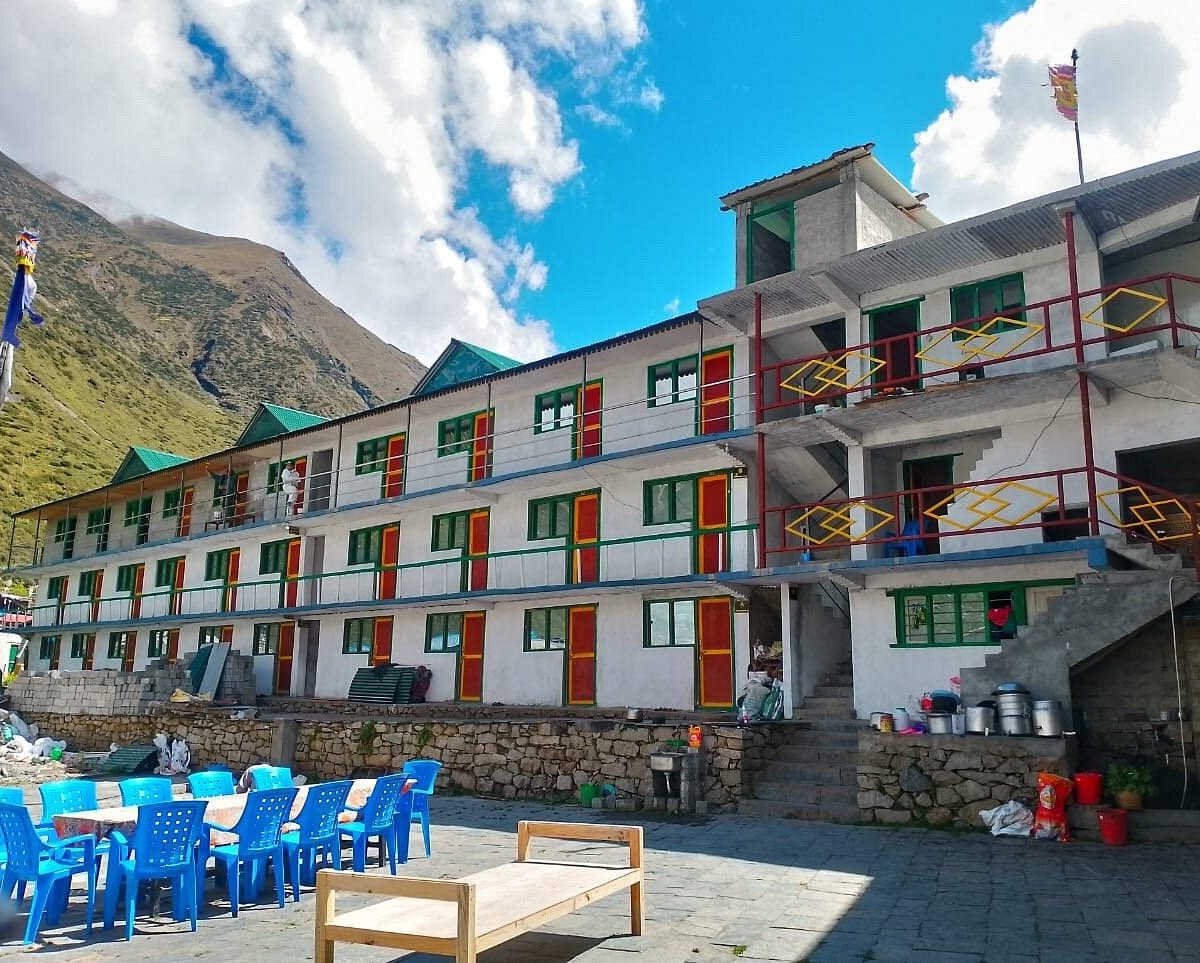
Where the Khumbu Circuit Slows Down
The lodges of Khumbu Pasanglhamu Rural Municipality do not compete with one another on the terms that urban hospitality uses. There are no lobby bars, no turndown service, no concierge referrals to the next-door spa. What structures the competitive set here is altitude, location on the trekking route, and the ability to provide warmth, food, and rest at elevations where the body is already working harder than usual. Zambala Lodge and Restaurant sits inside this framework, in a municipality that contains some of the most traversed high-altitude trekking terrain in the world, stretching from the lower Solukhumbu approaches toward Namche Bazaar and, eventually, the Base Camp trail itself.
The physical environment of the Khumbu valley shapes everything about how accommodation functions. Stone construction dominates because timber is scarce above a certain elevation and because stone retains heat through nights that drop well below freezing for most of the year. The design logic of a Khumbu lodge is not aesthetic in the conventional sense; it is thermal and structural, answering the mountain rather than a design brief. Windows, where they exist, tend to face south or southeast, angled to capture the low Himalayan sun and frame the ridgelines that define the valley walls. This is architecture by necessity, and the necessity produces a coherent visual language across the region.
The shortlist, unlocked.
Hard-to-book tables, cellar releases, and concierge-planned trips.
Get Exclusive Access →The Physical Logic of High-Altitude Lodging
Lodges in the Khumbu circuit have evolved considerably since the first organized trekking expeditions of the 1970s. Early teahouses were simple single-room structures where trekkers and locals shared the same fire. The contemporary Khumbu lodge occupies a more differentiated space: separate dining rooms with long communal tables, sleeping quarters ranged along upper floors or outbuildings, and in more developed nodes like Namche or Dingboche, some lodges have added solar-heated water and limited charging facilities. This architectural evolution tracks the growth of trekking tourism in Nepal, which has expanded the infrastructure significantly without, in most cases, dramatically altering the material character of the buildings.
The dining room of a Khumbu lodge is typically its social centre. Long tables encourage conversation among trekkers from different parties; menus written on chalkboards or laminated sheets reflect what can be sourced and transported at altitude. Dal bhat, the Nepali staple of lentil soup and rice, remains the most practical and calorically efficient option at any elevation. Alongside it, most lodges now offer a range of dishes aimed at international trekkers: pasta, noodle soups, pancakes, and variations on egg-based breakfasts. The food at this altitude is less a statement of culinary identity than a function of logistics, and the better lodges in the region understand this and execute it with consistency rather than ambition.
For context on how accommodation stratifies across Nepal more broadly, Dwarika's Sanctuary in Dhulikhel represents the country's heritage-led luxury tier, while properties like The Happy House in Phaplu occupy a middle register closer to the Solukhumbu access points that feed the Khumbu route. Hikers Inn in Chaunrikharka and Trekker's Holliday Inn in Pangboche are closer peers in the trekking lodge format, both operating within the same altitude band and trekker demographic.
Khumbu Pasanglhamu: The Municipality as Context
Khumbu Pasanglhamu Rural Municipality is the administrative designation for a zone that encompasses several of the most visited trekking nodes in Nepal, including Namche Bazaar, which functions as the commercial and logistical hub of the Everest region, and the higher villages that line the approach to Base Camp. The municipality has a population that is predominantly Sherpa, with a cultural and religious identity built around Tibetan Buddhism, visible in the mani walls, chortens, and monastery complexes that punctuate the trail. For trekkers, this means the physical built environment carries meaning beyond shelter: every structure, including lodges, is embedded in a landscape shaped by centuries of habitation at extreme altitude.
Tourism infrastructure in the municipality has grown substantially since Nepal reopened to international visitors following the disruptions of 2015 and 2020-2021. Trekking permit volumes to the Everest region have increased year on year, placing pressure on accommodation at key nodes during the October-November and March-May peak seasons. Trekkers arriving without advance lodge arrangements during these windows frequently find popular stopping points at capacity. This seasonal demand pattern means that lodges positioned well on the route, particularly those with reliable food service and adequate heating, hold a practical advantage that no amount of design investment in the off-season can replicate.
Properties further along the Khumbu corridor, such as Dingboche Inn in Sagarmāthā Zone, sherpa lodge lobuche in Lobuche, and Thukla Kalapathar Lodge in Thukla operate at progressively higher elevations and with correspondingly reduced amenity expectations. The trade-off is explicit: altitude for comfort. Zambala, positioned in the lower municipality zone, sits at a point in that spectrum where the infrastructure is more developed than the upper-altitude stops but where the mountain character of the setting remains fully intact.
Planning a Stay
Reaching any lodge in Khumbu Pasanglhamu Rural Municipality requires flying into Lukla's Tenzing-Hillary Airport, one of the more operationally demanding airstrips in commercial aviation, with flights typically originating from Kathmandu's Tribhuvan International Airport. The Lukla-to-Namche Bazaar section of the trek takes most fit trekkers two days; acclimatization stops add further time to any itinerary targeting higher elevations. Visitors planning treks in the Everest region need both a Sagarmatha National Park entry permit and a TIMS (Trekkers' Information Management System) card, both obtainable in Kathmandu or at entry checkpoints.
Peak season trekking in October and November, and to a lesser extent March and April, brings the clearest visibility and the heaviest trail traffic simultaneously. Those seeking quieter conditions at the cost of less predictable weather should consider the shoulder months. For comparable lodging options at different points along the route and in surrounding regions, Shinta Mani Mustang in Jomsom provides a sense of how premium lodge formats have developed elsewhere in Nepal's trekking corridors, while the full accommodation picture for the Khumbu region is covered in our full खुम्बु पासाङल्हामु गाउँपालिका restaurants guide.
For travellers building a broader Nepal itinerary that includes time in Kathmandu before or after the trek, Aloft Kathmandu Thamel offers a functional base in the city's main trekker district, a neighbourhood that has served as the departure point for Himalayan expeditions for decades and where gear, permits, and pre-trek logistics are most efficiently managed.
Frequently Asked Questions
- How would you describe the overall feel of Zambala Lodge and Restaurant?
- The feel is defined by the Khumbu setting rather than any designed interior program. Stone construction, communal dining, and proximity to the trekking route give Zambala the character of a working mountain lodge rather than a destination property. The region's altitude and Sherpa cultural context shape the atmosphere more than any aesthetic decision made inside the building.
- What is the signature room at Zambala Lodge and Restaurant?
- In the absence of verified room category data, it is more useful to note that across Khumbu lodges at this tier, the dining room typically functions as the property's most characterful space, where the combination of communal tables, mountain views, and the practical menu of dal bhat and trekker staples produces the most memorable part of the stay. Specific room configuration data for Zambala is not currently available.
- What is the defining thing about Zambala Lodge and Restaurant?
- Location within Khumbu Pasanglhamu Rural Municipality is the primary defining factor. The municipality sits at the heart of the Everest trekking corridor, and lodges here function as anchors on one of the world's most traversed high-altitude routes. The combination of altitude, Sherpa cultural setting, and trekking logistics gives properties in this zone a character that cannot be replicated elsewhere in Nepal.
- Do I need a reservation at Zambala Lodge and Restaurant?
- During the October-November and March-May peak trekking seasons, advance arrangements are advisable across all Khumbu lodges, as accommodation at popular staging points fills quickly. Website and direct contact information for Zambala are not currently listed; trekkers are advised to enquire through Kathmandu-based trekking agencies who maintain current lodge availability across the Khumbu circuit.
- What kind of food can trekkers expect at a lodge like Zambala in the Khumbu region?
- High-altitude lodge menus in the Khumbu circuit are shaped by what can be carried or transported to elevation rather than by culinary specialisation. Dal bhat is the baseline: nutritionally dense, consistently available, and the most practical meal at altitude. Most lodges supplement this with noodle soups, egg dishes, and basic pasta options for international trekkers. Zambala, situated in Khumbu Pasanglhamu Rural Municipality, operates within this same food-logistics framework, where reliable execution matters more than menu range.
How It Stacks Up
These are the closest comparables we have in our database for quick context.
| Venue | Cuisine | Price | Awards | Notes |
|---|---|---|---|---|
| Zambala Lodge & Restaurant | This venue | |||
| The Dwarika's Hotel | ||||
| Dwarika’s Sanctuary | ||||
| Aloft Kathmandu Thamel | ||||
| Varnabas Museum Hotel | ||||
| The Happy House |
Preferential Rates?
Our members enjoy concierge-led booking support and priority upgrades at the world's finest hotels.
Get Exclusive AccessThe shortlist, unlocked.
Hard-to-book tables, cellar releases, and concierge-planned trips.
Get Exclusive Access →