Wakaya Private Island Resort

Wakaya Private Island Resort occupies a privately held 2,200-acre island in Fiji, with just ten guest bures and two private villas spread across rain forest and white-sand shoreline. The resort hosts Fiji's only marine reserve, placing it in a tier of private-island properties where near-total seclusion is the governing logic. Access requires advance arrangement, and capacity is deliberately kept low.
Pearl is the En Primeur Club membership app — saves, bookings, and concierge access live there. Same editors, same standards.
- Address
- Wakaya Island, 5VJWCX2M+PJ
- Directions
- Get directions
 Saves & bookings on Pearl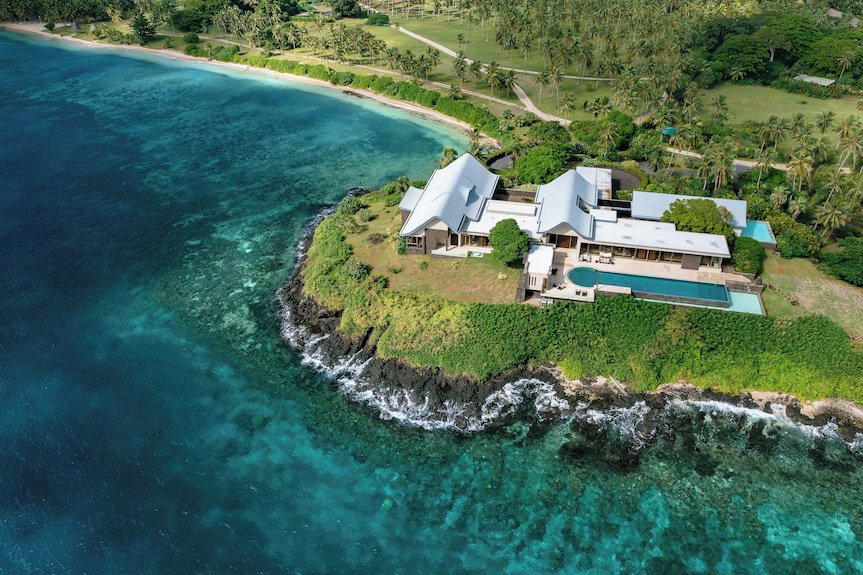
A Private Island at Near-Total Remove
The approach to Wakaya Island establishes the terms immediately. The island sits in the Koro Sea, east of Viti Levu, and reaching it involves a chartered flight or boat transfer rather than a scheduled connection. That friction is not incidental, it is structural. Wakaya operates as one of Fiji's smallest-capacity private island properties, with ten guest bures and two private villas across 2,200 acres of rain forest and farmland. At full occupancy, fewer than two dozen guests share an island larger than many village districts. The ratio of land to guest is the resort's defining architectural statement, more consequential than any single building.
That philosophy of deliberate spatial excess runs through the Fijian private island category broadly. Properties like Kokomo Private Island in Yaukuve Levu Island and Dolphin Island operate on a similar premise: low guest counts, high land-to-person ratios, access by charter. What distinguishes Wakaya within that comparable set is the scale of the landholding itself and the presence of Fiji's only designated marine reserve at its shore. That reserve classification is not a marketing description, it is a formal protection status, and it shapes what guests encounter in the water around the island.
The Architecture of Seclusion: Bures and Private Villas
The bure is the traditional Fijian dwelling form, a thatched-roof structure built low to the ground, with thick walls designed to manage tropical heat before the era of mechanical cooling. At Wakaya, the bure format grounds the accommodation in regional building tradition rather than imported resort typology. Compared to the glass-and-concrete aesthetic that defines properties like COMO Laucala Island, Fiji in Laucala Island, the bure approach at Wakaya represents a different architectural position: material continuity with Fijian vernacular construction, not departure from it.
Ten guest bures and two private villas define the entire guest inventory. The villa tier offers the greater separation, both from other guests and from the main resort rhythm, which places Wakaya's villa guests in a category comparable to the private residence formats operated by properties such as Turtle Island in the Yasawa Islands or Raiwasa Private Resort in Taveuni Island. For guests prioritising spatial autonomy above amenity density, the villa configuration is the direct selection. Guests seeking the social rhythm of other Wakaya visitors, communal meals, shared access to beaches, will find the bure format more integrated into the resort's daily tempo.
Marine Reserve Access and the Surrounding Reef
Fiji's coral systems represent some of the Pacific's most studied reef environments, and the Koro Sea area around Wakaya has recorded significant marine biodiversity. The designation of a marine reserve at Wakaya's shore is particularly concrete differentiator the resort holds relative to competitors. Likuliku Lagoon Resort in Yaro and Six Senses Fiji in Malolo Island operate near protected reef systems, but neither holds an on-site reserve classification. Giant clams, healthy coral coverage, and dense fish populations are documented features of protected marine zones of this type in the Pacific, though the specific conditions at Wakaya's reserve at any given time depend on seasonal and environmental factors that no static review can reliably capture.
The broader island environment supports the marine programme: 2,200 acres with no external development means no agricultural runoff, no light pollution from adjacent properties, and no boat traffic beyond resort transfers. That context matters for divers and snorkellers whose experience degrades significantly under anthropogenic pressure on reef systems. The absence of that pressure is part of what the island's private ownership protects.
Wakaya in the Fiji Private Island Hierarchy
Fiji's private island tier has grown considerably over the past two decades. Properties now span a range from high-amenity, mid-size resorts like Nanuku Resort in Pacific Harbour and Namale the Fiji Islands Resort and Spa in Savusavu to smaller-count private island formats. Wakaya sits at the low-capacity, high-seclusion end of that range. It competes less against full-service resort operations on the main islands and more against properties like Vomo Island, Fiji or Jean-Michel Cousteau Fiji Islands Resort in Vanua Levu Island where exclusivity of access is itself a primary offering.
The 2,200-acre landholding places Wakaya in a different physical register from most competitors. Taveuni Palms Resort in Matei and The Fiji Orchid in Nadi represent the smaller-footprint, boutique end of Fiji hospitality; Wakaya's scale tilts toward private estate territory. For context internationally, that scale and low-key-count approach finds loose analogues in properties operating private island or private estate formats: Amangiri in Canyon Point operates on comparable isolation logic in a desert setting, while Castello di Reschio in Lisciano Niccone deploys a similarly territorial approach on a Umbrian estate. The governing principle across all of them is the same: acreage and access control as amenity.
Planning and Access
Reaching Wakaya requires coordination that larger Fiji resorts do not demand. Nadi International Airport serves as the main international entry point for Fiji, with connections from Australia, New Zealand, and select Pacific hub cities. From Nadi, access to Wakaya involves a charter flight or sea transfer, both of which require pre-arrangement with the resort. There is no walk-in or same-day booking logic at a twelve-unit private island property.
For guests weighing Wakaya against Fiji's larger resort operations, InterContinental Fiji Golf Resort and Spa in Viti Levu being the clearest contrast at scale, the decision hinges on what the visit is for. Wakaya does not offer the amenity breadth of a full-service resort with multiple dining outlets, spa wings, and activity programming at scale. What it offers instead is structural privacy: a guest-to-land ratio, a marine reserve, and a transfer barrier that collectively make genuine isolation the default condition rather than a marketed upgrade.
How It Stacks Up
Comparable venues nearby, for context on price, style, and recognition.
| Venue | Cuisine | Price | Awards | Notes |
|---|---|---|---|---|
| Wakaya Private Island ResortThis venue — the venue you are viewing | Exclusive private island luxury with Fijian-inspired bures and villas. | $$$$ | 5-Star | Not listed |
| InterContinental Fiji Golf Resort & Spa | Traditional Fijian village layout with modern luxury amid tropical gardens | $$$$ | 5-Star | Natadola Bay |
| InterContinental Fiji Golf Resort & Spa | Luxury beachfront resort echoing traditional Fijian village layout across 35 acres of tropical gardens. | $$$$ | 5-Star | Natadola Bay |
| The Fiji Orchid | Exclusive private tented bures in lush tropical orchid gardens | $$$$ | 4-Star | Lautoka |
| Dolphin Island | Exclusive-use private island with traditional Fijian bures and Pacific island lifestyle design. | $$$$ | 5-Star | Nananu-i-Ra |
| Nanuku Resort | tropical-chic all-villa beachfront resort with seamless indoor-outdoor living | $$$$ | 5-Star | Pacific Harbour |
Recognition history
Dated appearances from independent guides and award organizations, with the underlying list record or original source where available.
Virtuoso Luxury Hotel Partner
Virtuoso
Continue exploring
More in Wakaya Island
Restaurants in Wakaya Island
Browse all →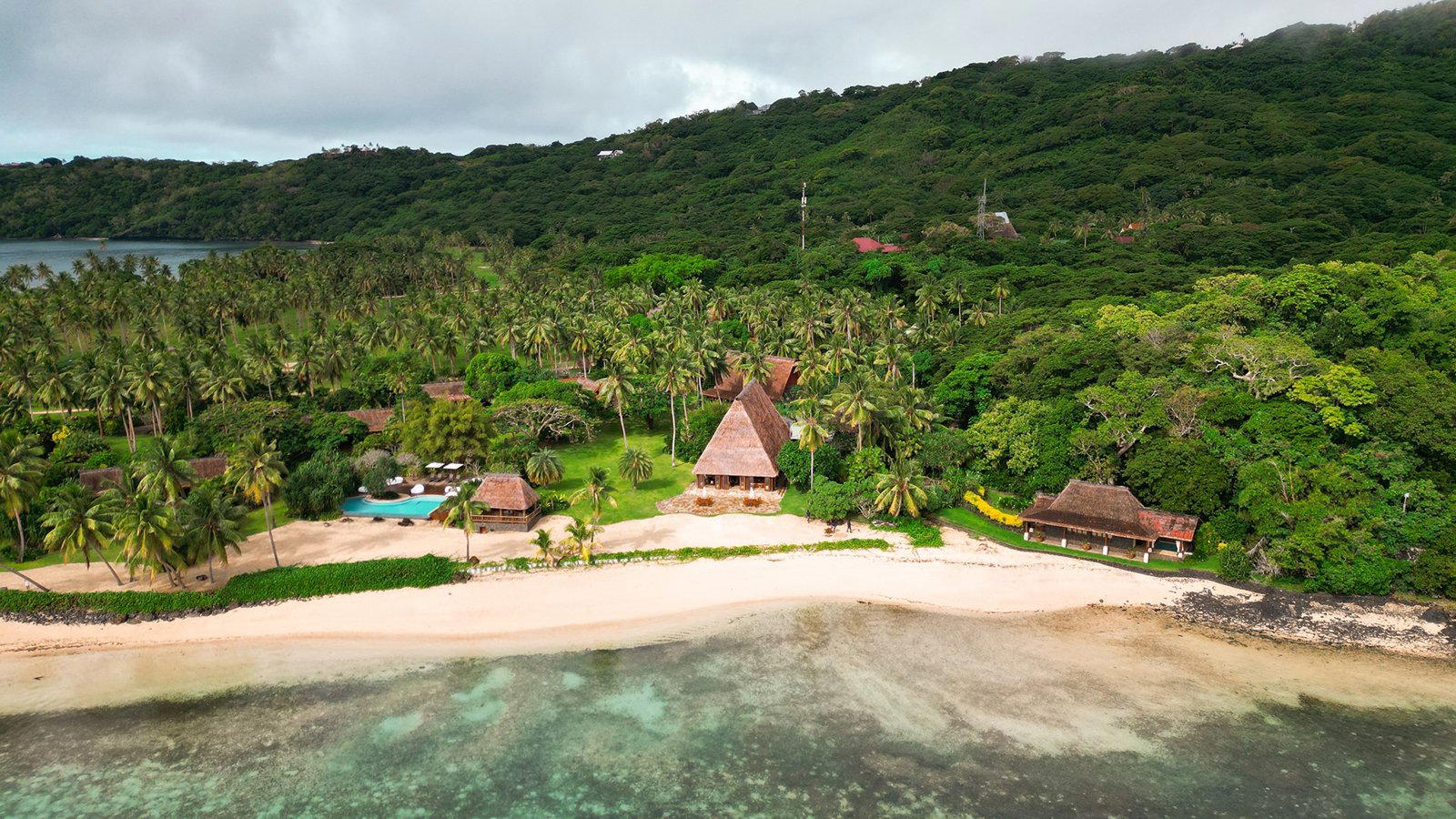
At a Glance
- Romantic
- Quiet
- Elegant
- Scenic
- Intimate
- Sophisticated
- Honeymoon
- Romantic Getaway
- Anniversary
- Wellness Retreat
- Destination Wedding
- Beachfront
- Private Villa
- Infinity Pool
- Panoramic View
- Spa
- Pool
- Fitness Center
- Room Service
- Concierge
- Wi Fi
- Golf Course
- Tennis Court
- Beach Access
- Waterfront
- Garden
- Spa
- Pool
- Fitness Center
- Room Service
- Concierge
- Wi Fi
- Golf Course
- Tennis Court
- Beach Access
Serene and peaceful with natural surroundings, private bures steps from the ocean, and a focus on seclusion and relaxation.