Dolphin Island


Forbes 5-Star · Virtuoso Luxury Hotel Partner
Dolphin Island is a 14-acre private island off the coast of Viti Levu, accommodating no more than eight guests under an exclusive-use policy. Four thatched-roof bures blend open-air tropical architecture with dark heartwood interiors and freestanding baths. Daily menus built around a local fisherman's catch, complimentary water sports, and a Hilltop Sleep-Out Bure position this as one of Fiji's most intimate escapes.

Pearl is the En Primeur Club membership app — saves, bookings, and concierge access live there. Same editors, same standards.
- Address
- M6WG+2X3, Ellington Wharf
- Phone
- +679 628 0358
- Website
- dolphinislandfiji.com
- Directions
- Get directions
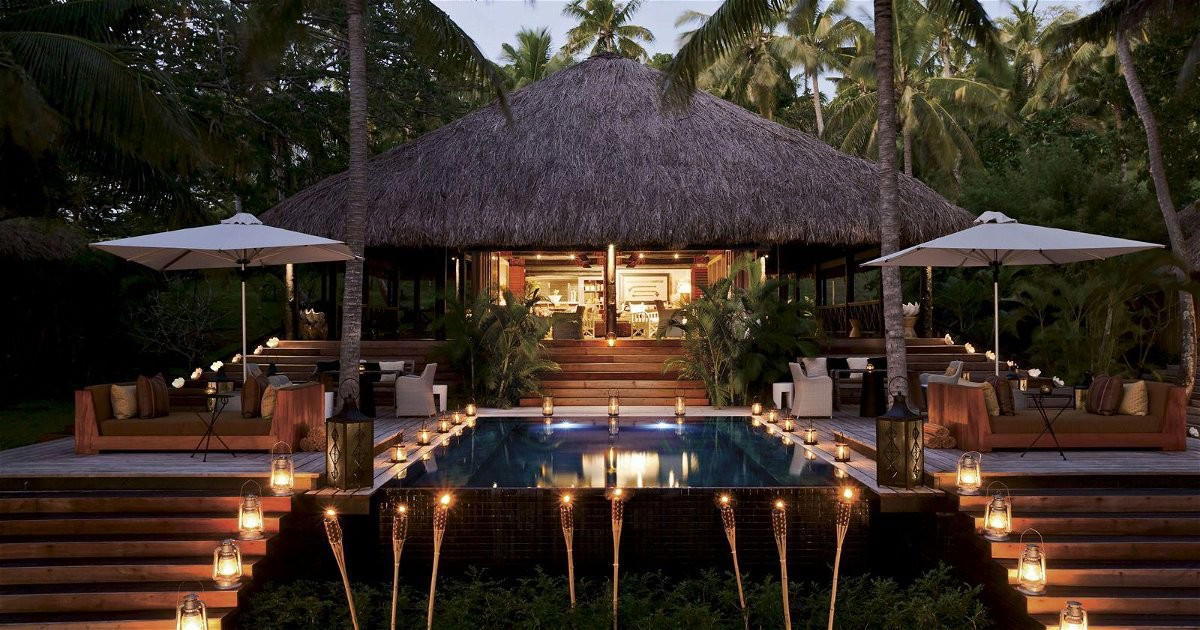
Where Architecture Dissolves Into the Pacific
Fiji's private island segment has stratified sharply over the past decade. At one end sit larger resort islands with dozens of villas, full spa menus, and infrastructure that mirrors a boutique hotel on land. At the other sits a smaller, harder-to-book category: islands where the capacity ceiling is so low that the architecture itself becomes the amenity. Dolphin Island belongs to this second tier. At 14 acres, it holds just four guest bures alongside a central Main Bure, meaning the entire island accommodates a maximum of eight guests at any time. The exclusive-use model takes that further: when a group reserves the property, they have the island to themselves. There are no other guests to encounter at breakfast, no shared infinity pool hours, no ambient soundtrack of other people's holidays.
The design logic across Dolphin Island reads as deliberate restraint applied to a spectacular setting. Thatched roofs anchor the bures to a vernacular Fijian building tradition, while the interiors pivot toward a quieter, more contemporary register: dark heartwood floors and paneling, wooden shutters that control light and sea breeze in equal measure, and high ceilings that make even modest square footage feel generous. Bathrooms are fitted with freestanding tubs and supplemented by outdoor showers set within secluded garden courtyards, a spatial choice that inverts the usual hotel hierarchy between indoor luxury and outdoor landscape. Here, the garden is part of the bathroom.
The Main Bure occupies the most architecturally considered position on the island, perched above the resort's infinity pool. It functions as the communal spine of the property: a living and dining space that can be used indoors or opened entirely to the air, with meals served either within or under the night sky. This refusal to separate interior from exterior runs throughout the property, and it reflects a broader design philosophy in Fiji's higher-end intimate escapes, where the climate and the surroundings are treated as structural elements rather than backdrop.
The Hilltop Sleep-Out Bure: A Room Defined by Its View
Among the accommodation categories at Dolphin Island, the Hilltop Sleep-Out Bure occupies a distinct position. It operates on the logic of the open-air bedroom: a structure closer to a traditional bure than to a conventional hotel suite, positioned on high ground with an unobstructed sea-facing aspect. The orientation is deliberate. For properties in the intimate luxury tier, this kind of offering has become a meaningful differentiator. Across Fiji's private island set, from Turtle Island in the Yasawa Islands to Raiwasa Private Resort on Taveuni, the most coveted room categories tend to be those that give up enclosure in exchange for exposure to the surrounding environment. The Sleep-Out Bure at Dolphin Island sits squarely in that tradition.
Food as Logistics and Culture
Fiji's private island dining tends to follow one of two models. The first is the fixed tasting menu, delivered by a trained chef working from a pre-set program. The second, rarer and more contingent, is built around daily supply. Dolphin Island operates on the second model. Each afternoon, a local fisherman passes the island on his return journey to Viti Levu, and guests choose from the day's catch. The kitchen, staffed by local cooks, then builds the evening meal around that selection. Menus are calibrated to the guest's preference for spice and preparation, and the default format is a Fijian feast served by candlelight. This approach gives the food a traceability that resort kitchens with more complex supply chains cannot replicate, and it situates the meal within local fishing culture rather than outside it.
Cultural programming extends into the wider guest experience. Kava ceremonies, storytelling sessions, and cuisine rooted in Fijian tradition are woven into stays by the resident staff. These are not performative additions layered onto a generic luxury template; they are the primary texture of the experience. For guests comparing Dolphin Island against properties like Jean-Michel Cousteau Fiji Islands Resort on Vanua Levu or Namale in Savusavu, this distinction matters: the cultural depth at Dolphin Island is inseparable from the small-group format that makes it possible.
Water and Land: What the Island Offers
Dolphin Island sits approximately 20 minutes by boat from the coast of Viti Levu, Fiji's largest island. That proximity gives it access to an established marine environment without requiring the longer transfers associated with properties further into the archipelago. Snorkeling, sea kayaking, and Hobie Cat sailing are included in the stay, and the water access is direct from the beach rather than requiring a tender operation. Guests seeking more structured activity can arrange windsurfing around the adjacent island of Nananu-i-Ra, or sport fishing in open Pacific waters.
On land, the programming extends to guided excursions off the island: visits to Fiji's Suncoast region, a horseback ride to a waterfall that drops into a naturally formed pool, and cultural village visits. The staff's capacity to configure these itineraries reflects the operational advantage of the eight-guest format: there is no need to work around group scheduling or standardized excursion packages. The itinerary is built around whoever is on the island that week.
For guests arriving from Nadi, private airport transfers by car are included in the room rate. A faster alternative exists in the form of a chartered seaplane or helicopter, which reduces transit time and delivers the kind of arrival sequence that has become a signature feature of Fiji's highest-tier island properties. Kokomo Private Island and COMO Laucala Island use similar seaplane access as a structural part of their guest experience. At Dolphin Island, it is optional but consistent with the property's positioning.
Where Dolphin Island Sits in Fiji's Private Island Set
Fiji's premium island accommodation spans a wide range. The large-format luxury resort, represented by properties like the InterContinental Fiji Golf Resort and Spa on Viti Levu or Six Senses Fiji on Malolo Island, operates at a different scale and with a different guest proposition. Smaller, design-led island properties such as Likuliku Lagoon Resort and Vomo Island occupy a middle tier. Dolphin Island operates at the far end of the capacity spectrum, where the limiting factor is not price tier but guest count. Eight people. The entire island. That structural fact shapes everything else: the food model, the cultural programming, the activity flexibility, and the nature of the architecture itself.
For context on how this category of intimate, exclusive-use island compares to other high-end small-property formats globally, the logic is similar to what drives interest in properties like Amangiri in Canyon Point or Castello di Reschio in Umbria: controlled capacity as the primary luxury signal. Wakaya Private Island Resort and Nanuku Resort in Pacific Harbour offer useful regional comparisons within Fiji's own archipelago for guests calibrating what kind of island experience they are actually after. See our full Dolphin Island restaurants guide for broader context on dining in the area.
Planning Your Stay
Dolphin Island is reached by a 20-minute boat transfer from Ellington Wharf on the coast of Viti Levu, with the wharf address at M6WG+2X3, Rakiraki. Nadi International Airport is the primary entry point into Fiji, served by daily flights from Australia and regular service from New Zealand, North America, and Asia, making Fiji one of the more direct Pacific destinations to reach from multiple departure points. Ground transfers from Nadi to the wharf are included in the room rate. Dress code is informal; the property recommends lightweight cotton clothing suited to the climate. The exclusive-use policy means bookings typically cover the full island rather than individual bures, and prospective guests should factor that into the planning and pricing conversation. Given the eight-person capacity, availability is constrained year-round.
In Context: Similar Options
| Venue | Price | Awards |
|---|---|---|
| Dolphin IslandThis venue — the venue you are viewing | Not listed | Forbes 5-Star · Virtuoso Luxury Hotel Partner |
| Six Senses Fiji | $2,500+ | 2 Michelin Keys · La Liste Top Hotels |
| Kokomo Private Island | $2,500+ | 2 Michelin Keys · World's 50 Best #50 |
| COMO Laucala Island, Fiji | $2,500+ | 2 Michelin Keys · La Liste Top Hotels |
| InterContinental Fiji Golf Resort & Spa | Not listed | Michelin Selected · Virtuoso Luxury Hotel Partner |
| Jean-Michel Cousteau Fiji Islands Resort | Not listed | 1 Michelin Key · Virtuoso Luxury Hotel Partner |
Recognition history
Dated appearances from independent guides and award organizations, with the underlying list record or original source where available.
Forbes 5-Star
Forbes
Virtuoso Luxury Hotel Partner
Virtuoso
Full recognition history (3 entries)
Forbes 5-Star
Forbes
Details
- Romantic
- Scenic
- Elegant
- Intimate
- Sophisticated
- Ornate
- Honeymoon
- Romantic Getaway
- Family Vacation
- Anniversary
- Celebration
- Beachfront
- Infinity Pool
- Private Villa
- Destination Spa
- Panoramic View
- Pool
- Spa
- Wi Fi
- Room Service
- Concierge
- Beach Access
- Waterfront
- Wheelchair Accessible
Spacious bures with cathedral ceilings, natural light from bi-fold doors allowing sea breezes, soft inviting decor, and serene ocean views creating a luxurious tropical retreat.