Kokomo Private Island






2 Michelin Keys · World's 50 Best #50 · La Liste Top Hotels
On a 140-acre private island within Fiji's Kadavu archipelago, Kokomo sits against the Great Astrolabe Reef with 21 beachfront villas and five hilltop residences, each with its own infinity pool. Ranked among the World's 50 Best Hotels (2024, #50) and awarded 94 points by La Liste in 2026, it operates at the smaller, higher-touch end of Fiji's private island tier, where curation depth matters more than resort scale.

Pearl is the En Primeur Club membership app — saves, bookings, and concierge access live there. Same editors, same standards.
- Address
- Yaukuve Levu Island
- Phone
- +679 776 4441
- Website
- kokomoislandfiji.com
- Directions
- Get directions
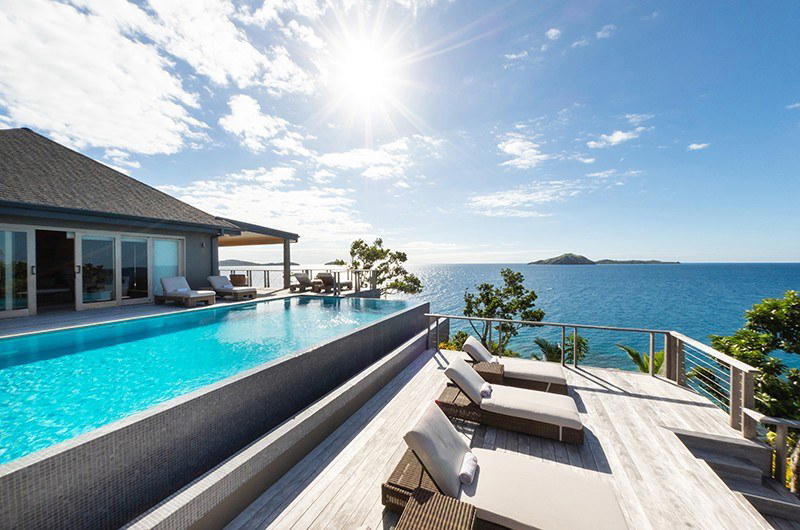
Where the Architecture Disappears Into the Island
The most deliberate design choice at Kokomo Private Island is restraint. Across 140 acres of Yaukuve Levu Island in Fiji's Kadavu archipelago, the structures defer to the landscape rather than competing with it. Heavy timber frames, deep thatch rooflines, and stone-anchored pathways draw from Fijian vernacular building traditions rather than international resort aesthetics. The effect is not rusticity — the interiors are fully fitted, and the infinity pools on each villa are precisely engineered — but the visual logic of the property reads as a continuation of the island rather than an imposition upon it.
That design decision places Kokomo in a specific and smaller tier within Fiji's premium hospitality category. Properties like COMO Laucala Island and Likuliku Lagoon Resort occupy related territory, design-conscious, low-key-count, remote, but each resolves the tension between luxury finish and natural setting differently. At Kokomo, the approach leans toward materials coherence: wood and thatch repeated at every scale, from entry pavilions to bedroom ceilings, while interior objects, sourced from across the world by the property's owner, create contrast without disrupting the spatial logic. Fijian artwork, driftwood sculptures, and paintings by artist Chris Kenyon reinforce a sense of geographic specificity that generic resort design rarely achieves.
The Kadavu Archipelago Context
Kokomo's location within the Kadavu group is the defining condition of the stay. The Great Astrolabe Reef, one of the largest barrier reefs in the world, wraps the island and determines the property's activity architecture. An onsite marine biologist, Cliona O'Flaherty, leads scuba and snorkelling programmes, and the reef supports a coral restoration project that gives guests structured participation in conservation work rather than passive observation. This is not an amenity, it is a consequence of where the island sits geographically.
Getting to Kokomo takes a 30-to-60-minute seaplane or helicopter transfer departing from a dedicated lounge at Nadi International Airport. That transfer is not incidental; it frames the arrival experience and places the island at a deliberate remove from Fiji's more accessible resort clusters. Properties in more connected locations, the InterContinental Fiji Golf Resort on Viti Levu or Nanuku Resort in Pacific Harbour, serve a different guest logic: easier in, easier out. Kokomo's access friction is, by design, part of the proposition.
Scale, Count, and the Intimacy Arithmetic
Twenty-one beachfront villas and five hilltop Grand Residences across 140 acres produces a density figure that defines the guest experience as much as any design choice. The villas run from one to three bedrooms; the residences from three to six, making them functional for larger families or groups. Each villa and residence has its own infinity pool, with dense garden walls providing visual separation. Rooms on the east side of the island offer sunrise exposure and a higher degree of seclusion; west-facing accommodations deliver calmer water and longer evening light. That distinction, east for quiet, west for views, is worth communicating to the property ahead of arrival.
Within Fiji's private island category, Kokomo's count positions it between ultra-intimate properties like Dolphin Island or Raiwasa Private Resort on Taveuni, which operate at single-digit villa counts, and larger-footprint resorts such as Namale or Jean-Michel Cousteau Fiji Islands Resort. At 26 keys total, it operates in a range where staff-to-guest ratios remain high enough to sustain genuine personalisation without the hermetic quality of the smallest properties. Its 2024 placement at number 50 on the World's 50 Best Hotels list and a 94-point score from La Liste in 2026 confirm that peer recognition aligns with the upper bracket of this tier.
Food, Farm, and the Agricultural Backbone
The 5.5-acre working farm is the operational anchor of Kokomo's food programme across its three dining venues. Farm-to-table rhetoric is common across Fiji's premium properties, but a farm of this scale on a private island of 140 acres represents a meaningful share of the land allocation, a structural commitment rather than a talking point. Farm tours led by kitchen staff connect the agricultural programme to the dining experience directly. Pre-arrival surveys covering culinary preferences allow the kitchen to calibrate against specific tastes rather than generic menus, extending the personalisation logic from the accommodation into the food offering. Room service is included in the rate and draws from the same kitchen.
The Wellness and Activity Architecture
The Yaukuve Spa Sanctuary operates in outdoor bures within garden surroundings, using Sodashi products whose selection is guest-directed by scent. The yoga shala is small by design, classes are sized for meaningful instructor contact rather than group programming. A hilltop gym and a floating dock with lounge seating round out the physical infrastructure. For families, an overwater trampoline and a games room with air hockey, ping pong, foosball, and pool tables extend the activity range without demanding a separate children's club operation. The property handles this by embedding family programming into the daily schedule alongside adult activities, rather than separating the two entirely.
Manta ray dives, private island picnics, and kayak access to the floating dock are the activity anchors most specific to Kokomo's location. These are not amenities that replicate what a mainland resort could offer, they are a function of the Kadavu reef system and the island's isolation. Properties such as Turtle Island in the Yasawa Islands or Vomo Island sit in comparable reef-access territory but serve different archipelago contexts. Six Senses Fiji on Malolo Island brings a branded wellness framework that Kokomo's independent positioning does not replicate, a trade-off of brand infrastructure for a more singular identity.
Arrival and Personalisation
The arrival sequence at Kokomo is choreographed from the Nadi airport lounge. Guests are met with a melodic welcome from staff, a salusalu (an intricate floral lei), and a fresh coconut. Before arrival, the property sends a survey covering pillow preferences, dietary notes, drink choices, housekeeping timing, and other specifics. An iPad in each accommodation provides live tide, weather, and activity data. These systems work together as a pre-arrival intelligence model, the property arrives knowing more about the guest than the guest expects, which is the mechanism behind what feels like effortless personalisation.
Among Fiji's independent private island properties, this level of pre-arrival coordination is not universal. It is more common at the upper end of the global luxury hotel category, comparable in intention, if not in setting, to the pre-stay profiling at Amangiri or the arrival detail at Cheval Blanc Paris. The difference is that at Kokomo, the guest has already been physically separated from the outside world by a seaplane ride over open ocean before those details materialise. The context makes the execution land differently.
Planning Your Stay
Access is via seaplane or helicopter from Nadi International Airport, where Kokomo maintains a dedicated lounge to manage the transfer experience. The island operates as all-inclusive, with room service and dining across three venues included in the rate. The pre-arrival survey should be completed fully, it is the primary channel through which the property calibrates the stay. East-facing villas suit guests prioritising seclusion and sunrise; west-facing rooms suit those who prioritise calm water and evening light. The Grand Residences, at three to six bedrooms, are practical for groups or multi-generational travel without the coordination overhead of booking multiple villas. For broader context on travel in this region, see our full Yaukuve Levu Island guide.
Comparison Snapshot
Comparable venues nearby, for context on price, style, and recognition.
| Venue | Cuisine | Price | Awards | Notes |
|---|---|---|---|---|
| Kokomo Private IslandThis venue — the venue you are viewing | Exclusive family-run private island resort blending Fijian tradition with ultra-luxury privacy. | $2,500+ | 2 Michelin Keys · World's 50 Best #50 | Not listed |
| Six Senses Fiji | Barefoot luxury eco-resort with locally-inspired design and natural aesthetics emphasizing sustainability and connection to place. | $2,500+ | 2 Michelin Keys · La Liste Top Hotels | Malolo Island, Mamanuca Islands |
| The Remote Resort | Secluded beachfront villas on a private peninsula. | $300–500 | 2 Michelin Keys | Nawi |
| Jean-Michel Cousteau Fiji Islands Resort | Eco-luxury Fijian beachfront bures blending natural materials with modern comforts. | Not listed | 1 Michelin Key · Virtuoso Luxury Hotel Partner | Savusavu Bay |
| Dolphin Island | Exclusive-use private island with traditional Fijian bures and Pacific island lifestyle design. | Not listed | Forbes 5-Star · Virtuoso Luxury Hotel Partner | Nananu-i-Ra |
| The Fiji Orchid | Exclusive private tented bures in lush tropical orchid gardens | $200–300 | World Travel Awards | Lautoka |
Recognition history
Dated appearances from independent guides and award organizations, with the underlying list record or original source where available.
Michelin 2 Keys
Michelin
World's 50 Best Hotels #50
World's 50 Best
La Liste Top Hotels
La Liste
Forbes Recommended
Forbes
Robb Report The 50 Greatest Luxury Hotels on Earth
Robb Report · 2026 Robb Report The 50 Greatest Luxury Hotels on Earth
Full recognition history (8 entries)
Virtuoso Luxury Hotel Partner
Virtuoso
Forbes Recommended
Forbes
Michelin Selected
Michelin
Continue exploring
More in Yaukuve Levu Island
Restaurants in Yaukuve Levu Island
Browse all →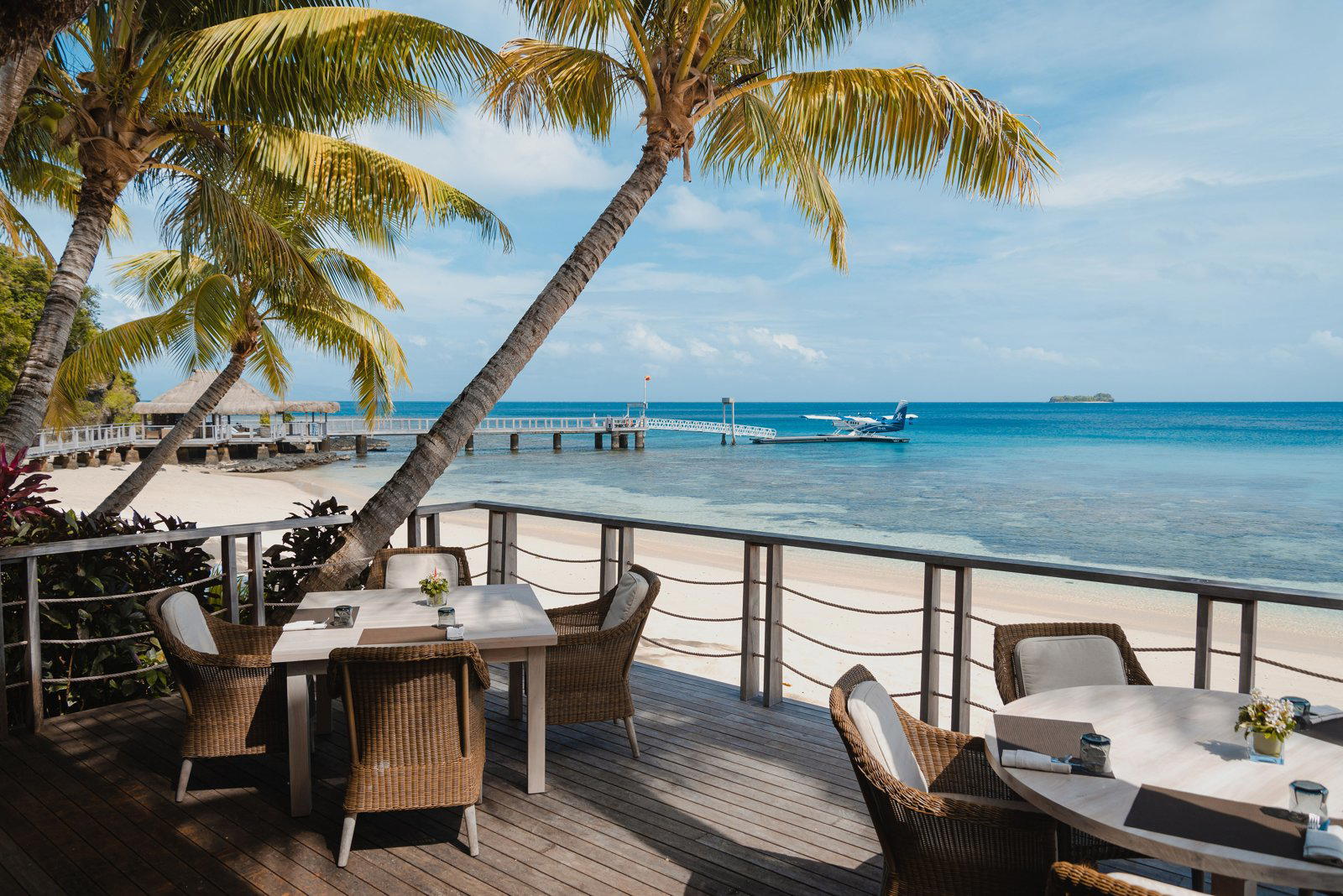
Details
- Romantic
- Scenic
- Elegant
- Sophisticated
- Ornate
- Intimate
- Honeymoon
- Romantic Getaway
- Family Vacation
- Anniversary
- Celebration
- Group Retreat
- Beachfront
- Infinity Pool
- Private Villa
- Butler Service
- Panoramic View
- Private Dining
- Pool
- Spa
- Fitness Center
- Room Service
- Concierge
- Beach Access
- Kids Club
- Waterfront
Relaxed tropical luxury with warm Fijian hospitality, pristine beaches, crystal-clear waters, and seamless intuitive service.