
On Vanua Levu's northern coast, Namale sits in the smaller, more deliberate tier of Fiji's luxury resort market — a property scaled for privacy rather than volume. Its 2026 La Liste recognition at 95 points places it among a short list of Pacific properties held to global hospitality standards. For those who find Fiji's larger international resorts too diffuse, Namale offers a more concentrated version of what the archipelago does well.
Pearl is the En Primeur Club membership app — saves, bookings, and concierge access live there. Same editors, same standards.
- Address
- Vanua Levu, 1 Hibiscus Highway, Savusavu
- Phone
- +679 892 2155
- Website
- namalefiji.com
- Directions
- Get directions
 Saves & bookings on Pearl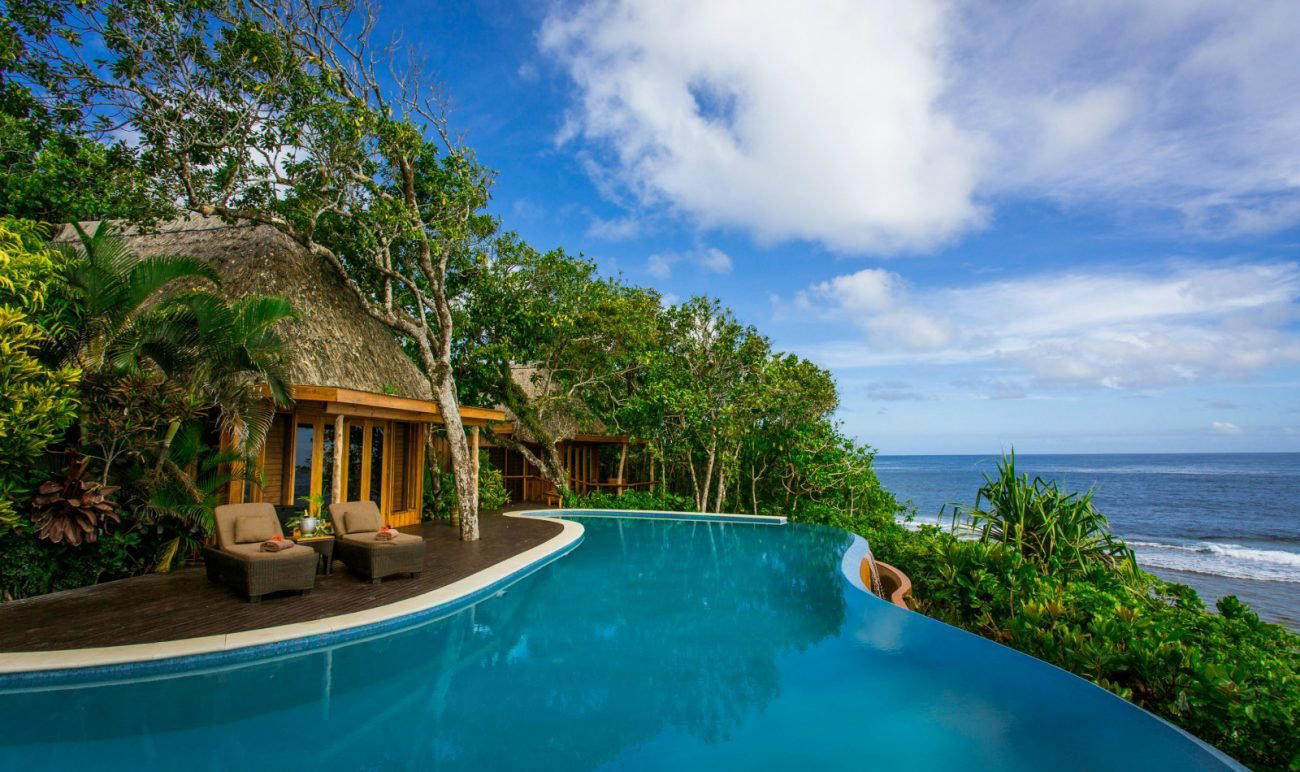
The Physical Setting: Vanua Levu's Case for Restraint
Arriving at Namale requires a level of commitment that most resort guests never encounter. Savusavu sits on Vanua Levu, Fiji's second-largest island, accessible by a short propeller flight from Nadi or a longer overland route through terrain that makes no concessions to convenience. That friction is not incidental — it functions as a filter. Properties on Vanua Levu attract a different kind of traveller than those on Viti Levu's more developed coastline, where infrastructure and volume-driven development have reshaped what luxury looks like. Namale sits along the Hibiscus Highway outside Savusavu town, where the road runs close to the water and the interior climbs sharply into forested ridgelines. The setting puts the resort in dialogue with the landscape rather than isolated from it — a design logic that distinguishes the smaller, more site-specific properties in Fiji's premium tier from the larger footprint resorts further south.
Within Fiji's hierarchy of high-end accommodation, the properties that hold international recognition tend to split along two lines: those that prioritise scale and branded service infrastructure, and those that prioritise physical specificity and a lower ratio of guests to land. Namale belongs to the second category. Its 2026 La Liste score of 95 points places it in the same recognition tier as globally benchmarked luxury properties, a ranking system that weighs hospitality quality against a broad international field, not just regional competitors.
Architecture as Argument: How the Property Reads in Space
The premium resort properties on Fiji's outer islands have, over the past decade, developed a recognisable design vocabulary: bure-influenced structures that reference traditional Fijian building forms while accommodating the material expectations of international luxury travellers. Namale operates within this tradition. The architectural approach common to this tier of Fijian property relies on high-pitched thatched or palm-frond rooflines, open-sided pavilion structures that allow cross-ventilation in place of mechanical air conditioning, and a material palette drawn from local timber, stone, and woven pandanus. This is not mere aesthetic preference, it is a response to climate, a reflection of regional craft traditions, and, at its most considered, a statement about how a building should relate to its site.
What separates the more carefully executed properties in this category from their competitors is the degree to which the design holds together across scale. A single well-built bure is achievable; a property where every transition, from arrival sequence to dining pavilion to accommodation, reads as a coherent spatial argument is considerably rarer. With 22 rooms, Namale keeps guest capacity restrained and maintains a tighter relationship between built footprint and natural context. Namale's position on a coastal site with interior elevation creates the conditions for this kind of spatial layering, where arrival, accommodation, and communal spaces can occupy distinct zones without the compressed adjacency that undermines privacy on more crowded sites.
For comparison, Six Senses Fiji on Malolo Island and Kokomo Private Island in the Kadavu group each represent different positions within Fiji's premium design spectrum, Six Senses with a wellness-infrastructure emphasis, Kokomo with a private island seclusion model. Namale's Vanua Levu location places it in a distinct geographic and experiential bracket, closer in character to Jean-Michel Cousteau Fiji Islands Resort, which also sits on Vanua Levu and draws from the same coastal-inland site logic.
The Savusavu Context: A Town That Doesn't Perform for Tourists
Savusavu has earned a particular reputation among those who know Fiji's geography well. It functions as a working port town with a genuine local economy, yachting, copra, and small-scale agriculture, rather than a tourism staging ground. The hot springs near the waterfront are a geological feature, not a curated attraction. The market operates on local rhythms. This is relevant to how a property like Namale sits within its surroundings: guests can have resort seclusion, but the proximity to an actual town with its own identity gives the location a quality that purely remote properties cannot offer. Dolphin Island, Raiwasa Private Resort on Taveuni, and COMO Laucala Island each represent more fully isolated formats, where the resort is the entire world for the duration of a stay. Namale sits at the point where resort seclusion and genuine place meet, an increasingly rare position in Pacific luxury hospitality.
The broader Fijian premium market, which includes properties like Likuliku Lagoon Resort, Turtle Island in the Yasawas, Vomo Island, Wakaya Private Island, Nanuku Resort, and Taveuni Palms Resort, has diversified considerably. Each property now targets a distinct travel profile, and the decision between them is less about quality tier than about what kind of experience the traveller is actually seeking. InterContinental Fiji Golf Resort and Spa and The Fiji Orchid in Nadi represent the more accessible and amenity-complete end of the spectrum. Namale sits at a different point on that axis, a property where the physical environment and the resort's footprint within it are the primary arguments. You can read more about Fiji's full accommodation range in
Planning a Stay: What the Logistics Require
Side-by-Side Snapshot
Comparable venues nearby, for context on price, style, and recognition.
| Venue | Cuisine | Price | Awards | Notes |
|---|---|---|---|---|
| Namale the Fiji Islands Resort and SpaThis venue — the venue you are viewing | Luxury all-inclusive tropical resort focused on intimacy and seclusion with Fijian-inspired design and five-star amenities. | $$$$ | 5-Star | Not listed |
| InterContinental Fiji Golf Resort & Spa | Luxury beachfront resort echoing traditional Fijian village layout across 35 acres of tropical gardens. | $$$$ | 5-Star | Natadola Bay |
| Vomo Island, Fiji | Luxurious private island villas with private pools and beachfront access | $$$$ | 5-Star | Vomo Island |
| Dolphin Island | Exclusive-use private island with traditional Fijian bures and Pacific island lifestyle design. | $$$$ | 5-Star | Nananu-i-Ra |
| Turtle Island | Barefoot luxury with locally-crafted furnishings and sustainable design; villas built from island-grown hardwoods with solar power and minimal environmental impact. | $$$$ | 5-Star | Yasawa Islands |
| The Fiji Orchid | Exclusive private tented bures in lush tropical orchid gardens | $$$$ | 4-Star | Lautoka |
Recognition history
Dated appearances from independent guides and award organizations, with the underlying list record or original source where available.
La Liste Top Hotels
La Liste
Continue exploring
More in Savusavu
Hotels in Savusavu
Browse all →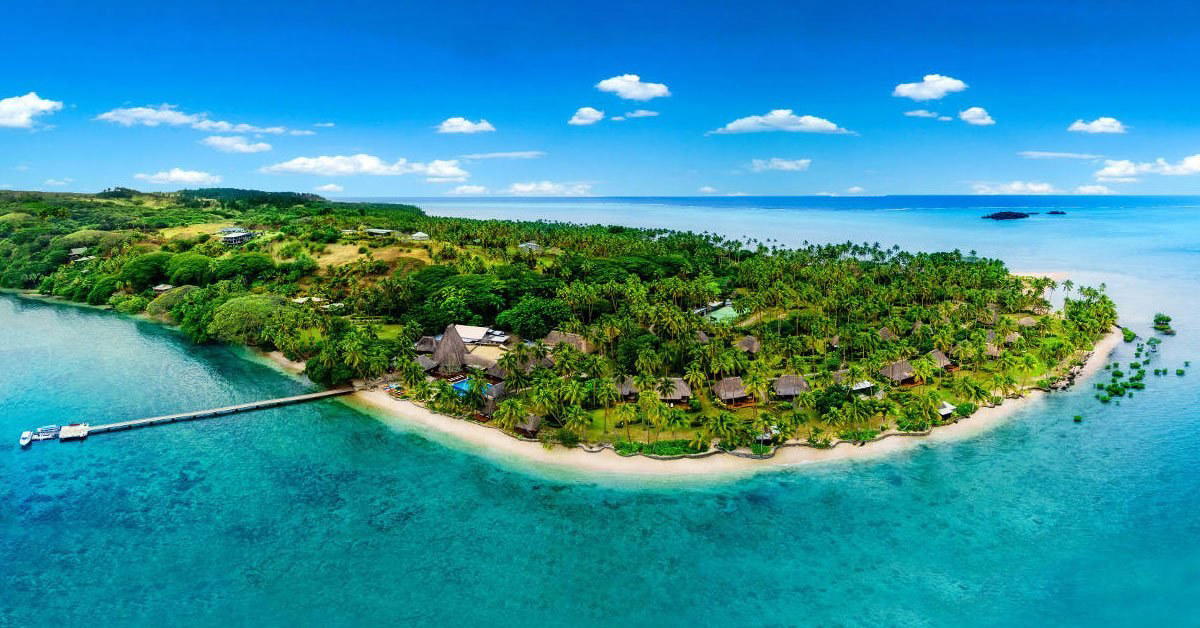
Bars in Savusavu
Browse all →
Restaurants in Savusavu
Browse all →
At a Glance
- Romantic
- Intimate
- Elegant
- Scenic
- Honeymoon
- Romantic Getaway
- Wellness Retreat
- Anniversary
- Beachfront
- Private Villa
- Destination Spa
- Waterfront
- Private Dining
- Panoramic View
- Spa
- Pool
- Fitness Center
- Golf Course
- Beach Access
- Room Service
- Concierge
- Valet Parking
- Restaurant
- Waterfront
- Spa
- Pool
- Fitness Center
- Golf Course
- Beach Access
- Room Service
- Concierge
- Valet Parking
- Restaurant
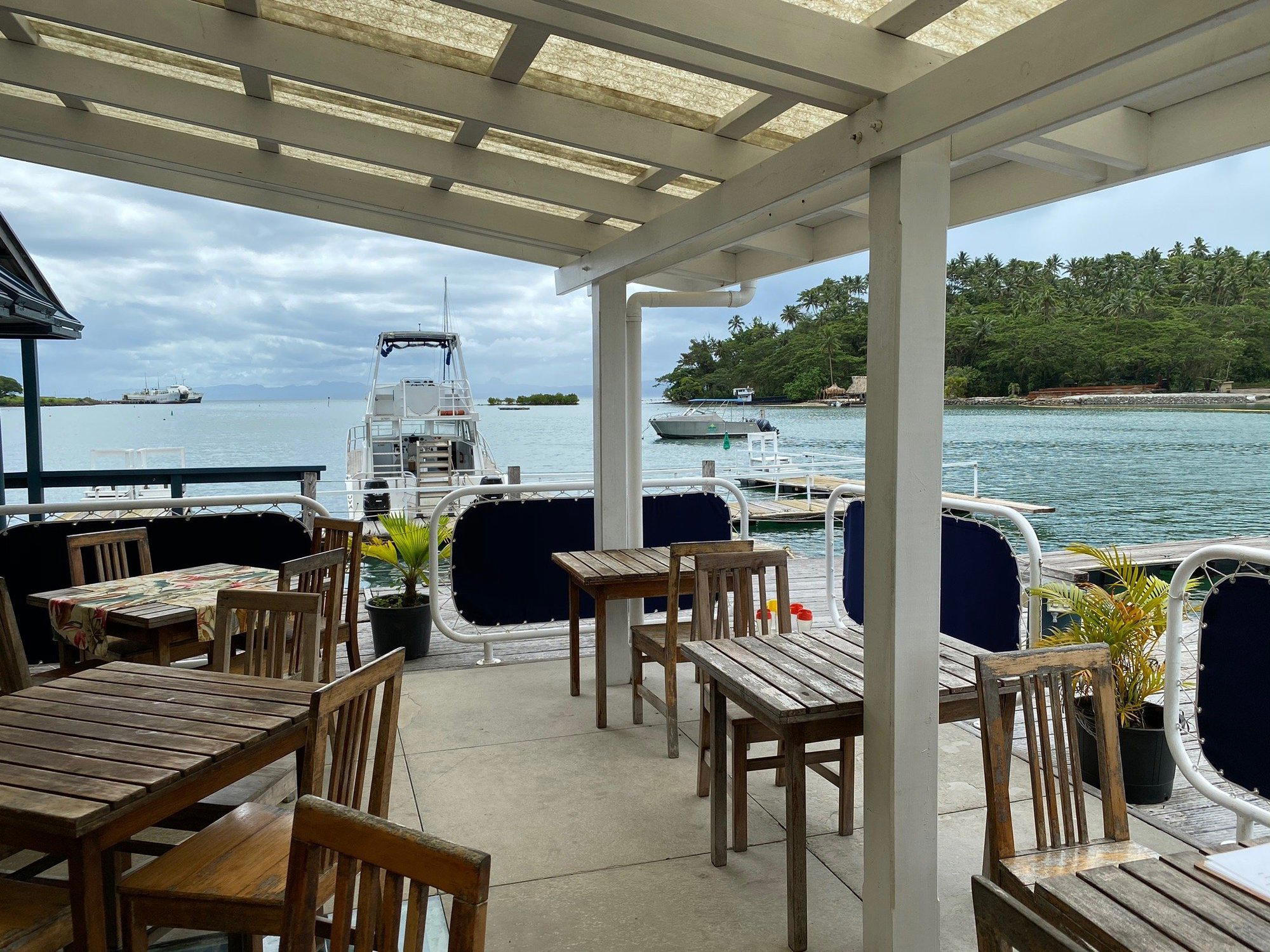
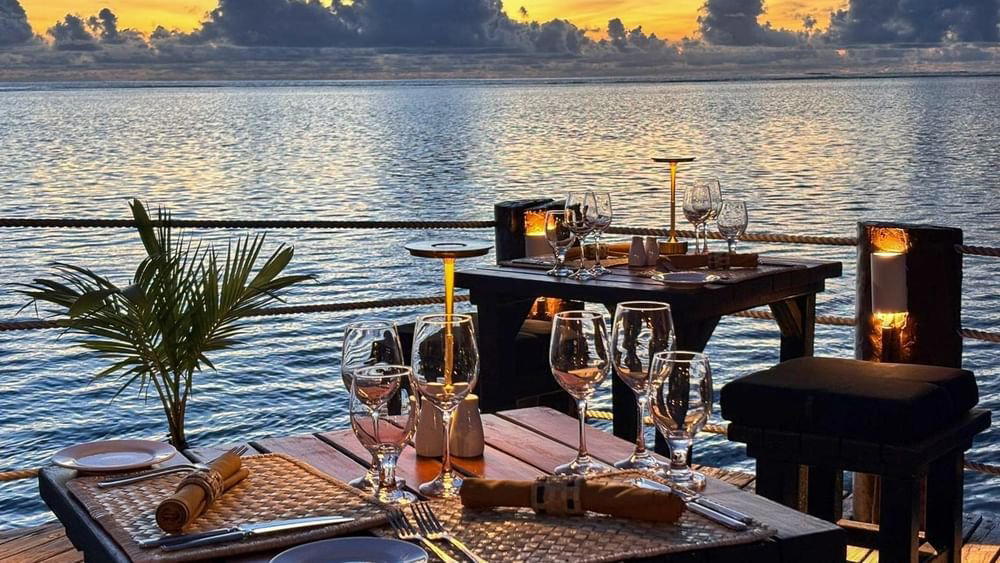
Serene and luxurious tropical setting with ocean views, lush gardens, and intimate cliff-side locations; guests praise the peaceful, pampered atmosphere enhanced by attentive staff and natural beauty.