Turtle Island

Fodor's Most Incredible Hotels in the World
Turtle Island occupies Nanuya Levu in the Yasawa Islands, one of Fiji's most remote and carefully controlled private-island addresses. The property has carried near-mythical status in the premium travel circuit for decades, operating at a scale and guest-to-land ratio that keeps it in a different conversation from larger Fijian resorts. Access is by seaplane or charter, and the island functions as an all-inclusive, exclusively booked environment.

Pearl is the En Primeur Club membership app — saves, bookings, and concierge access live there. Same editors, same standards.
- Address
- Turtle Island, Nanuya Levu
- Phone
- (800) 255-4347
- Website
- turtlefiji.com
- Directions
- Get directions
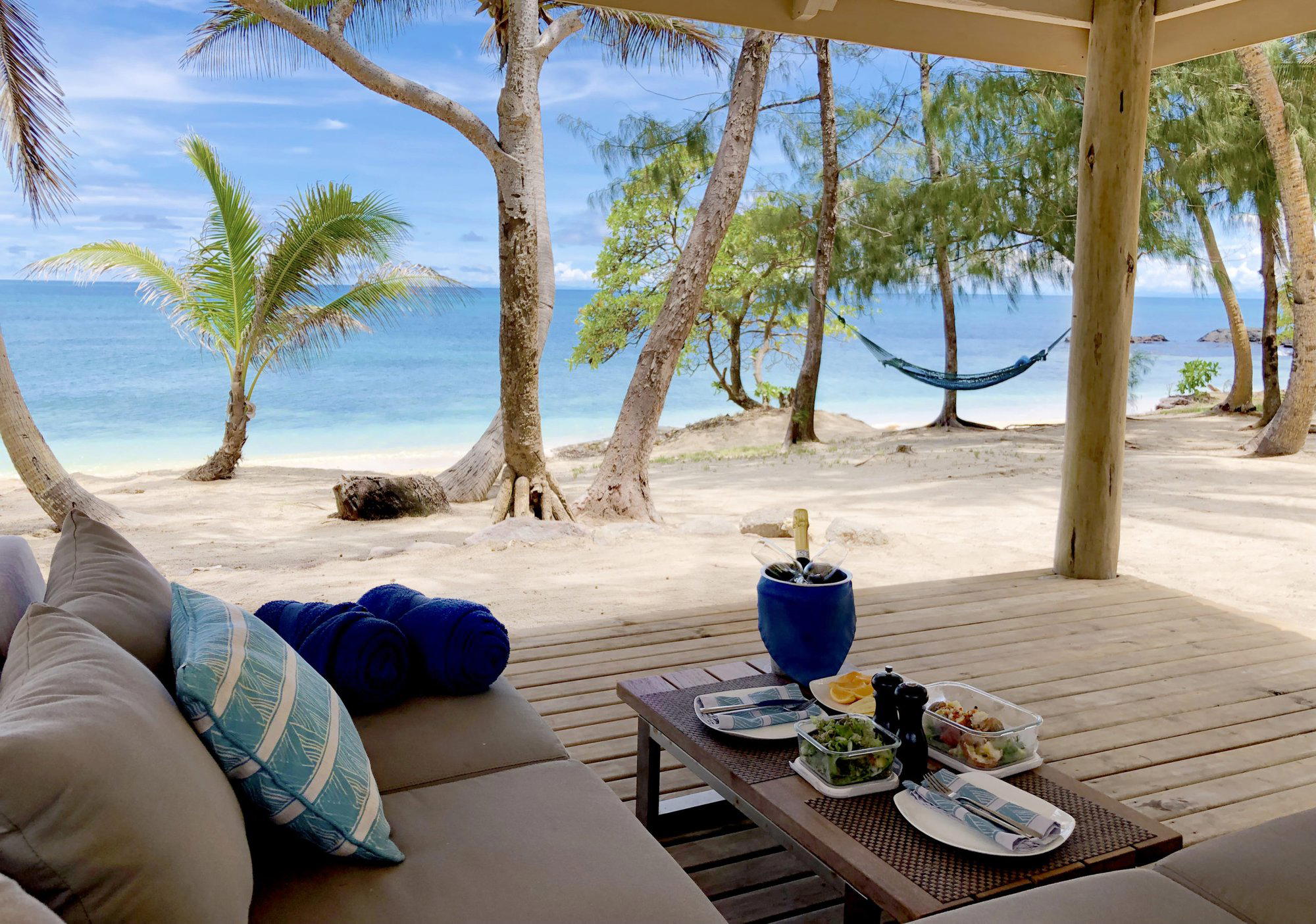
An Island Designed Around Absence
The Yasawa chain runs roughly 90 kilometres northwest of Viti Levu, a string of volcanic islands that remained largely closed to foreign visitors until 1987. The remoteness was structural, not incidental, and it shaped the kind of tourism that eventually took hold there: low-volume, high-commitment, long-journey. Turtle Island sits at the far end of that logic. Nanuya Levu is a 500-acre island in the northern Yasawas, reachable by seaplane from Nadi, and it operates on a capacity model that is almost conspicuously restrained by any regional standard. Where Likuliku Lagoon Resort in Yaro or Six Senses Fiji in Malolo Island occupy positions closer to the main island infrastructure, Turtle Island's geography enforces genuine separation. That distance is the primary design decision.
The Architecture of Restraint
Pacific private-island design has historically split between two registers: the resort that imports a global luxury vocabulary wholesale, and the property that takes its formal cues from the surrounding environment. Turtle Island belongs firmly to the second category. The built environment on Nanuya Levu draws on Fijian building traditions rather than working against them. Bures, the traditional Fijian dwelling form, serve as the primary accommodation unit across the property. The construction logic of the bure, with its high thatched roof pitched to manage airflow and its raised floor plan, is climatically intelligent for the South Pacific, and it also produces a spatial atmosphere that imported contemporary architecture would struggle to replicate. The interiors are open to natural ventilation in a way that air-conditioned villas, however well-appointed, are not.
The property's scale means that the designed environment never crowds itself. Land-to-guest ratios at small private islands in this bracket typically translate into a relationship with landscape that larger resorts cannot engineer. At Turtle Island, the 500 acres means that guests encounter unoccupied beach and interior forest regularly, not as an amenity curated for them, but as a structural consequence of the island's operating model.
Private Islands as a Category, Not a Feature
Fiji's premium accommodation market has expanded considerably over the past two decades. The country now hosts a wide range of properties, from large-scale international resort infrastructure like the InterContinental Fiji Golf Resort and Spa in Viti Levu to design-led boutique properties and true private-island operations. Within that last category, there are meaningful distinctions. Some properties marketed as private islands share their landmass or reef with other operations. Others, like Turtle Island, function as genuinely exclusive environments: one booking party controls the entire island, or the capacity is low enough that the distinction between private and shared dissolves in practice.
This places Turtle Island in a different conversation from, say, Namale the Fiji Islands Resort and Spa in Savusavu or Nanuku Resort in Pacific Harbour, both of which occupy the premium tier but operate at larger scales with broader programmatic offerings. The closest regional comparators in the genuine private-island format would include Kokomo Private Island in Yaukuve Levu Island, Wakaya Private Island Resort in Wakaya Island, and Vomo Island, Fiji, each of which competes on similar terms: remote location, restricted access, low guest count, and all-inclusive programming that removes the friction of on-property decision-making.
At the farthest extreme of Fijian private-island luxury sits COMO Laucala Island, Fiji, which operates at a scale and capital intensity that places it in a separate tier entirely. Turtle Island is not competing in that space. Its positioning is closer to that of Jean-Michel Cousteau Fiji Islands Resort in Vanua Levu Island or Taveuni Palms Resort in Matei: properties where the experience is shaped by deliberate smallness and a specific relationship to the Fijian environment, rather than by the breadth of programmatic infrastructure.
The Yasawa Context
Understanding Turtle Island requires understanding the Yasawas as a travel corridor. The islands sit on the outer edge of Fiji's accessible tourism geography. The seaplane transfer from Nadi runs approximately 35 minutes, and the journey is itself a form of arrival ritual, moving guests over reef systems and uninhabited coastline before setting down in the lagoon. This approach vector, shared by most guests regardless of their accommodation on the island, functions as a decompression mechanism. The Yasawas have no commercial airport; access by surface, via the Yasawa Flyer catamaran from Port Denarau, takes several hours and is used primarily by backpacker-circuit travellers bound for the southern and mid-chain islands. The northern Yasawas, where Nanuya Levu sits, remain effectively seaplane-only for the premium market.
That infrastructure reality limits the pool of competing properties in the immediate geography, which is part of why the Yasawa Islands carry a reputation for genuine remoteness even within Fiji's already island-distributed tourism market. For a broader orientation to what the region offers across price points and formats, our full Yasawa Islands guide maps the key properties and how they sit relative to one another.
Planning an Island Stay at This Latitude
The dry season in the Yasawas runs from May through October, with July and August representing the period of most reliable trade winds and lowest humidity. This is also the peak booking window, and properties at Turtle Island's capacity level operate with lead times that reflect it. The wet season, from November through April, brings the possibility of cyclone disruption as well as periods of overcast weather, but also lower demand pressure. Travellers with schedule flexibility and a tolerance for occasional weather variability will find the shoulder months, April to May and October to November, a reasonable balance. The Fijian government's relationship to private island operations in the Yasawas has historically been stable, though any international travel at this distance from hub airports requires contingency planning for flight disruption. For context on how Fiji's broader luxury accommodation scene compares to global private-island formats, properties like Amangiri in Canyon Point, Castello di Reschio in Lisciano Niccone, and Aman Venice in Venice occupy a similarly deliberate relationship between location and physical isolation, though through entirely different means.
How It Stacks Up
Comparable venues nearby, for context on price, style, and recognition.
| Venue | Cuisine | Price | Awards | Notes |
|---|---|---|---|---|
| Turtle IslandThis venue — the venue you are viewing | Barefoot luxury with locally-crafted furnishings and sustainable design; villas built from island-grown hardwoods with solar power and minimal environmental impact. | Not listed | Fodor's Most Incredible Hotels in the World | Not listed |
| The Fiji Orchid | Exclusive private tented bures in lush tropical orchid gardens | $200–300 | World Travel Awards | Lautoka |
| Nanuku Resort | tropical-chic all-villa beachfront resort with seamless indoor-outdoor living | $300–500 | Virtuoso Luxury Hotel Partner · Small Luxury Hotels of the World Member | Pacific Harbour |
| Likuliku Lagoon Resort | Traditional Fijian architecture with natural materials and modern luxury | Not listed | La Liste Top Hotels | Malolo Island |
| InterContinental Fiji Golf Resort & Spa | Traditional Fijian village layout with modern luxury amid tropical gardens | Not listed | Michelin Selected · Virtuoso Luxury Hotel Partner | Natadola Bay |
| Vomo Island, Fiji | Luxurious private island villas with private pools and beachfront access | Not listed | La Liste Top Hotels | Vomo Island |
Recognition history
Dated appearances from independent guides and award organizations, with the underlying list record or original source where available.
Fodor's Most Incredible Hotels in the World
Fodor's
Details
- Romantic
- Scenic
- Intimate
- Elegant
- Well Known
- Honeymoon
- Romantic Getaway
- Anniversary
- Celebration
- Destination Wedding
- Beachfront
- Private Villa
- Butler Service
- Destination Spa
- Waterfront
- Panoramic View
- Private Dining
- Spa
- Beach Access
- Room Service
- Concierge
- Wi Fi
- Hot Tub
- Airport Transfer
- Pool
- Waterfront
- Garden
Serene and romantic with natural lighting from expansive windows, ocean views, and candlelit evening settings; guests describe it as an idyllic, peaceful paradise with warm hospitality.