COMO Laucala Island, Fiji




2 Michelin Keys · La Liste Top Hotels · Virtuoso Luxury Hotel Partner
In the remote Koro Sea, COMO Laucala Island occupies five square miles of rainforest, reef, and coconut groves across 25 secluded villas built from thatch, timber, and stone. Named Tatler Asia-Pacific Best Resort 2025 and placed on La Liste's Top Hotels list at 91.5 points, the property operates at the top of Fiji's private-island tier, with rates available on request only.

Pearl is the En Primeur Club membership app — saves, bookings, and concierge access live there. Same editors, same standards.
- Address
- Laucala Island
- Phone
- +679 888 0077
- Website
- laucala.com
- Directions
- Get directions
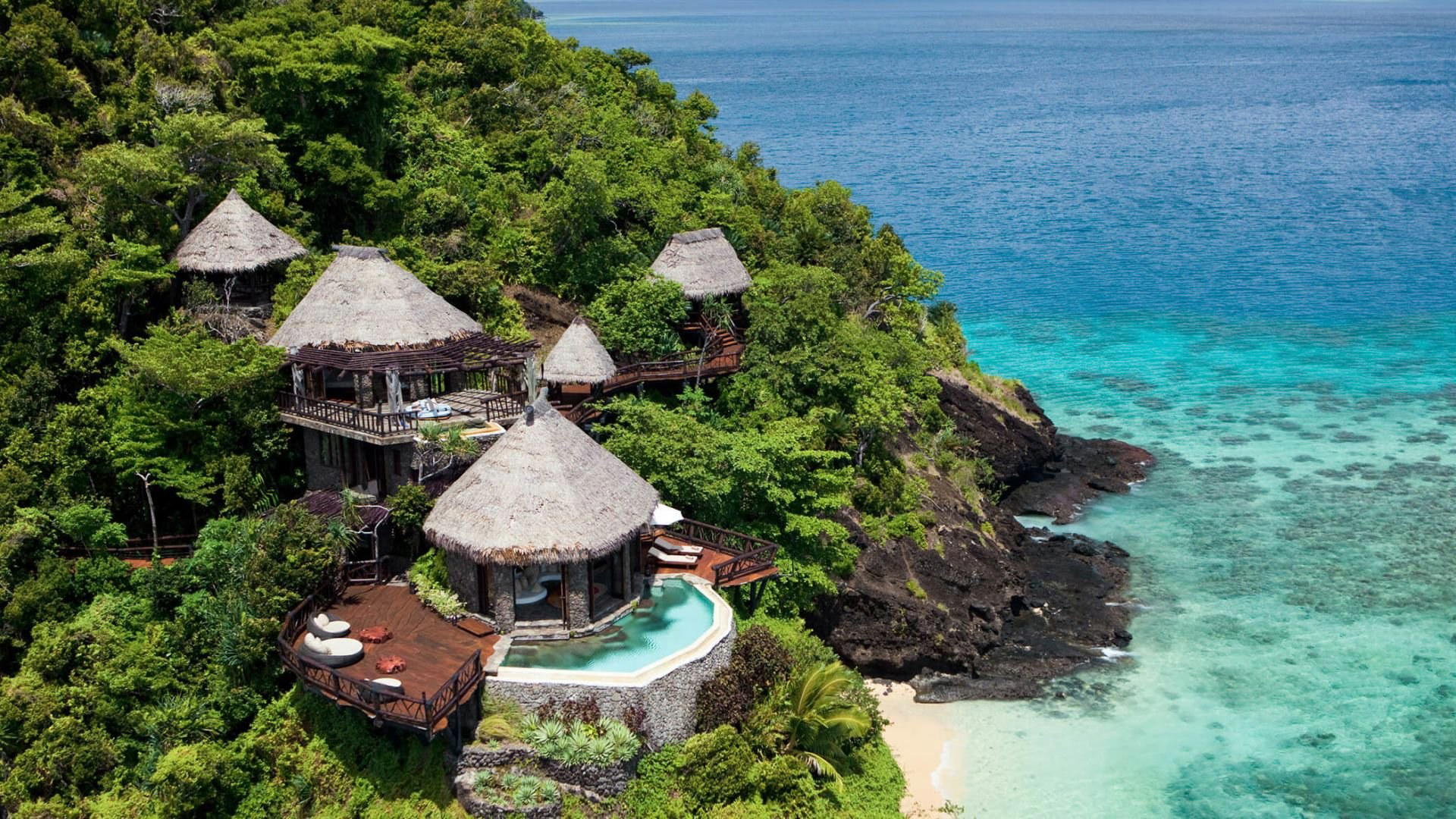
Architecture at the Edge of the Koro Sea
Private-island resorts in Fiji divide fairly cleanly into two categories: properties that apply a standard luxury-hotel formula to a remote setting, and those where the physical design is itself the argument. COMO Laucala Island belongs to the second group. The resort occupies five square miles of the Koro Sea, a stretch of ocean east of Viti Levu that most travellers never reach, and the architecture responds to that remoteness rather than compensating for it. The 25 villas are constructed from thatch, timber, and stone — materials sourced and shaped to sit inside the rainforest and reef landscape rather than assert themselves against it. Vaulted ceilings draw the eye upward into structural woodwork. Open-air baths and sun decks dissolve the boundary between interior and exterior. The sculptural quality of each villa is deliberate: these are not rooms with views, they are spaces designed to make you aware of where you are at every moment.
That design approach places COMO Laucala in a conversation with a small set of properties globally that treat architecture as the primary guest experience. Amangiri in Canyon Point operates on a similar premise in the American Southwest — geology first, hospitality second. Castello di Reschio in Lisciano Niccone does the same with Umbrian stone farmhouses. What these properties share is a refusal to treat the physical space as backdrop. At COMO Laucala, the interiors incorporate curated art and bold woodwork, and the ocean light that enters each villa changes the character of those spaces through the day. It is a property that rewards slowness.
Where Laucala Sits in Fiji's Private-Island Hierarchy
Fiji's private-island market has expanded considerably over the past decade, but it remains stratified. At the accessible end, resorts like InterContinental Fiji Golf Resort and Spa on Viti Levu and Nanuku Resort in Pacific Harbour operate on larger scales with broader amenity sets. Further up the exclusivity curve, properties like Likuliku Lagoon Resort in Yaro and Namale Resort and Spa in Savusavu offer genuine seclusion with more moderate villa counts. COMO Laucala operates at the top of that hierarchy: 25 villas across five square miles, rates on request only, and a location in the Koro Sea that requires a charter flight or private transfer to reach. The comparison set is not other Fiji resorts, it is a handful of properties globally that price and operate at the same register, including Cheval Blanc Paris and Aman Venice, where exclusivity of access is itself part of the offer.
Within Fiji specifically, the closest peer in terms of private-island format and exclusivity positioning is Kokomo Private Island in Yaukuve Levu, which also operates on a low-key, high-cost model in a remote location. Turtle Island in the Yasawa Islands and Wakaya Private Island Resort occupy similar territory. What distinguishes COMO Laucala is scale: five square miles gives the property a spatial generosity that smaller private islands cannot replicate, and the COMO Hotels group brings a wellness infrastructure that most standalone private-island operators lack.
Recognition and the Evidence Behind It
Tatler Asia-Pacific named COMO Laucala Island its Leading Resort for 2025, a recognition that places it at the head of the Asia-Pacific resort field in an editorial context that reads across the region's most discerning travel audience. La Liste's Leading Hotels ranking for 2026 assigned it 91.5 points, a score that positions it within a global cohort of properties operating at the highest tier. These are not minor credentials: La Liste's methodology draws from a wide range of international sources, and a 91.5-point score indicates consistent recognition across multiple evaluation frameworks, not a single-year anomaly.
For context, properties earning comparable La Liste scores in other markets include addresses like Badrutt's Palace Hotel in St. Moritz and Bvlgari Hotel Tokyo, properties where the score reflects both design and service consistency over time. That COMO Laucala reaches this tier from a remote Pacific island location, without the infrastructure advantages of an urban or established resort destination, is itself a signal about the depth of the operation.
The Activities Programme and Island Scale
The five-square-mile footprint enables an activities range that smaller private islands cannot support. Reef dives operate directly from the island into waters that form part of Fiji's broader marine system. Rainforest treks use the island's interior terrain. The programme extends across water sports and wellness, consistent with COMO Hotels' broader group positioning around active, health-oriented travel. For comparison, Jean-Michel Cousteau Fiji Islands Resort on Vanua Levu has built its identity specifically around marine education and diving; COMO Laucala operates across a wider activity spectrum without that single-discipline focus.
Other Fiji properties that offer activities-led programming include Six Senses Fiji on Malolo Island, which centres its offer on wellness and sustainability, and Raiwasa Private Resort on Taveuni Island, which operates at smaller scale in a similarly remote location. Dolphin Island and Vomo Island, Fiji represent the market at a more intimate scale, where the island itself, rather than a structured programme, is the primary draw.
Planning a Stay: What to Know
COMO Laucala Island is reached via charter flight or private transfer into the Koro Sea; this is not a resort you arrive at by accident or on a whim. Rates are provided on request only, placing the property in a pricing tier where the conversation begins with availability and builds from there. With 25 villas across five square miles, the property maintains a guest-to-space ratio that keeps the island feeling genuinely uncrowded even at capacity. Booking lead times for peak season should be factored in well in advance; the combination of limited inventory and sustained award-level recognition means the property does not sit empty in its target windows.
For those building a wider Fiji itinerary, Taveuni Palms Resort in Matei, The Fiji Orchid in Nadi, and the broader range of options in our full Laucala Island guide offer context for pairing COMO Laucala with other properties across the archipelago. Those arriving through Nadi before a charter transfer will find the city useful for acclimatisation before the final leg into the Koro Sea.
How It Stacks Up
Comparable venues nearby, for context on price, style, and recognition.
| Venue | Cuisine | Price | Awards | Notes |
|---|---|---|---|---|
| COMO Laucala Island, FijiThis venue — the venue you are viewing | Private island luxury resort with Fijian-inspired standalone villas. | $2,500+ | 2 Michelin Keys · La Liste Top Hotels | Not listed |
| Raiwasa Private Resort | Private luxury villa on a 3-acre tropical estate | Not listed | Small Luxury Hotels of the World Member | Matei Coastal Road |
| Taveuni Palms Resort | Ultra-luxury boutique beachfront resort with private villas | $1,000–1,500 | World Travel Awards | Matei |
| Tides Reach Resort | Secluded luxury beachfront villas blending Fijian hospitality with 5-star service. | Not listed | La Liste Top Hotels | Matei |
| InterContinental Fiji Golf Resort & Spa | Luxury beachfront resort echoing traditional Fijian village layout across 35 acres of tropical gardens. | Not listed | Michelin Selected · Virtuoso Luxury Hotel Partner | Natadola Bay |
| The Fiji Orchid | Exclusive private tented bures in lush tropical orchid gardens | $200–300 | World Travel Awards | Lautoka |
Recognition history
Dated appearances from independent guides and award organizations, with the underlying list record or original source where available.
Michelin 2 Keys
Michelin
La Liste Top Hotels
La Liste
Virtuoso Luxury Hotel Partner
Virtuoso
Tatler Listed in Best Hotels Asia-Pacific
Tatler
Full recognition history (6 entries)
Michelin 2 Keys
Michelin
Tatler Best Resort
Tatler
Continue exploring
More in Laucala Island
Hotels in Laucala Island
Browse all →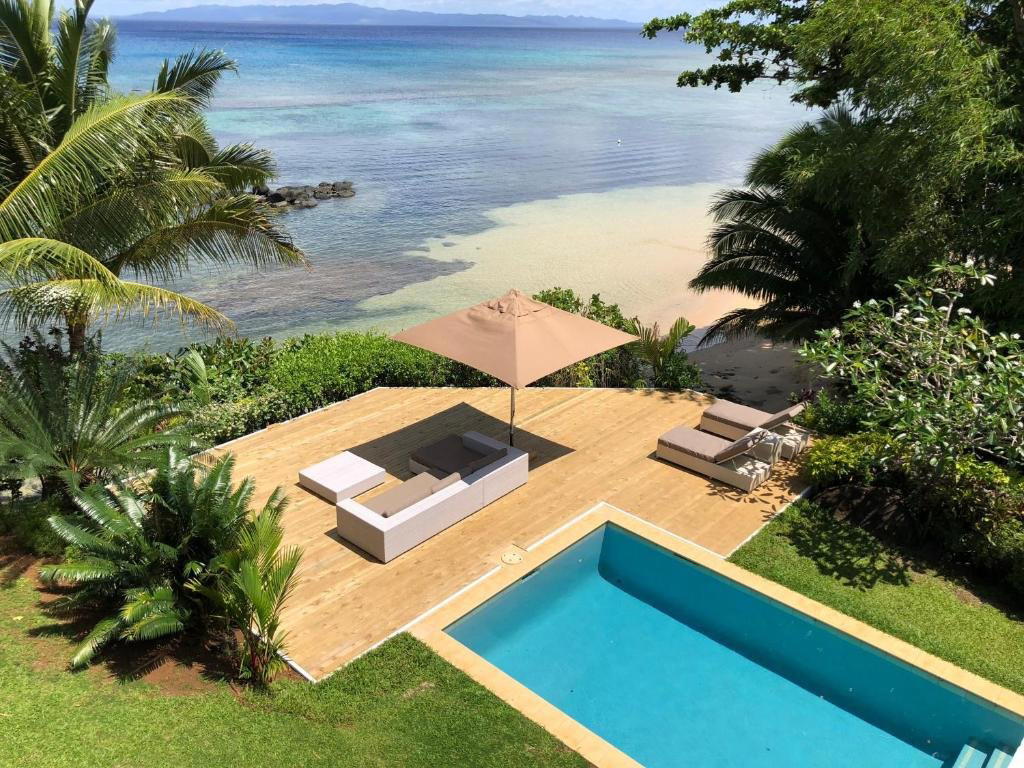
Details
- Romantic
- Quiet
- Elegant
- Scenic
- Sophisticated
- Ornate
- Honeymoon
- Romantic Getaway
- Wellness Retreat
- Anniversary
- Beachfront
- Infinity Pool
- Private Villa
- Butler Service
- Destination Spa
- Golf Course
- Wi Fi
- Pool
- Spa
- Fitness Center
- Room Service
- Concierge
- Tennis
- Beach Access
- Golf Course
- Kids Club
- Waterfront
- Garden
Serene and luxurious with natural tropical surroundings, soft lighting in villas, and tranquil spa settings amid forested hilltops and beaches.