Raiwasa Private Resort

Small Luxury Hotels of the World Member
Raiwasa operates as a fully exclusive-use resort on Taveuni Island, taking over the entire property for a single group at a time. The design centres on an infinity pool oriented toward open ocean, with a dedicated team covering cuisine, spa, and service for the duration of each stay. It sits within a small tier of Fiji properties built around total privacy rather than amenity scale.

Pearl is the En Primeur Club membership app — saves, bookings, and concierge access live there. Same editors, same standards.
- Address
- Matei Coastal Road, Waiyevo Taveuni
- Phone
- (310) 598-2176
- Website
- raiwasa.com
- Directions
- Get directions
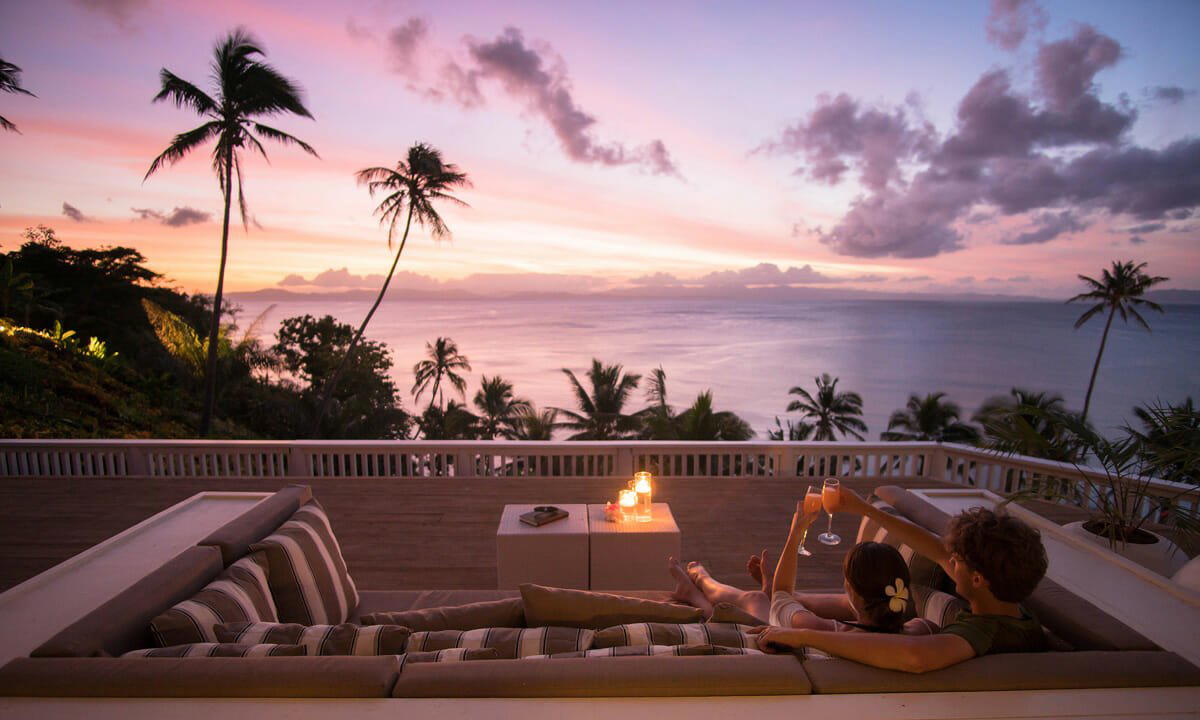
A Private Island Format on Fiji's Greenest Shore
Taveuni occupies a specific position in Fiji's geography and its travel identity. Known as the Garden Island for the density of its rainforest cover and the richness of its reef systems, it sits in the northern Lau group far enough from Nadi to filter out the resort circuits that define Viti Levu and the Mamanuca chain. The travellers who reach Taveuni are, by definition, intentional about it. Raiwasa sits on the Matei Coastal Road within that context, and its operating model takes the logic of remoteness one step further: the entire property books as a single unit, for a single group, for the duration of each stay. No other guests. No shared dining room. No lobby traffic.
This exclusive-use format has become a distinct tier within Pacific luxury. Properties like Dolphin Island and Turtle Island in the Yasawa Islands operate on comparable logic, as does Wakaya Private Island Resort. Where larger-footprint properties such as InterContinental Fiji Golf Resort and Spa or Nanuku Resort compete on amenity breadth, Raiwasa competes on the opposite axis: singular access to a place, a team, and a setting that operates for no one else during your stay.
The Physical Setting and Design Logic
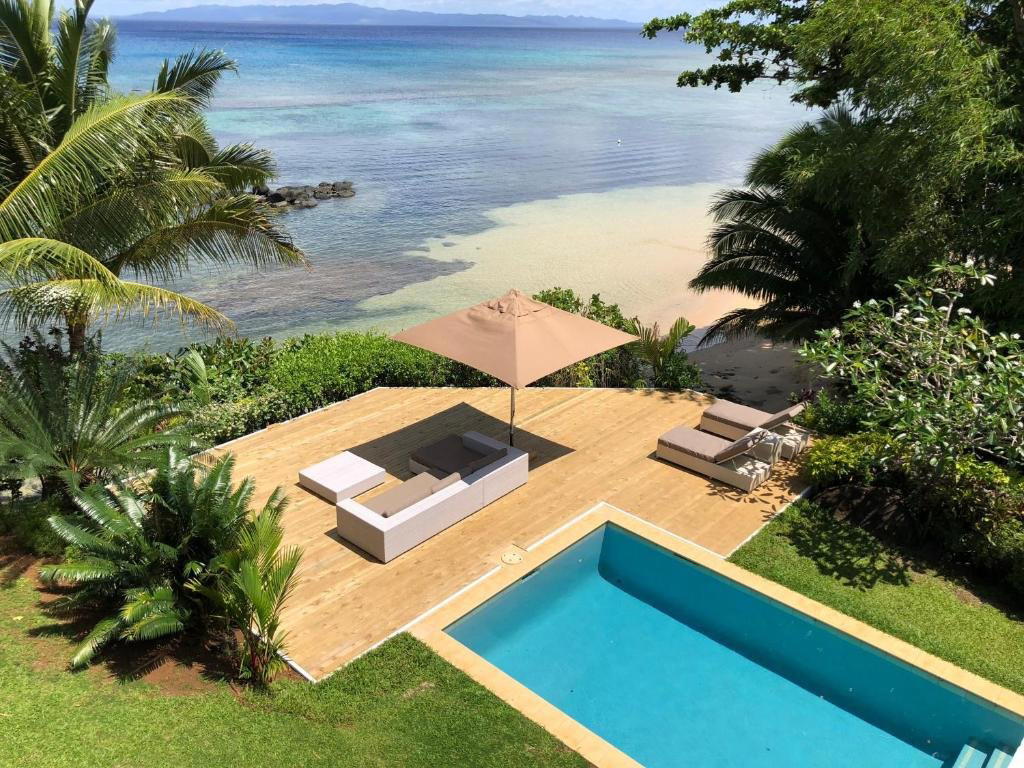
The design at Raiwasa leans into Taveuni's elevation and its coast rather than working against either. The infinity pool, which sits as the architectural centrepiece of the property, reads as an extension of the horizon rather than an interruption of it. At this latitude, the orientation toward open water allows for unobstructed night sky visibility, which the property's own description frames as a primary evening activity: stargazing from the pool terrace or the grounds. In an era when luxury properties often over-programme evening hours, this restraint is a design choice as much as a scheduling one.
Taveuni itself provides much of the aesthetic context that the built environment doesn't need to manufacture. The island's interior is dense tropical rainforest; the coastline where Raiwasa sits shifts between volcanic rock and sand depending on the tide and the point. Fiji's broader architectural vocabulary at the premium end of the market tends toward bure-influenced forms, thatched rooflines, and locally sourced materials, and properties in this tier that ignore that vocabulary tend to feel imported rather than placed. Based on available data, Raiwasa's structure appears consistent with the site-specific design tradition common across Taveuni's premium properties, including the nearby Taveuni Palms Resort, which shares the Matei area and a similar orientation toward low-density, high-contact design.
Service Architecture: A Dedicated Team, Not a Shared Roster
The staffing model at Raiwasa is worth examining as a design principle in its own right. The property describes a hand-picked team covering culinary, service, spa, and guest relations, all deployed for a single group at any given time. In practical terms, this means the ratio of staff to guests almost certainly exceeds anything available at multi-villa resort formats. Compare this to the model at a property like COMO Laucala Island, which operates at a larger footprint with more guest capacity and a correspondingly broader staff operation. The exclusive-use format compresses that ratio in the guest's favour. The chef team plans and executes menus around the preferences of one group; the spa therapists schedule around one group's rhythms; the service personnel manage the pace of one group's days.
This model has a precedent in other Pacific properties. Kokomo Private Island in the Kadavu group operates at a slightly larger scale but similarly positions its service team around a contained guest count. Jean-Michel Cousteau Fiji Islands Resort on Vanua Levu maintains a curated staff programme as part of its identity. What distinguishes Raiwasa within this group is the absolute exclusivity: there is no one else staying at the property, which removes even the minor social friction of encountering other guests at breakfast or at the water's edge.
Positioning Within Fiji's Private Resort Tier
Fiji's premium accommodation market has developed a clear internal hierarchy. At the widest end sit large-scale resorts with golf courses, multiple restaurant concepts, and broad amenity stacks. Below that, design-led boutique properties offer higher service ratios and more curated programmes. At the narrowest point sits the exclusive-use category, where the product is total possession of a place. Raiwasa operates in this narrowest tier, alongside properties such as Likuliku Lagoon Resort and Namale the Fiji Islands Resort and Spa, though both of those operate with multiple guest groups simultaneously. The fully exclusive-use format sits above even that tier in terms of privacy architecture.
For those considering how Raiwasa fits within a broader trip through Fiji, Six Senses Fiji on Malolo Island represents a useful point of contrast: it competes on wellness depth and environmental programming, with a multi-guest format and a brand architecture behind it. Raiwasa offers nothing of that brand scaffolding, which is precisely the point for the guest profile it attracts. The comparison extends beyond the Pacific. The exclusive-use logic is more commonly found at properties like Amangiri in Canyon Point or Castello di Reschio in Umbria, where the architecture and the setting do the work that a brand name might otherwise carry.
Taveuni as a Destination Context
Arriving at Taveuni requires a connection through Nadi or Suva, with Matei airport serving the northern end of the island. The flight time from Nadi is roughly 45 minutes on a light aircraft, which places Raiwasa further from international arrival infrastructure than most Fiji properties. This is not incidental: the journey itself functions as a filter, and the island's limited air access is part of what keeps Taveuni's tourism density low. For context on how Taveuni compares to Fiji's wider options, our full Taveuni Island guide covers the island's dining, accommodation, and marine environment in detail.
The reef system off Taveuni, particularly around the Rainbow Reef corridor at the southern tip, ranks among the most documented dive sites in the South Pacific. The island also contains Bouma National Heritage Park, which covers a substantial portion of Taveuni's interior rainforest and includes waterfall systems accessible by guided walk.
For travellers who move between Fiji and other high-privacy destinations, Raiwasa belongs to a recognisable category: remote enough that the journey is a commitment, small enough that the experience reshapes around the guest rather than the reverse.
Planning a Stay
Raiwasa operates as an exclusive-use booking, meaning the property is not available on a per-room or per-villa basis. Enquiries for availability and pricing should be directed through specialist travel advisers with access to Fiji's private-island market. The Fiji dry season runs from May through October, with cooler temperatures and lower humidity making that window the most consistent for outdoor activities, stargazing, and reef visibility. Taveuni receives more rainfall than the western Fiji islands year-round due to its elevation and position relative to the trade winds, so conditions vary even within the dry season. Guests staying in the Nadi area before or after a Taveuni leg will find it a practical staging point for the onward flight to Matei.
Fast Comparison
| Venue | Price | Awards |
|---|---|---|
| Raiwasa Private ResortThis venue — the venue you are viewing | Not listed | Small Luxury Hotels of the World Member |
| Six Senses Fiji | $2,500+ | 2 Michelin Keys · La Liste Top Hotels |
| Kokomo Private Island | $2,500+ | 2 Michelin Keys · World's 50 Best #50 |
| Dolphin Island | Not listed | Forbes 5-Star · Virtuoso Luxury Hotel Partner |
| COMO Laucala Island, Fiji | $2,500+ | 2 Michelin Keys · La Liste Top Hotels |
| InterContinental Fiji Golf Resort & Spa | Not listed | Michelin Selected · Virtuoso Luxury Hotel Partner |
Recognition history
Dated appearances from independent guides and award organizations, with the underlying list record or original source where available.
Small Luxury Hotels of the World Member
Small Luxury Hotels of the World
Continue exploring
More in Taveuni Island
Details
- Romantic
- Quiet
- Scenic
- Intimate
- Elegant
- Ornate
- Honeymoon
- Romantic Getaway
- Anniversary
- Wedding
- Beachfront
- Infinity Pool
- Private Villa
- Panoramic View
- Pool
- Wi Fi
- Spa
- Room Service
- Concierge
- Airport Transfer
- Fitness Center
- Waterfront
- Garden
Serene and luxurious tropical atmosphere with far-reaching ocean views, lush gardens, and discreet service creating an intimate paradise for relaxation and indulgence.