

The Pure sits in Frankfurt's Bahnhofsviertel on Niddastrasse, where the city's cosmopolitan energy is most concentrated. Its design language, marble surfaces, leather finishes, and a nightlife-forward aesthetic, positions it in a tier of Frankfurt hotels that prioritise atmosphere over convention. For travellers whose measure of a stay includes the quality of the space they return to each evening, this is a considered choice.
Pearl is the En Primeur Club membership app — saves, bookings, and concierge access live there. Same editors, same standards.
- Address
- Niddastrasse, 86, Frankfurt 60329, Germany
- Phone
- +49.69.71.04.57.0
- Website
- marriott.com
- Directions
- Get directions
 Saves & bookings on Pearl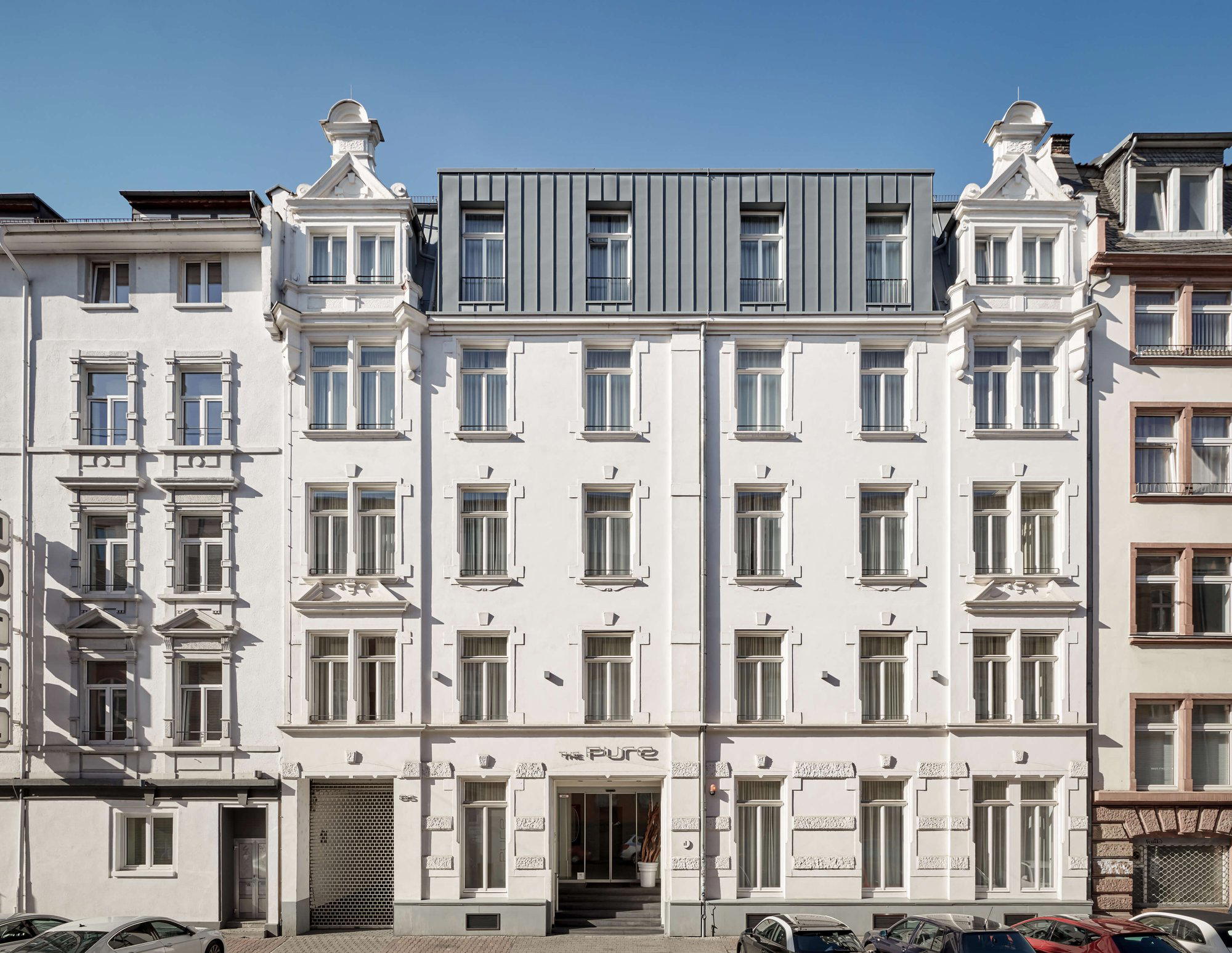
Frankfurt's Design-Led Hotel Tier and Where The Pure Sits Within It
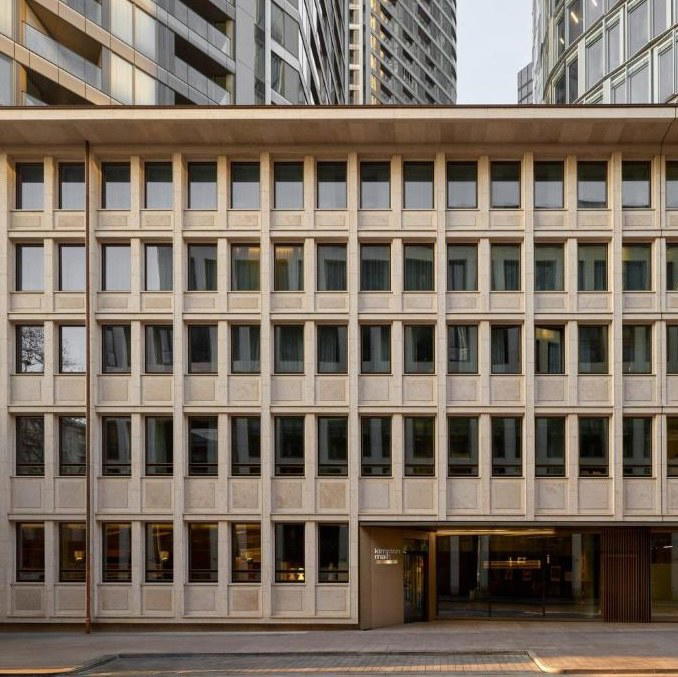
Frankfurt divides its hotel accommodation into two broad categories more sharply than most German cities. On one side sit the large-footprint international operators clustered around the Messe and Bankenviertel, serving the constant rotation of trade fair delegates and finance professionals. On the other sits a smaller, more deliberate cohort of properties where the design brief has been taken seriously enough to become a point of difference rather than an afterthought. The Pure, on Niddastrasse in the Bahnhofsviertel, is a 4-star hotel with 50 rooms. Its material palette, marble, leather, and a visual language borrowed as much from contemporary nightlife as from traditional hospitality, places it in a comparable set that includes Roomers and, at greater distance, the classically positioned Villa Kennedy, a Rocco Forte Hotel. These are properties where the physical environment is itself an editorial statement.
The Bahnhofsviertel address matters. The neighbourhood surrounding Frankfurt's main station has undergone a significant reappraisal over the past decade. What was once understood primarily through its red-light district associations is now read, at least in parallel, as one of the city's most genuinely cosmopolitan quarters: dense with international restaurants, natural wine bars, and a creative scene that sits closer to Berlin's looseness than to Frankfurt's traditional financial-district formality. A hotel positioned here is making a deliberate statement about which version of Frankfurt it identifies with.
The Design Environment as Wellness Infrastructure
The wellness conversation in premium hospitality has expanded well beyond the spa floor. Increasingly, the quality of the spaces a guest inhabits, the light in a room, the tactile quality of surfaces, the calibration between stimulation and calm, counts as part of what a property does for recovery and restoration. The Pure's design programme, described as marble-meets-leather-meets nightlife, operates at an interesting pressure point within that conversation. The material choices suggest sensory confidence rather than sensory reduction: this is not the muted linen-and-concrete wellness vernacular of Nordic-inflected retreats. It is, instead, an urban version of restoration, one that assumes the guest is energised rather than depleted by a well-designed environment with genuine atmosphere.
Travellers for whom wellness means deliberate detachment from city stimulation would look elsewhere in Germany. Properties such as Schloss Elmau Luxury Spa Retreat and Cultural Hideaway in Elmau, Das Kranzbach Hotel and Wellness Retreat in Kranzbach, or Gut Steinbach Hotel Chalets Spa in Reit im Winkl anchor the retreat end of that spectrum. Althoff Seehotel Überfahrt in Rottach-Egern and Hotel Bareiss in Baiersbronn operate in similar territory, with landscape and spa programming as the primary offering. The hotel's proposition is different: it restores through the quality of the urban environment it creates, not through removal from that environment.
Frankfurt's Cosmopolitan Character and This Property's Position Within It
Frankfurt is routinely underestimated as a travel destination by visitors whose mental image of the city does not extend beyond its skyline and its role as Europe's primary financial exchange hub. The reality is more layered. The city's international population, one of the highest proportional foreign-resident ratios of any German city, generates a dining and cultural scene that reflects genuine global heterogeneity rather than curated multiculturalism. The Bahnhofsviertel is where that diversity is most legible at street level. The hotel's stated identity, as a property that captures Frankfurt's open-minded cosmopolitan spirit, is not a marketing abstraction in this context; it is a locational fact.
For comparison within Frankfurt's hotel tier, JW Marriott Hotel Frankfurt and Hotel Nizza each position themselves differently, the former anchored in the city's business infrastructure, the latter in a more intimate, neighbourhood-scaled proposition. The hotel sits between those poles in terms of atmosphere, with a design intensity that reads more confidently urban than either.
Across Germany's broader premium tier, properties such as Fairmont Hotel Vier Jahreszeiten in Hamburg, Excelsior Hotel Ernst in Cologne, Breidenbacher Hof in Düsseldorf, and Hotel de Rome in Berlin each carry their own city's social weight. The hotel carries Frankfurt's: ambitious, international, and more stylistically confident than the city's conservative financial reputation might suggest.
Planning a Stay: What to Know Before You Arrive
The hotel is located at Niddastrasse 86, Frankfurt 60329, placing it within walking distance of Frankfurt Hauptbahnhof, which makes it straightforwardly accessible from Frankfurt Airport via the S-Bahn connection, a journey of roughly 11 minutes. For travellers arriving from other German cities by rail, or connecting internationally through Frankfurt's airport hub, the address reduces transfer friction to a minimum. This is a practical consideration that favours the hotel for short-stay visitors whose priority is proximity to the city's transit infrastructure without sacrificing the quality of the space they return to.
Hotel Ketschauer Hof in Deidesheim, in the Palatinate wine country roughly 80 kilometres southwest, offers a counterpoint in register and setting. Further afield, Der Öschberghof in Donaueschingen, Esplanade Saarbrücken, and LA MAISON in Saarlouis each represent the southwest German premium tier.
Recognition, Side-by-Side
Comparable venues nearby, for context on price, style, and recognition.
| Venue | Cuisine | Price | Awards | Notes |
|---|---|---|---|---|
| The PureThis venue — the venue you are viewing | Boutique design hotel in former textile factory with open, borderless spaces. | $$$$ | 4-Star | Not listed |
| LUME Boutique Hotel, Autograph Collection | Historic villas with modern luxury | $$$$ | 4-Star | Roemerberg |
| ATLANTIC Hotel Frankfurt am Main | Modern 4-star superior high-rise business hotel with event facilities and skyline-facing leisure spaces. | $$$$ | 4-Star | Europaviertel |
| Moxy Frankfurt Airport | Boutique hotel at heart with contemporary setting and communal experiences. | $$ | 4-Star | Airport |
| The Florentin | Luxury urban retreat in a restored historic villa with a Mediterranean courtyard focus and comprehensive spa and dining offering. | $$$$ | 5-Star | Sachsenhausen |
| lyf East Frankfurt | Co-living community hotel with social ecosystem design. | $$ | 4-Star | Ostend |
Recognition history
Dated appearances from independent guides and award organizations, with the underlying list record or original source where available.
Design Hotels Member
Design Hotels
Michelin Selected
Michelin
Continue exploring
More in Frankfurt
Hotels in Frankfurt
Browse all →
Bars in Frankfurt
Browse all →

Restaurants in Frankfurt
Browse all →


At a Glance
- Modern
- Minimalist
- Elegant
- Quiet
- Sophisticated
- Business Trip
- Weekend Escape
- Terrace
- Wi Fi
- Fitness Center
- Spa
- Room Service
- Concierge
- Restaurant
- Bar
- Garden
- Street Scene
- Wi Fi
- Fitness Center
- Spa
- Room Service
- Concierge
- Restaurant
- Bar
- Garden
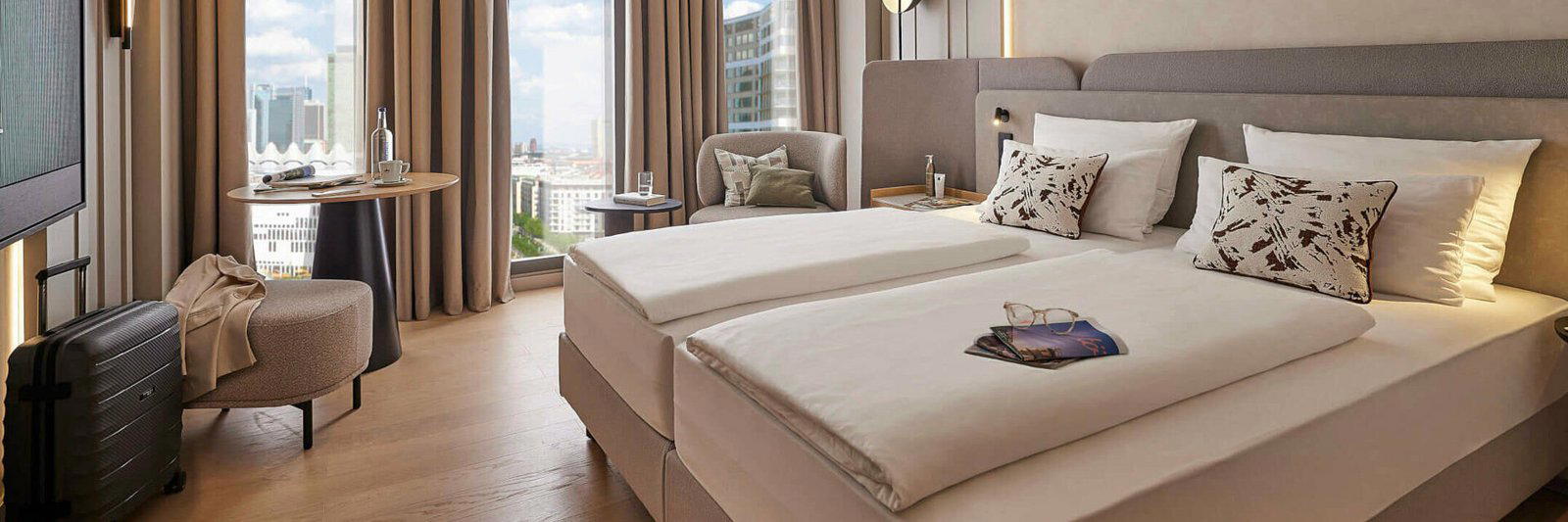
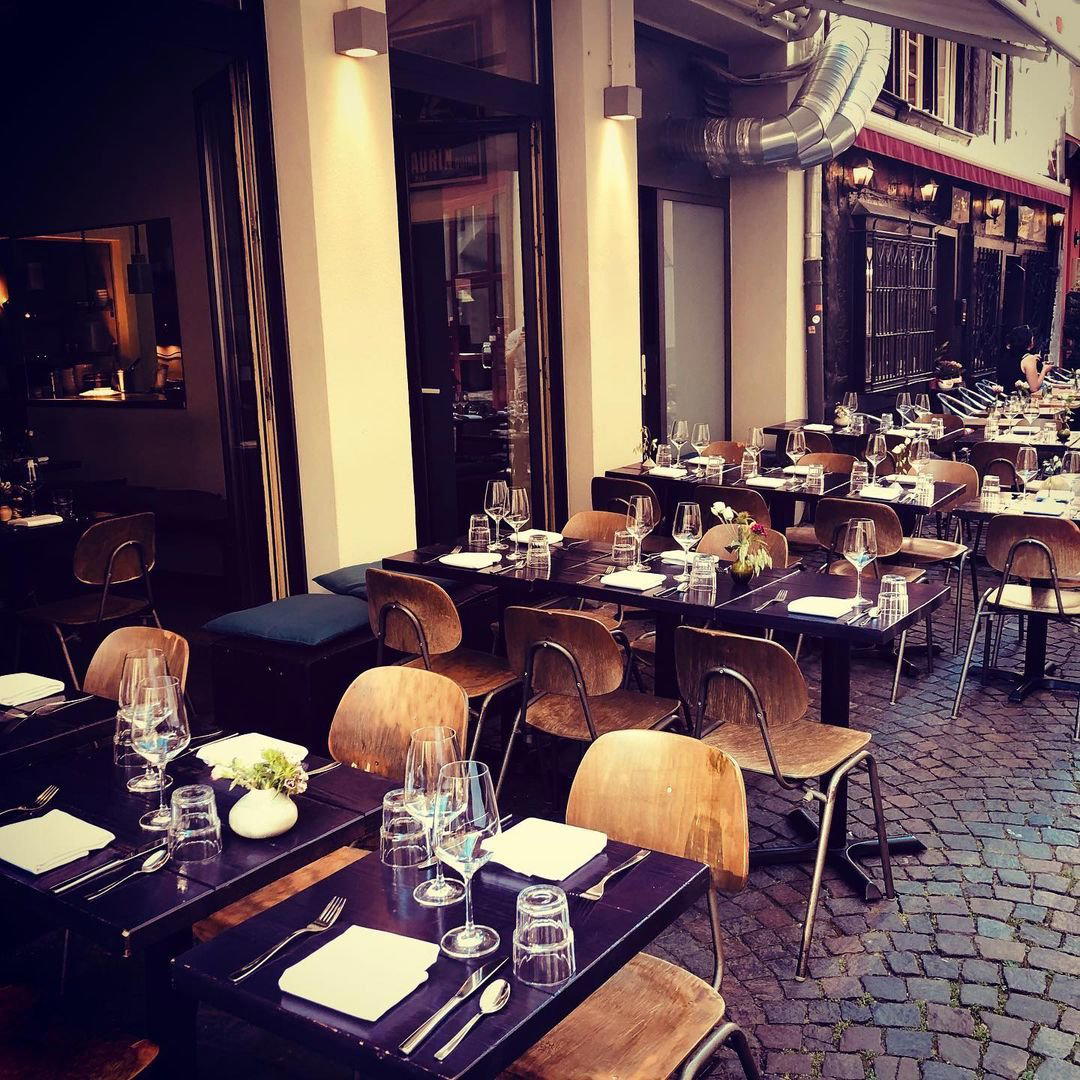
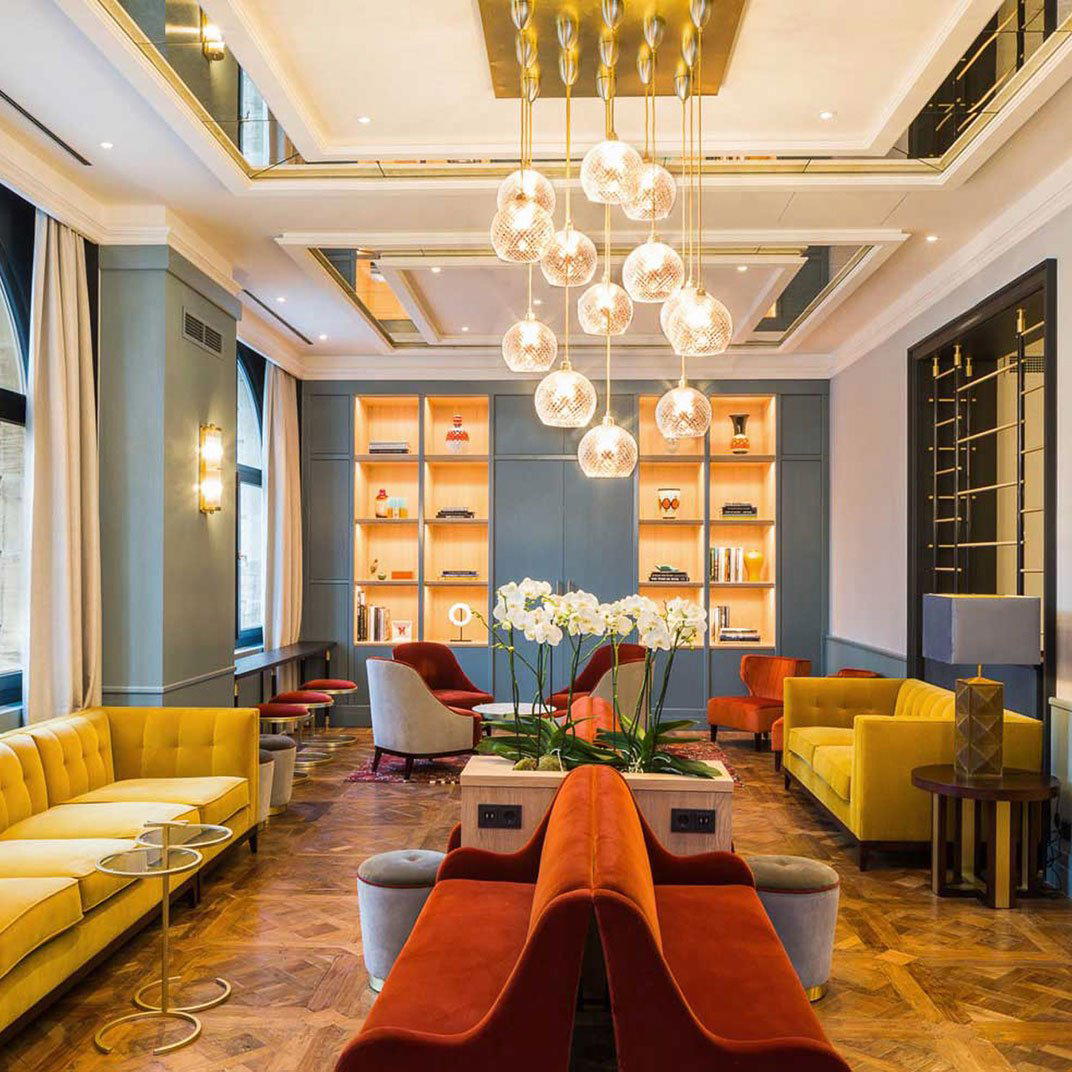
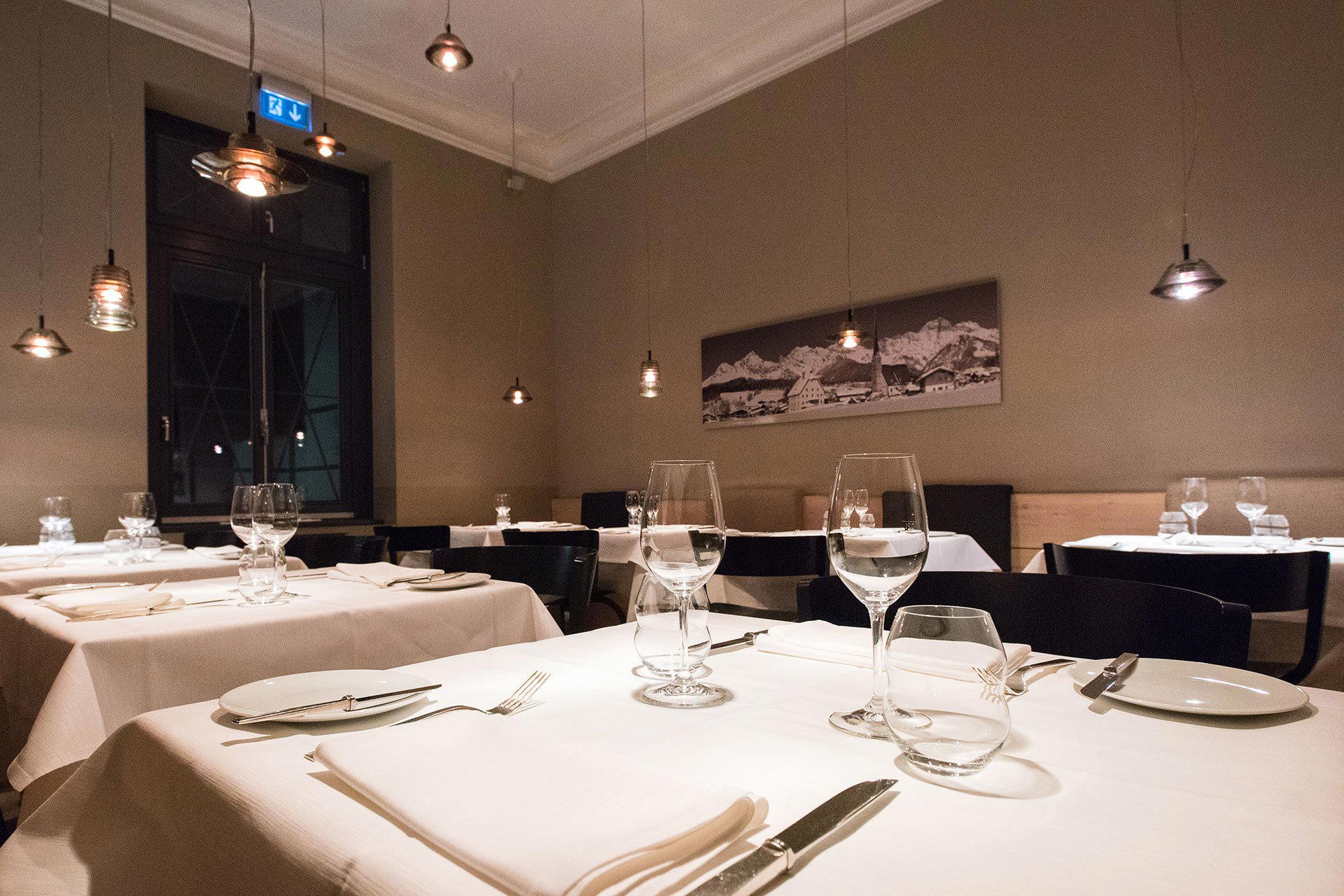
Minimalist white interiors with clean lines, high ceilings, light fabrics, skillful lighting, and a calm, reposeful atmosphere praised as an oasis of peace.