The Grand Hotel

Small Luxury Hotels of the World Member
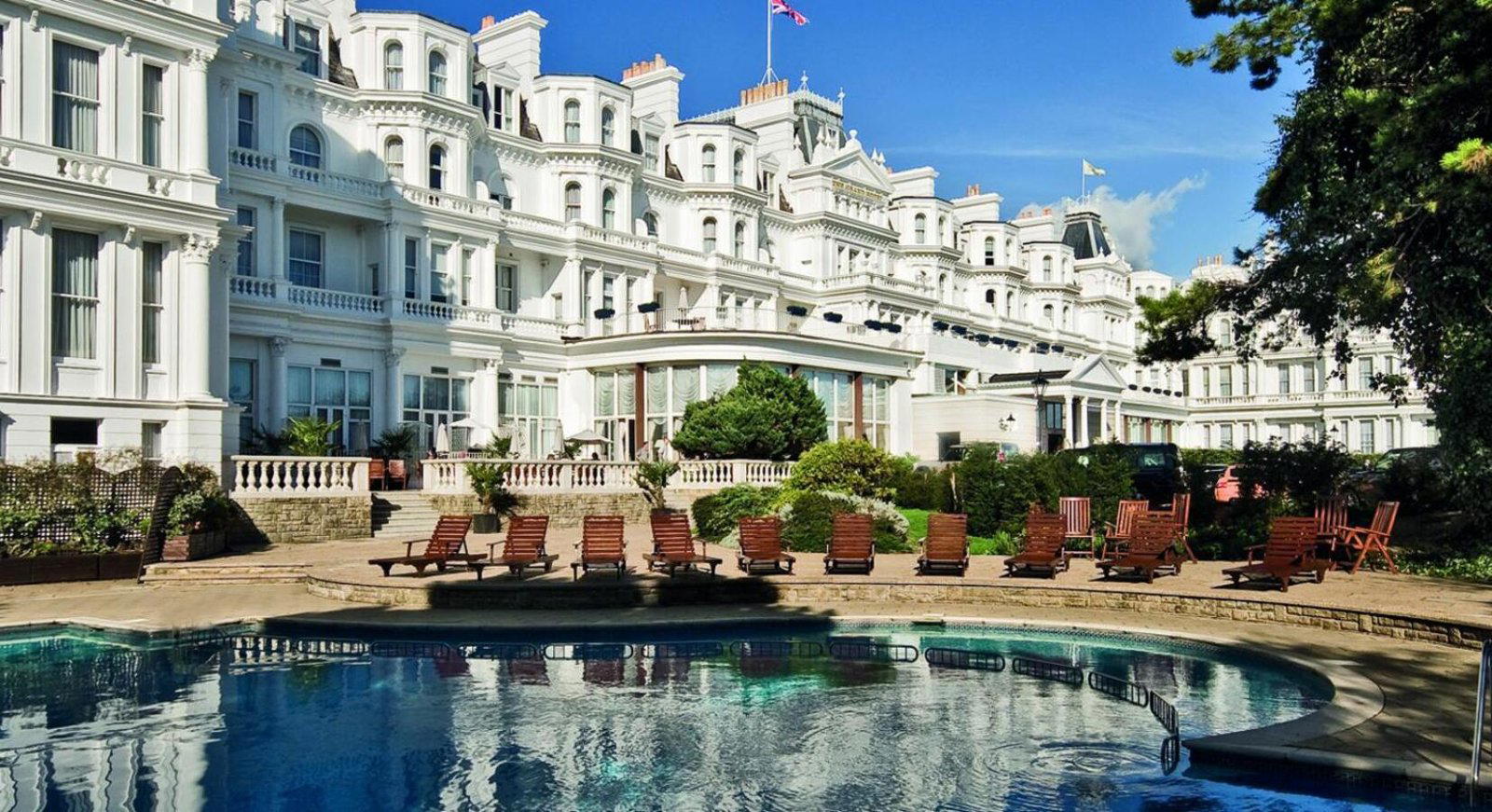
A Victorian seafront institution on King Edward's Parade, The Grand Hotel has anchored Eastbourne's upper end of the hospitality market for well over a century. The building reads as a statement of late-19th-century confidence: white stucco facade, sea-facing terraces, and a position commanding direct views across the English Channel toward the chalk cliffs of Beachy Head. Spa facilities, considered food, and a range of room and suite categories complete a proposition that sits squarely in the classic English seaside grand-hotel tradition.

Pearl is the En Primeur Club membership app, where members save venues, book tables and use the concierge.
A Seafront Address That Earns Its Formality
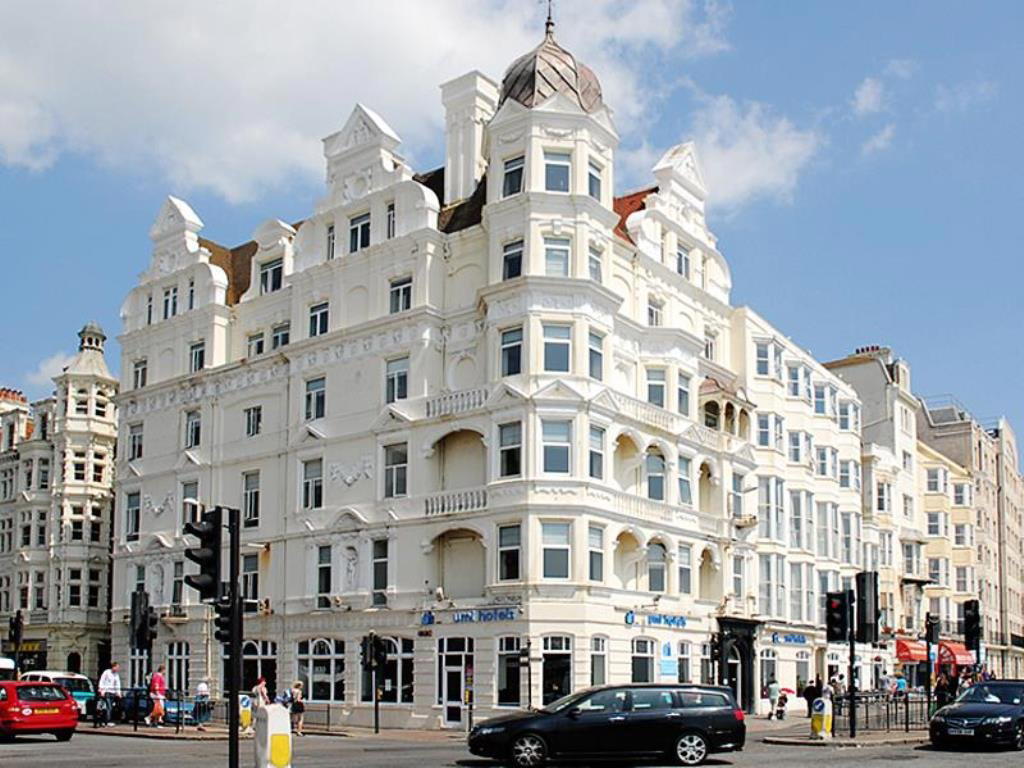
The English seaside grand hotel is a specific architectural type, and The Grand Hotel on King Edward's Parade, Eastbourne, is among its more intact surviving examples. The building's white stucco elevation faces directly onto the promenade, positioned so that both the sweep of the English Channel and the chalk mass of Beachy Head fall within the sightline from most sea-facing rooms and terraces. That relationship between building and coastline is not incidental. Victorian resort hotels were designed to frame nature rather than retreat from it, and The Grand still operates according to that logic, public rooms open toward the view, terraces are sheltered enough for actual use, and the seafront orientation governs the entire spatial sequence from arrival to room.
For context on where this sits in the broader UK coastal-hotel picture, properties of comparable Victorian provenance tend to split into two trajectories: those that have been comprehensively remodelled into boutique formats, and those that have maintained the scale and formality of the original programme. The Grand belongs to the latter group. Its proposition is the full-service, multi-amenity grand hotel rather than the intimate design-led stay. Readers drawn to the smaller, more idiosyncratic end of the market might look instead at Hell Bay Hotel in Bryher or Lifeboat Inn in St Ives. But if the category you want is a grand Victorian seafront hotel operating at the scale its architects intended, Eastbourne's offering here is substantive.
The Architecture as the Argument
The building's exterior makes its period clear without ambiguity. Late-Victorian resort architecture in Britain favoured white or cream render, strong horizontal cornicing, and repetitive bay windows designed to maximise sea views across as many rooms as possible. The Grand delivers all three, and the seafront elevation reads as a coherent composition rather than a piecemeal accumulation of additions. This matters because so many British seaside hotels of similar age have been compromised by mid-century alterations that disrupted the original massing. The King Edward's Parade frontage retains enough of its Victorian character to read as genuinely historical rather than nostalgically reconstructed.
Inside, the spatial hierarchy typical of the grand-hotel type, substantial public rooms at ground level, accommodation arranged on upper floors around circulation corridors, produces a specific kind of atmosphere. These are not spaces scaled for intimacy. The lobby, dining rooms, and bar areas carry the proportions of a building conceived when hoteliers expected guests to spend substantial time in public rooms rather than retreating immediately to private space. For travellers accustomed to smaller properties, Drakes Hotel in Brighton, for instance, or Burts Hotel in Melrose, the shift in scale takes a moment of adjustment. For those who find large-format hospitality more comfortable than constrained boutique rooms, it is precisely the point.
Rooms, Suites, and Sea Views
The room and suite categories at The Grand cover a range that allows for meaningful differentiation by budget and preference. The defining variable, as at most seafront hotels, is orientation. Sea-facing rooms and suites command the Beachy Head and Channel outlook that defines the property's position; courtyard-facing or inland rooms offer the same service infrastructure at a different price point. The terraces attached to some suite categories provide the most direct engagement with the seafront setting, sheltered enough, according to the property's own description, for practical outdoor use rather than purely ornamental balconies.
This orientation-based tiering is the consistent logic of Victorian seafront hotels, and it applies here as it does at comparable properties of the era. At Lime Wood in Lyndhurst or The Newt in Somerset, the room hierarchy is driven by proximity to landscape or garden features; at a seafront grand hotel, the Channel view performs the equivalent function. Book accordingly.
Food, Spa, and the Full-Service Model
The Grand's food offer is described as good rather than destination-level, which is an honest placement within the broader dining context. Eastbourne's food scene is covered in more depth in our full Eastbourne restaurants guide, but the hotel's dining rooms serve a function consistent with the grand-hotel model: competent, comfortable, and calibrated to guests who want a contained experience rather than one that requires leaving the building for every meal. The sheltered terraces add an outdoor option during workable weather, which on the south-facing Sussex coast means a longer season than the climate inland might suggest.
The spa facilities are positioned as a substantive part of the offer rather than an afterthought, the property's own framing lists them alongside rooms and food as a primary reason to visit. Within the UK coastal hotel category, spa investment at Victorian-era properties signals a particular kind of repositioning: away from purely seasonal leisure toward year-round wellness stays. At properties like Glen Mhor Hotel in Highland or Avon Gorge by Hotel du Vin in Bristol, comparable logic applies. The spa at The Grand positions the hotel for October to March stays as much as August.
Eastbourne and the Sussex Coast Context
Eastbourne's hotel market sits at an interesting point in the Sussex coastal hierarchy. Brighton, forty minutes west by train, draws the design-hotel and short-break crowd at higher average rates and with a more varied food and nightlife offer. Eastbourne has historically attracted a quieter demographic and a longer average stay. That character has been shifting, but The Grand's positioning, formal, full-service, seafront Victorian, aligns with the town's established identity more than with any emerging boutique wave. For travellers who find Brighton too concentrated and London fatigue real, Eastbourne offers genuine decompression, and The Grand provides the infrastructure for a stay that does not require a rental car or extensive local knowledge to navigate.
The proximity to the South Downs National Park and the Seven Sisters chalk cliffs means that walking access to serious landscape is available directly from the seafront. The cliffs at Beachy Head are within reach on foot from the hotel's position on King Edward's Parade. That combination of formal hotel infrastructure and immediate access to coastal walking country is the specific case for Eastbourne over other Sussex options.
Planning a Stay
The Grand Hotel is on King Edward's Parade, Eastbourne BN21 4EQ, directly on the seafront promenade. Eastbourne railway station is served by regular Southern services from London Victoria, with the journey taking approximately ninety minutes. The seafront position means the hotel is accessible on foot from the station in around twenty minutes, or by taxi in a few minutes. For those arriving by car, the seafront location provides clear navigation. The hotel's room and suite range, spa, sheltered terraces, and dining rooms make it a workable base for stays of two nights or more. Booking directly via the hotel's own channels is advisable for suite categories, which are likely to move faster during summer and bank holiday weekends. Those comparing options in the broader UK coastal and country-house segment might also consider Babington House in Kilmersdon, Estelle Manor in North Leigh, or, for a different register entirely, Claridge's in London.
Comparable Venues
Comparable venues nearby, for context on price, style, and recognition.
| Venue | Cuisine | Price | Awards | Notes |
|---|---|---|---|---|
| The Grand HotelThis venue (the venue you are viewing) | Victorian seaside grandeur with modern luxury amenities | $200–300 | Small Luxury Hotels of the World Member | Not listed |
| Rusacks St Andrews | Historic Victorian golf hotel with modern renovation | $200–300 | Michelin Selected | Pilmour Links |
| The Pelham London - Starhotels Collezione | luxury boutique townhouse | $200–300 | Michelin Selected · Preferred Hotels Member | South Kensington |
| Andaz London Liverpool Street, by Hyatt | Historic Victorian railway hotel with modern lifestyle twists | Not listed | 5-Star | Broadgate |
| The Newman | Contemporary Art Deco with bohemian influences, blending Fitzrovia's cultural heritage with modern luxury design. | $300–500 | 1 Michelin Key · Mr & Mrs Smith Seal of Approval | Fitzrovia |
| St Martins Lane Hotel | Urban resort with Philippe Starck's irreverent design updated by Tim Andreas. | Not listed | Michelin Selected | Covent Garden |
Recognition history
Dated appearances from independent guides and award organizations, with the underlying list record or original source where available.
Small Luxury Hotels of the World Member
Small Luxury Hotels of the World
Continue exploring
More in Eastbourne
Hotels in Eastbourne
All hotels in Eastbourne →
Bars in Eastbourne
Browse all →
Restaurants in Eastbourne
All restaurants in Eastbourne →

Details
- Elegant
- Classic
- Ornate
- Sophisticated
- Romantic Getaway
- Family Vacation
- Anniversary
- Weekend Escape
- Beachfront
- Historic Building
- Panoramic View
- Pool
- Spa
- Fitness Center
- Room Service
- Concierge
- Wi Fi
- Restaurant
- Bar
- EV Charging
- Waterfront
- Wheelchair Accessible
- Elevator
- Step Free Entrance
- Accessible Parking
Grand Victorian atmosphere with spacious lounges, elegant dining rooms, and a sense of timeless luxury as described in guest reviews.