The Crown
On All Saints' Street in Hastings Old Town, The Crown occupies a stretch of the East Sussex coast where the fishing fleet still lands daily and the surrounding Weald supplies much of what reaches the plate. The pub sits within a neighbourhood that has become a reference point for serious, ingredient-led cooking at prices that sit well below the county's Michelin-starred tier.
Pearl is the En Primeur Club membership app — saves, bookings, and concierge access live there. Same editors, same standards.
- Address
- 64-66 All Saints' St, Hastings TN34 3BN, United Kingdom
- Phone
- +441424465100
- Website
- thecrownhastings.co.uk
 Saves & bookings on Pearl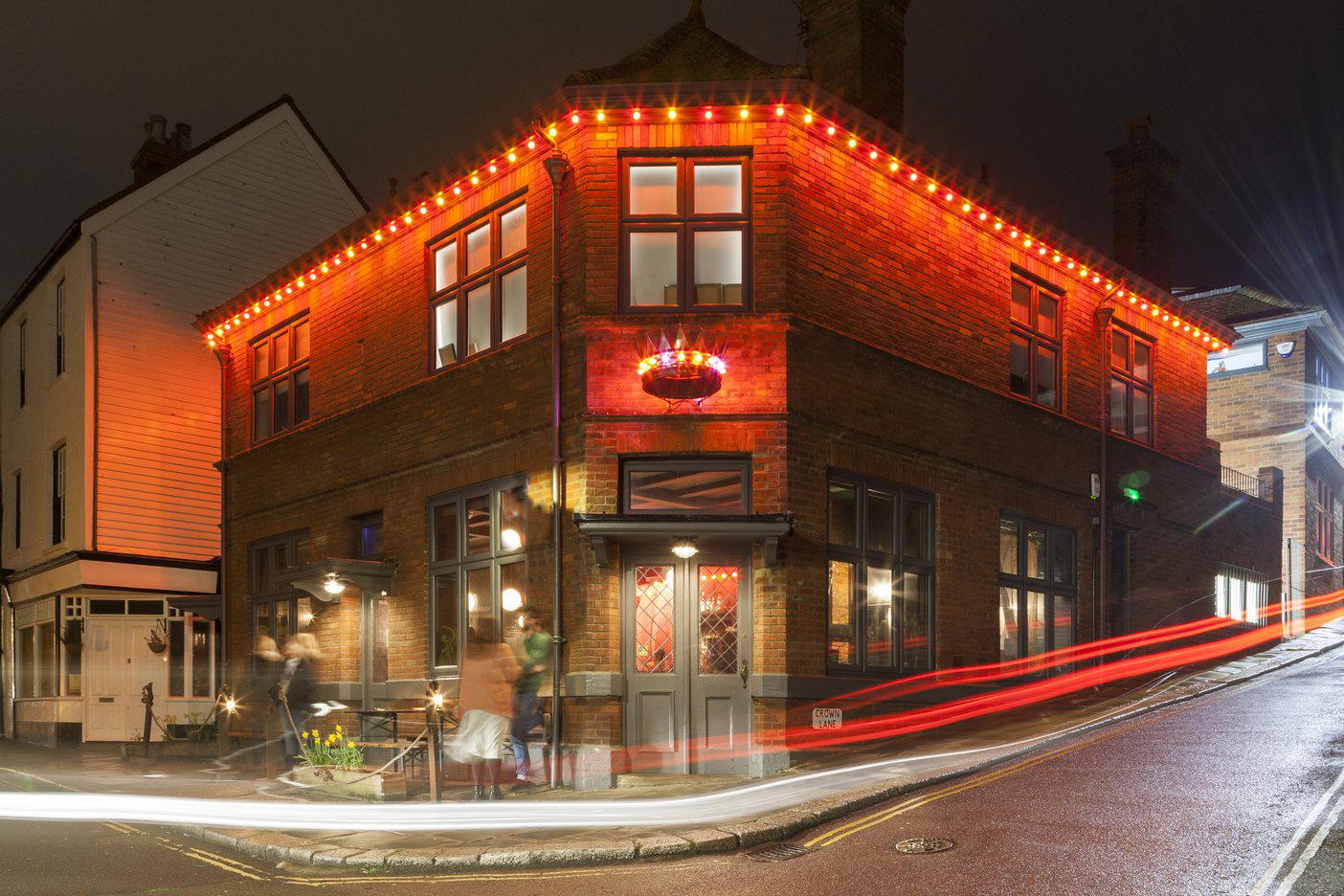
Where the Old Town Meets the Plate
All Saints' Street runs through the spine of Hastings Old Town, a neighbourhood of tall net shops, working fishing boats, and independent traders that has attracted a particular kind of food business over the past decade: one that treats proximity to raw ingredients as an argument in itself. The Crown sits at 64 to 66 on that street, in a building that reads as a traditional East Sussex pub from the outside but operates with a more deliberate relationship to sourcing than the façade suggests. Approaching from the seafront, you pass the beach-launched fishing fleet that supplies a significant portion of the town's restaurant trade; that context is not incidental to what The Crown does.
The Old Town's food scene has developed quietly, without the institutional backing or destination-dining infrastructure that places like Bray or Cartmel carry. Where Waterside Inn in Bray or L'Enclume in Cartmel operate within an established fine-dining gravity, Hastings has built its reputation from the ground up, using the East Sussex coast and the High Weald as the primary argument. The Crown belongs to that tradition.
The Ingredient Case for Hastings
Few stretches of English coastline make the sourcing argument as directly as Hastings. The town operates one of the largest beach-launched fishing fleets in Europe, landing species that vary by season and sea conditions: Dover sole, skate, sea bass, cuttlefish, and mackerel are among the regulars. The supply chain between boat and kitchen here is compressed in a way that coastal restaurants in more developed resort towns cannot replicate, because the fleet lands directly onto the beach rather than into a centralised wholesale port.
This matters for how kitchens in the Old Town compose their menus. Restaurants in this neighbourhood, including neighbours like Rock A Nore Kitchen and Lury, build around what the fleet delivers rather than ordering to a fixed specification. The Crown operates within the same logic. That approach produces menus that shift with genuine frequency, reflecting tidal, seasonal, and weather-driven realities rather than a quarterly menu refresh.
Inland, the High Weald provides the other half of the sourcing picture. Small farms and producers across East Sussex supply a county-level food economy that connects to Hastings' kitchens directly. The contrast with how ingredient-led restaurants in London operate is instructive: venues like CORE by Clare Smyth in London source from similarly committed producers but do so across longer, more complex supply lines. The proximity advantage that Old Town Hastings kitchens carry is structural, not aspirational.
Atmosphere and Format
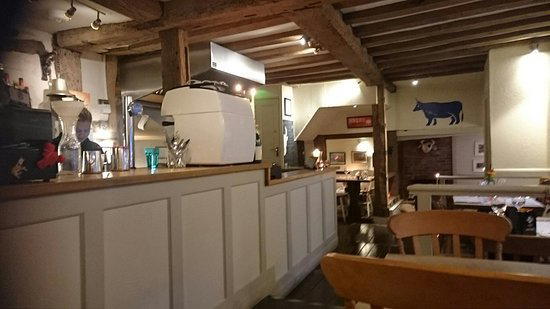
The Crown reads as a pub in format and feeling, which places it in a different register from Hastings' more explicitly restaurant-format operators. The interior retains the character of a working local: the kind of space where the distinction between a proper drink and a serious plate of food is deliberately blurred. That format has particular currency in a neighbourhood where the clientele includes both long-standing residents and visitors arriving specifically for the food scene, and the pub model accommodates both without hierarchising either.
Across British coastal towns, this hybrid format has proved durable. The model sits at some distance from the country-house dining room approach of Gidleigh Park in Chagford or the formal tasting menus of Midsummer House in Cambridge, and that distance is part of the point. The Crown's register is lower in ceremony, which allows the ingredients to make the argument without the scaffolding of fine-dining theatre.
Hastings in the Broader British Context
The emergence of Hastings as a credible destination for ingredient-focused eating is part of a wider shift in British coastal dining. The towns that have built the most convincing food identities in recent years are not those that have imported fine-dining formats from London, but those with genuine production assets: a working fleet, a productive agricultural hinterland, a network of small producers with direct supply relationships. Hastings carries those assets in concentration.
Comparison set for serious British restaurant cooking skews toward cities and established destination villages. Opheem in Birmingham, Restaurant Sat Bains in Nottingham, and Moor Hall in Aughton represent the institutional end of that spectrum. hide and fox in Saltwood, sitting further along the Kent and East Sussex coast, is a closer geographic peer and operates at a higher formal register. The Crown sits outside that Michelin-tracked tier, which is not a limitation so much as a positioning: the pub format and the price point it implies serve a different function in the regional food ecosystem.
The argument The Crown and its neighbours make is a more direct one: the sea is visible from the street, and the boats that supplied the kitchen yesterday are visible from the beach today.
Planning a Visit
Hastings is served by direct rail from London Charing Cross and London Bridge, with journey times typically in the range of one hour forty minutes to just under two hours. The Old Town is walkable from Hastings station in approximately fifteen to twenty minutes, or a short taxi ride. The Crown is at 64 to 66 All Saints' Street, which sits in the heart of the Old Town's food and pub cluster.
Quick Comparison
Comparable venues nearby, for context on price, style, and recognition.
| Venue | Cuisine | Price | Awards | Notes |
|---|---|---|---|---|
| The CrownThis venue — the venue you are viewing | Modern British Gastropub | $$ | , | |
| Lury | Modern British-Sri Lankan Tasting Menu | $$$ | Michelin Plate | Hastings Town Centre |
| Rock A Nore Kitchen | Fresh Local Seafood | $$ | Hastings Old Town | |
| The Crown | pub | $$ | Old Town | |
| Esters | Modern British Brunch Cafe | $$ | , | Stoke Newington |
| Newman Arms | British Pie Pub | $$ | , | Fitzrovia |
Continue exploring
More in Hastings
Restaurants in Hastings
Browse all →

Bars in Hastings
Browse all →
Hotels in Hastings
Browse all →
Wineries in Hastings
Browse all →
At a Glance
- Cozy
- Lively
- Rustic
- Casual Hangout
- After Work
- Historic Building
- Beer Program
- Local Sourcing
- Street Scene
Cosy interior with amazing cut flowers, homely feel from local art exhibitions, warm and friendly pub atmosphere.