



Michelin Guide New Hotels New Hotel · Michelin Selected · Mr & Mrs Smith Seal of Approval
The Anam Mui Ne brings Small Luxury Hotels of the World affiliation to Vietnam's Binh Thuan coastline, making it the only SLH member in the country. Its 127 rooms channel colonial Indochine design through local artisanal materials, antique-style tiling, and canvases by Vietnamese artists. The property sits directly on Mui Ne's honey-toned shoreline, positioned as the reference point for heritage-inflected luxury in this part of the country.

Pearl is the En Primeur Club membership app — saves, bookings, and concierge access live there. Same editors, same standards.
- Address
- 18 Nguyễn Đình Chiểu, Phường Hàm Tiến, Thành phố Phan Thiết, Bình Thuận 77000
- Phone
- +84 252 6284 868
- Website
- theanam.com
- Directions
- Get directions
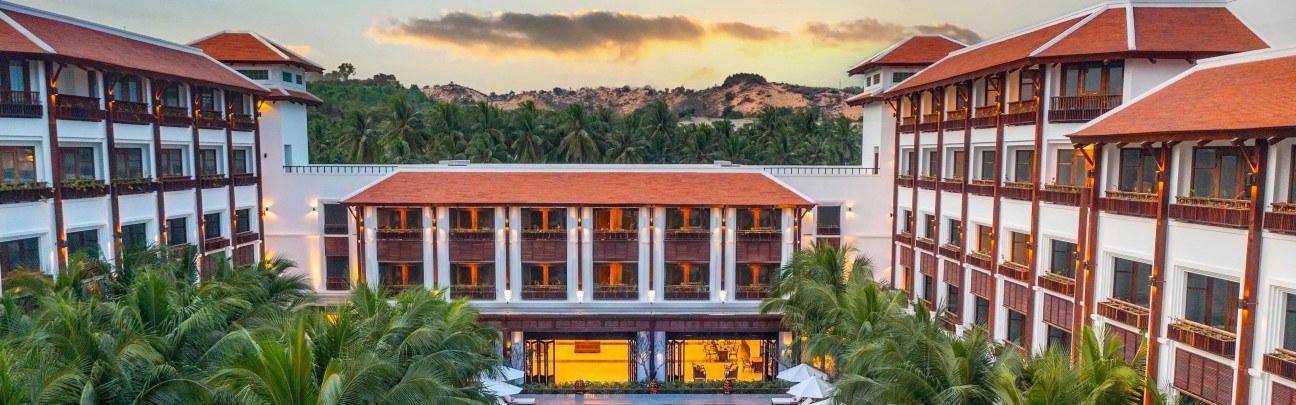
Where the Indochine Aesthetic Meets the East Sea
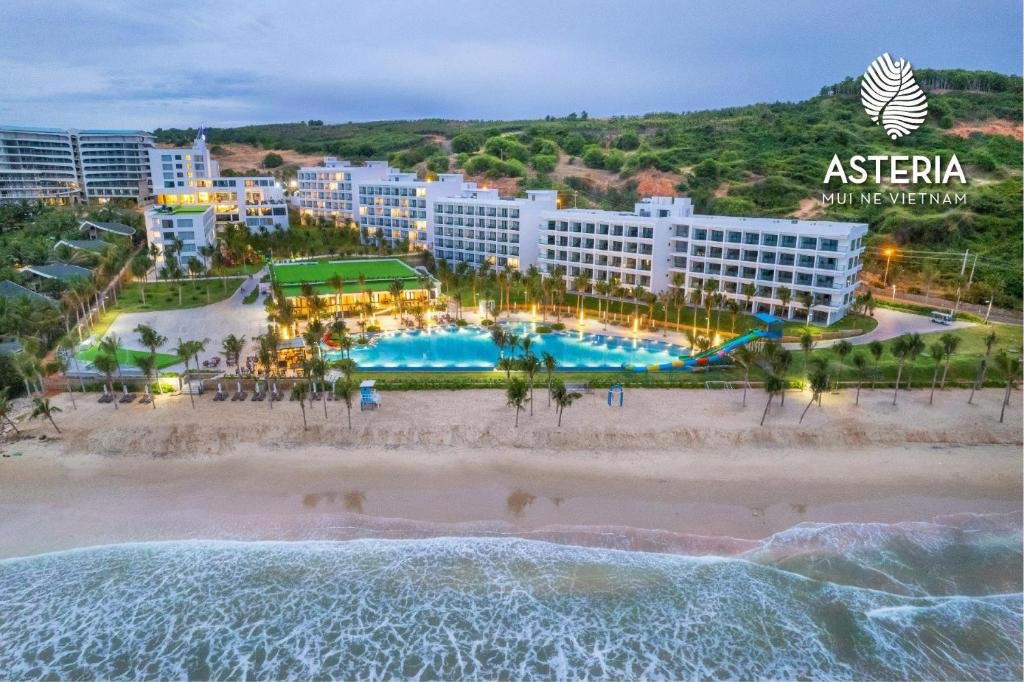
Mui Ne's coastline has long drawn a particular kind of traveler: those who want coast without the resort-city infrastructure of Da Nang, or the island-package crowds of Phu Quoc. The strip along Nguyễn Đình Chiểu runs south to north, flanked by casuarina trees and the copper-toned dunes that give this stretch its name. Within that corridor, the design register of most properties skews toward either bare-bones surf-town simplicity or mid-market internationalism. Asteria Mui Ne Resort represents the mid-tier well enough, but The Anam Mui Ne operates on a different premise: that colonial Indochine aesthetics, executed with local craft materials, can hold its own in the premium segment without importing a foreign design language.
Approaching the property from the coast road, the first impression is of density and shade. Mature tropical planting screens the entry sequence, with dense green foliage pulling the eye away from the streetscape before the architecture comes into full view. The resort cascades toward the water in a way that keeps the sea as the terminal point of nearly every sightline. That relationship between built structure and shoreline is deliberate, and it defines the spatial logic of the whole property.
The Design Argument: Colonial Reference Without Pastiche
The Indochine revival is a recurring mode in Vietnamese luxury hospitality. Properties from Hue to Hanoi have drawn on French colonial forms, and the results vary widely between credible reinterpretation and surface-level theming. At The Anam Mui Ne, the commitment to materiality is what separates the approach from the latter category. The design uses customized antique-style tiling, natural color palettes calibrated to the surrounding landscape, and a material palette drawn from Vietnamese and regional artisanal traditions rather than imported finishes.
This places the property in a lineage that includes Azerai La Residence in Hue and the colonial-heritage mode practiced at Dalat Palace Heritage Hotel, though the Mui Ne property's coastal orientation gives it a different atmospheric register. Where Hue's La Residence reads as riverine and urban, The Anam Mui Ne is coastal and garden-heavy, with the interplay of salt air, lush grounds, and warm interior tones creating a coherent sensory argument for the style. Paintings by local Vietnamese artists appear throughout the property, functioning not as decorative filler but as a deliberate curatorial position: that scenes of Vietnamese daily life, rendered by Vietnamese hands, belong in a Vietnamese luxury context.
The 127 rooms and suites are framed by the property as evoking warmth and luxury from a previous era. That framing only works when the physical details back it up, and the antique-referencing tilework and natural palette choices do carry the concept across public and private spaces alike. In Vietnamese coastal luxury, where the design conversation more often defaults to modernist minimalism (see the crystalline geometry of Amanoi in Vinh Hy), a property staking its identity on craft-forward heritage aesthetics occupies a distinct and smaller niche.
Affiliation and Positioning
The Anam Mui Ne holds affiliation with Small Luxury Hotels of the World, and its venue data identifies it as the only SLH member in Vietnam. That credential matters in practical terms: SLH membership requires properties to meet defined standards around independence, quality, and scale, and it places The Anam Mui Ne in a global booking and loyalty ecosystem used by travelers who actively seek owner-operated or character-led properties over branded chain inventory. The competitive set, in SLH terms, runs internationally rather than just regionally, which is a different positioning calculus than a property competing solely within the Vietnamese luxury tier.
Within Vietnam, the luxury resort field includes properties with considerably larger international backing: Four Seasons Resort The Nam Hai in Hoi An, InterContinental Phu Quoc Long Beach Resort, and Banyan Tree Lăng Cô all operate within major international groups. The Anam's SLH affiliation positions it explicitly outside that category, toward travelers for whom independence and design specificity carry more weight than global points programs.
Activity and Wellness Programming
Mui Ne's physical environment supports a particular activity mix that the property draws on directly. The coastline is internationally recognized among windsurfers and kitesurfers, with the consistent trade winds between November and April generating conditions that attract serious practitioners. Water sports infrastructure is part of the property's offer. Beyond that, the wellness programming falls into the mind-body category common to premium Vietnamese resort formats, where properties like Almanity Hoi An Wellness Resort and Amiana Resort Nha Trang have made integrated wellness their primary editorial identity. At The Anam Mui Ne, wellness sits alongside rather than above the broader resort offer.
The property also positions itself explicitly as multi-generational, with a kids' club in the mix and an activity range that spans adrenaline and contemplation. That breadth is a deliberate commercial decision: Mui Ne is close enough to Ho Chi Minh City (approximately 200 kilometres, or a four-to-five-hour drive depending on route) to function as a long-weekend destination for family groups, not just as an international leisure draw. Comparing with coastal alternatives accessed from Saigon, including Ixora Ho Tram by Fusion to the south, Mui Ne's kite-surfing reputation and the dune landscapes of Bình Thuận give it a distinct character that Ho Tram's jungle-coast setting doesn't replicate.
Planning Your Stay
The property sits at 18 Nguyễn Đình Chiểu in the Hàm Tiến area of Phan Thiết, which is the administrative center for Mui Ne. The most practical access from Ho Chi Minh City is by private car or hired driver, with train services to Phan Thiết also available on the recently extended rail line. Mui Ne's peak wind season, from November through April, delivers the leading kite and windsurf conditions but also the most competitive room availability across the strip. Travelers prioritizing calm sea swimming over wind sports may prefer the shoulder months. For a broader orientation to the destination before arrival, our full Mui Ne restaurants guide covers the dining corridor along Nguyễn Đình Chiểu in detail. Travelers building a wider Vietnam itinerary might also consider pairing Mui Ne with heritage-city properties: Indochine Palace in Hue and Hotel de la Coupole in Sapa both operate in the colonial-influenced design register that The Anam Mui Ne represents on the coast. For travelers using Vietnam as part of a longer Asia Pacific circuit, reference properties in the broader SLH-adjacent premium independent tier include Amanaki Saigon Boutique Hotel for urban contrast. At the global independent luxury end, Aman Venice and Aman New York represent the design-led, small-footprint model that The Anam Mui Ne channels, with different scale and geography.
A Quick Peer Check
Comparable venues nearby, for context on price, style, and recognition.
| Venue | Cuisine | Price | Awards | Notes |
|---|---|---|---|---|
| The Anam Mui NeThis venue — the venue you are viewing | Indochine-inspired luxury resort | Not listed | Michelin Guide New Hotels New Hotel · Michelin Selected | Not listed |
| Premier Village Phu Quoc | Luxury villa resort blending modern simplicity with natural tropical environment | Not listed | Michelin Selected · World Travel Awards | Ong Doi Cape |
| The Myst Dong Khoi Hotel | Contemporary luxury boutique hotel curated by Silverland Hospitality, merging vintage Vietnamese design elements with modern minimalist aesthetics. | $100–200 | Michelin Selected · World Luxury Hotel Awards WLHA Country Winner | Quan 1 |
| DALAT PALACE HERITAGE HOTEL | French colonial heritage property with Art Deco architecture | $100–200 | World Luxury Hotel Awards WLHA Regional Winner | Dalat City Center |
| Hilton Saigon | Modern full-service urban hotel on the Saigon River. | Not listed | World Luxury Hotel Awards WLHA Regional Winner | Quan 1 |
| The Grand Ho Tram | Integrated luxury resort complex combining contemporary design with tropical elegance, featuring both InterContinental and Holiday Inn properties. | $200–300 | Forbes Recommended | Xuyen Moc District, Ba Ria-Vung Tau Province |
Recognition history
Dated appearances from independent guides and award organizations, with the underlying list record or original source where available.
Michelin Guide New Hotels New Hotel
Michelin Guide New Hotels
Michelin Selected
Michelin
Mr & Mrs Smith Seal of Approval
Mr & Mrs Smith
Virtuoso Luxury Hotel Partner
Virtuoso
Small Luxury Hotels of the World Member
Small Luxury Hotels of the World
Continue exploring
More in Mui Ne
Hotels in Mui Ne
Browse all →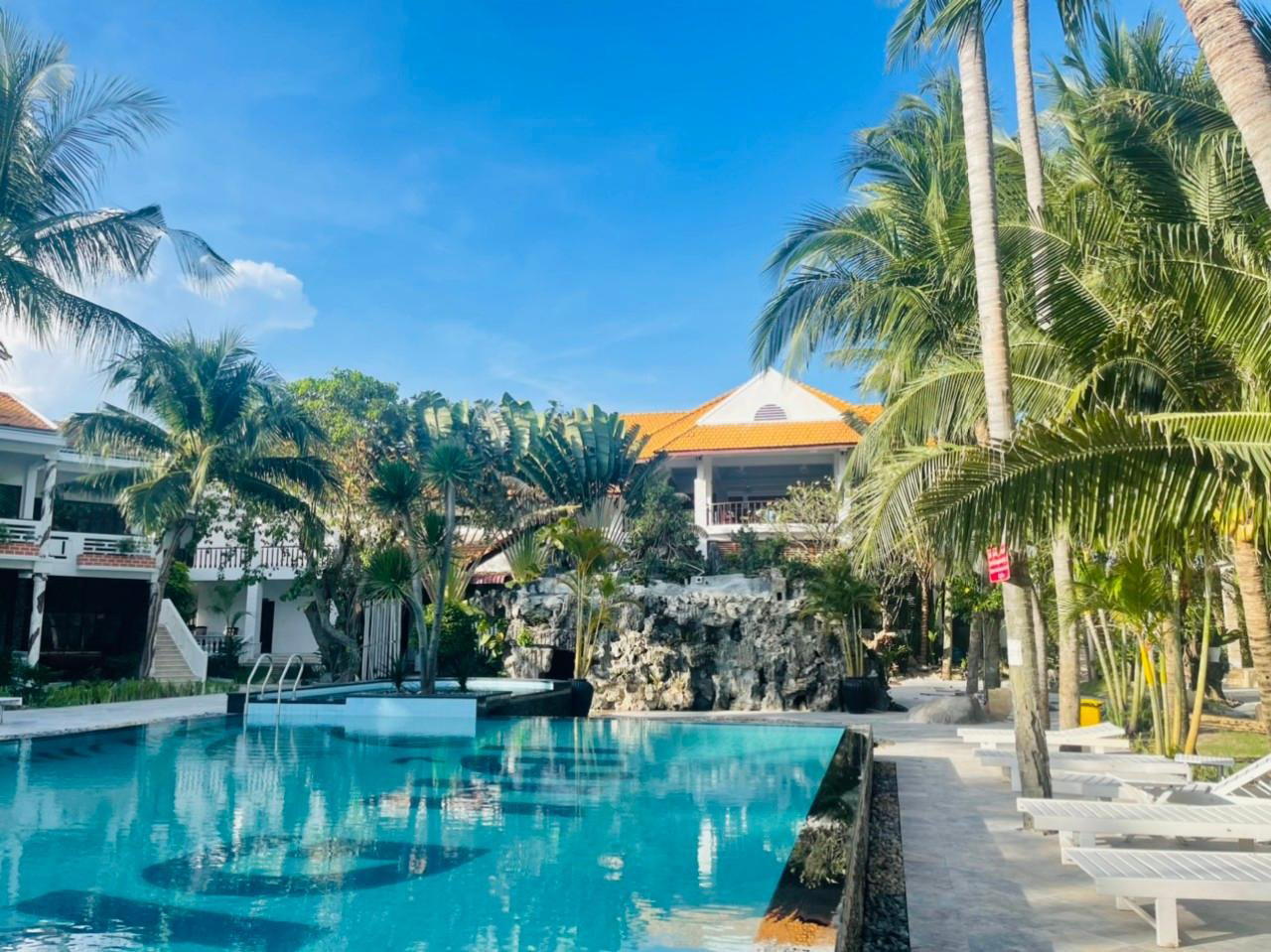

Details
- Elegant
- Scenic
- Sophisticated
- Romantic
- Quiet
- Honeymoon
- Romantic Getaway
- Family Vacation
- Anniversary
- Beachfront
- Infinity Pool
- Panoramic View
- Wi Fi
- Pool
- Spa
- Fitness Center
- Room Service
- Concierge
- Kids Club
- Beach Access
- Waterfront
- Garden
- Wheelchair Accessible
- Elevator
- Accessible Parking
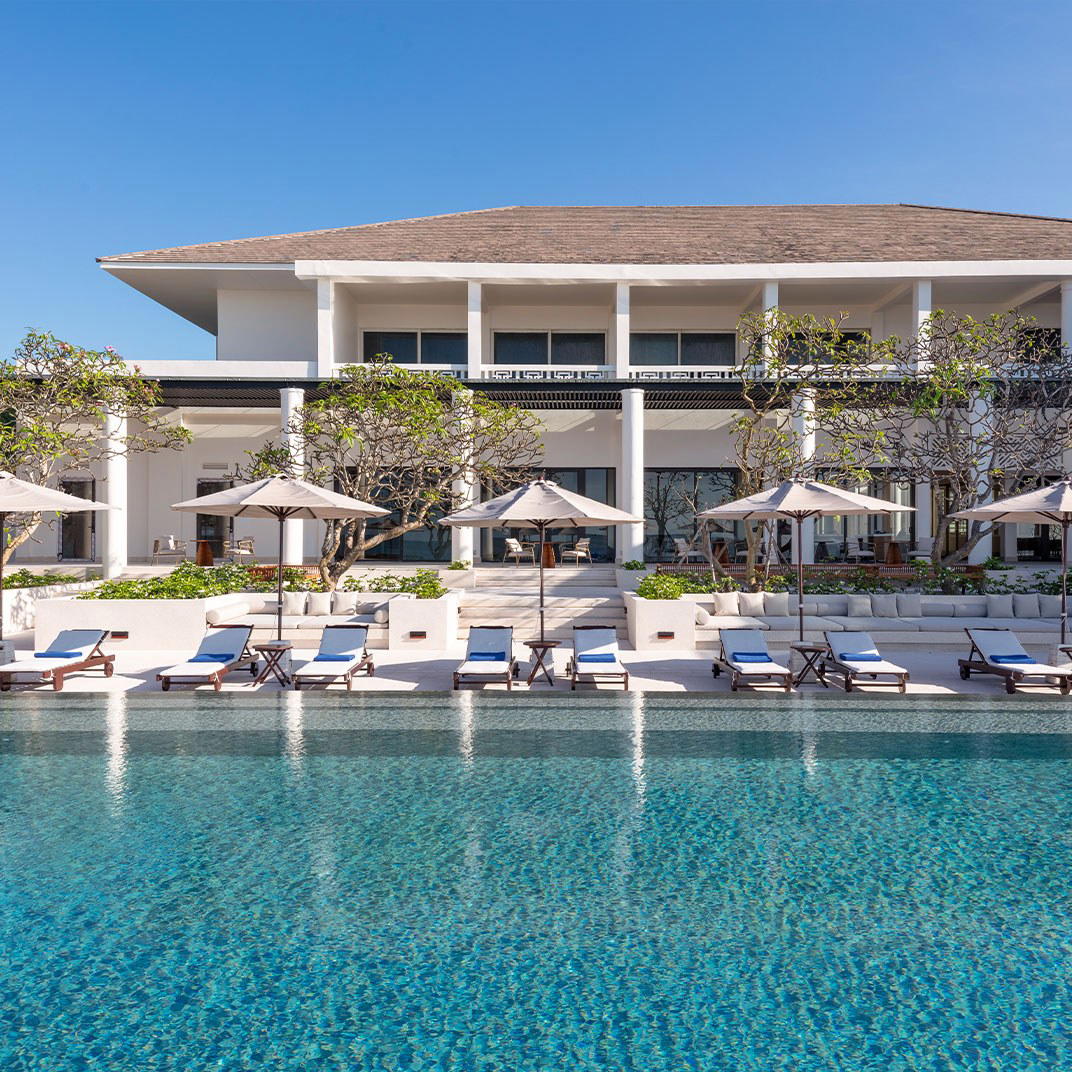
Serene and elegant with warmly glowing lanterns, bespoke furnishings, handcrafted details, and a tranquil beachfront atmosphere praised for relaxation.