Asteria Mui Ne Resort

World Luxury Hotel Awards WLHA Regional Winner
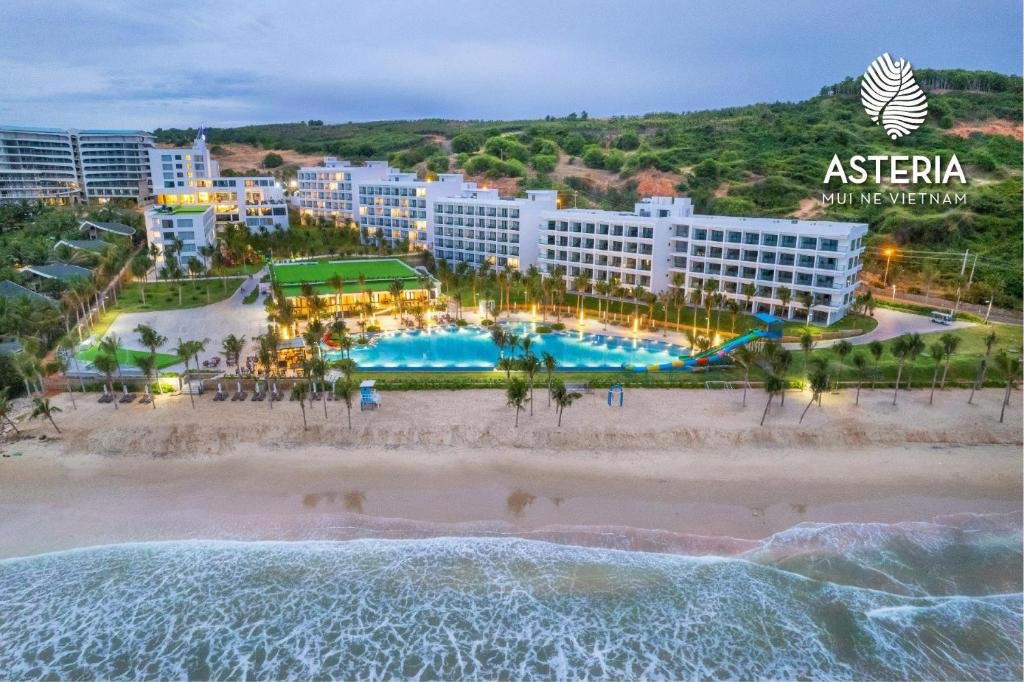
Asteria Mui Ne Resort sits on the South China Sea coast of Phan Thiet, holding three international Luxury Lifestyle Awards across family, resort, and all-inclusive categories. The property positions itself at the upper end of Mui Ne's resort market, where coastal design, inclusive programming, and family-oriented infrastructure converge in a stretch of shoreline that remains quieter than Vietnam's more crowded beach destinations.

Pearl is the En Primeur Club membership app, where members save venues, book tables and use the concierge.
Where Mui Ne's Coastline Earns Its Credentials
Phan Thiet occupies an unusual position in Vietnam's resort geography. It sits close enough to Ho Chi Minh City, roughly 200 kilometres northeast, to function as a long-weekend destination for southern Vietnam's urban travellers, yet far enough removed from the well-worn Danang-Hoi An corridor to maintain a pace that the central coast's premium belt has largely lost. The coastline here is windier and drier than Nha Trang or Phu Quoc, shaped by trade winds that have made Mui Ne one of Southeast Asia's more established kitesurfing destinations. That same climate informs the architecture of the resorts that line Xuan Thuy Road: wide-eaved, open-sided structures built for airflow rather than the sealed, air-conditioned envelopes common further north.
Asteria Mui Ne Resort sits on this stretch of Xuan Thuy Road in Khu Pho 5, Phan Thiet, and its awards record positions it at a specific tier within the local market. The property holds three international recognitions from the Luxury Lifestyle Awards: Regional Winner for Luxury Lifestyle Resort, Global Winner for Luxury Family Resort, and Country Winner for Luxury All-Inclusive Resort. That combination of regional, global, and country-level recognition across three distinct categories is not common among Mui Ne properties, and it signals a competitive positioning that extends well beyond the provincial resort circuit.
The Architecture of an All-Inclusive Coastal Property
Vietnam's premium coastal resort market has increasingly split into two design philosophies. One group, properties like Amanoi in Vinh Hy, Anantara Quy Nhon Villas in Quy Nhon, and Banyan Tree Lang Co, pursues small-footprint intimacy, with design languages drawn from local materials and low key-counts. The other group builds for breadth: larger grounds, layered amenity sets, and programming structures designed to keep guests on-property across multiple days. Asteria Mui Ne belongs to the second category, and its all-inclusive designation reflects a design philosophy that treats the property as a contained environment rather than a base for outward exploration.
Coastal resort architecture in this tier typically organises itself around a progression from arrival to shoreline, with public amenities, pools, dining, entertainment, positioned as connective tissue between accommodation zones and the beach. In Mui Ne, where the wind off the South China Sea is a constant presence, this organisation acquires a particular logic: covered walkways, sheltered dining terraces, and pools oriented to capture afternoon light while deflecting the afternoon gusts that come in off the water. These are design responses to a specific microclimate, not decorative choices, and they tend to distinguish properties that were planned for this coast from those that replicated a generic tropical resort template.
For families specifically, the spatial calculus of a resort changes in ways that test architectural coherence. Children's facilities, water features, and supervised activity areas need to sit within sight lines of adult-oriented spaces without collapsing the separation between them. The Luxury Family Resort recognition from the Luxury Lifestyle Awards points to a property that has resolved this tension at a level that registers on an international evaluation framework. Compare this with the approach taken at larger-footprint regional properties such as the InterContinental Phu Quoc Long Beach Resort, where scale allows near-complete functional separation; at Mui Ne's more compact site, achieving the same result requires tighter design discipline.
Phan Thiet in the Context of Vietnam's Coastal Tier
Vietnam's premium beach market is stratified more clearly than it might appear. Phu Quoc anchors the western island segment and has absorbed significant international brand investment in the past decade. The central coast, Danang, Hoi An, Lang Co, carries the weight of international recognition and conference-circuit infrastructure, with properties like the Four Seasons Resort The Nam Hai and Hoiana Hotel and Suites competing at a global rather than regional benchmark. Nha Trang operates as a mid-market volume destination with pockets of higher-end product, visible in properties like Amiana Resort Nha Trang.
Phan Thiet and Mui Ne sit outside all of these tiers. They serve a southern Vietnamese domestic market and an international visitor mix that tends toward Ho Chi Minh City-based expats and regional Southeast Asian travellers rather than the European long-haul segment that fills the central coast's premium rooms. This market reality shapes what a resort here needs to deliver: reliability, genuine all-inclusive value, and family-proof design over the status-signalling that drives decision-making further up the coast. Asteria Mui Ne's award set, particularly the global family resort recognition, suggests it has built a product calibrated precisely to those demands.
For travellers approaching Phan Thiet from Ho Chi Minh City, the standard route runs northeast along National Route 1A, with the journey taking approximately three to four hours by road. Alternative access via Tan Son Nhat International Airport to a resort-arranged transfer is the most common approach for international arrivals. Given the all-inclusive format, planning entry and exit logistics in advance, and aligning arrival time with check-in to maximise the first day on property, is direct operational sense.
Placing Asteria in the Regional Picture
Within Mui Ne itself, the accommodation market spans a wide range, from budget guesthouses along the fisher village strip to the handful of properties that genuinely compete on a regional scale. Ravenala Boutique Resort represents the design-led, smaller-footprint end of the local premium market; Asteria occupies the broader-footprint, amenity-layered end. These are not competing for the same traveller. The boutique segment suits couples and solo travellers prioritising atmosphere and neighbourhood access; the resort segment suits families and groups for whom contained programming and inclusive pricing reduce friction across a multi-day stay.
The all-inclusive model itself deserves a word of context. In Southeast Asia, this format has historically skewed toward lower-price-point properties where the inclusive wrapper substitutes for quality by simplifying the decision matrix. Over the past decade, a smaller cohort of properties has applied the model at a higher quality tier, where the inclusive structure becomes an amenity in itself rather than a cost-reduction signal. Asteria's Luxury Lifestyle Awards positioning, particularly the global family category, which evaluates across an international competitive field, places it in this second cohort rather than the first.
Travellers building a broader Vietnam itinerary around Phan Thiet can orient additional stops to complement the coastal rest-and-reset that Mui Ne does well. Cultural and heritage stops further north, including Azerai La Residence in Hue or Almanity Hoi An Wellness Resort, offer contrast in both tempo and character. Urban bookends in Ho Chi Minh City, where Amanaki Saigon Boutique Hotel covers the design-led city-stay end, round out a southern Vietnam circuit that uses Phan Thiet as its rest phase rather than its centrepiece.
For the full picture of dining, activities, and what else is worth your time in the region, see our full Phan Thiet restaurants guide.
Practical Planning
Asteria Mui Ne Resort is located at 08 Duong Xuan Thuy, Khu Pho 5, Phan Thiet, Binh Thuan Province. The property operates on an all-inclusive format, which should be confirmed at booking for current inclusions and rate structures. The optimal season for Mui Ne runs from November through April, when the northeast monsoon keeps the western coast wet while leaving Phan Thiet's south-facing shore largely dry and manageable. May through October brings the southwest monsoon and rougher surf conditions, though the wind that makes this coast a kitesurfing reference point is present year-round and is part of the character of the place, not a defect in it. Contact and booking details should be confirmed directly through current reservation channels, as specific pricing and availability fall outside what can be reliably stated here.
In Context: Similar Options
Comparable venues nearby, for context on price, style, and recognition.
| Venue | Cuisine | Price | Awards | Notes |
|---|---|---|---|---|
| Asteria Mui Ne ResortThis venue (the venue you are viewing) | Modern beachfront luxury resort | $1–100 | World Luxury Hotel Awards WLHA Regional Winner | Not listed |
| Ravenala Boutique Resort | Small-scale boutique resort with artistic, sophisticated design emphasizing individuality and luxury without excess. | $1–100 | Not listed | Ham Tien |
| Vinpearl Landmark 81, Autograph Collection | luxury skyscraper hotel in Vietnam's tallest building | $100–200 | Michelin Selected | Vinhomes Central Park |
| Villa Le Corail, Gran Meliá | All-villa beachfront resort combining Mediterranean elegance with Vietnamese tropical charm | $300–500 | Michelin Selected | Bãi Tiên |
| Sofitel Saigon Plaza | Luxury urban hotel blending French and Vietnamese aesthetics | $100–200 | World Luxury Hotel Awards WLHA Regional Winner | Quan 1 |
| Grand Tourane Hotel Da Nang | Five-star beachfront city resort facing My Khe Beach, appealing to both leisure and business travelers. | $1–100 | Not listed | Son Tra |
Recognition history
Dated appearances from independent guides and award organizations, with the underlying list record or original source where available.
World Luxury Hotel Awards WLHA Regional Winner
World Luxury Hotel Awards
Full recognition history (3 entries)
World Luxury Hotel Awards WLHA Global Winner
World Luxury Hotel Awards
World Luxury Hotel Awards WLHA Country Winner
World Luxury Hotel Awards
Continue exploring
More in Phan Thiet
Details
- Scenic
- Elegant
- Romantic
- Family Vacation
- Romantic Getaway
- Wellness Retreat
- Beachfront
- Infinity Pool
- Pool
- Spa
- Fitness Center
- Room Service
- Concierge
- Kids Club
- Beach Access
- Wi Fi
- Waterfront
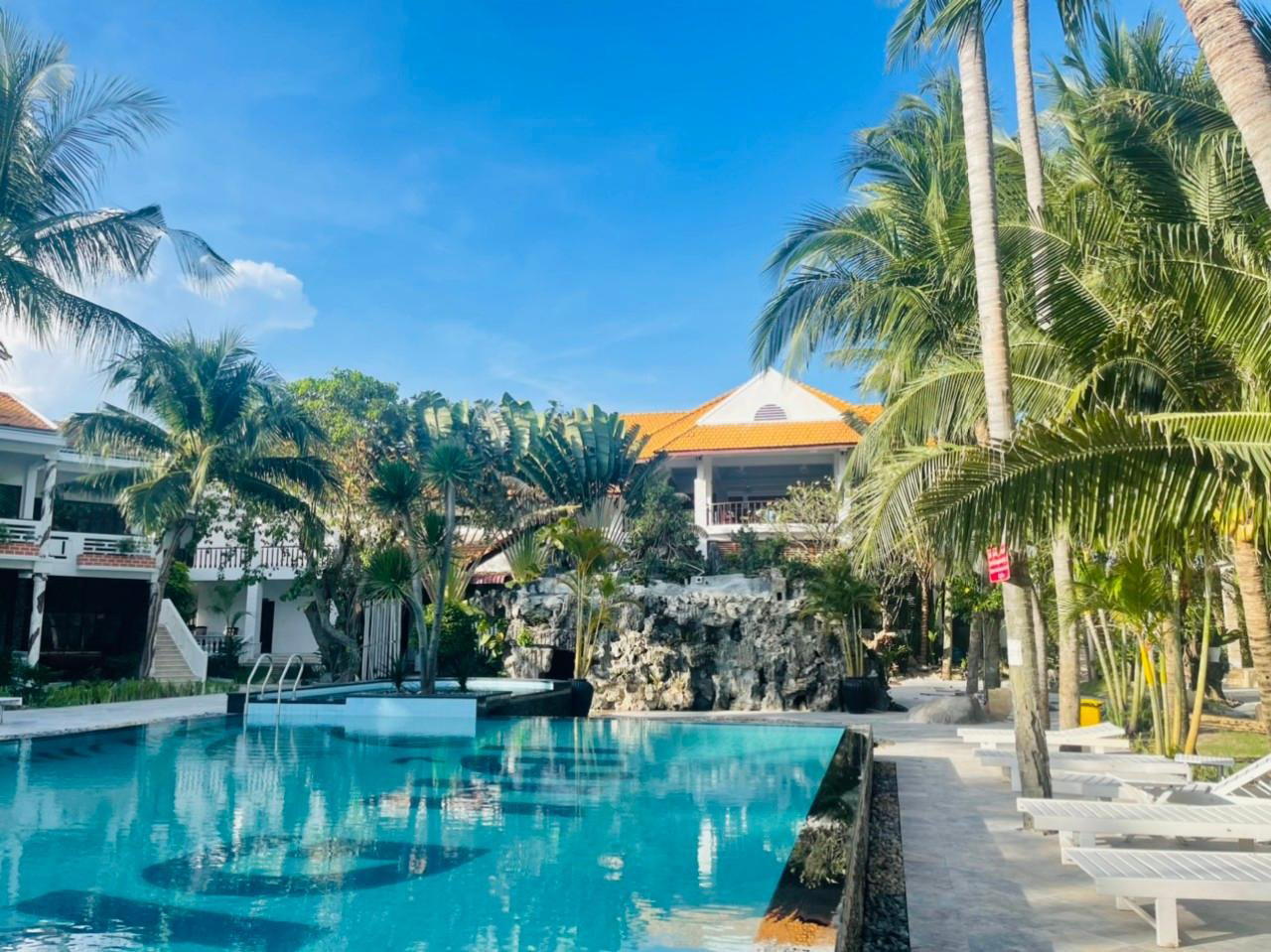
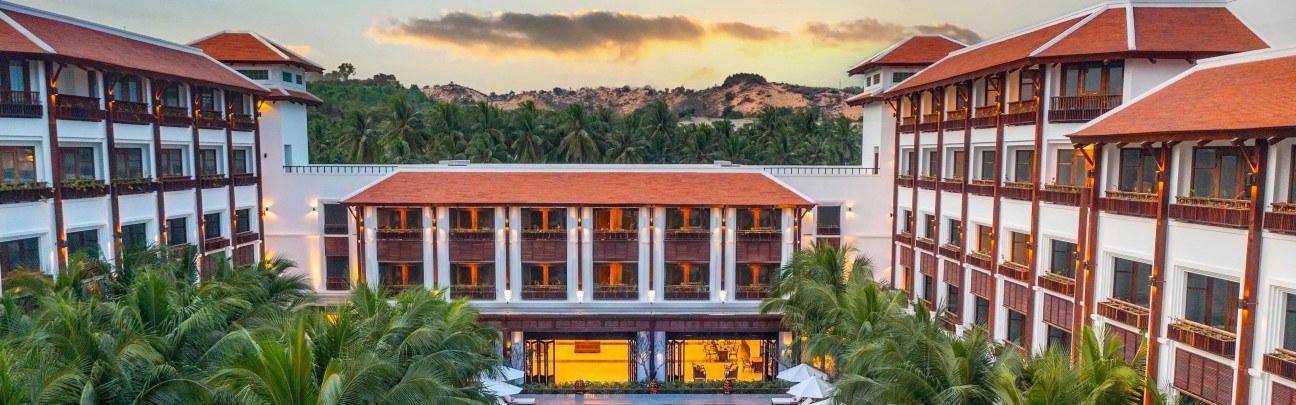
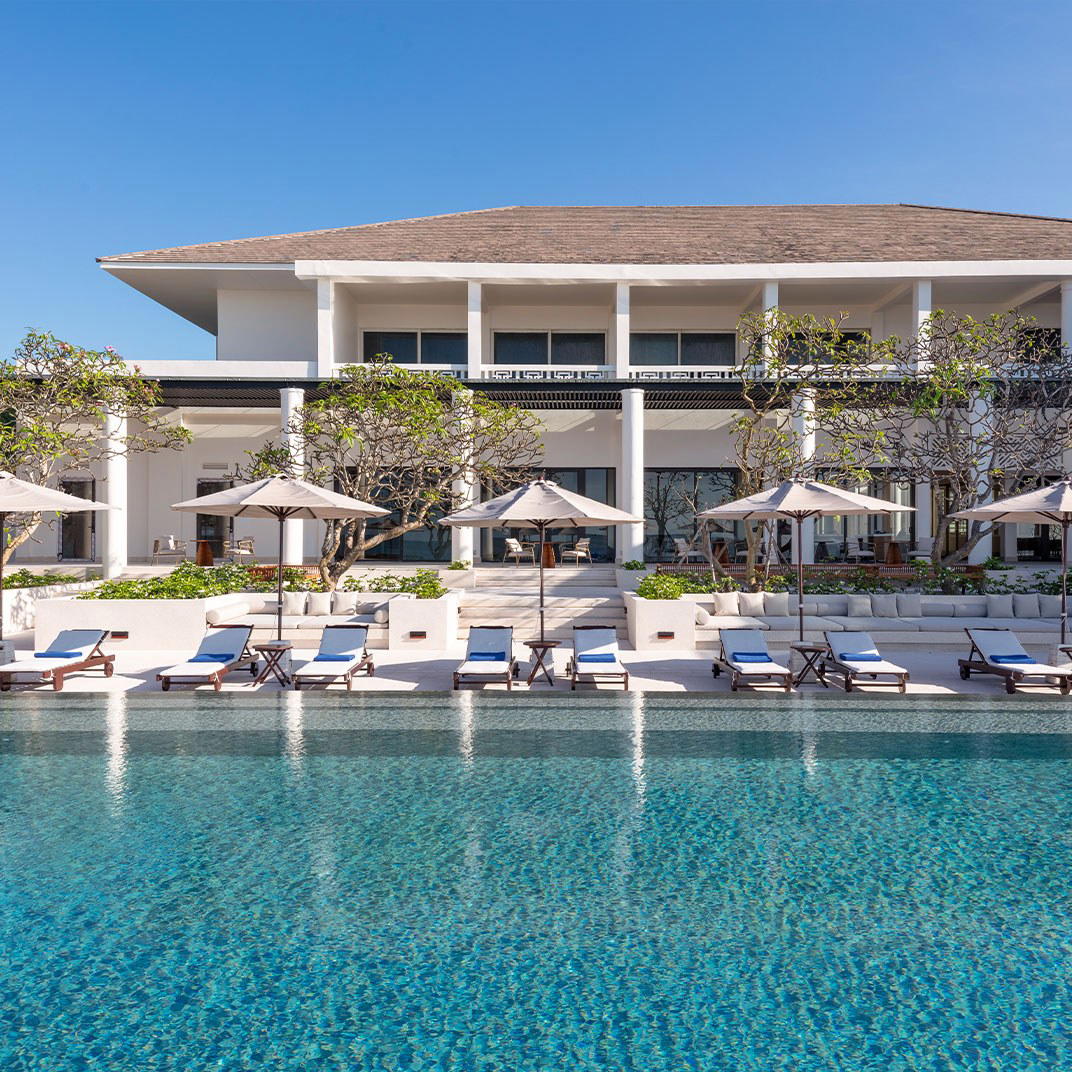
Refined and relaxing with dramatic sea views from spacious balconies, soundproofed rooms, and lively yet family-friendly poolside atmosphere.