Four Seasons Resort The Nam Hai, Hoi An




2 Michelin Keys · La Liste Top Hotels · Forbes 5-Star
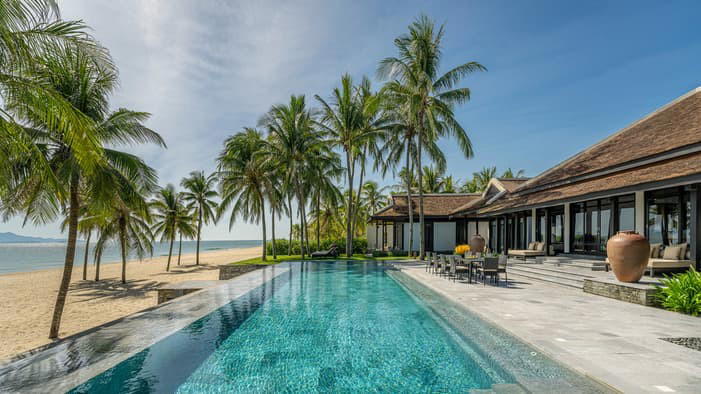
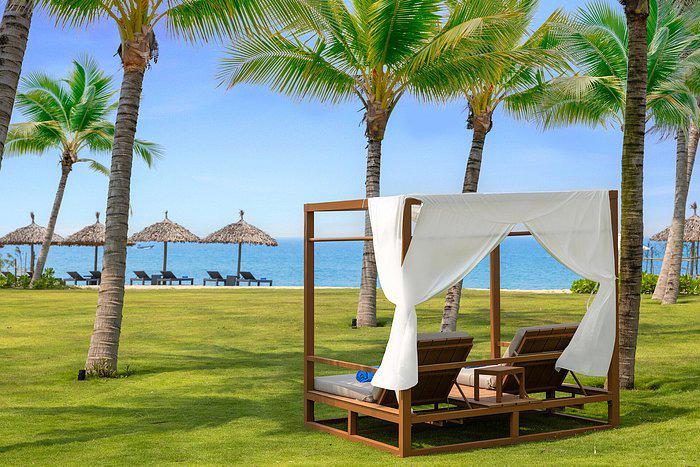
On a private kilometre of Ha My Beach, 30 kilometres south of Da Nang, Four Seasons Resort The Nam Hai anchors itself to Vietnam's central coast with 100 villas drawn from the nha vuon garden-home tradition. Three tiered infinity pools, a Japanese omakase counter, and proximity to three UNESCO World Heritage Sites position it as the region's most contextually grounded luxury address. La Liste rated it 94 points in 2026.

Pearl is the En Primeur Club membership app — saves, bookings, and concierge access live there. Same editors, same standards.
- Address
- Block Ha My Dong B, Dien Ban Dong, Ward, Điện Dương, Ward, Đà Nẵng 50000
- Phone
- +84 235 3940 000
- Website
- fourseasons.com
- Directions
- Get directions
Where the Central Vietnamese Coast Sets Its Terms
Vietnam's central coast has long occupied an awkward position in the country's luxury hotel market: geographically between the heritage density of Hue and the lantern-lit old quarter of Hoi An, yet oceanside enough to compete with the island retreats further south. The properties that work here are the ones that earn both registers simultaneously, functioning as a genuine beach resort while holding their own as a cultural base. Four Seasons Resort The Nam Hai sits on 35 hectares along Ha My Beach, a stretch that Forbes has listed among the world's notable beaches, positioned 30 kilometres south of Da Nang and roughly equidistant from three UNESCO World Heritage Sites: the Imperial City of Hue, the Hindu temple complex of My Son, and the Ancient Town of Hoi An. That triangulation shapes everything about how the property is designed and programmed.
Within Vietnam's high-end coastal tier, the competitive reference points include Amanoi in Vinh Hy to the south and Banyan Tree Lăng Cô in Lăng Cô to the north. The Nam Hai occupies a different register from both: denser in programming, broader in family infrastructure, and more explicitly rooted in Central Vietnamese vernacular architecture. La Liste awarded it 94 points in its 2026 Leading Hotels ranking, placing it in the upper bracket of regionally recognised Vietnamese luxury. Pearl also designated it a Recommended Hotel in 2025.
The Architecture of Phong Thuy
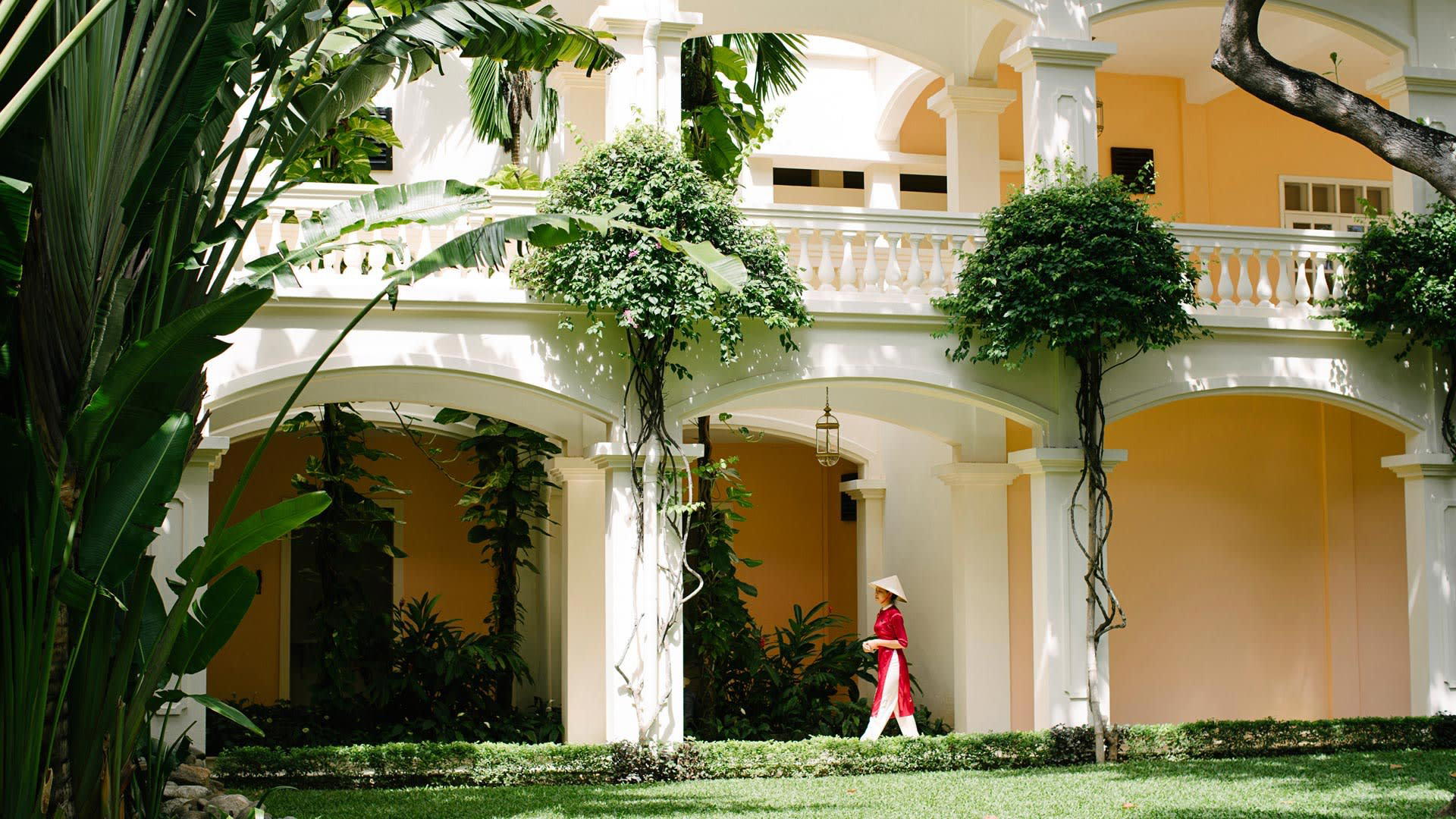
The design logic here is not decorative Vietnameseness applied to a generic luxury frame. The villas draw directly from nha vuon, the Central Vietnamese garden-home tradition characterised by timber frames, pitched roofs covered with flat tiles, and structures organised around outdoor living rather than interior mass. This is a building type historically associated with Hue's scholarly class, and its integration into 100 individual villas across 35 hectares means the resort reads as a dispersed village rather than a hotel compound.
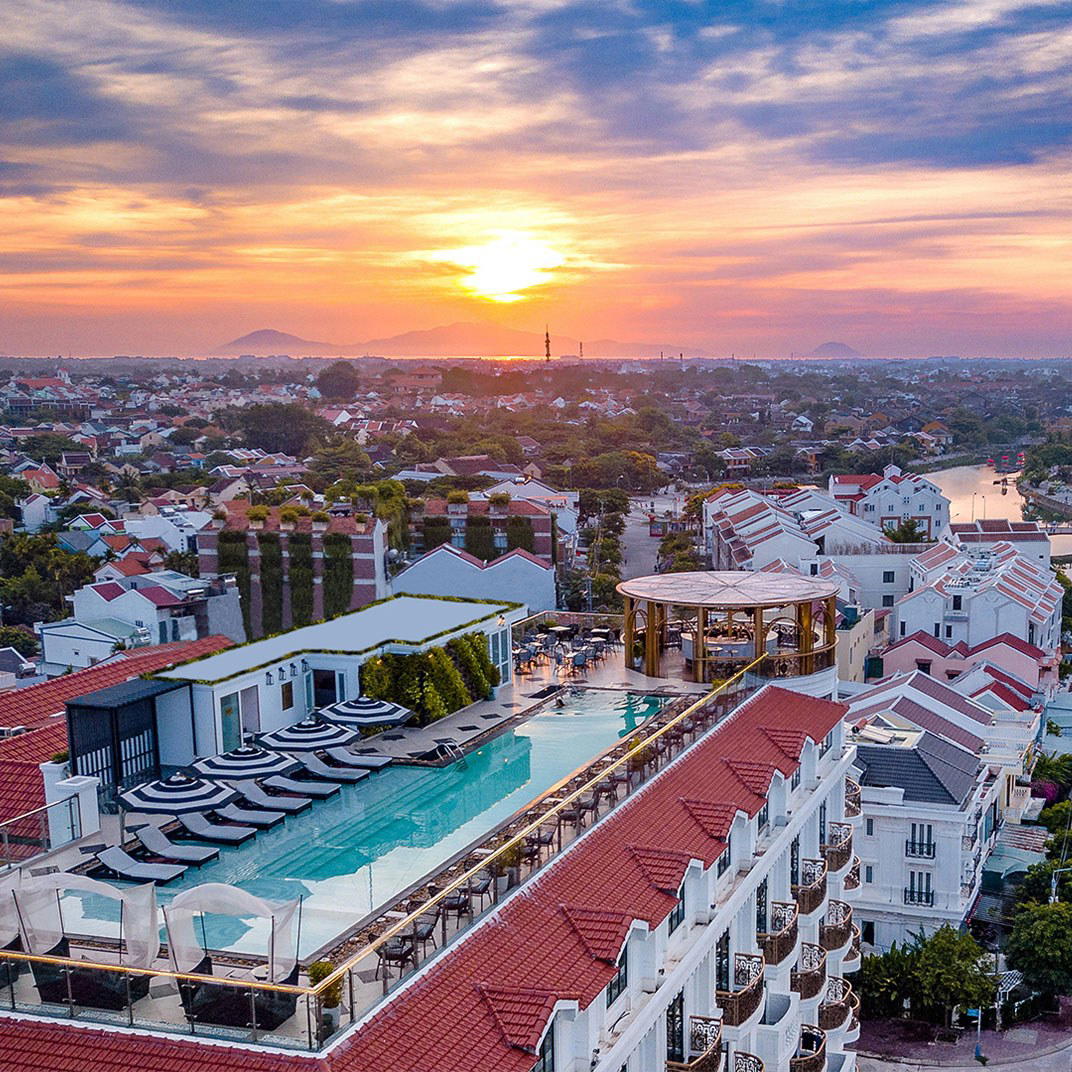
Phong thuy principles, Vietnam's equivalent of feng shui, govern the orientation of each structure: openings, sightlines, and water features are positioned to align with what the tradition identifies as beneficial flows of energy. The three tiers of infinity pools at the resort's centre are among the most discussed elements in any guest account of the property. The uppermost tier is adults-only, set at an elevation that places the water's edge within a few steps of the beach. The middle pool runs lap length. The lowest is heated and suited to families. This is a deliberate spatial hierarchy, not incidental layout, and it functions both aesthetically and practically.
Individual villas are built around a raised central platform draped in gossamer netting, a feature that evokes the sleeping architecture of traditional Central Vietnamese homes while serving a contemporary function in rooms that open onto outdoor rain showers and private gardens. Pool villas exceed 2,600 square feet and include a private courtyard entrance, heated pool, and separate living space. All 100 accommodations include in-room bathtubs, Bose audio systems, espresso machines, and butler-accessible services across the larger categories.
Dining Across Four Distinct Formats
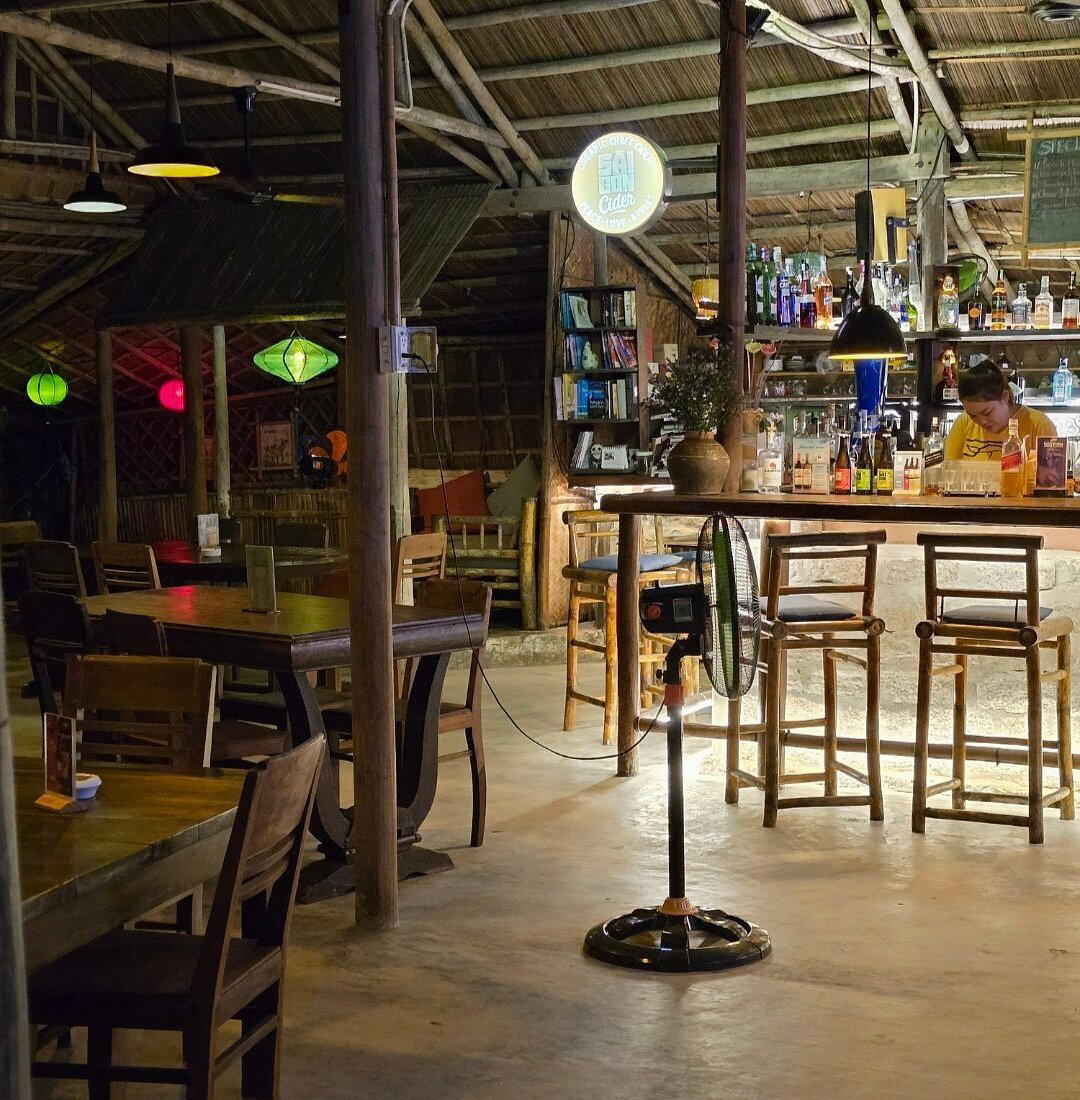
Southeast Asian luxury resorts increasingly run two or three restaurants that overlap in format and audience, producing a repetition of ambiance rather than genuine culinary range. The Nam Hai's dining programme is structured to avoid that compression. Café Nam Hai, which overlooks the water gardens, operates as the morning venue for breakfast and converts to an Indian cuisine dinner setting in the evening. Lá Sen takes Indochine cuisine as its frame, pairing Vietnamese ingredients and technique with French cooking methods in a beachside setting. Both represent well-established template formats in Vietnamese resort dining.
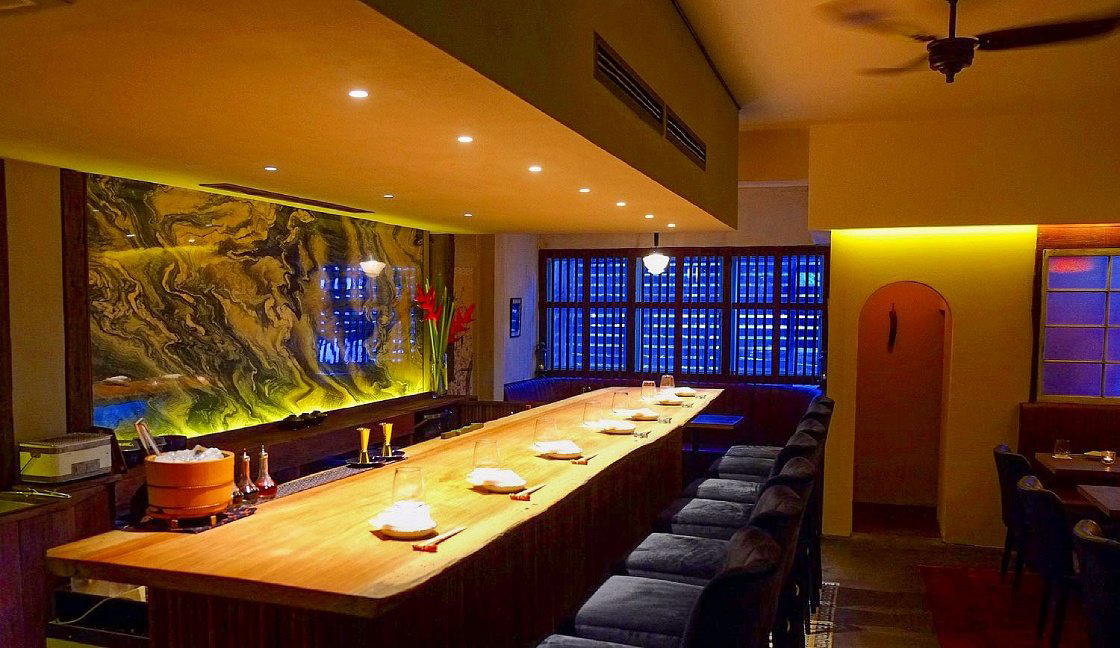
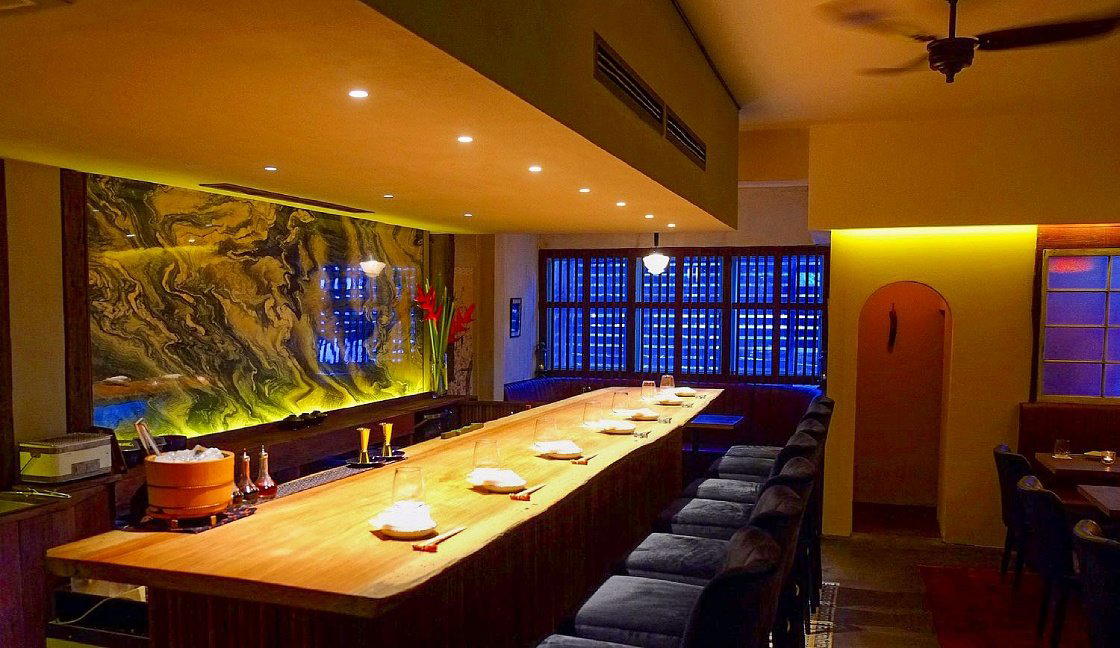
The outlier in the programme is Nayuu, a Japanese grill and omakase counter that the resort positions as the only venue of its kind in Central Vietnam. It focuses on aged beef and crustacean and offers what is described as Vietnam's only draft sake service alongside a cocktail programme. Whether that claim holds precisely is difficult to verify independently, but the format itself is unusual in the region: a serious Japanese grill operation embedded in a Vietnamese beach resort, drawing on the high-end omakase conventions more typically found in Hanoi or Ho Chi Minh City. The fourth venue, Sol and Sao Bar, works a sherry-based cocktail programme alongside Vietnamese tapas, gelato, and MOD coffee. A rotating schedule of themed dinners, including lobster evenings and street food formats, runs across the resort's dining venues.
Programming the Cultural Distance
The resort runs shuttle service into Hoi An's Ancient Town throughout the day, which makes it a functional base for visitors whose primary interest is the heritage corridor rather than the beach. The cooking academy on-site includes its own herb and vegetable farm, and the curriculum extends to off-site market excursions followed by a kitchen class and a lunch built from that session's output. Afternoons bring a complimentary class for younger guests, which integrates children into a programme that would otherwise be adult-facing.
Grounds were formerly a fisherman's village, and a preserved shrine at one corner of the property remains in use. During the Tet period, the resort invites local residents to celebrate on the property, a practice that grounds the guest experience in something beyond the resort's own internal programming. This is the kind of detail that separates properties with genuine local embeddedness from those that treat cultural context as visual decoration.
Heart of the Earth Spa operates across eight floating treatment suites with indoor-outdoor decks distinct from the massage rooms. Treatments are organised into three wellbeing categories: Stability, Creativity, and Non-Judgement, each incorporating crystal singing bowls. The evening ritual, described as the Goodnight Kiss to the Earth, combines bowls, music, and lanterns in a ceremony timed to sunset. The Health Club adds five tennis courts including both a padel and a pickleball surface, a half-size basketball court, sauna, and steam rooms. The Chuon Chuon Kids' Club functions as a self-contained facility with its own wading pool, shaded sandy play area, and indoor zones.
Planning a Stay
Resort sits in Dien Duong Ward, Quang Nam Province, approximately 30 kilometres from Da Nang International Airport. Guests arriving at Da Nang can reach the property in under an hour by road in normal conditions, making it accessible from both the airport and the city's hotel and restaurant corridor. For those covering the broader central coast, Azerai La Residence, Hue in Hue and Indochine Palace in Hue City offer natural extensions to the north, while Almanity Hoi An Wellness Resort in Hoi An sits directly in the Ancient Town for those preferring urban proximity. Further afield, Hoiana Hotel and Suites in Duy Xuyen and Four Points by Sheraton Danang in Da Nang offer alternative positioning along the same coast. The Nam Hai is bookable through Four Seasons Hotels and Resorts channels. Given the resort's villa-only format across just 100 keys, availability narrows during the Tet period and over the dry-season peak months of February through July. Book well ahead if your dates align with Vietnamese public holidays. See our full Dien Duong restaurants guide for context on the broader area.
A Quick Peer Check
Comparable venues nearby, for context on price, style, and recognition.
| Venue | Cuisine | Price | Awards | Notes |
|---|---|---|---|---|
| Four Seasons Resort The Nam Hai, Hoi AnThis venue — the venue you are viewing | Modern-minimalist luxury beach resort with private villas amid 86 acres of tropical gardens | $750–1,000 | 2 Michelin Keys · La Liste Top Hotels | Not listed |
| Indochine Palace | Indochine opulence in a noble house style with lush gardens | Not listed | World Luxury Hotel Awards WLHA Continent Winner | Hue City Centre |
| Pullman Danang Beach Resort | Large contemporary beachfront resort blending leisure, family, and business facilities on Bac My An Beach. | $100–200 | Star Wine List · Forbes Recommended | Ngu Hanh Son |
| Nobu Hotel and Restaurant Ho Chi Minh City | Luxury lifestyle urban hotel integrated into a 40‑story mixed-use tower in Ho Chi Minh City’s historic core. | Not listed | Not listed | District 1 |
| Hotel de la Coupole - MGallery | French colonial heritage luxury | Not listed | 1 Michelin Key · World Luxury Hotel Awards WLHA Continent Winner | Sa Pa Square |
| Villa Le Corail, Gran Meliá | All-villa beachfront resort combining Mediterranean elegance with Vietnamese tropical charm | $300–500 | Michelin Selected | Bãi Tiên |
Recognition history
Dated appearances from independent guides and award organizations, with the underlying list record or original source where available.
Michelin 2 Keys
Michelin
La Liste Top Hotels
La Liste
Forbes 5-Star
Forbes
Virtuoso Luxury Hotel Partner
Virtuoso
Full recognition history (6 entries)
Forbes 5-Star
Forbes
Michelin 2 Keys
Michelin
Details
- Elegant
- Scenic
- Sophisticated
- Ornate
- Honeymoon
- Romantic Getaway
- Family Vacation
- Wellness Retreat
- Beachfront
- Infinity Pool
- Private Villa
- Destination Spa
- Pool
- Spa
- Fitness Center
- Room Service
- Concierge
- Kids Club
- Beach Access
- Tennis
- Wi Fi
- Waterfront
- Garden
- Wheelchair Accessible
Serene and elegant with natural light filtering through tropical gardens, palm-fringed pools, and beachfront settings creating a peaceful, luxurious retreat.