
Winner of Vietnam's Leading Design Hotel at the 2025 World Travel Awards, Hotel de la Coupole MGallery sits above Sapa's valley mist with an architectural identity that draws on French colonial references and H'mong textile traditions in equal measure. The property belongs to the MGallery Collection's design-led tier, where the physical environment carries as much weight as the room count. For travellers approaching Sapa's premium accommodation market, it occupies a distinct position.
Pearl is the En Primeur Club membership app — saves, bookings, and concierge access live there. Same editors, same standards.
- Address
- Sapa, Vietnam
- Website
- hoteldelacoupole.com
 Saves & bookings on Pearl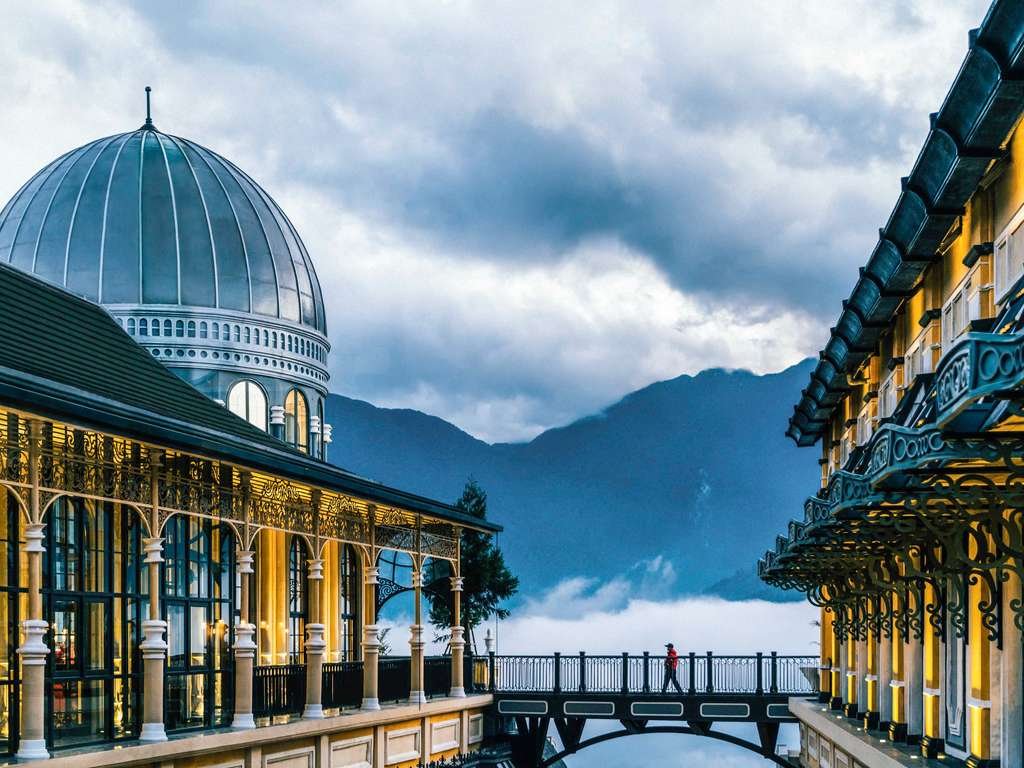
Where Mountain Architecture Meets Colonial Memory
Sapa's premium hotel tier has developed in an unusual direction for a Vietnamese mountain town. Rather than the glass-and-infinity-pool formula that dominates coastal resorts from Da Nang to Phu Quoc, the properties that have earned sustained recognition here draw on a layered visual vocabulary: French colonial masonry, the geometric textile patterns of the H'mong and Red Dao communities, and the particular quality of light that moves through the Hoang Lien Son range at altitude. Hotel de la Coupole MGallery operates squarely within that tradition, and the 2025 World Travel Awards designation as Vietnam's Leading Design Hotel confirms its position at the front of that cohort.
The name itself signals the design premise before you arrive. A coupole, the French architectural term for a dome or cupola, references the colonial-era civic buildings that once punctuated Vietnam's northern hill stations. Sapa was developed as a retreat for French administrators from the 1920s onward, and the stone villas and pitched rooflines of that period left a physical grammar that serious architects working in the area cannot simply ignore. The hotel reads that history through its facade treatment, its covered colonnades, and the relationship between its principal volumes, not as pastiche, but as considered reinterpretation.
The Design Argument for Sapa's Upper Tier
Vietnam's premium accommodation market has split cleanly over the past decade. On one side sit the large international flagships concentrated in Hanoi and Ho Chi Minh City, properties like InterContinental Hanoi Westlake that operate on volume and brand recognition. On the other sit smaller, design-intensive properties in secondary destinations where the physical environment is the primary reason anyone travels there in the first place. Sapa belongs firmly to the second category, and the hotels that perform leading here are those that treat architecture and interior design as editorial decisions rather than operational necessities.
The MGallery Collection, Accor's design-led soft-brand, works specifically in this territory. The Collection's positioning requires each property to carry a distinct identity rooted in its location, it is not a standardised product. That structure gives Hotel de la Coupole latitude to pursue a design brief that would be unlikely within a conventional branded hotel framework. The result is an interior environment that deploys H'mong indigo textile motifs at scale, uses local stone and timber in ways that acknowledge craft rather than conceal it, and organises public spaces around views of the Muong Hoa Valley that function as the property's most consequential amenity.
Elsewhere in Vietnam, properties pursuing a similar design-and-place philosophy include Amanoi in Vinh Hy, where the architecture mediates between bay landscape and interior calm, and Azerai La Residence in Hue, which occupies and restores a genuine colonial-era structure on the Perfume River. Hotel de la Coupole takes a different route, constructing rather than restoring, but the underlying discipline, that the building must justify its location through design intelligence rather than simply occupying it, is shared across that cohort.
Sapa as a Design Context
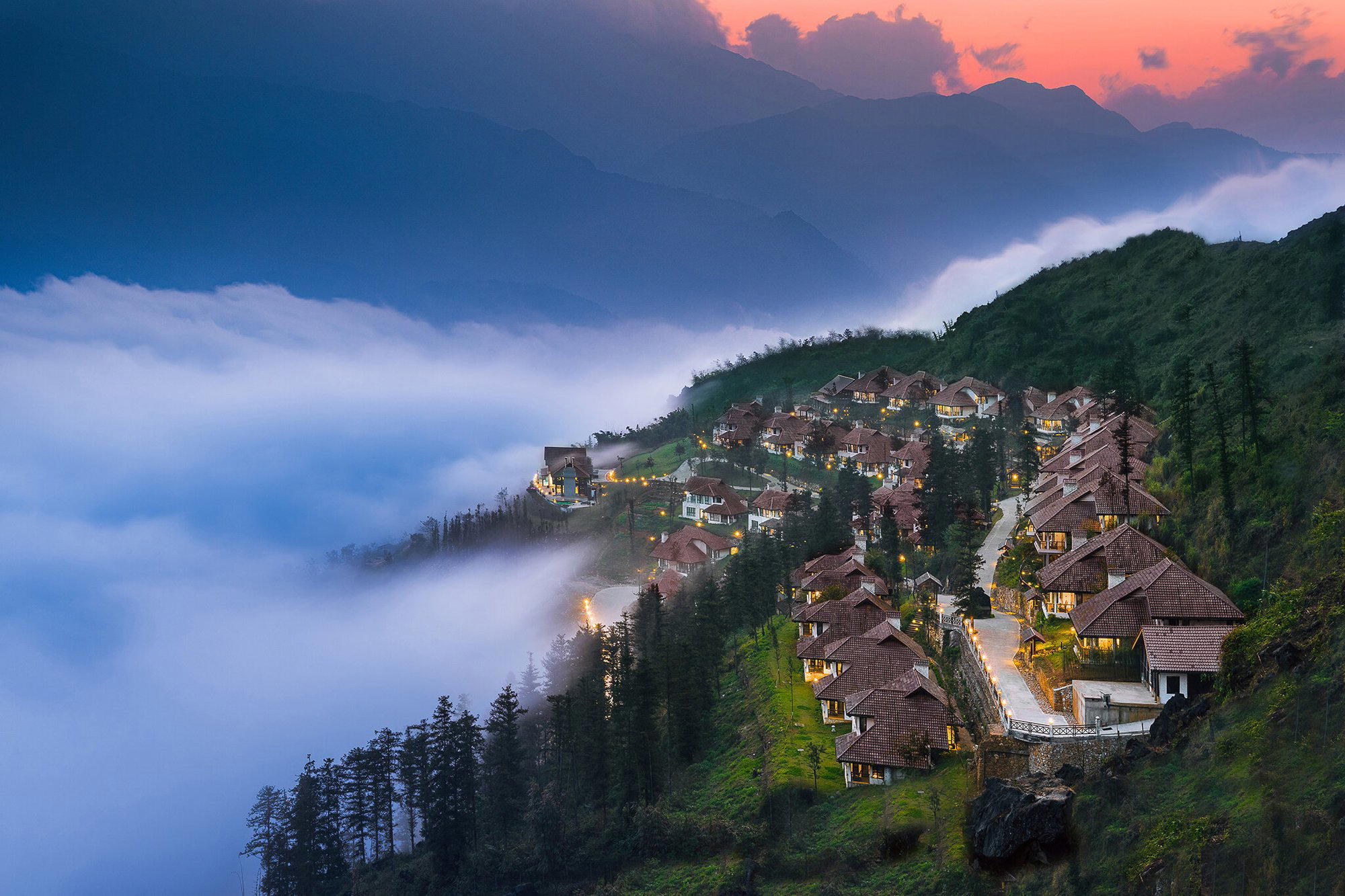
Understanding what the award means requires understanding what Sapa demands of its architecture. At roughly 1,500 metres elevation in Lao Cai Province, the town sits in conditions that shift quickly: cloud cover moves through at walking pace, temperatures drop sharply after dark, and the terraced rice fields that make the valley visually arresting are also a reminder that the landscape was shaped by agricultural communities over centuries. A hotel that ignores those conditions, climatically, culturally, or visually, reads as misplaced regardless of how well it is executed in isolation.
The properties that have earned recognition in Sapa share an attentiveness to those pressures. Ville de Mont Mountain Resort represents the more contemporary end of the local design spectrum. Hotel de la Coupole leans toward the historically inflected end, with the dome reference and the colonial-adjacent masonry language placing it in deliberate conversation with Sapa's pre-war built fabric. Neither approach is inherently superior; they address different traveller appetites within the same destination. The World Travel Awards outcome in 2025 recognised the property's design approach for this particular town.
What the Award Signals for Booking Decisions
The World Travel Awards operate on a global voting and assessment structure that covers hospitality categories by country and region. A national category win in a competitive market like Vietnam, where properties such as Four Seasons Resort The Nam Hai in Hoi An, Anantara Quy Nhon Villas, and Banyan Tree Lang Co also hold category positions, carries genuine comparative weight. It is not a local or regional designation; it measures Hotel de la Coupole against Vietnam's full premium hotel inventory and places the design outcome at the front of that field for 2025.
For travellers weighing Sapa against other northern Vietnam destinations, the practical implication is that the design environment here is confirmed as the strongest available in the mountain tier. That travel investment makes accommodation selection consequential in a way it rarely is for urban hotels where alternatives are a short taxi ride away. Choosing the leading design property in a destination where the interior environment matters considerably, because mountain weather often keeps guests indoors for portions of the day, is a substantively different decision than it would be in a city.
Travellers interested in how design-led properties perform across Vietnam's wider geography can find comparative context through our coverage of Almanity Hoi An Wellness Resort, Dalat Palace Heritage Hotel, and Emeralda Resort Ninh Binh, all of which pursue location-specific design briefs in destinations where heritage and landscape carry similar weight to Sapa.
Planning Your Stay
Sapa's high season runs from March through May and September through November, when visibility across the valley is strongest and temperatures remain manageable for trekking and outdoor movement. The summer months bring heavier rainfall and reduced visibility, while December and January can produce frost and, occasionally, snow at higher elevations. For a property where architectural views of the valley are a core part of the experience, shoulder-season timing in March or October tends to maximise return.
Side-by-Side Snapshot
Comparable venues nearby, for context on price, style, and recognition.
| Venue | Cuisine | Price | Awards | Notes |
|---|---|---|---|---|
| Hotel de la Coupole - MGalleryThis venue — the venue you are viewing | French colonial heritage luxury | $$$$ | 5-Star | Not listed |
| Hotel de la Coupole Sapa – MGallery Collection | French colonial heritage luxury hotel | $$$$ | 5-Star | Sapa center |
| Ville De Mont Mountain Resort | Mountain villas blending French colonial and Hmong rustic architecture | $$$ | Not listed | TT. Sa Pa |
| Amanaki Thao Dien | Contemporary boutique blending Polynesian hospitality with modern Vietnamese elegance | $$$$ | 4-Star | Quan 2 |
| Jiva Hoa Lu Retreat | Vietnamese-inspired luxury retreat with handcrafted details and open-air pavilions designed to harmonize with the natural landscape | $$$$ | 5-Star | Hoa Lu District |
| LOTTE HOTEL SAIGON | Luxury urban hotel with grand facilities | $$$$ | 5-Star | Quan 1 |
Recognition history
Dated appearances from independent guides and award organizations, with the underlying list record or original source where available.
World Travel Awards
World Travel Awards
Continue exploring
More in Sapa
Hotels in Sapa
Browse all →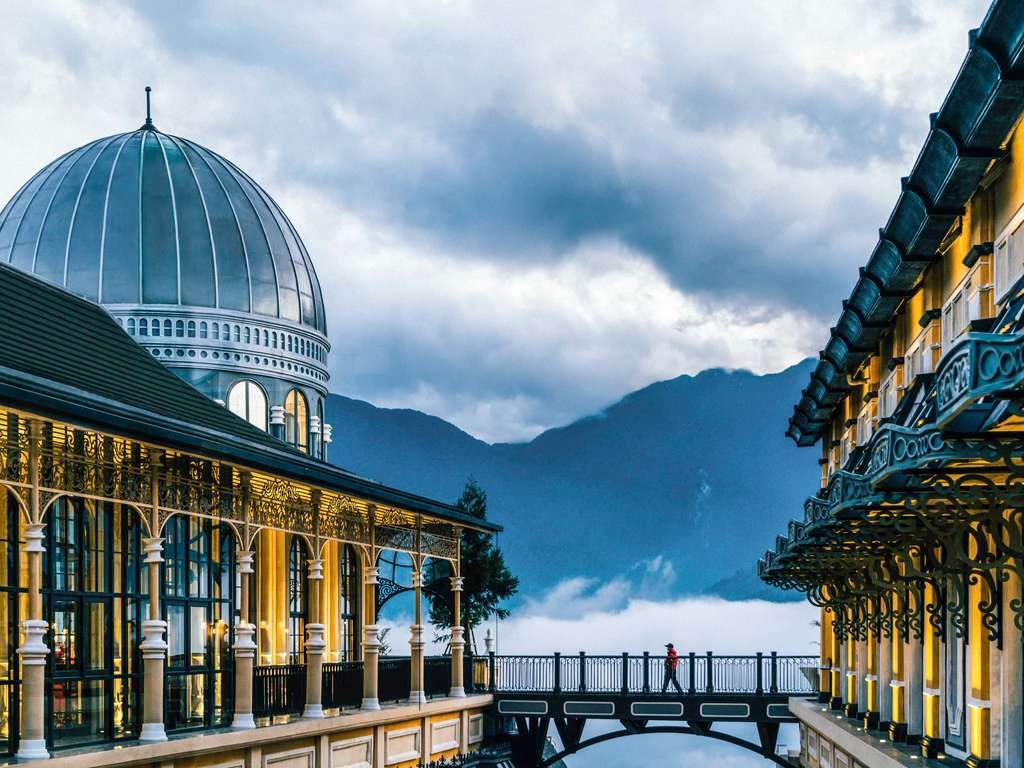
Bars in Sapa
Browse all →
Restaurants in Sapa
Browse all →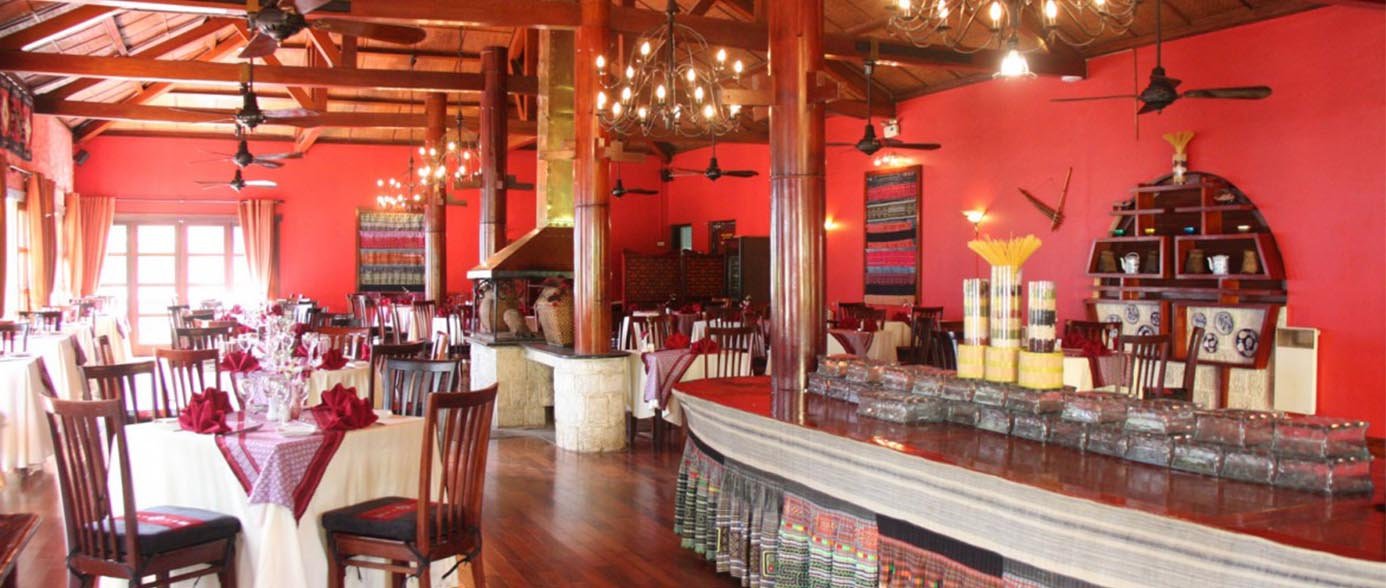
At a Glance
- Elegant
- Scenic
- Sophisticated
- Classic
- Romantic Getaway
- Family Vacation
- Wellness Retreat
- Panoramic View
- Historic Building
- Wi Fi
- Pool
- Spa
- Fitness Center
- Room Service
- Concierge
- Business Center
- Mountain
- Wi Fi
- Pool
- Spa
- Fitness Center
- Room Service
- Concierge
- Business Center
Majestic, quiet hallways resembling a castle with grand, ornate interiors, chandeliers around the indoor pool, and panoramic mountain and city views.