
1 Michelin Key
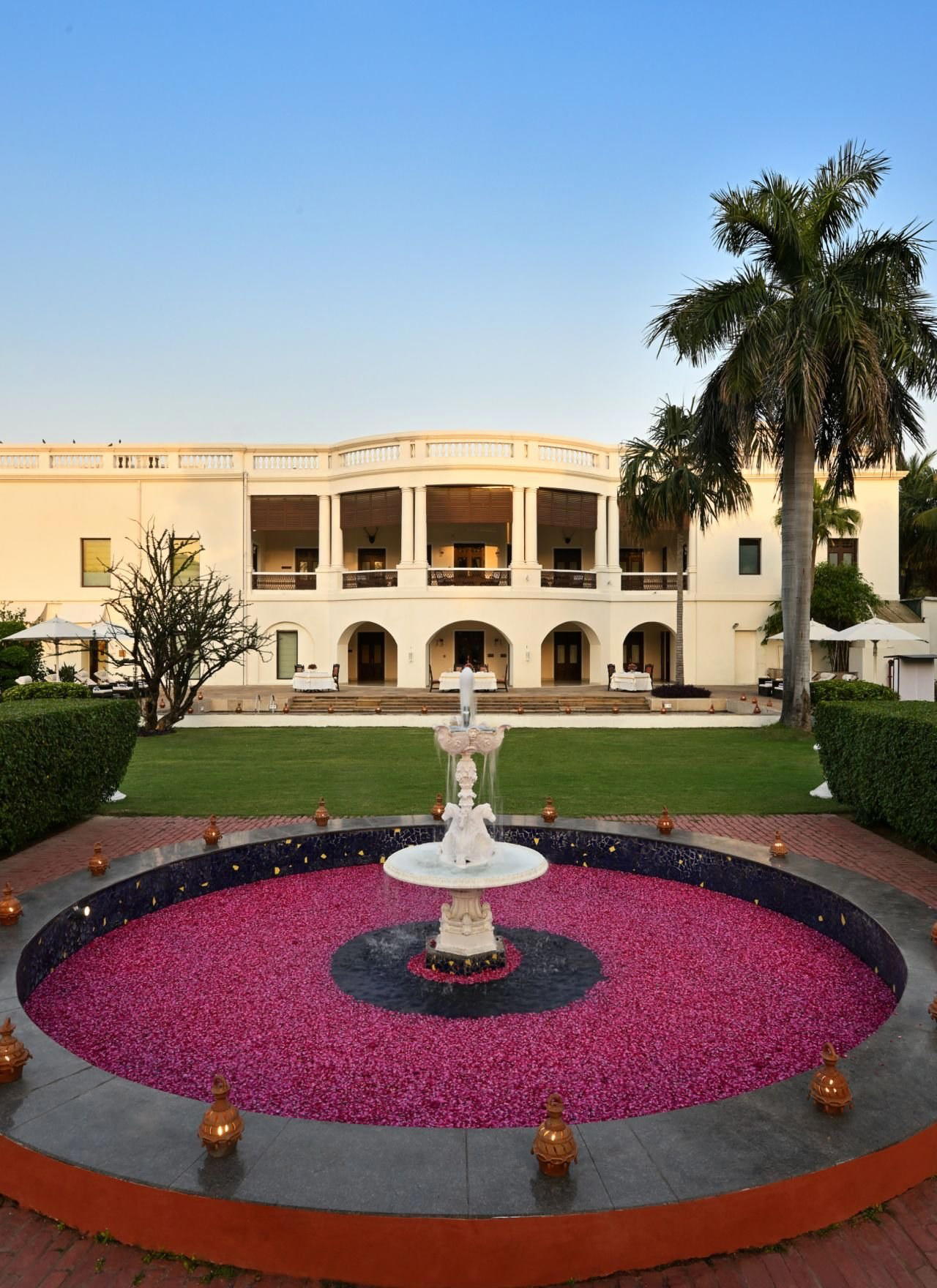
A former Maharaja's private residence reduced to just ten rooms, Taj Nadesar Palace sits apart from Varanasi's intensity as a genuinely sequestered retreat. A recent renovation preserved claw-foot tubs and antique furnishings from the royal collection while adding contemporary comfort throughout. At around $1,070 per night, it occupies a rare tier in Indian heritage hospitality where atmosphere and luxury genuinely reinforce each other.

Pearl is the En Primeur Club membership app, where members save venues, book tables and use the concierge.
Where Heritage Hospitality Retreats from the City
Varanasi operates at a pitch that few cities anywhere match. The ghats at dawn, the cremation fires, the density of pilgrims and priests and traders moving through streets that have been continuously inhabited for roughly three thousand years, the city does not relent. Which is precisely what makes the premise of Taj Nadesar Palace so striking. Behind its gates, on a property that once served as the Maharaja of Benares' private residence, the sound drops away almost entirely. Ten rooms. Grounds that absorb the day. An atmosphere that takes its own time.
This is the particular tension that defines Nadesar as a hospitality proposition: not despite Varanasi's intensity, but because of it. The contrast between what lies outside the gates and what exists within them is the experience. Few properties in India's heritage circuit manage this dynamic as cleanly. Amanbagh in Ajabgarh achieves seclusion through sheer remoteness; Aman-i-Khas in Ranthambore through tented wilderness. Nadesar achieves it inside one of the world's most populated sacred cities, which is a considerably more demanding architectural and curatorial feat.
The Architecture of Restraint and Memory
Indian palace hotels occupy a wide spectrum. At one end sit the large-format converted forts and city palaces that have been expanded across decades of tourism demand, adding wings and amenities until the original structure becomes one element among many. At the other end is the approach Nadesar represents: preservation of intimate scale as a deliberate design choice. Ten rooms is not a capacity limitation here, it is the entire logic of the property.
The recent renovation at Nadesar was executed with care for the original fabric of the building. Claw-foot tubs remain in position. Antique furnishings from the Maharaja's collection have been refurbished rather than replaced. Artworks that belonged to the palace before it entered the Taj portfolio continue to occupy their spaces. The intervention applied modern functionality, plumbing standards, climate systems, the technical infrastructure that guests at the $1,070-per-night tier expect, without substituting contemporary aesthetic language for the building's own. This is harder to do well than it sounds. Many heritage renovations in India produce rooms that feel like museum reconstructions rather than inhabited spaces. The Nadesar approach leans toward the latter.
The common spaces matter as much as the rooms in a property of this scale. Three meals a day are served in the palace's shared interiors, which means the formal and social architecture of the building shapes the guest experience in ways that a larger resort, with its multiple dining venues and dispersal of guests across space, cannot replicate. You eat where the Maharaja ate. The proportions of the rooms, the ceiling heights, the positioning of light, these are not stage-set heritage but the actual spatial logic of aristocratic Benaras in a previous century.
For comparison within the Taj group's own portfolio, the contrast with The Taj Mahal Palace in Mumbai is instructive. Mumbai's flagship is a grand-scale urban monument operating across hundreds of rooms with the full complexity of a major hotel. Nadesar is the opposite proposition: a private house that happens to accommodate ten guests at the standard of a palace. Both belong to the same group and both deliver heritage credibility, but they address entirely different traveller needs.
Varanasi as Context, Not Background
Heritage properties in India's pilgrimage cities face a specific curatorial challenge. The city that draws visitors to Varanasi, its ghats, its rituals, its antiquity, is also the city from which those visitors often need periodic relief. Nadesar's position on Raja Bazar Road in the Nadesar locality, away from the most congested ghat areas, gives guests a genuine base that is not embedded in the noise and density of the old city centre. The property's grounds provide the buffer.
This separateness is not the same as disconnection. Varanasi's sacred geography remains accessible from Nadesar, the Ganges, the Dashashwamedh Ghat, the temples of the old city, but on the guest's terms rather than the city's. That balance between access and shelter is what makes a property like this functional as more than a symbolic gesture toward heritage. Guests arriving from Varanasi Junction railway station or Lal Bahadur Shastri Airport can reach the palace without passing through the most congested corridors of the old city, which matters for arrivals with luggage and after long journeys.
For context across the broader Indian sacred-city circuit, properties like Vivanta Vrindavan address a comparable challenge in another pilgrimage city, while Haveli Dharampura in Delhi represents the haveli-scale heritage model that operates closer to a city's historic fabric rather than at remove from it. Each approach carries trade-offs. Nadesar's particular answer, maximum seclusion within an active sacred city, is the more expensive and more complete one. You can also consult our full Varanasi restaurants guide for dining beyond the palace grounds.
Where Nadesar Sits in the Indian Heritage Tier
At approximately $1,070 per night, Nadesar prices at the upper level of Indian heritage hospitality but below the Aman tier, which in India is represented by properties like Amanbagh. It occupies a space closer to the premium Taj and Oberoi offerings, The Oberoi Amarvilas in Agra is a useful peer reference for the combination of monument-adjacent position, intimate scale, and deliberate luxury, while Nadesar's ten-room count gives it an exclusivity of access that most Oberoi and Taj properties cannot match purely by size.
The Indian heritage hotel market has bifurcated sharply in the past decade. Large-format palace hotels in Jaipur, Udaipur, and Jodhpur now operate with enough rooms to support multiple restaurant concepts, destination spas, and conference facilities. The smaller intimacy-led model, where the heritage credential is about authenticity of scale rather than grandeur of amenity, is the more difficult position to sustain commercially but typically the more satisfying one for guests who genuinely want to inhabit a historic space rather than visit a themed version of one. Among properties that have navigated this well, Nadesar, Chapslee in Shimla, and Alila Fort Bishangarh in Manoharpur each represent different regional expressions of the small-format heritage model.
For those building a longer India itinerary, Nadesar fits logically as a Varanasi anchor alongside The Leela Palace New Delhi and Ananda in the Himalayas, each addressing a different register of Indian luxury, urban, sacred-city, and wellness respectively, without redundancy.
Planning Your Stay
With only ten rooms, Nadesar's availability operates on a fundamentally different logic from larger hotel properties. Rooms at this scale and price point tend to move faster than occupancy data might suggest, because a single group booking can exhaust availability entirely. Booking through the Taj Hotels platform well ahead of travel, particularly for the October-to-March high season when Varanasi receives the bulk of international visitors, is the practical requirement rather than a suggestion. The dry, cooler months from November through February produce the most comfortable conditions for time on the ghats and around the city, which remains the primary draw for most guests arriving at this price level. Three meals daily are included in the palace's formal dining spaces, with a small spa and pool completing the on-site offer, modest in amenity count, but calibrated for a property where the building itself is the primary amenity.
Comparable Spots, Quickly
Comparable venues nearby, for context on price, style, and recognition.
| Venue | Cuisine | Price | Awards | Notes |
|---|---|---|---|---|
| Taj Nadesar Palace, VaranasiThis venue (the venue you are viewing) | Heritage palace hotel with regal legacy on expansive grounds | $500–750 | 1 Michelin Key | Not listed |
| Avantika by the Ganges | Luxury boutique riverside hotel blending sacred Varanasi heritage with contemporary comfort and elemental design. | $300–500 | Town & Country Hotel Awards | Ramghat |
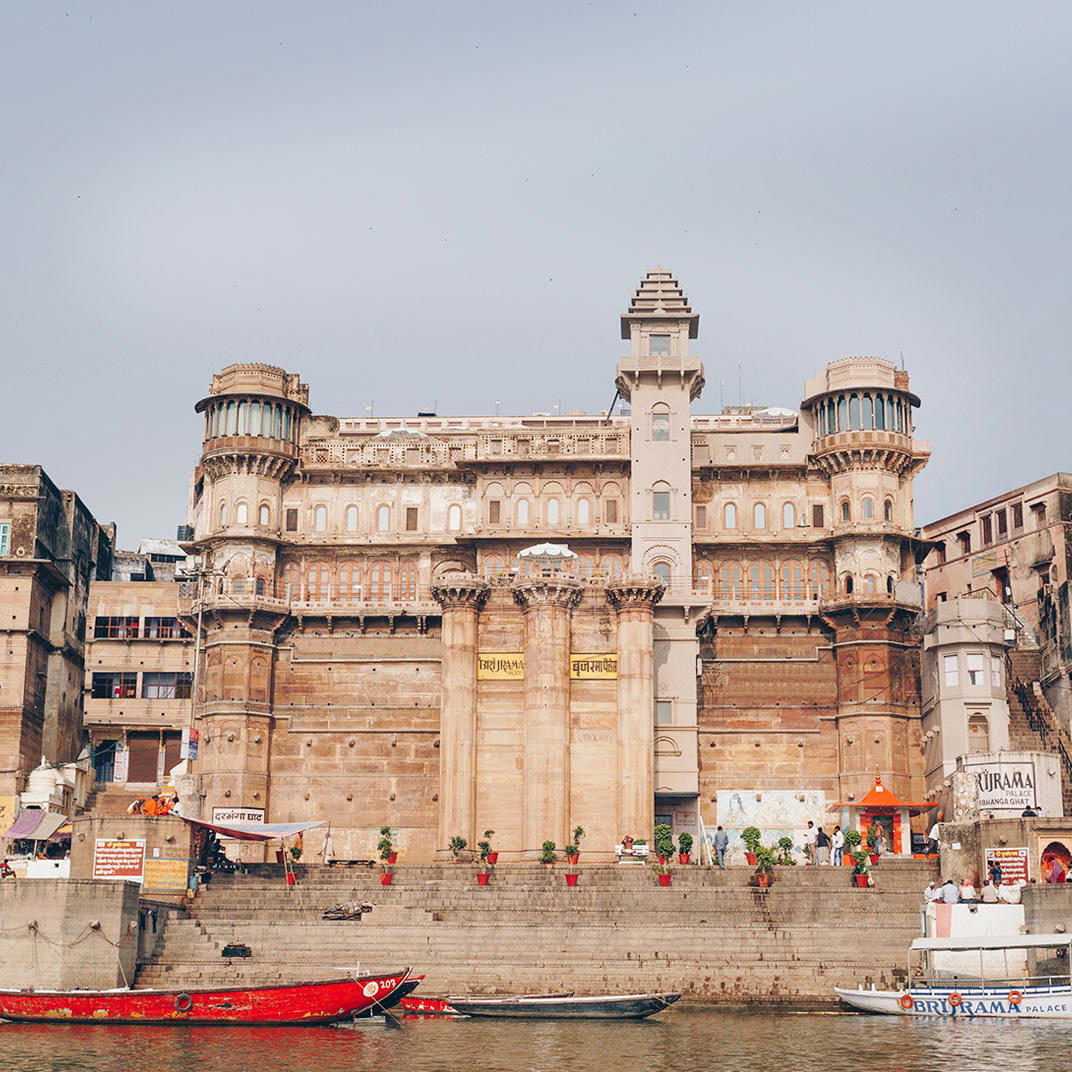
| Brij Rama Palace Varanasi | Heritage palace hotel blending Maratha architecture with royal luxury on the Ganges. | $100–200 | Michelin Selected | Darbhanga Ghat |
| Taj Surajkund Resort & Spa, Delhi NCR | Luxury resort blending 1920s graceful design with modern architecture inspired by Mughal heritage. | $100–200 | Michelin Selected | Surajkund |
| Taj Exotica Resort & Spa, Goa | Luxurious beachfront resort with colonial-inspired architecture sprawled across 56 acres of lush greenery | $200–300 | Michelin Selected | Benaulim |
| Taj Mahal, New Delhi | Classic luxury heritage property with modern amenities | Not listed | 1 Michelin Key · Virtuoso Luxury Hotel Partner | Lutyens' Delhi |
Recognition history
Dated appearances from independent guides and award organizations, with the underlying list record or original source where available.
Michelin 1 Key
Michelin
Full recognition history (2 entries)
Michelin 1 Key
Michelin
Continue exploring
More in Varanasi
Hotels in Varanasi
All hotels in Varanasi →
Restaurants in Varanasi
All restaurants in Varanasi →
Details
- Elegant
- Ornate
- Quiet
- Sophisticated
- Scenic
- Honeymoon
- Romantic Getaway
- Anniversary
- Historic Building
- Garden
- Private Dining
- Wi Fi
- Pool
- Spa
- Fitness Center
- Room Service
- Concierge
- Business Center
- Valet Parking
- Garden
- Wheelchair Accessible
Regal and serene with lush gardens, live music at meals, and an oasis of peace amid Varanasi's intensity.