Our verdict
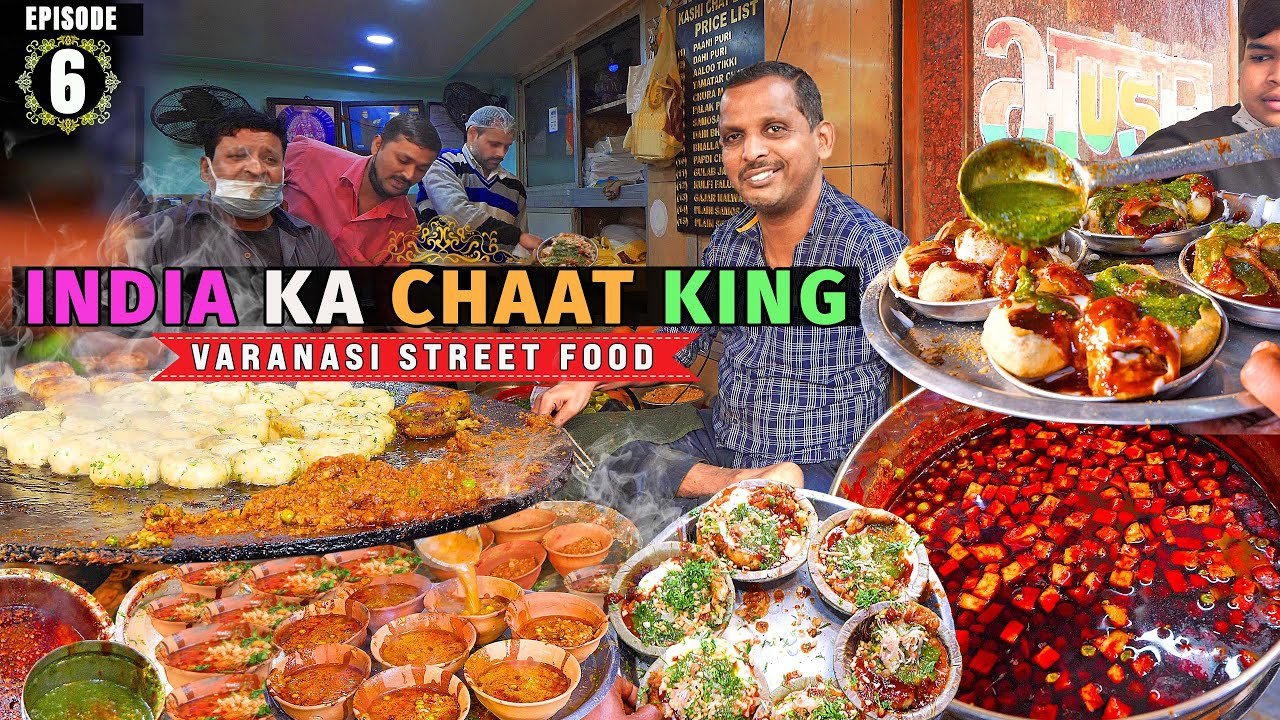
On Godowlia Road, one of Varanasi's most trafficked arteries near the ghats, Kashi Chat Bhandar has operated as a reference point for street-style chaat in a city that treats the form as serious culinary tradition. The stall-format setting draws locals and pilgrims alike, placing it squarely in the category of Varanasi eating that no hotel restaurant can replicate.

Pearl is the En Primeur Club membership app, where members save venues, book tables and use the concierge.
The menu
What to order
- Tamatar ki Chaat
- Palak Chaat
- Aloo Tikki Chaat
- Papdi Chaat
- Chura Matar
Where Varanasi Eats Without Ceremony
Godowlia is not a neighbourhood that rewards passive observation. It is the commercial and ritual hinge of Varanasi's old city, where the road from the railway station meets the lane down to Dashashwamedh Ghat, and where foot traffic at almost any hour includes pilgrims, vendors, students, and the kind of regulars who have been eating at the same counter for decades. Kashi Chat Bhandar sits on this road at D-37/49, which places it precisely in the current of daily Varanasi life rather than on its edge. That location is not incidental. In a city whose culinary identity is inseparable from its religious and social rhythms, eating chaat on Godowlia is a participation in the city, not just a transaction.
Chaat as Cultural Form, Not Snack Category
Varanasi has a particular claim on North Indian chaat culture that goes beyond regional pride. The city's tradition of street food developed alongside its role as a pilgrimage destination, where vegetarian eating was not a preference but an expectation. That constraint produced a culinary grammar of considerable range: tamarind, green chutney, yoghurt, sev, puffed rice, and the fried doughs of puri and papdi became the vocabulary for dishes that are simultaneously acidic, cooling, sharp, and textured. The chaat of Varanasi is not the same as what you find in Delhi's Chandni Chowk, nor the Kolkata version that leans into mustard oil, nor the Mumbai variant that runs sweeter. It occupies its own register, shaped by the Gangetic plain's produce, the city's Brahminical vegetarian traditions, and a density of practitioners who have refined technique through repetition across generations.
This is the context in which Kashi Chat Bhandar should be read. Stalls and counters along Godowlia and the lanes connecting to the ghats represent one of the more consistent and least diluted expressions of this tradition. Unlike the formal dining rooms of properties serving reconstructed Indian cuisine, places like this operate without the apparatus of menus, reservations, or service design. The format is the point: you order at the counter, the preparation is visible, and the eating is immediate. For anyone tracking how traditional Indian food cultures survive urbanisation and tourism pressure, Varanasi's chaat corridor is more instructive than most fine-dining rooms. For comparison, the architectural complexity of Bukhara in New Delhi or the technique-led plating of Farmlore in Bangalore offer a different entry point into Indian culinary tradition, one mediated by professional kitchens and design intention. Kashi Chat Bhandar operates at the opposite end of that spectrum, where the tradition is delivered without editorial intervention.
The Godowlia Address and What It Implies
The specific address on Godowlia Road places Kashi Chat Bhandar within walking distance of Dashashwamedh Ghat, Varanasi's most active ritual space and the site of the nightly Ganga Aarti ceremony that draws thousands of observers. This proximity is not coincidental for a chaat establishment: the flow of pilgrims and visitors toward the ghats has historically sustained the street food economy of this corridor. Eating here at the right moment, particularly in the late afternoon or early evening before the aarti begins, means sharing the space with an unusually cross-sectional crowd. That social character is part of the experience in a way that cannot be separated from the food itself.
For practical orientation: Godowlia is accessible by rickshaw or on foot from most of Varanasi's central lodging options. The old city's lane structure makes private vehicles impractical past a certain point, so arriving by cycle rickshaw from the Cantonment area or on foot from nearby ghats is the standard approach. No booking mechanism exists for a counter of this type. Timing matters more than planning: midday and early evening are peak periods for chaat consumption in North Indian street food culture, and that pattern holds here.
How Varanasi Positions Against the Broader India Dining Conversation
India's premium dining conversation has shifted considerably in the past decade. Tasting menus and sourcing narratives now anchor the top end of the market, from Americano in Mumbai to the refined regionalism of Esphahan in Agra. Varanasi sits largely outside that conversation, not because its food culture is less serious, but because the city's culinary authority is invested in forms that predate restaurant culture entirely. The chaat counter, the lassi shop, the thandai vendor, and the kachori-sabzi stall are the institutions that define eating in Varanasi, and they operate by entirely different metrics than starred restaurants or curated tasting menus.
This is a distinction worth holding onto for any traveller who arrives in Varanasi expecting the kind of polished regional cuisine available at properties like Leela Kerala Terrace in Trivandrum or the precision-led format of Naar in Kasauli. Those venues make a considered argument for Indian food through the grammar of contemporary hospitality. Varanasi's street food makes a different argument, one grounded in continuity and volume rather than curation. Both are legitimate. They answer different questions. See our full Varanasi restaurants guide for a broader map of how the city's eating options distribute across formats and price points.
For those building a picture of how Indian regional food cultures express themselves across formats, it is also worth examining the pure-vegetarian tradition at Dadi Ki Rasoi in Budaun, which operates in a related North Indian vegetarian register, or the contrast offered by the more restaurant-structured Kriva Cafe and Fine Dining within Varanasi itself.
Planning Your Visit
Kashi Chat Bhandar operates as Varanasi's street food tradition has always operated: on presence, not pre-arrangement. The address at D-37/49 Godowlia Road is the navigational anchor; any local rickshaw driver will know the area. Cash is the working assumption for transactions of this type in the old city. Visiting in the October to March window aligns with Varanasi's cooler, drier months, which make outdoor eating along the ghats corridor considerably more comfortable than the summer heat or monsoon humidity. Eating here is an argument for Varanasi's culinary seriousness on its own terms, not as a warm-up act for a fancier dinner.
Frequently asked questions
Would Kashi Chat Bhandar be comfortable with kids?
Yes, without reservation. Godowlia Road is one of Varanasi's busiest public thoroughfares, and chaat counters like this one are a staple of family outings across North India. There is no formal seating or dining-room protocol to manage, the format is stand-and-eat, which suits children well. The food is vegetarian-forward, as is common in Varanasi's old city.
Is Kashi Chat Bhandar better for a quiet night or a lively one?
Lively, without question. Kashi Chat Bhandar sits on Godowlia Road, the commercial artery connecting Varanasi's old city to Dashashwamedh Ghat, and the street operates at near-constant volume from late morning into the evening. This is not a place to seek calm, it is a place to eat standing among a crowd of pilgrims, traders, and regulars, which is precisely the point.
How do you find Kashi Chat Bhandar with no website or phone number listed?
The address, D, 37/49, Godowlia Road, Varanasi, is the only confirmed contact point, and it is sufficient. Godowlia is a compact, well-trafficked area where locals can direct you on foot. There is no booking process; Kashi Chat Bhandar operates as a walk-in counter, consistent with how Varanasi's street food establishments have always functioned.
What's the must-try dish at Kashi Chat Bhandar?
What is established is that Varanasi's chaat tradition centres on preparations like tamatar chaat and dahi puri, which differ from their Delhi or Mumbai counterparts in spicing and texture. Visiting with that regional context in mind will sharpen what you order at the counter. Check the venue's official channels for the latest details.
Price and Recognition
Comparable venues nearby, for context on price, style, and recognition.
| Venue | Cuisine | Price | Notes |
|---|---|---|---|
| Kashi Chat BhandarThis venue (the venue you are viewing) | Authentic Varanasi Chaat | $1–10 | Not listed |
| Kriva ~ Cafe & Fine Dining | Multicuisine Fine Dining | $10–20 | Anandbagh, Multicuisine Fine Dining |
| Tadka | Awadhi & North-West Frontier Indian Fine Dining | $30–50 | Cantonment, Awadhi & North-West Frontier Indian Fine Dining |
| Nand Di Hatti | Classic Punjabi Chole Bhature | $1–10 | Sadar Bazar, Classic Punjabi Chole Bhature |
| Swirl | Indian Pure Vegetarian | Not listed | Vrindavan, Indian Pure Vegetarian |
| Cafe Luv Kush, Ayodhaya | Indian Vegetarian | Not listed | Civil Line, Indian Vegetarian |
Continue exploring
More in Varanasi
Restaurants in Varanasi
All restaurants in Varanasi →

Details
- Lively
- Well Known
- Casual Hangout
- Historic Building
- Street Scene
- Small Plates
- Vegetarian Friendly
- Vegan Options
Current opening hours
- Monday
- 3–10:30 PM
- Tuesday
- 3–10:30 PM
- Wednesday
- 3–10:30 PM
- Thursday
- 3–10:30 PM
- Friday
- 3–10:30 PM
- Saturday
- 3–10:30 PM
- Sunday
- 3–10:30 PM
Hours can change for holidays and private events. Hours as of .
Bustling street-side atmosphere on a crowded main road with enticing aromas of spices amid pilgrims and tourists.