Vivanta Vrindavan sits in one of India's most visited pilgrimage cities, where the Taj Hotels brand's mid-luxury positioning meets the particular demands of devotional tourism. For travellers seeking a structured, modern stay within reach of Vrindavan's temple circuit, the property occupies a distinct tier between budget dharamshalas and the handful of higher-end options serving this stretch of the Braj region.
Pearl is the En Primeur Club membership app — saves, bookings, and concierge access live there. Same editors, same standards.
- Address
- Vrindavan, India
- Directions
- Get directions
 Saves & bookings on Pearl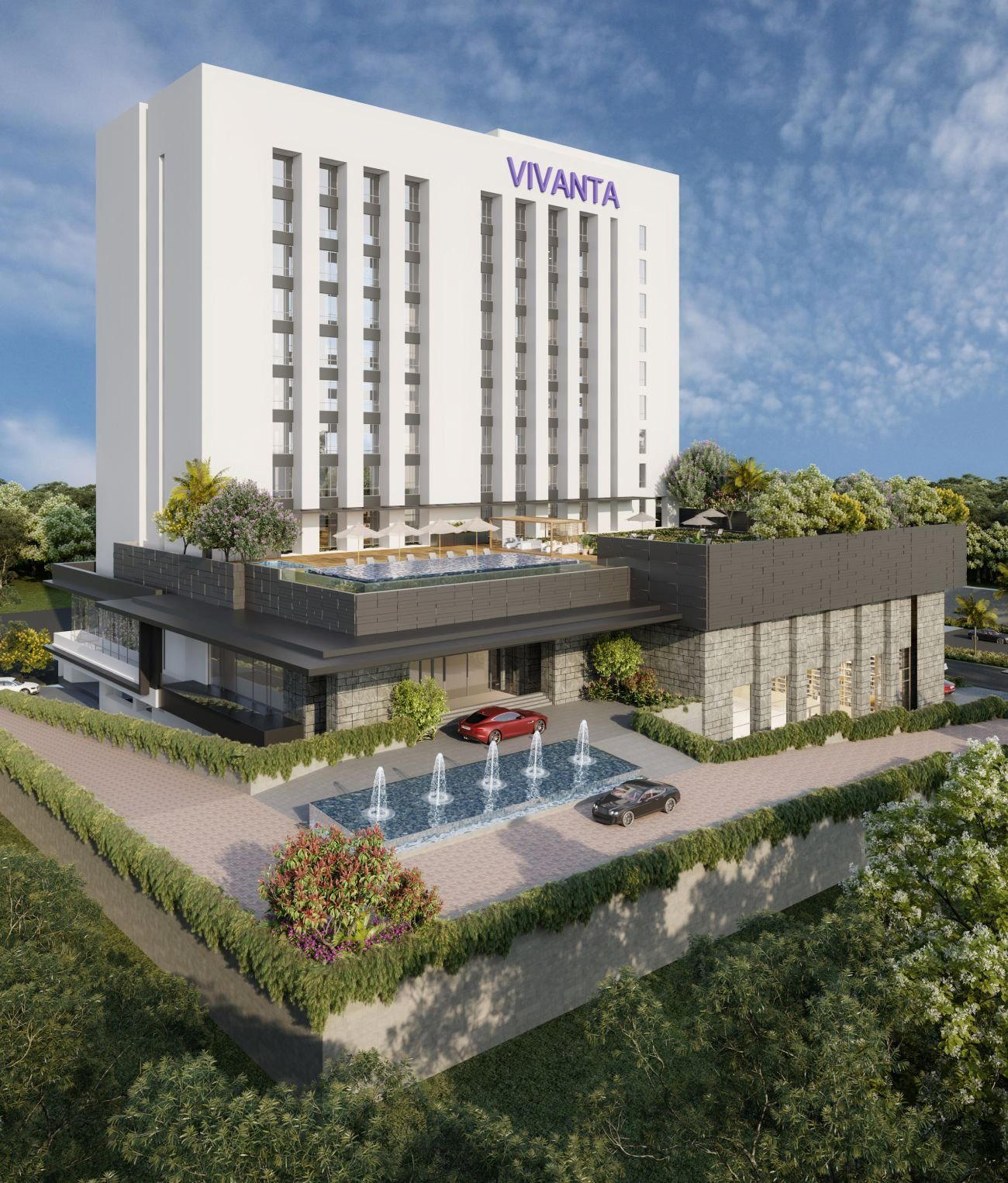
Arriving in Vrindavan: What the City Demands of Its Hotels
Vrindavan receives millions of pilgrims annually, yet its hotel infrastructure has historically skewed toward either dharamshalas, the spartan lodge-style accommodation that serves religious travellers on a budget, or the sprawling resort properties that appeared in the 2010s as domestic leisure tourism expanded. Into that gap, the Vivanta brand, Taj Hotels' mid-luxury tier, has positioned properties designed to serve a visitor who wants the proximity of a pilgrimage town without the austerity of its traditional lodging. Understanding Vivanta Vrindavan means understanding that gap first: the property is a practical answer to what modern Indian travellers expect when visiting sacred destinations.
The Oberoi Amarvilas in Agra and The Taj Mahal Palace, Mumbai anchoring its flagship identity. Vivanta operates in a different register, targeting the upper-mid segment rather than the leading bracket. Vivanta Vrindavan is a 135-room hotel. In a city like Vrindavan, that positioning carries a certain logic: the visitor mix is weighted toward religious intent, and extravagance can read as tone-deaf in a place where the street life outside is defined by temple bells, flower vendors, and the movement of devotees between ghats.
Design in a Sacred Context
Hotels in pilgrimage cities face a design problem that leisure resorts do not: how to create a sense of refuge and comfort without visually or culturally disconnecting from the city's spiritual register. Vrindavan's architecture is defined by its temples, many of them centuries old, with red sandstone facades, ornate carvings, and inner courtyards designed for contemplative movement rather than transit. Contemporary hotels in this environment make a choice, consciously or not, about how much of that language to absorb.
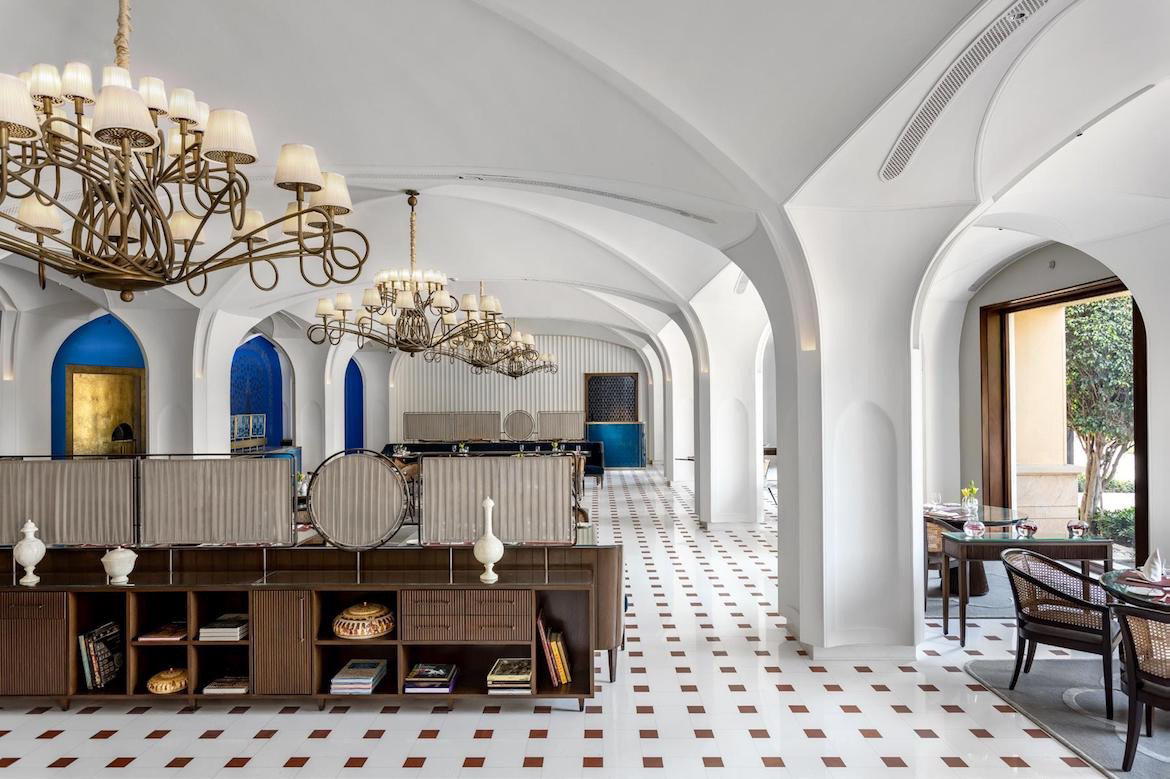
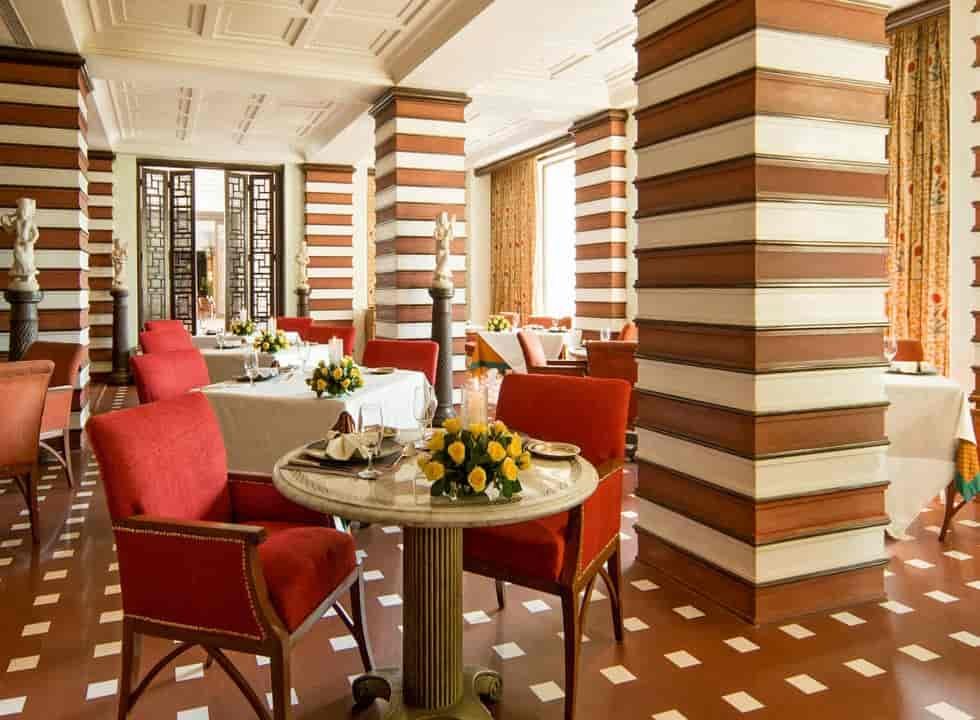
The Vivanta brand across India has generally opted for contemporary interiors with selective nods to regional craft and colour, an approach that borrows visual coherence from local traditions without attempting reproduction. In Vrindavan specifically, that means a palette and material vocabulary shaped by the region's association with devotional colour: the deep yellows, saffrons, and blues that saturate the city's festival imagery carry through into Indian hospitality design conventions even when the building itself is modern construction.
For travellers who have stayed at comparable Taj group properties in heritage contexts, such as Haveli Dharampura in Delhi or Chapslee in Shimla, the contrast is instructive. Those properties work with pre-existing built heritage.A purpose-built Vivanta operates differently, constructing its sense of place through material choices, art programming, and spatial proportion rather than through the bones of an older building. Neither approach is inherently stronger, but they produce different atmospheres, and in Vrindavan, where the surrounding city is already dense with authentic architectural legacy, the modern construction model requires more deliberate design work to earn its surroundings.
What Vrindavan Asks of a Visitor's Schedule
The temple circuit in Vrindavan is not linear. The city's major sites, Banke Bihari Mandir, ISKCON's sprawling compound, Prem Mandir with its illuminated evening programme, and dozens of smaller ghats and shrines along the Yamuna, are distributed across a walkable but crowded urban grid. Early mornings and early evenings are the primary ritual windows, with Banke Bihari's famous darshan drawing the largest crowds between roughly 8am and noon and again in the late afternoon.A hotel that positions itself within easy reach of this circuit changes the character of the stay meaningfully.
The Oberoi Amarvilas in Agra, where sight-line positioning relative to the Taj Mahal is the property's primary design argument, illustrates how seriously Indian luxury hospitality can take geographic relationship to a landmark. Vrindavan demands a different approach: the temples are numerous and dispersed rather than singular and monumental, making street-level access and logistical ease more important than any single view.
The Broader Pilgrimage Belt and Where Vivanta Vrindavan Fits
Vrindavan sits within a roughly two-hour drive from Agra and around three hours from central Delhi by road, placing it squarely within the North Indian heritage and pilgrimage corridor that also takes in Mathura, Fatehpur Sikri, and the broader Braj region. Travellers combining a visit to Vrindavan with Agra's Mughal monuments or Delhi's urban offering will find that the accommodation tier they choose affects how comfortably that multi-stop itinerary flows.A Vivanta-level property provides a baseline of consistent service standards across the corridor, which matters when moving between cities with different hotel markets.
Further afield but relevant for comparison, properties like Amanbagh in Ajabgarh or Alila Fort Bishangarh in Manoharpur demonstrate what India's top tier of destination hospitality looks like when architecture and setting are the primary product. The hotel operates several tiers below that in both price and ambition, but for a pilgrim-city context, that calibration may be the appropriate one. Pilgrimage is not primarily about the hotel.
The Leela Palace Jaipur, Ananda in the Himalayas in Narendra Nagar, and Aman-i-Khas in Ranthambore, all of which sit at higher price points and more scenically prominent locations.
Planning a Stay
Vrindavan's peak periods cluster around Holi, which the Braj region celebrates with unusual intensity over several days preceding the national festival, and Janmashtami, Krishna's birth anniversary, when the city sees its largest annual crowds. Booking at either of these windows requires significant lead time, and even mid-range properties fill well in advance. The shoulder months, October through February, when North Indian weather is cooperative, represent one comfortable window for a visit combining temple access with manageable street conditions. Summers in the Yamuna basin run hot and are avoided by most leisure travellers. For further reference on comfortable stays in neighbouring markets, Gateway Dehradun and The Leela Palace New Delhi provide useful calibration on what branded mid-to-upper hotel infrastructure looks like across the Northern India corridor.
International travellers building a broader itinerary around India may also find it useful to reference Aman New York or Aman Venice as benchmarks for global luxury positioning, against which Vivanta's domestic mid-tier role becomes easier to read.
Comparable Venues
Comparable venues nearby, for context on price, style, and recognition.
| Venue | Cuisine | Price | Notes |
|---|---|---|---|
| Vivanta VrindavanThis venue — the venue you are viewing | Contemporary urban retreat blending modern comfort with spiritual heritage | $$$ | Not listed |
| Garner Kutch Gujarat | Midscale conversion hotel with flexible spaces | $$ | Kutch |
| Natraj Hotel and Restaurant | Traditional family-run hotel with restaurant | $$ | Bapu Bazar |
| Four Seasons Private Residences Mumbai | Ultra‑luxury branded private residences combining five‑star hotel services with high‑rise waterfront living in Mumbai’s Worli district. | $$$$ | Lower Parel |
| Pebble Street | Hotel | $$ | New Friends Colony |
| Gateway Dehradun | Contemporary comfort reflecting local heritage | $$$ | Niranjanpur |
Continue exploring
More in Vrindavan
Hotels in Vrindavan
Browse all →
Restaurants in Vrindavan
Browse all →
At a Glance
- Serene
- Modern
- Elegant
- Sophisticated
- Destination Wedding
- Family Vacation
- Weekend Escape
- Group Retreat
- Infinity Pool
- Garden
- Terrace
- Wi Fi
- Pool
- Spa
- Fitness Center
- Room Service
- Concierge
- Restaurant
- Bar
- Meeting Rooms
- Garden
- Wi Fi
- Pool
- Spa
- Fitness Center
- Room Service
- Concierge
- Restaurant
- Bar
- Meeting Rooms
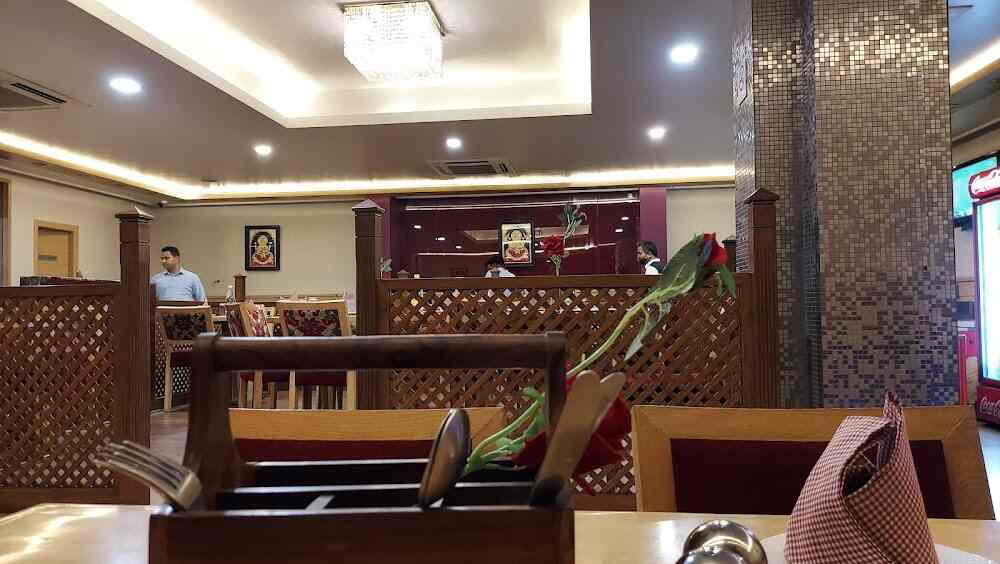
Calming interiors with soft color palettes, modern amenities, and a serene atmosphere infused with spiritual hospitality.