

Michelin Selected · Preferred Hotels Member
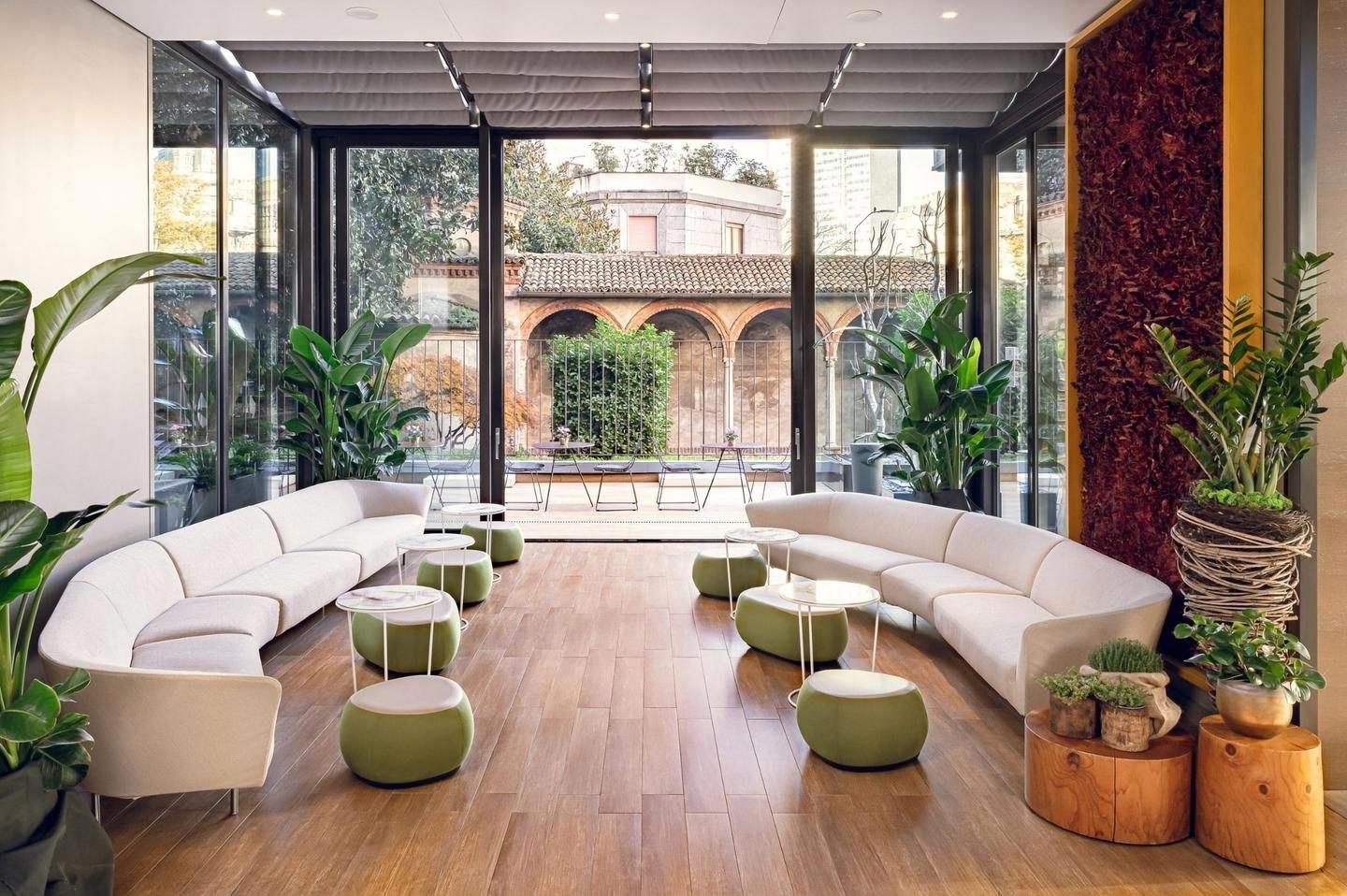
Starhotels E.c.ho. sits at Viale Andrea Doria 4 in Milan's Repubblica district, a 143-room property that occupies a different competitive tier from the city's heritage palazzo hotels. Its position places it within walking reach of Stazione Centrale and the Porta Nuova business corridor, making it a practical anchor for both commercial and leisure stays in northern Milan.

Pearl is the En Primeur Club membership app — saves, bookings, and concierge access live there. Same editors, same standards.
Northern Milan's Business District, Reconsidered
Milan's hotel market has long been defined by two poles: the heritage palazzi clustered around the Quadrilatero della Moda, where properties like Grand Hotel et de Milan and Bvlgari Hotel Milan trade on nineteenth-century credentials, and the newer design-led properties pushing into Porta Nuova and the Isola neighbourhood. Starhotels E.c.ho. at Viale Andrea Doria 4 in the Repubblica quarter, sits between these poles geographically and commercially. At 143 rooms, it operates at a scale that positions it closer to the full-service business hotel than to the boutique design properties that define Milan's more photographed lodging tier.
That positioning matters for a specific kind of traveller. The Repubblica district, sandwiched between Stazione Centrale and the gardens of Porta Venezia, is a working part of the city rather than a curated one. Hotels here compete on access and efficiency as much as atmosphere, which sets a different set of expectations than properties like Mandarin Oriental Milan or Portrait Milano, whose guest experience is built around neighbourhood immersion in the fashion and design quarters.
The Starhotels Group and Its Environmental Commitments
Starhotels is an Italian-owned group with a portfolio concentrated in major Italian cities and a handful of international outposts. Within the group's positioning, E.c.ho. carries a particular designation: the name itself is a contraction of eco and hotel, a signal of the property's formal sustainability orientation. Italian hotel groups operating in this tier have increasingly formalised environmental commitments as both regulatory pressure and guest expectation have shifted since the mid-2010s, and Starhotels has publicly aligned E.c.ho. with that movement.
The sustainability framing at E.c.ho. is not incidental branding. The property operates within a broader shift in the Italian hospitality sector toward measurable environmental standards, where energy efficiency certification, waste reduction programs, and responsible sourcing have moved from differentiators to baseline expectations for properties targeting the corporate travel segment. At 143 rooms, E.c.ho. sits at a scale where such commitments are operationally meaningful rather than symbolic: building systems, supply chains, and housekeeping protocols all operate at sufficient volume for changes to produce measurable outcomes.
For context, the sustainability conversation in Italian luxury hospitality looks quite different at properties like Passalacqua in Moltrasio or Castello di Reschio in Lisciano Niccone, where the approach is embedded in agricultural land management and heritage restoration. At an urban business hotel in central Milan, the parameters are different: energy consumption in a dense city block, procurement from regional suppliers, and reducing single-use materials across a high-turnover room count are the relevant measures.
What the Repubblica Location Delivers
Viale Andrea Doria runs north from Stazione Centrale, which means guests at E.c.ho. have walking access to one of Europe's major rail hubs. High-speed services from Milano Centrale reach Rome in under three hours and Florence in under two, which makes the location genuinely useful for itinerary-building across northern and central Italy. Properties further into the fashion district, including Hotel Principe di Savoia and Vico Milano, offer a different neighbourhood experience but require more transit time to reach the rail network.
The Porta Nuova business district, home to Milan's contemporary architecture and the relocated Unicredit tower, is accessible on foot or by the M2 and M3 metro lines that serve the Repubblica area. This connectivity makes E.c.ho. functional for trade fair visitors, since the Fiera Milano Rho complex connects via direct rail from Centrale, and for Salone del Mobile season in April, when hotel availability across the city compresses sharply and properties in every district command premium rates.
Travellers considering Milan's broader accommodation map should note that the city's design week and fashion weeks represent the highest-demand periods, when booking lead times at properties across all tiers extend significantly. Outside those windows, the Repubblica district typically offers more availability than the Quadrilatero, which makes E.c.ho. a practical alternative for visitors whose itinerary centres on the Centrale transport hub rather than the luxury retail corridor.
Placing E.c.ho. in the Italian Hotel Context
Understanding where E.c.ho. sits requires some calibration against the wider Italian market. The peninsula's premium hotel segment has diversified considerably, with properties like Borgo Egnazia in Savelletri di Fasano, Il San Pietro di Positano, and Aman Venice occupying the upper end of a design-and-experience-led tier, while urban business properties serve a different brief entirely. E.c.ho.
That does not diminish the property's utility. Italian-owned hotel groups operating within formal sustainability frameworks occupy a specific niche in the corporate travel segment, where environmental credentials have become procurement criteria for companies booking accommodation at scale. For that audience, a 143-room property with a documented eco-orientation and direct rail access to Italy's high-speed network is a more relevant option than a smaller palazzo hotel whose environmental infrastructure was not designed with corporate supply chain requirements in mind.
Travellers whose priority is immersion in Milan's design and food culture may find properties like 3Rooms 10 Corso Como or 10 Corso Como Café a more immediate entry point into the city's creative quarters. For those using Milan as a rail hub for broader Italian travel, combining E.c.ho. with onward stays at properties like Casa Maria Luigia in Modena, Four Seasons Hotel Firenze, or Bulgari Hotel Roma maps naturally to the Centrale departure point.
Italy's hotel scene beyond Milan includes strong regional alternatives worth considering depending on the duration of a trip. Borgo Santandrea on the Amalfi Coast, JK Place Capri, Rosewood Castiglion Del Bosco in Montalcino, Il Pellicano in Porto Ercole, and Corte della Maestà in Civita di Bagnoregio each represent distinct regional propositions that extend any Milan-anchored Italian itinerary into the country's more rural registers. For international reference points on what design-led sustainability looks like at scale, Amangiri in Canyon Point offers a useful contrast in how environmental integration operates in an entirely different climate and terrain context. See our full Milan restaurants and hotels guide for a complete picture of the city's accommodation and dining options across all tiers. For comparable international urban hotel considerations, The Fifth Avenue Hotel in New York City and Aman New York illustrate how different cities approach the business-versus-experience tension in full-service urban properties.
Planning Your Stay
Starhotels E.c.ho. is located at Viale Andrea Doria 4, a short walk from Milano Centrale. The property's 143 rooms position it as a full-service urban hotel rather than a boutique property, which means the booking experience follows standard hotel protocols rather than the allocation-based systems used by smaller design properties. Peak demand periods in Milan align with Salone del Mobile in April and the fashion weeks in February and September, when rates across all tiers increase and availability tightens considerably. Outside those windows, the Repubblica district tends to offer more room to move on both availability and pricing than the more coveted Quadrilatero addresses.
At a Glance
Comparable venues nearby, for context on price, style, and recognition.
| Venue | Price | Awards | Notes |
|---|---|---|---|
| Starhotels E.c.ho.This venue (the venue you are viewing) | $100–200 | Michelin Selected · Preferred Hotels Member | Not listed |
| Hotel Cristoforo Colombo | Not listed | Preferred Hotels Member | Buenos Aires - Porta Venezia - Porta Monforte, Classic urban hotel in historic 19th-century building with modern comforts. |
| 3Rooms 10 Corso Como | Not listed | Michelin Selected | Porta Garibaldi - Porta Nuova, Design-focused boutique hotel showcasing mid-20th century modernist furniture and contemporary art within a historic Milan complex. |
| STRAF | $300–500 | Michelin Selected · Design Hotels Member | Duomo, Boutique design hotel in Art Deco building with contemporary interiors. |
| Nhow Milan | Not listed | Michelin Selected | Tortona, Fashion & Design hotel in a repurposed industrial building |
Recognition history
Dated appearances from independent guides and award organizations, with the underlying list record or original source where available.
Michelin Selected
Michelin
Preferred Hotels Member
Preferred Hotels
Continue exploring
More in Milan
Hotels in Milan
All hotels in Milan →
Bars in Milan
All bars in Milan →
Restaurants in Milan
All restaurants in Milan →
Details
- Modern
- Elegant
- Business Trip
- Weekend Escape
- Terrace
- Historic Building
- Wi Fi
- Fitness Center
- Restaurant
- Bar
- Room Service
- Concierge
- Business Center
- Skyline
- Street Scene
- Elevator
- Wheelchair Accessible
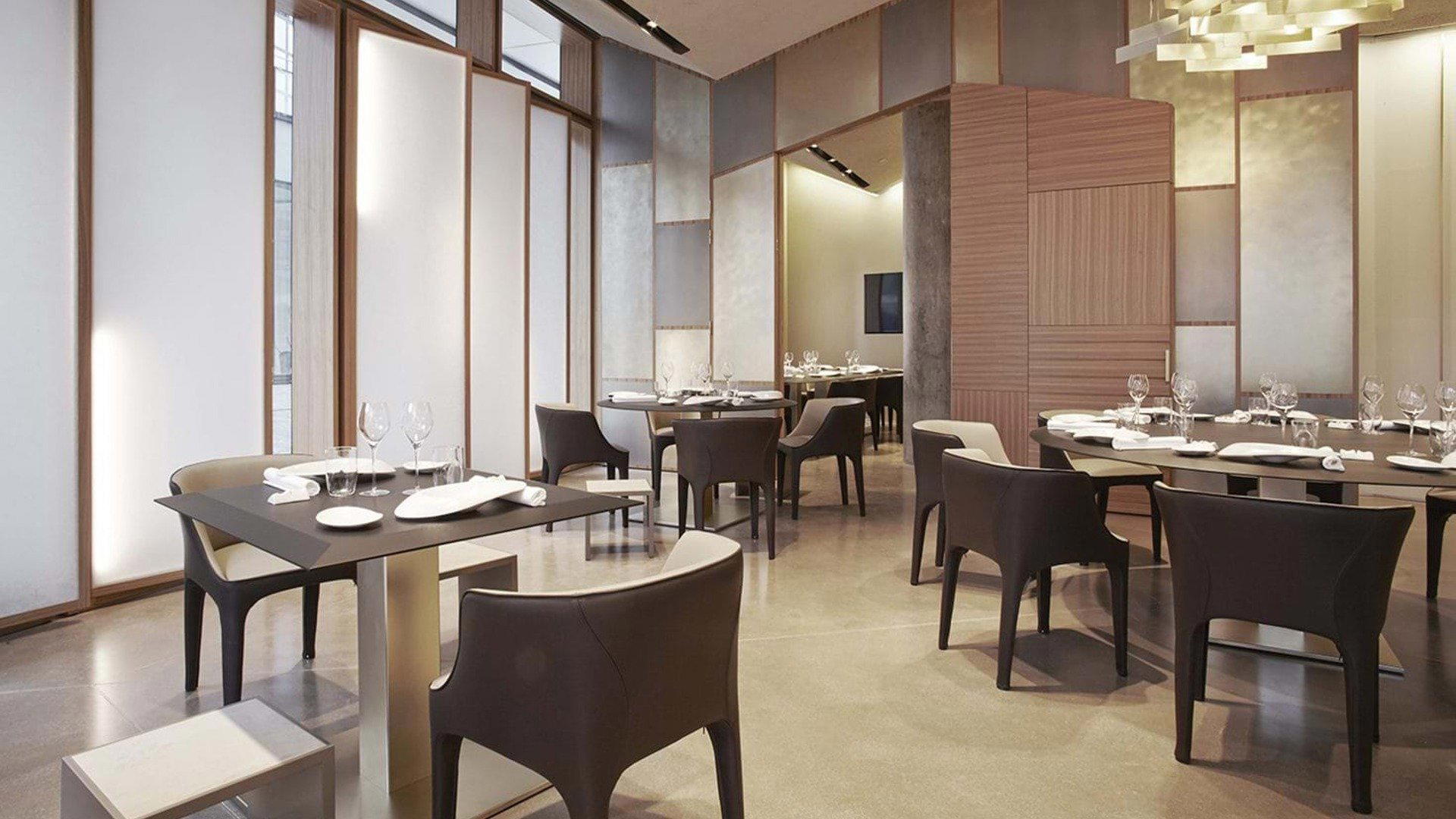
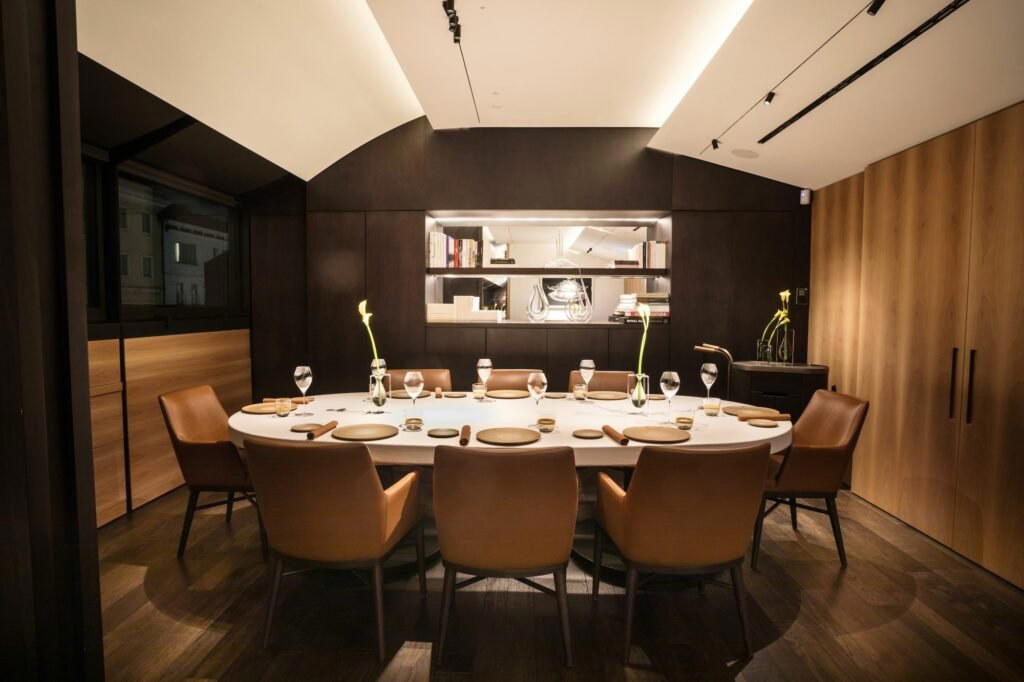
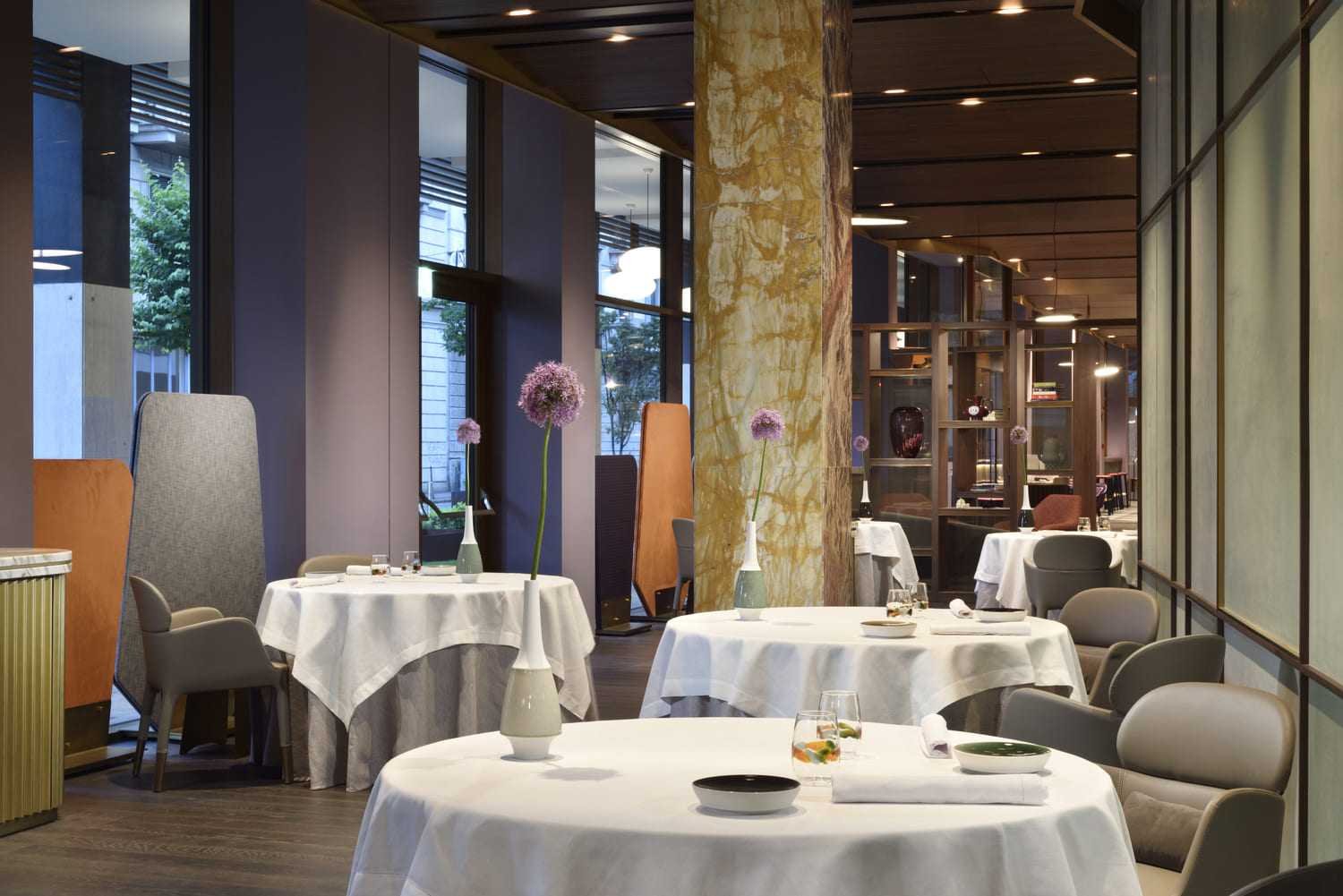
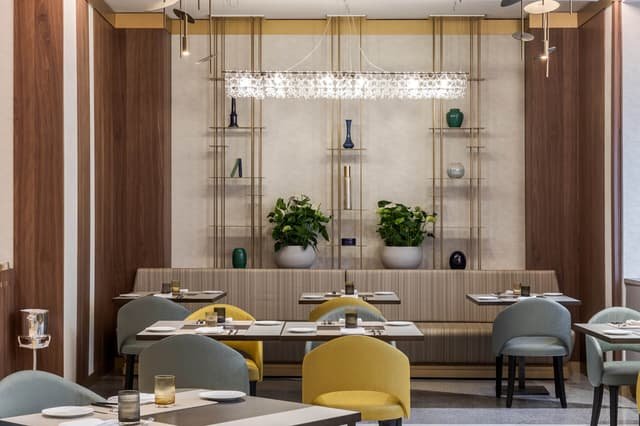
Tranquil and stylish with natural light, modern eco-friendly interiors, relaxing bar atmosphere, and occasional live jazz.