SpiceTree Munnar

SpiceTree Munnar, named Kerala's Leading Boutique Hotel at the 2025 World Travel Awards, sits in the tea-plantation terrain above Chinnakanal where the Western Ghats define both the architecture and the pace. The property belongs to a tier of design-led hill retreats that prioritise material authenticity over resort scale, with accommodation built into the slope rather than imposed upon it.
Pearl is the En Primeur Club membership app — saves, bookings, and concierge access live there. Same editors, same standards.
- Address
- P.O, Muttukad-Periakanal Road, Nadukkurissu, Chinnakkanal, Munnar, Kerala 685613, India
- Website
- spicetreemunnar.com
- Directions
- Get directions
 Saves & bookings on Pearl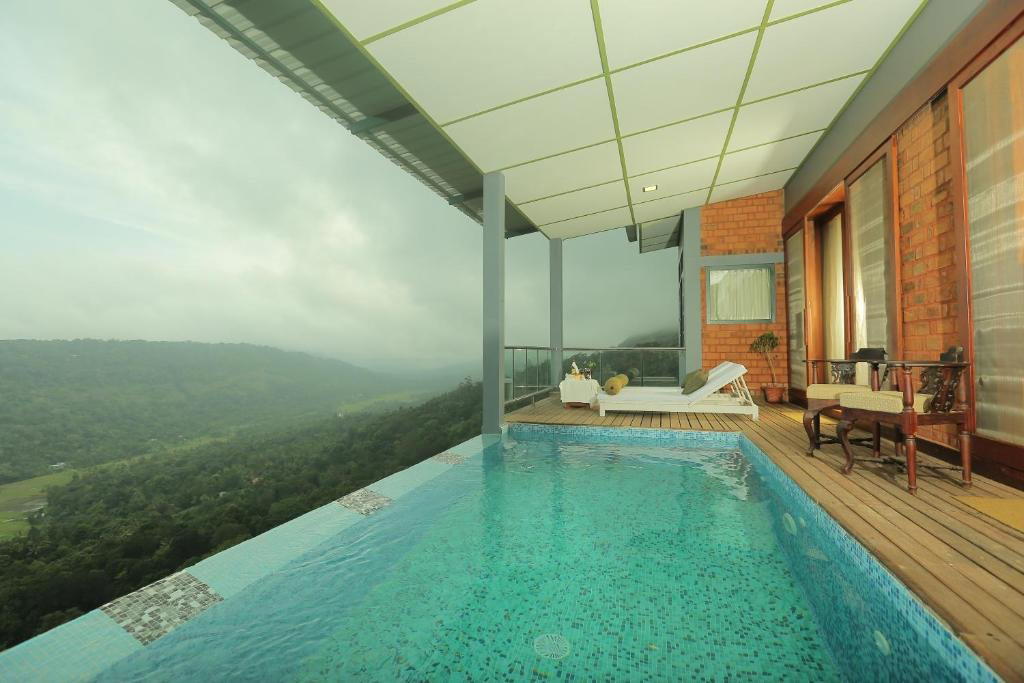
Where the Ghats Set the Terms
Boutique hotels in India's hill-station belt have split into two distinct categories over the past decade: large-footprint legacy resorts that trade on historical prestige, and smaller, topography-responsive properties where the site itself is the primary design brief. SpiceTree Munnar is a 4-star hotel in Chinnakanal, Kerala, recognized in 2025 as Kerala's Leading Boutique Hotel by the World Travel Awards. SpiceTree Munnar belongs firmly in the second category. Positioned along the Muttukad-Periakanal Road above Chinnakanal, in the upper reaches of the Munnar tea country, it operates at an altitude and scale that makes proximity to the land non-negotiable rather than decorative.
That relationship between building and terrain is the right starting point for understanding what distinguishes this tier of Kerala hospitality from its peers. Properties like Anantya By The Lake in Kaliyal or Ananda in the Himalayas in Narendra Nagar have made a similar argument in their respective geographies: that a premium hill retreat earns its positioning through how carefully it integrates with its natural setting, not through lobby grandeur or branded amenities alone. SpiceTree Munnar's 2025 World Travel Awards recognition as Kerala's Leading Boutique Hotel confirms that argument is landing with the industry, and with the travellers voting through those awards.
Architecture as Site Response
The design approach at properties of this type in the Western Ghats starts from constraint. Steep gradients, monsoon water management, and Kerala's strict environmental protections mean that building here is not simply a matter of placing structures on flat ground. The result, when handled with care, is architecture that reads as a series of cascading levels, each unit or cluster positioned to preserve sightlines to the plantation canopy and valley below rather than compete with them.
The hotel follows this logic. The accommodation is built into the hillside in a way that each space relates differently to the elevation, rather than replicating a single room type across a uniform footprint. This is the fundamental distinction between properties that earn boutique classification and those that use the word loosely. At the scale this property operates, material choices and spatial sequencing carry more weight than they would in a larger hotel where volume absorbs inconsistency. Stone, timber, and locally sourced finishing materials appear in Kerala hill-station builds of this calibre as functional choices, not styling decisions; they weather predictably, they connect the interior palette to the exterior environment, and they age in a way that synthetic materials do not.
For travellers arriving from large-footprint luxury properties, whether the palatial corridors of The Leela Palace New Delhi or the historical scale of The Taj Mahal Palace, Mumbai, the adjustment at the hotel is one of register, not quality. The language shifts from monument to shelter, from procession to pause.
The Munnar Context
Munnar's appeal as a destination has been consistent for well over a century, rooted in the tea-plantation economy that shaped the landscape and the colonial-era hill-station culture that followed. The area around Chinnakanal sits at the quieter, less-trafficked end of that geography, above the town congestion that affects the lower reaches of Munnar during peak season. That positioning matters for a boutique property: the guest experience depends on a quality of silence and an unobstructed relationship with the landscape that is difficult to maintain in a more saturated tourist corridor.
The Western Ghats, classified as a UNESCO World Heritage biodiversity hotspot, frame the broader natural context. At this elevation and in this microclimate, mornings typically arrive with mist sitting in the valley and the tea bushes holding dew at the edge of cleared ground. These are the conditions that the design of a property like SpiceTree Munnar is specifically built around, and they are available most reliably between September and May, after the Southwest Monsoon has cleared and before pre-monsoon heat builds in April. The Northeast Monsoon affects this area more lightly than the coast, which extends the practical travel window.
comparable set and Positioning
The World Travel Awards recognition places the hotel in a legible competitive tier within Indian boutique hospitality. Across the subcontinent, the design-led, low-key-count category includes properties as varied as Amanbagh in Ajabgarh, Suján Jawai in Pali, and Alila Fort Bishangarh in Manoharpur, each earning its standing through a specific site-driven identity rather than brand scale. The hotel operates in that tradition, applied to Kerala's hill-country conditions.
Difference from Rajasthan's desert-luxury tier is instructive. Where those properties draw on fortress architecture, ochre rock, and wide sky, Kerala's premium hill retreats work with dense green, rain, canopy cover, and a culture that expresses itself through spice cultivation rather than royal heritage. The material vocabulary is entirely different, and so is the pace of a stay. Aman-i-Khas in Ranthambore offers a useful contrast: the tented luxury of the wildlife corridor versus the plantation-wrapped enclosure of the Ghats. Both approaches reward travellers who understand what the specific environment offers, rather than expecting a standardised luxury template.
Other Indian boutique properties worth mapping against the hotel's tier include Chapslee in Shimla for northern hill-station character, Amaya in Solan for Himachal comparisons, and Haveli Dharampura in Delhi for the heritage-property category in a different urban context. Internationally, the design-led small-hotel approach finds expression in properties like Aman Venice and Aman New York, though the scale and urban density make those comparisons primarily structural rather than experiential.
Planning a Stay
The journey itself functions as a decompression from the city, which is partly the point of the destination. The property's address on the Muttukad-Periakanal Road places it in the Nadukkurissu area above Chinnakkanal, at an elevation that puts it above much of the plantation traffic.
The cooler months at this elevation are measured rather than dramatic; temperatures stay comfortable without requiring heavy insulation, which makes the outdoor relationship with the landscape practical for much of the day.
Side-by-Side Snapshot
Comparable venues nearby, for context on price, style, and recognition.
| Venue | Cuisine | Price | Awards | Notes |
|---|---|---|---|---|
| SpiceTree MunnarThis venue — the venue you are viewing | Intimate hillside retreat set in tea plantations with wooden cottages and modern comforts. | $$$$ | 4-Star | Not listed |
| Taj Bekal Resort and Spa, Kerala | Contemporary classic resort with Kettuvallam houseboat-inspired architecture blending local Kerala elements and modern luxury. | $$$$ | 5-Star | Bekal |
| Taj Theog Resort & Spa, Shimla | Lodge-style luxury resort blending contemporary architecture with mountain tranquility. | $$$$ | 5-Star | Theog |
| Taj Fort Aguada Resort & Spa | Portuguese-colonial heritage resort with modern luxury | $$$$ | 5-Star | Candolim |
| Taj Green Cove Resort & Spa, Kovalam | Luxury tropical resort combining contemporary Balinese design with traditional Kerala architecture on a hillside setting. | $$$$ | 5-Star | Kovalam |
| Shakti Prana | remote eco-luxury mountain retreat | $$$$ | 5-Star | Kasar Devi |
Recognition history
Dated appearances from independent guides and award organizations, with the underlying list record or original source where available.
World Travel Awards
World Travel Awards
At a Glance
- Scenic
- Quiet
- Elegant
- Cozy
- Romantic
- Honeymoon
- Romantic Getaway
- Wellness Retreat
- Weekend Escape
- Infinity Pool
- Panoramic View
- Destination Spa
- Garden
- Wi Fi
- Pool
- Spa
- Fitness Center
- Room Service
- Concierge
- Restaurant
- Mountain
- Garden
- Wi Fi
- Pool
- Spa
- Fitness Center
- Room Service
- Concierge
- Restaurant
Tranquil and serene with natural lighting, lush greenery views, soundproof rooms, and a peaceful spa-like atmosphere praised for its calming oasis feel.