Sofitel Legend The Grand Amsterdam


A former city hall and convent complex on Oudezijds Voorburgwal, Sofitel Legend The Grand Amsterdam occupies one of the most historically layered addresses in the city. The 177-room Accor property places Dutch architectural heritage alongside a two-floor spa, a canal-side location, and Bridges restaurant, which has built a sustained reputation for fish cookery among Amsterdam's serious dining addresses.
 Discover on Pearl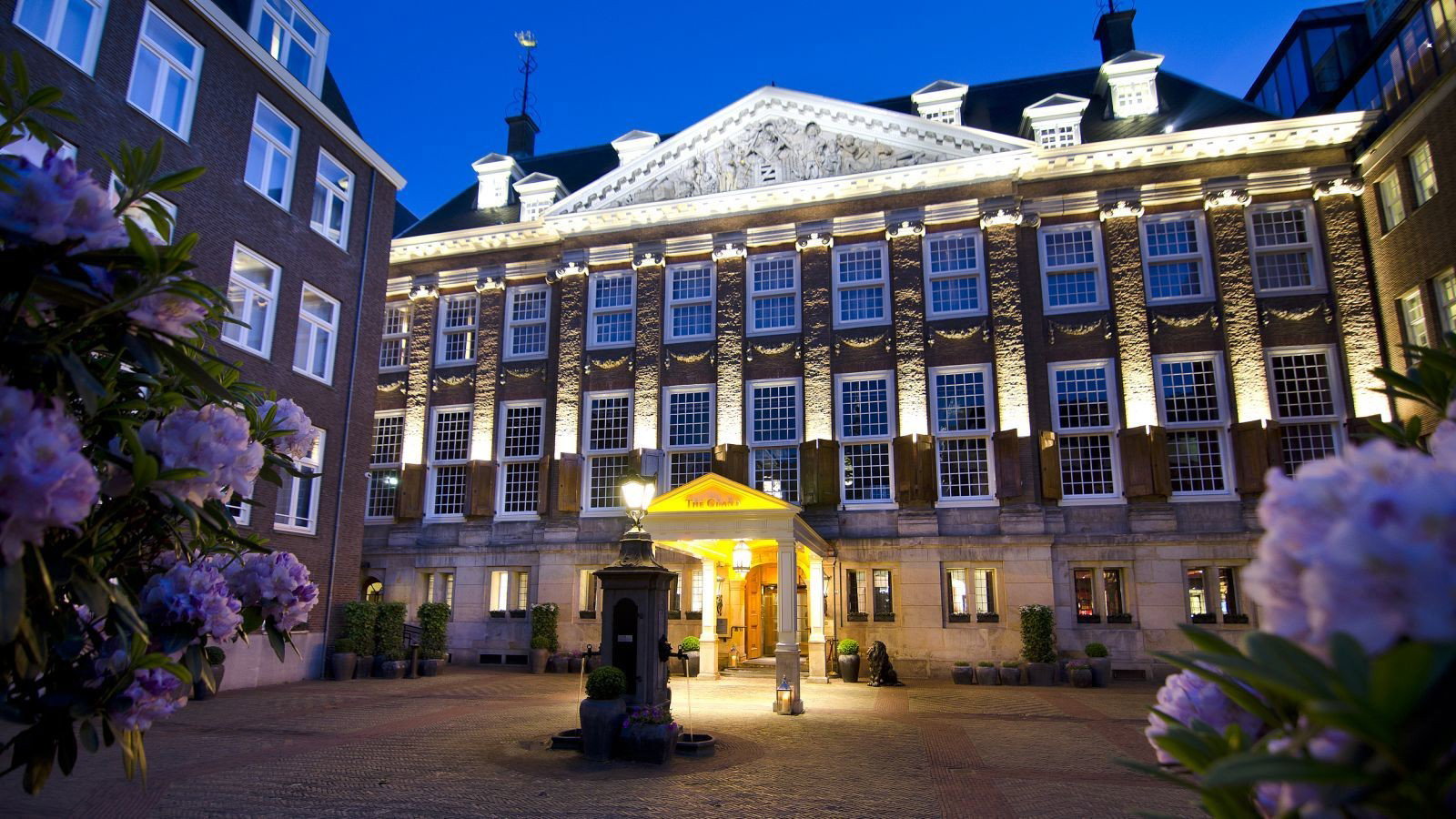
Where the City's Administrative Past Becomes a Hotel Address
Oudezijds Voorburgwal is one of Amsterdam's oldest canal streets, running through the medieval city core just east of Dam Square. The buildings along this stretch accumulated centuries of civic purpose before tourism or hospitality entered the picture, and Sofitel Legend The Grand Amsterdam sits at the far end of that arc: a property that began as a convent, became a military affairs building, then served as the city's own hall before Accor repositioned it within the Sofitel Legend tier. That sequence of institutional uses is not incidental to the experience — it explains the scale of the interiors, the ceremonial rooms that survive intact, and the particular weight the address carries within Amsterdam's hotel market.
Amsterdam's premium hotel tier has consolidated around a recognisable set of addresses: the Amstel waterfront, the Canal Ring, and a handful of Old Town properties with genuine historic fabric. The Grand sits in that last category alongside De L'Europe Amsterdam and the InterContinental Amstel Amsterdam, competing on heritage credentials rather than contemporary design. Where the Conservatorium and Andaz Amsterdam Prinsengracht draw guests through architectural transformation and design-led identity, The Grand operates on the logic of accumulated history: rooms with wood-beamed ceilings, a Marriage Chamber with stained glass and frescos by Dutch artist Chris Lebeau, and a courtyard garden that functions as a genuine urban retreat rather than a decorative amenity.
The Address and What It Means on the Ground
The canal-side position on Oudezijds Voorburgwal places guests within walking distance of the Rijksmuseum, the Anne Frank House, and the city's main shopping corridor, but the immediate neighbourhood is the medieval centre rather than the more curated Canal Ring. That distinction matters. This part of Amsterdam is older, denser, and more mixed in character than the Jordaan or the southern canal belt, and the hotel operates as a formal island within it. The gardens and courtyard provide a separation from the street that properties further south on the grachtengordel often lack, and the dual-canal setting means that some rooms look out over water on both sides of the building.
Parking in central Amsterdam is one of the more persistent logistical headaches the city presents to arriving guests. The Grand addresses this directly with valet parking available around the clock, which in a city where self-parking near the historic centre can mean a fifteen-minute walk from the nearest garage, is a practical differentiator worth noting before arrival.
Rooms: Scale, Suite Count, and the Royal Suite Question
The 177-room inventory includes 52 suites, a ratio that sits well above the industry average and reflects the building's original scale rather than a conversion decision. Entry rooms begin at 269 square feet under the Classic Room designation — compact by luxury hotel standards but consistent with what historic city-centre buildings allow. The Imperial Suite extends to 1,076 square feet across two bedrooms, and the Royal Suite, positioned on the third floor of a former canal house section, features wood-beamed ceilings, a lounge, and a private balcony with views over the hotel's own courtyard. Canal-facing rooms offer water views; garden and courtyard-facing rooms trade that vista for a quieter internal outlook. Both orientations serve a different kind of stay, and neither is strictly superior to the other depending on what the guest is prioritising.
All rooms across the inventory carry the Sofitel MyBed specification, a walk-in rain shower, and a dedicated desk. These are standardised across the Sofitel Legend tier rather than bespoke to this property, but they represent a consistent baseline that the historic fabric of the building enhances rather than competes with.
The Spa, the Wellness Floor, and Why It Matters in This City
Amsterdam is a high-footfall city where the density of visitors and the compressed geography mean that recovery time matters more than it might in a resort destination. The Sofitel SPA here occupies two full floors, with a heated indoor swimming pool, Turkish steam bath, sauna, relaxation room, and the Sofitel FITNESS exercise room alongside several treatment rooms. For a city-centre hotel in a converted historic building, that scope is considerable. Properties of comparable age and address in Amsterdam rarely offer this depth of wellness infrastructure in-house, which makes it a meaningful operational advantage for guests on longer stays or those arriving after transcontinental travel.
Bridges and the Dining Position
The hotel's restaurant, Bridges, has developed a sustained reputation within Amsterdam's dining scene specifically for fish cookery. In a city with a genuine maritime and North Sea fish tradition, that specialisation has substance behind it. Amsterdam's serious fish restaurants occupy a smaller niche within the broader dining market, and Bridges has maintained a position near the leading of that category over time. For guests who want to eat at the hotel rather than leave it, this removes the usual compromise between convenience and quality that many hotel restaurants still present. The full picture of Amsterdam's restaurant options, including where Bridges sits relative to independent addresses, is covered in our full Amsterdam restaurants guide.
Ceremonies, History Tours, and the Marriage Chamber
The Marriage Chamber is not a hotel amenity in the conventional sense. As a room that survived from the building's civic life as Amsterdam's city hall, it retains its original stained glass and Chris Lebeau frescos in working condition. The hotel offers a Royal Breakfast format in this room, taken on the balcony that overlooks the garden terrace. It is a specific product aimed at a specific occasion, but it illustrates how the property uses its heritage inventory rather than simply preserving it behind glass.
Daily guided history tours depart at 11 a.m. and offer a structured way to understand the building's layered past. For guests already oriented toward Amsterdam's architectural and civic history, this adds interpretive depth to what would otherwise be a hotel stay with impressive but unexplained interiors.
Planning a Stay: Timing, Booking, and Context
Amsterdam operates on a compressed visitor calendar, with spring tulip season and the summer months (June through August) representing the densest booking periods across the city's premium hotel tier. The Grand's 177 rooms mean it has more availability than smaller boutique properties like Breitner House or Canal House, but suite inventory , particularly the Royal Suite , will fill early during peak periods. For stays involving the Marriage Chamber breakfast or private history tours, advance coordination with the hotel is advisable rather than assumed on arrival. Shoulder seasons (March to April and September to October) offer the leading combination of manageable visitor volume and full operational programming across the spa and dining outlets.
For a broader view of how The Grand sits within Amsterdam's wider premium accommodation market, our full Amsterdam hotels guide covers the full competitive set, including design-led options at Park Centraal Amsterdam and Hotel Okura Amsterdam. Elsewhere in the Netherlands, comparable grand hotel formats can be found at Château Neercanne in Maastricht, Château St. Gerlach in Valkenburg aan de Geul, and Grand Hotel Huis ter Duin in Noordwijk aan Zee. For those extending travel internationally, Aman Venice and Aman New York represent the heritage-building conversion model at a different price point, while The Fifth Avenue Hotel in New York City offers a point of comparison for civic-building conversions in a major city context. Further Dutch options at the boutique end of the spectrum include Bij Jef in Den Hoorn, Mooirivier in Dalfsen, Op Oost in Oosterend, Landgoed Hotel Het Roode Koper in Leuvenum, Central Park Voorburg in Voorburg, and De Plesman Hotel The Hague in The Hague. Amsterdam's broader scene, covering bars, wineries, and experiences, is mapped across our full Amsterdam bars guide, our full Amsterdam wineries guide, and our full Amsterdam experiences guide.
Frequently Asked Questions
City Peers
A quick peer check to anchor this venue’s price and recognition.
Preferential Rates?
Our members enjoy concierge-led booking support and priority upgrades at the world's finest hotels.
Get Exclusive Access