Saruni Samburu occupies the Kalama Community Conservancy in Kenya's northern Rift Valley, a stretch of semi-arid wilderness that sees a fraction of the traffic directed at the Maasai Mara. The camp's design works with the terrain rather than against it, producing spaces that read as extensions of the rock and scrub rather than impositions on it. For travellers prioritising Samburu-specific wildlife and a lower-density experience, it sits in a distinct tier from the larger conservancy lodges further south.

Pearl is the En Primeur Club membership app, where members save venues, book tables and use the concierge.
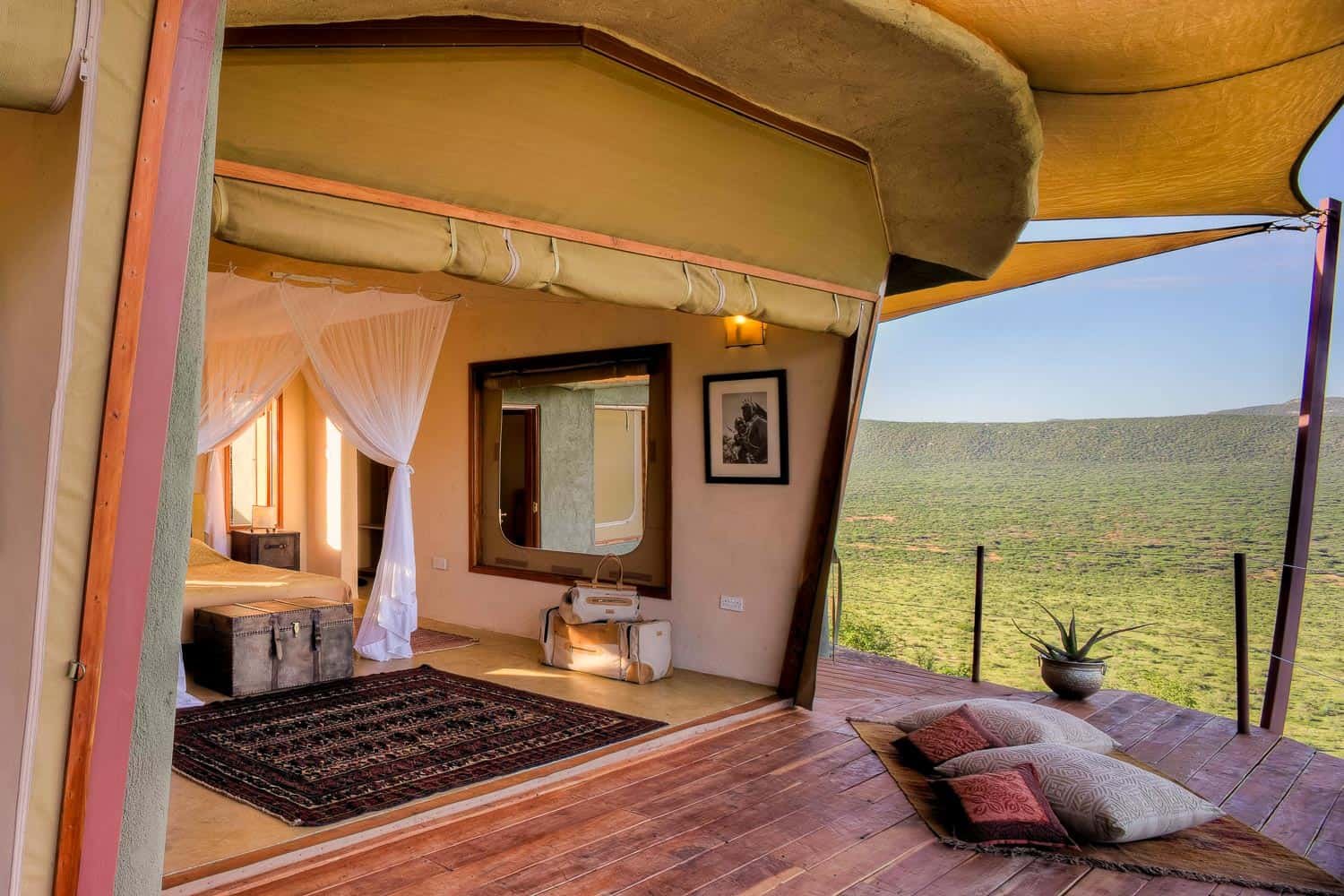
Stone, Canvas, and Open Sky: The Architecture of Saruni Samburu
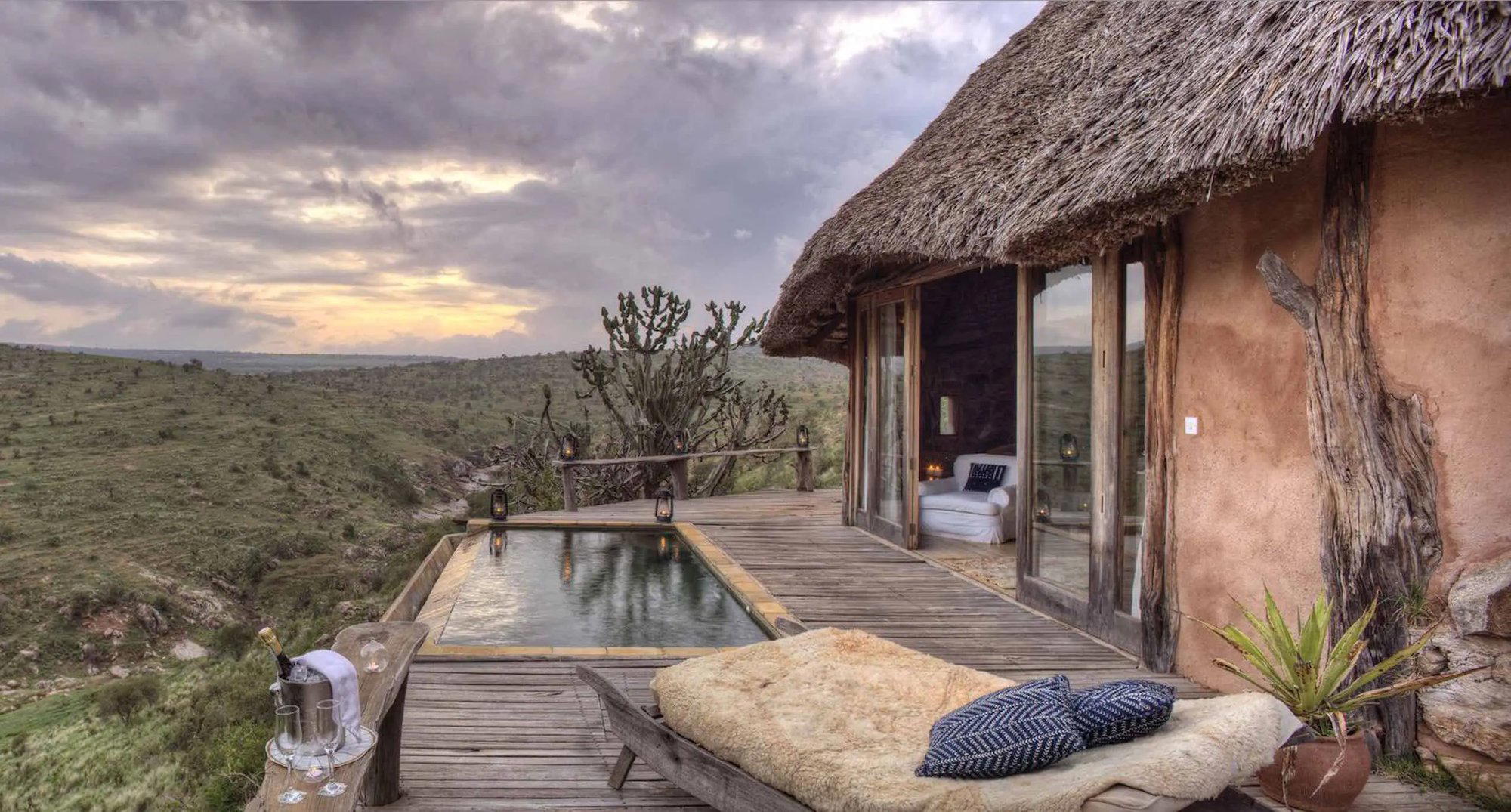
Arriving at Saruni Samburu means crossing the Kalama Community Conservancy, a vast stretch of northern Kenya where the bush thins into acacia scrubland and the horizon sits far enough away to feel genuinely empty. The camp does not announce itself with gates or signage in the conventional sense. What appears instead are low stone structures that seem to have grown from the rocky hillside rather than been placed upon it. This is the defining design logic of the property: local volcanic stone, rough-hewn and unfinished, used not as decoration but as the primary building material. The effect is that the camp reads as an extension of the geology rather than an interruption of it.
The design philosophy behind this approach belongs to a well-established tradition in East African luxury conservation camps, where the architectural brief demands that structures recede into the environment rather than compete with it. Saruni Samburu sits at the more committed end of that spectrum. Platforms are raised to follow the natural contour of the hill, which means each accommodation unit commands an unobstructed sightline across the conservancy below. The structural openness, with walls that open fully to the bush on multiple sides, is not incidental to the experience. It is the experience. The boundary between interior space and the landscape is, in practical terms, absent during the warmer hours of the day.
Kalama Conservancy and What It Means for the Stay
The Kalama Community Conservancy covers roughly 200,000 acres of community-owned land in Samburu County. Saruni Samburu operates within this framework, which means the conservation model is community-based rather than privately owned or government-administered. This matters to the guest experience in ways that go beyond the ethical footnote. Access to Kalama is restricted to guests of the conservancy-affiliated properties, which keeps vehicle density low during game drives. In Samburu, where the dry season concentrates wildlife around the Ewaso Ng'iro river, the combination of low traffic and a distinct northern ecosystem produces a different quality of encounter than the high-volume circuits of the Maasai Mara. Northern Kenya's signature species, Grevy's zebra, reticulated giraffe, Somali ostrich, and gerenuk, are not found in the southern reserves, and Samburu's more arid character gives the conservancy a visual identity that contrasts sharply with the grassland camps further south.
For regional context and comparative planning, our full Samburu restaurants and hotels guide maps the broader options across this part of northern Kenya. Those considering the Mara ecosystem instead will find strong alternatives in andBeyond Bateleur Camp in Maasai Mara National Reserve and Mahali Mzuri in Olare Motorogi Conservancy, both of which operate within private conservancies and offer comparably low vehicle density but against grassland rather than semi-arid terrain.
Kenya's high-end camp market has stratified over the past decade into at least three distinct tiers. The large heritage properties, Fairmont Mount Kenya Safari Club and Fairmont The Norfolk among them, occupy one end. The boutique design camps, often with fewer than twenty keys and a conservancy-based access model, occupy another. Saruni Samburu belongs to the second group.
Further comparators in the broader Kenya premium segment include Borana Lodge in Laikipia, Elewana Loisaba Tented Camp in Loisaba Conservancy, and ol Donyo Lodge in Chyulu Hills. Each occupies a private or community conservancy, each keeps guest numbers low, and each anchors its design identity to its specific landscape. The shared logic across all of them is that scarcity of access is itself a feature. Elewana Elsa's Kopje in Meru National Park follows a related model, set in a park that sees a fraction of the international visitor volumes of the Mara or Amboseli circuits.
Design Detail and the Logic of Openness
The architectural strategy at Saruni Samburu rewards attention to what is deliberately absent. There are no enclosed corridors connecting units to public spaces, no lobby in the conventional hotel sense, and the communal areas function as viewing platforms as much as social spaces. This is typical of the better-designed East African camps, where the layout encourages orientation toward the bush at all times. The stone construction holds heat in the early morning and releases it slowly, which means the physical fabric of the buildings responds to the diurnal temperature range of the semi-arid north rather than working against it through mechanical climate control.
Within Kenya's broader premium camp cohort, this approach to material honesty in construction aligns Saruni Samburu with properties like Cottar's Safaris in Narok, which draws on 1920s East African colonial tent form, and andBeyond Kichwa Tembo Tented Camp, where the canvas and timber construction is similarly rooted in the landscape character of its specific site. Design-led camps at this tier understand that aesthetic coherence with the environment is a competitive signal, not simply a stylistic preference.
Planning a Stay
Samburu's dry seasons, January to February and June to October, concentrate game around the Ewaso Ng'iro river and deliver the most reliable wildlife sightings. The camp is accessed via small aircraft from Nairobi's Wilson Airport on scheduled or chartered flights to local airstrips, with transfers arranged through the property. Guests arriving in Nairobi first may find Villa Rosa Kempinski in Nairobi a practical holding point before the onward domestic flight. Given the conservancy-based access model and the low guest count that defines this tier of property, booking well in advance is advisable, particularly for the peak dry season months when demand across northern Kenya's small-inventory camps runs high.
Elsewhere in Kenya's coast and lake circuits, Sirai Beach in Kilifi, Chale Island, and Sarova Whitesands Beach Resort and Spa in Mombasa offer contrasting formats for those building a longer Kenya itinerary combining wildlife and coast. Kinondu Kwetu in Diani Beach and Sarova Lion Hill Game Lodge in Nakuru represent further options at different price points across the country. For those extending into Tanzania or considering comparable East African formats, Enaidura Camp in Masai Mara, Fairmont Mara Safari Club in Maasai Mara, and JW Marriott Masai Mara Lodge in Talek represent a range of scale and format in the southern reserve. andBeyond Suyian Lodge in Nanyuki and Finch Hattons Luxury Safari Camp in Tsavo complete a cross-section of Kenya's premium camp offering across its major wildlife areas.
Quick Comparison
| Venue | Price | Awards |
|---|---|---|
| Saruni SamburuThis venue (the venue you are viewing) | Not listed | Not listed |
| Fairmont Mount Kenya Safari Club | Not listed | Forbes Recommended · Virtuoso Luxury Hotel Partner |
| Fairmont The Norfolk | $200–300 | 1 Michelin Key · Forbes Recommended |
| Giraffe Manor | $1,500–2,500 | 3 Michelin Keys · La Liste Top Hotels |
| Great Plains Mara | Not listed | Relais Chateaux Award |
| ol Donyo Lodge | $1,000–1,500 | Relais Chateaux Award |
Continue exploring
More in Samburu
Details
- Romantic
- Scenic
- Intimate
- Elegant
- Rustic
- Honeymoon
- Romantic Getaway
- Family Vacation
- Anniversary
- Private Villa
- Panoramic View
- Private Dining
- Infinity Pool
- Destination Spa
- Garden
- Pool
- Spa
- Wi Fi
- Room Service
- Concierge
- Mountain
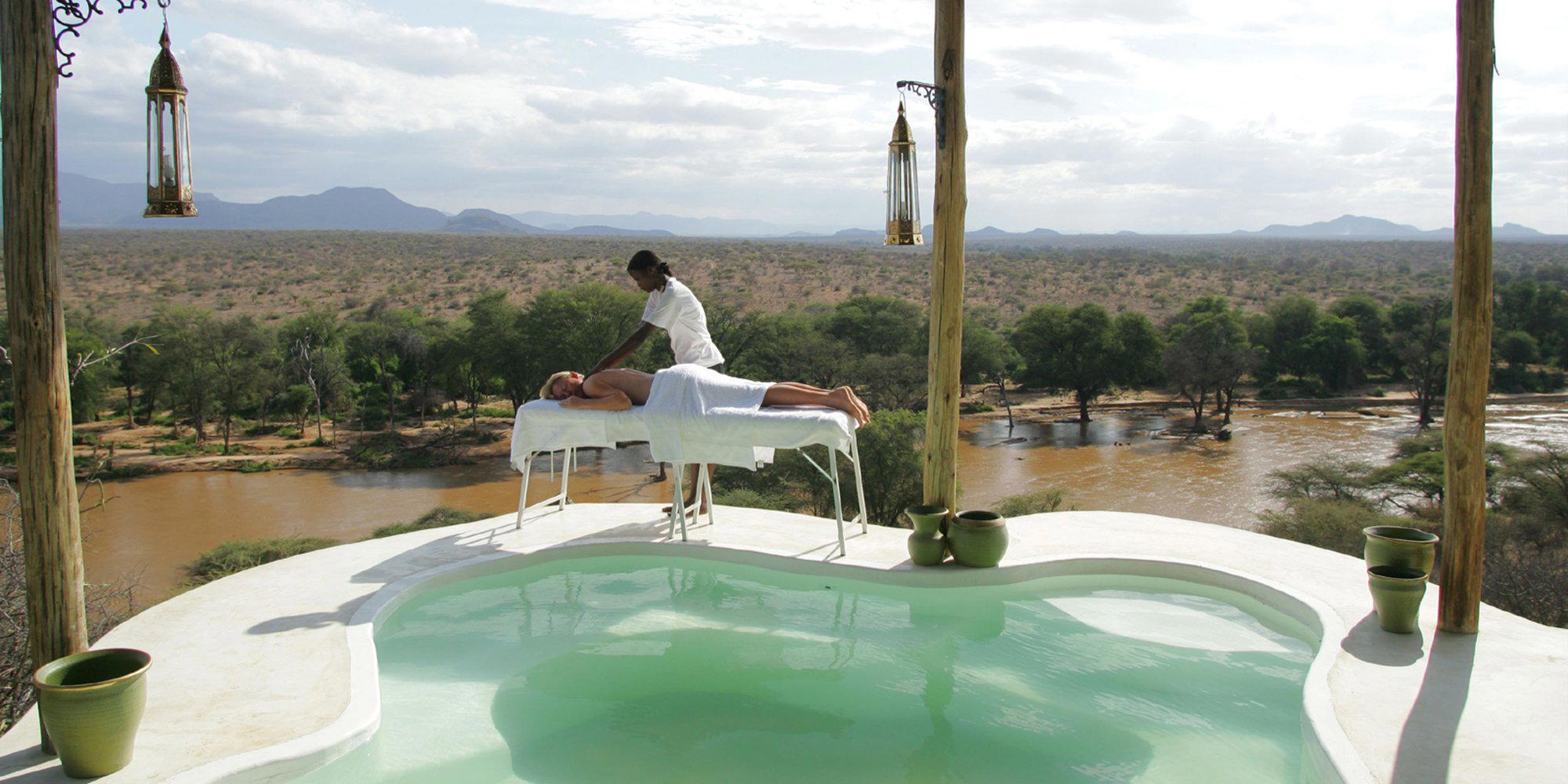
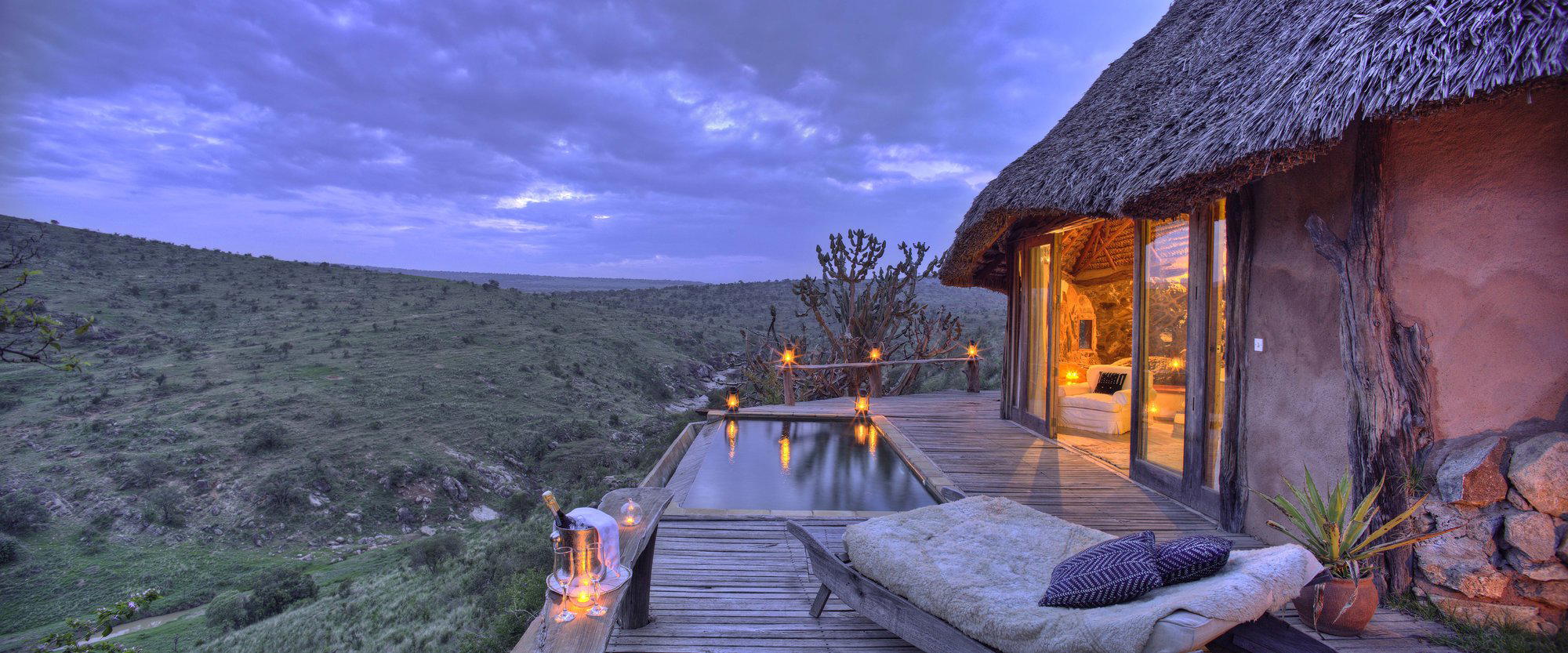
Open-air luxury with natural light flooding through expansive villas, cool stone interiors shaded by natural rock formations, and unobstructed panoramic views of the African plains and distant Mount Kenya.