Mahali Mzuri




Positioned inside the Olare Motorogi Conservancy on the path of the Great Migration, Mahali Mzuri is Sir Richard Branson's 12-suite tented camp in the Maasai Mara ecosystem. Recognised by La Liste's Top Hotels 2026 with 94 points, it occupies a niche where low-capacity design and private conservancy access define the stay rather than resort scale.
Pearl is the En Primeur Club membership app — saves, bookings, and concierge access live there. Same editors, same standards.
- Address
- Olare Motorogi Conservation, 76FF+966, Olare Motorogi Conservancy
- Website
- virginlimitededition.com
- Directions
- Get directions
 Saves & bookings on Pearl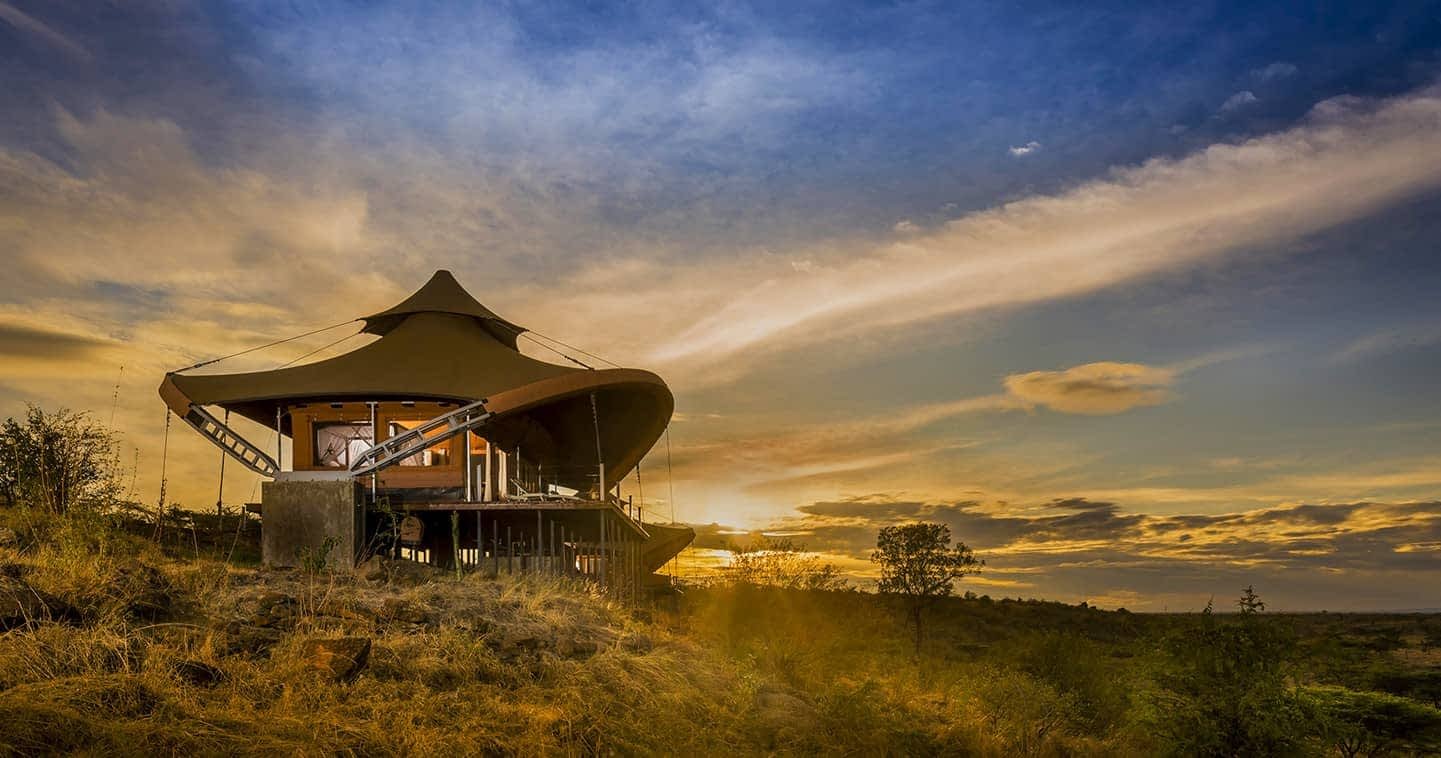
Canvas and Canopy: How Mahali Mzuri Frames the Mara
The architectural grammar of premium safari camps in East Africa has, over the past two decades, moved decisively away from colonial lodge permanence toward something lighter and more deliberate. Tented structures raised on platforms, open frontages oriented toward game corridors, materials that signal the bush rather than override it. Mahali Mzuri, opened in 2013 within the Olare Motorogi Conservancy, belongs to the sharper end of that shift. Its 12 tented suites sit on raised platforms that hold the structure above the Mara grassland rather than anchoring it into the earth, and each suite orients its large deck outward toward the conservancy rather than inward toward camp amenities. The design logic is clear: the view is the architecture.
That approach places Mahali Mzuri in a specific competitive tier within the Maasai Mara ecosystem. The conservancy model, which operates on private land adjacent to the National Reserve, allows camps to control density and access in ways that the Reserve itself cannot. The Olare Motorogi Conservancy imposes strict limits on the number of vehicles and guests, which means that what you see from that raised deck, and what you encounter on a game drive, is shaped as much by land management policy as by the camp's own design choices. Mahali Mzuri's 12-suite scale is calibrated for exactly that context: small enough to operate within conservancy limits, concentrated enough to maintain a consistent guest experience. For comparable low-density properties in the broader Mara ecosystem, see Cottar's Safaris in Narok and andBeyond Bateleur Camp in Maasai Mara National Reserve.
Inside the Suite: Platform, Deck, and Spatial Logic
Each of the 12 suites at the hotel follows a consistent spatial programme: a spacious bedroom, an en suite bathroom, a sitting area, and a large external deck. The raised-platform construction is not merely aesthetic. It separates the guest from ground-level movement, reduces the thermal mass of the structure, and positions the eyeline for sightlines across open ground rather than through grass. In a conservancy where elephant, buffalo, and lion move through camp perimeters, the platform also functions as a practical boundary without requiring walls or fencing that would interrupt the visual relationship between interior and exterior.
This suite typology, a private deck as the primary living space rather than a secondary amenity, is increasingly the standard at the upper tier of East African safari accommodation. The question of whether a camp executes it well comes down to orientation, the quality of the platform structure itself, and whether the sitting area inside genuinely connects to the exterior or simply references it through glazing. The hotel's suites are described as including all three elements with the deck as a central feature, placing them in the category of properties where the outdoor component is designed rather than appended. For a different approach to suite design in the Kenyan highlands, Borana Lodge in Laikipia and Solio Lodge in Nyeri offer useful contrasts in how permanent structures handle the same interior-exterior relationship.
The Migration Corridor and What It Means in Practice
The hotel's location within the Olare Motorogi Conservancy places it on the established path of the Great Migration, the annual movement of wildebeest, zebra, and other grazers between the Serengeti ecosystem in Tanzania and the Maasai Mara in Kenya. During peak migration periods, typically July through October, the conservancy receives the highest concentration of game movement in the entire region. Game drives from camp can yield wildebeest, elephant, zebra, lion, buffalo, topi, and hippopotamus within a single outing. Outside migration season, the conservancy's permanent resident population, including the Mara's resident lion prides and elephant families, maintains year-round game density that distinguishes conservancy camps from those operating solely inside the National Reserve.
The practical consequence for trip planning is that the timing of a stay at the hotel significantly affects the type of experience on offer. Migration crossings at the Mara River are not predictable to the day, but the July to October window concentrates the probabilities. Guests staying outside that window encounter a quieter, less crowded conservancy with consistent resident game but without the scale of the migration. Both are legitimate versions of the Maasai Mara, and they attract different types of traveller. For comparable conservancy and private-land experiences elsewhere in Kenya, Elewana Loisaba Tented Camp in Loisaba Conservancy, Saruni Samburu in Samburu, and ol Donyo Lodge in Chyulu Hills each occupy different ecosystems with distinct seasonal rhythms. Our full Olare Motorogi Conservancy guide covers the broader conservancy context in detail.
Dining in the Bush: Format and Setting
The dining programme at the hotel spans African and international dishes, served either in the main dining tent or out in the bush. Bush dining at this tier of safari camp is less a novelty and more a structural expectation, with the quality of execution depending on logistics, timing, and whether the setting is genuinely chosen for the landscape or simply moved outdoors for effect. At a 12-suite camp with a small, known guest count each night, the ratio of staff to guests allows for the kind of flexible, location-specific dining that larger-footprint properties cannot reliably deliver. The main dining tent, as the primary social space at a camp of this scale, functions as much as a communal gathering point after evening drives as it does as a restaurant. That dual role is intrinsic to the small-camp format. For a point of comparison on dining formats at Mara-region properties, Fairmont Mara Safari Club in Maasai Mara and JW Marriott Masai Mara Lodge in Talek both operate at significantly larger scale with different dining formats.
Recognition and Peer Context
The hotel received 94 points from La Liste's Leading Hotels ranking in 2026, placing it within the recognised tier of premium safari accommodation at an international assessment level. La Liste's hotel methodology draws on aggregated critical and guest data, and a 94-point score positions the camp in the upper range of its category without placing it at the absolute peak of the global list. Within the Kenya safari market, properties at this recognition level include both conservancy-based tented camps and permanent lodge structures, and the La Liste score is one of the cleaner cross-format comparators available. For context on other Kenya properties with comparable recognition profiles, Elewana Elsa's Kopje in Meru National Park and Enaidura Camp in Masai Mara sit in adjacent tiers of the same market.
Planning a Stay
The hotel operates as part of the Virgin Limited Edition portfolio and is accessible via light aircraft from Nairobi to the Mara airstrips, followed by a short road transfer into the Olare Motorogi Conservancy. Guests arriving via Nairobi from international connections commonly use Villa Rosa Kempinski in Nairobi as a transit night before or after the bush leg. The camp's 12-suite scale means that availability, particularly during migration season, moves quickly, and planning the Kenya leg of a broader East African itinerary several months in advance is standard practice at this tier. Those extending into Kenya's coast after a Mara stay might consider Sirai Beach in Kilifi or Chale Island as the beach component. For those building a multi-property Kenya itinerary across different ecosystems, andBeyond Suyian Lodge in Nanyuki, Finch Hattons Luxury Safari Camp in Tsavo, and SAROVA Lion Hill Game Lodge in Nakuru cover the Lake Nakuru and Tsavo corridors respectively. International travellers comparing Africa safari architecture against design-led wilderness properties in other regions may find useful reference points at Amangiri in Canyon Point, where a similar design-first, low-capacity model operates in a desert rather than savannah setting.
How It Stacks Up
Comparable venues nearby, for context on price, style, and recognition.
| Venue | Cuisine | Price | Awards | Notes |
|---|---|---|---|---|
| Mahali MzuriThis venue — the venue you are viewing | Contemporary luxury safari camp with innovative canvas tents polished on hillsides overlooking a lush valley. | $$$$ | 5-Star | Not listed |
| Solio Lodge | Contemporary luxury bush lodge seamlessly integrated with the natural landscape, featuring locally-sourced materials and modern design elements. | $$$$ | 5-Star | Laikipia County |
| Borana Lodge | family-hosted luxury conservancy lodge built from local materials | $$$$ | 5-Star | Borana Conservancy |
| Tribe Hotel | Luxury boutique with African-inspired contemporary design | $$$$ | 5-Star | Westlands |
| Sankara Nairobi, Autograph Collection | Contemporary urban boutique with Kenyan charm | $$$$ | 5-Star | Westlands |
| SAROVA LION HILL GAME LODGE | Classic safari lodge with chalet-style accommodations. | $$$ | 4-Star | Lake Nakuru National Park |
Recognition history
Dated appearances from independent guides and award organizations, with the underlying list record or original source where available.
La Liste Top Hotels
La Liste
Town & Country Hotel Awards
Town & Country
Virtuoso Luxury Hotel Partner
Virtuoso
Preferred Hotels Member
Preferred Hotels
At a Glance
- Scenic
- Elegant
- Intimate
- Sophisticated
- Rustic
- Honeymoon
- Romantic Getaway
- Family Vacation
- Wellness Retreat
- Anniversary
- Panoramic View
- Infinity Pool
- Private Villa
- Butler Service
- Pool
- Spa
- Wi Fi
- Room Service
- Concierge
- Laundry Service
- Mountain
- Garden
- Pool
- Spa
- Wi Fi
- Room Service
- Concierge
- Laundry Service
Cozy and relaxing with an open fireplace in the main lounge, panoramic views of the plains from tents and infinity pool, and a sophisticated African chic design blending contemporary comfort with natural wilderness immersion.