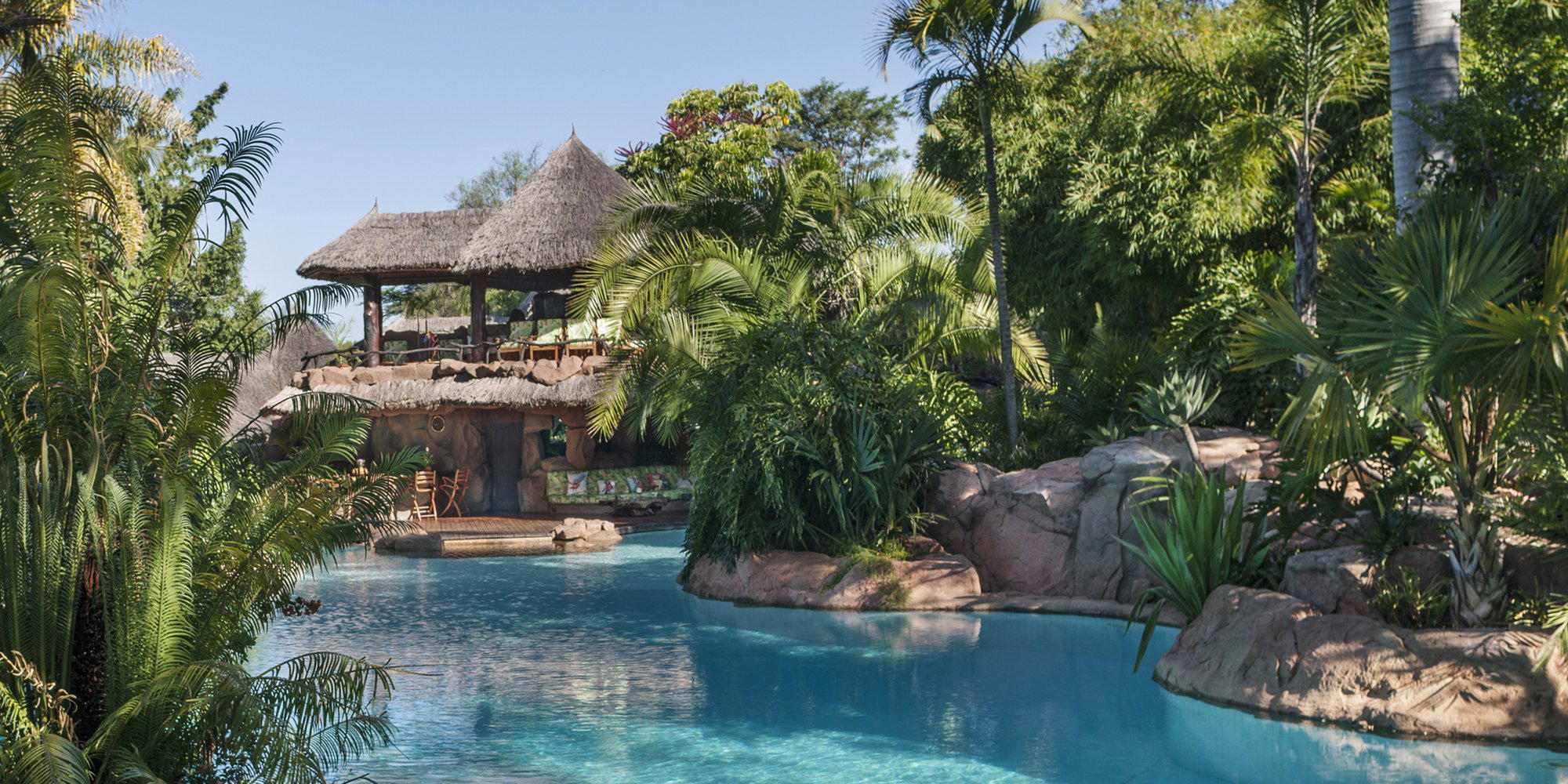
Borana Lodge sits within the Borana Wildlife Conservancy on the Laikipia Plateau, where the architecture keeps faith with the surrounding savanna rather than competing with it.

Pearl is the En Primeur Club membership app, where members save venues, book tables and use the concierge.
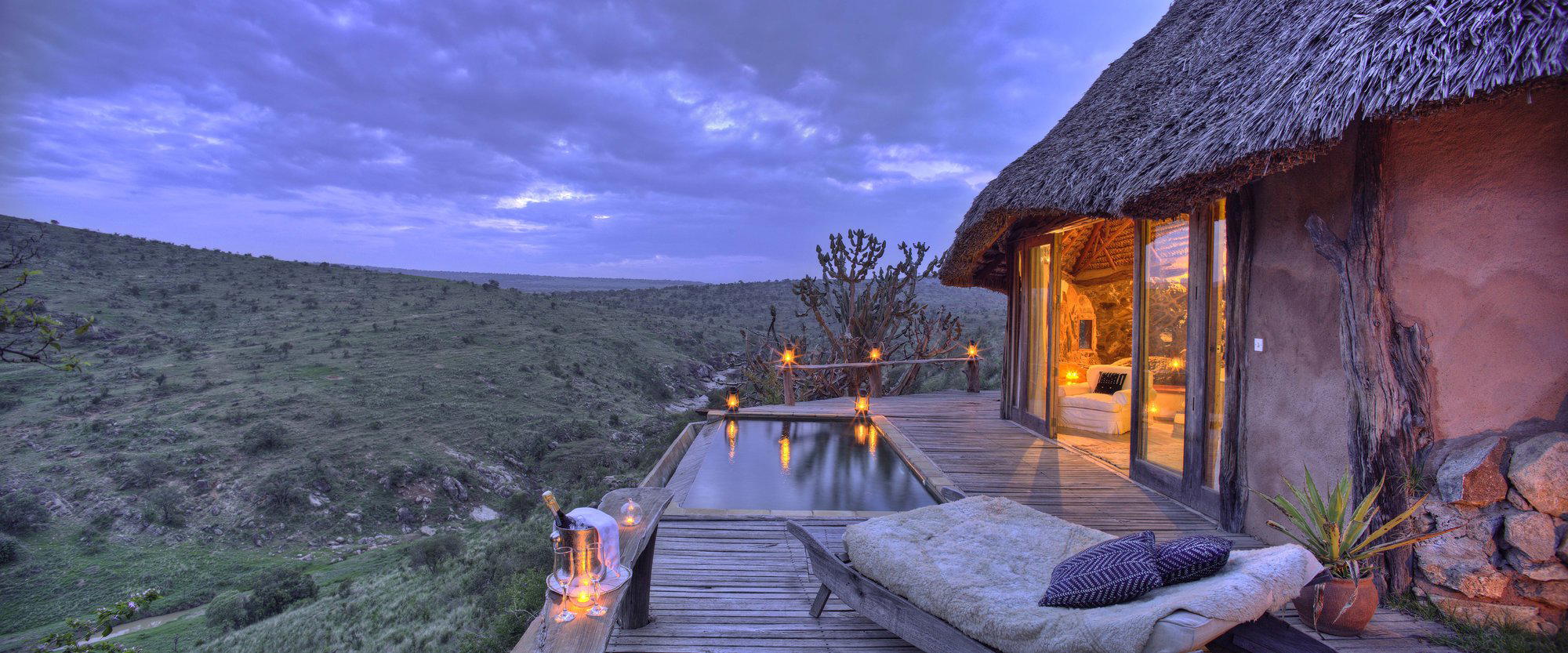
Stone, Timber, and the Laikipia Plateau
The Laikipia Plateau operates on a different logic than Kenya's headline wildlife circuits. Where the Maasai Mara draws volume, Laikipia draws exclusivity: a series of private conservancies where guest numbers are kept low, wildlife corridors are actively managed, and the lodges themselves tend to be built into the terrain rather than imposed upon it. Borana Lodge, set within the Borana Wildlife Conservancy near Nanyuki, belongs to this tradition of low-footprint architecture that treats the surrounding environment as the primary design element.
At Borana, the physical approach matters. The conservancy sits at elevation on the plateau's southern edge, with Mount Kenya's snow-capped peaks visible across the treeline on clear mornings. The lodge structures are built from local stone and hardwood, a construction language that keeps the buildings close in tone to the kopjes and red-earth tracks of the surrounding landscape. This is a deliberate design choice common to the better conservancy lodges of Laikipia: rather than signal luxury through imported materials or theatrical interiors, the architecture signals it through restraint and materiality. Nearby alternatives like El Karama Lodge and Olepangi Farm work within a broadly similar ethos, though each occupies a distinct part of the plateau with its own landscape character.
Architecture as Landscape Argument
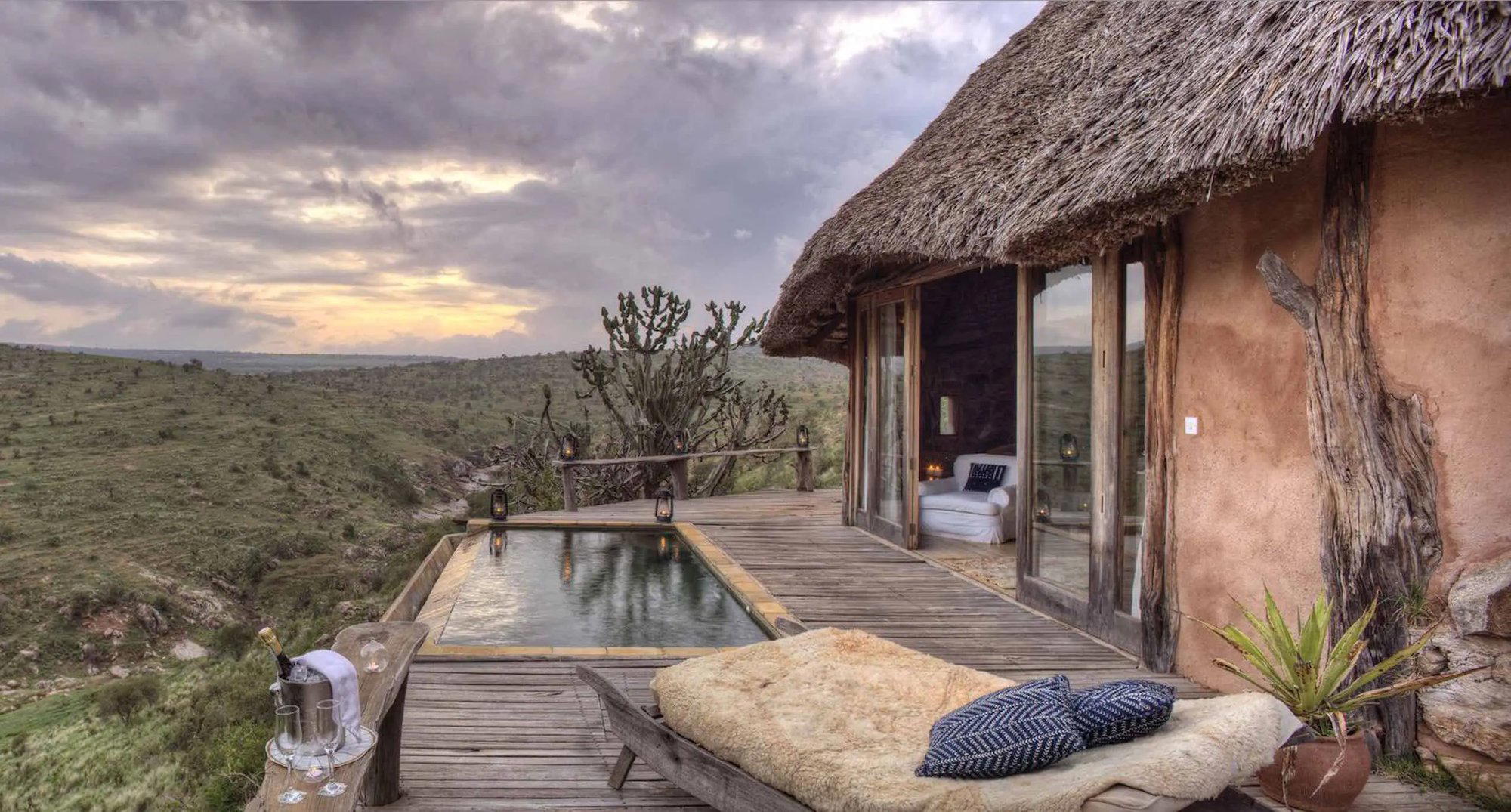
The design philosophy at Laikipia's conservancy lodges has always been partly ethical and partly aesthetic. Building with local stone reduces both visual intrusion and the carbon footprint of material transport. Thatch and timber rooflines allow structures to recede into the landscape when viewed from a distance, an important consideration when the view from a game drive is part of the product. Borana's cottages follow this grammar: generous floor plans with open-facing walls or wide verandas that prioritize sightlines over enclosure, so the room functions as a frame for the landscape rather than a retreat from it.
This approach contrasts meaningfully with the large-footprint model used by some of Kenya's branded safari camps. Properties in the Fairmont Mara Safari Club tier, or international chain entries like the JW Marriott Masai Mara Lodge, operate with larger guest capacities and correspondingly larger physical footprints. Borana's scale keeps it in a different competitive bracket: fewer keys, more conservancy access per guest, and an architectural language calibrated for the plateau rather than for brand recognition.
The Conservancy Context
Understanding Borana Lodge requires understanding what a private conservancy adds to the safari experience, because the lodge and the conservancy are functionally inseparable. The Borana Wildlife Conservancy is part of the broader Laikipia ecosystem, one of the few areas in Africa where black rhino populations are recovering rather than declining. The conservancy model means guests are not competing for animal sightings with dozens of other vehicles as can happen on the Mara; game drives here operate under low-density protocols that the national park system cannot replicate.
Laikipia's conservancies have also become significant for activities that national parks typically prohibit: night drives, walking safaris, and horseback riding are standard offerings at the better properties. This activity range is part of why Laikipia attracts a different traveller profile than the Mara circuit. For context on how the broader Mara offer differs, andBeyond Bateleur Camp and Cottar's Safaris represent the premium Mara tier, while Mahali Mzuri in the Olare Motorogi Conservancy offers a conservancy-within-Mara hybrid. Borana's Laikipia setting gives it a more varied landscape, semi-arid acacia, highland forest edges, and open plains within a single property.
Placing Borana Within Kenya's Premium Safari Tier
Kenya's high-end safari lodges have split into two broad cohorts over the past decade. The first cohort competes on brand recognition and consistent international service standards: this is where properties connected to groups like Fairmont or andBeyond sit. The second cohort competes on conservancy depth, architectural authenticity, and the argument that smaller scale produces better experiences. Borana belongs firmly in the second group, alongside properties like Solio Lodge in Nyeri and Elewana Elsa's Kopje in Meru National Park. Each of these operates within a conservation-focused ownership structure where the lodge is partly a revenue mechanism for the wider ecosystem.
ol Donyo Lodge in the Chyulu Hills and Saruni Samburu represent the same tier in different regions, architecture rooted in local materials, low guest counts, and a conservancy model that ties commercial performance to wildlife outcomes. andBeyond Suyian Lodge, also in the Nanyuki area, offers a direct regional comparison within a branded group structure. For travellers building a Kenya itinerary, the contrast between Laikipia's conservancy model and the larger beach-resort offer at properties like Sarova Whitesands Beach Resort and Spa or coastal retreats like Sirai Beach in Kilifi captures how varied Kenya's premium hospitality offer has become.
Planning a Stay at Borana
Borana Lodge is reached via a short light-aircraft flight from Nairobi's Wilson Airport to the conservancy's private airstrip, with the journey from Wilson typically taking under an hour, considerably faster than the road alternative from the capital. Nairobi's premium hotel offer, including Villa Rosa Kempinski, is a practical pre-trip staging point for international arrivals connecting to Laikipia. The main wildlife seasons on the plateau run broadly from January through March and from July through October, with the dry months producing the most concentrated game viewing. Given the low room count typical of conservancy lodges in this tier, advance planning of two to three months is advisable for peak-season travel, and six months or more is not excessive for the Christmas and New Year period.
For a broader sense of the Laikipia hospitality scene and how Borana compares to the full range of properties on the plateau, our full Laikipia restaurants and hotels guide maps the options across budget tiers and activity profiles.
At-a-Glance Comparison
| Venue | Cuisine | Price | Awards |
|---|---|---|---|
| Borana LodgeThis venue (the venue you are viewing) | This venue | Not listed | Not listed |
| Fairmont Mount Kenya Safari Club | Not listed | Not listed | Forbes Recommended · Virtuoso Luxury Hotel Partner |
| Fairmont The Norfolk | Not listed | $200–300 | 1 Michelin Key · Forbes Recommended |
| Giraffe Manor | Not listed | $1,500–2,500 | 3 Michelin Keys · La Liste Top Hotels |
| Great Plains Mara | Not listed | Not listed | Relais Chateaux Award |
| ol Donyo Lodge | Not listed | $1,000–1,500 | Relais Chateaux Award |
Continue exploring
More in Laikipia
Hotels in Laikipia
All hotels in Laikipia →
Restaurants in Laikipia
Browse all →
Details
- Rustic
- Scenic
- Cozy
- Elegant
- Intimate
- Family Vacation
- Romantic Getaway
- Group Retreat
- Panoramic View
- Infinity Pool
- Pool
- Spa
- Wi Fi
- Laundry Service
- Bar
- Restaurant
- Mountain
- Garden
- Wheelchair Accessible
Rustic yet luxurious with natural materials, open fireplaces, wooden interiors blending English country and African authenticity, creating an informal, inviting family-home atmosphere.