Fairmont Mara Safari Club

Set on the banks of the Mara River in the north-western corner of the Maasai Mara Game Reserve, Fairmont Mara Safari Club operates 51 canvas-walled tents with four-poster beds and private decks positioned directly above hippo and crocodile territory. For travellers timing a visit around the Great Wildebeest Migration, the riverside setting places guests closer to the action than most camps in the reserve.
Pearl is the En Primeur Club membership app — saves, bookings, and concierge access live there. Same editors, same standards.
- Address
- Masai Mara National Reserve
- Website
- fairmont.com
- Directions
- Get directions
 Saves & bookings on Pearl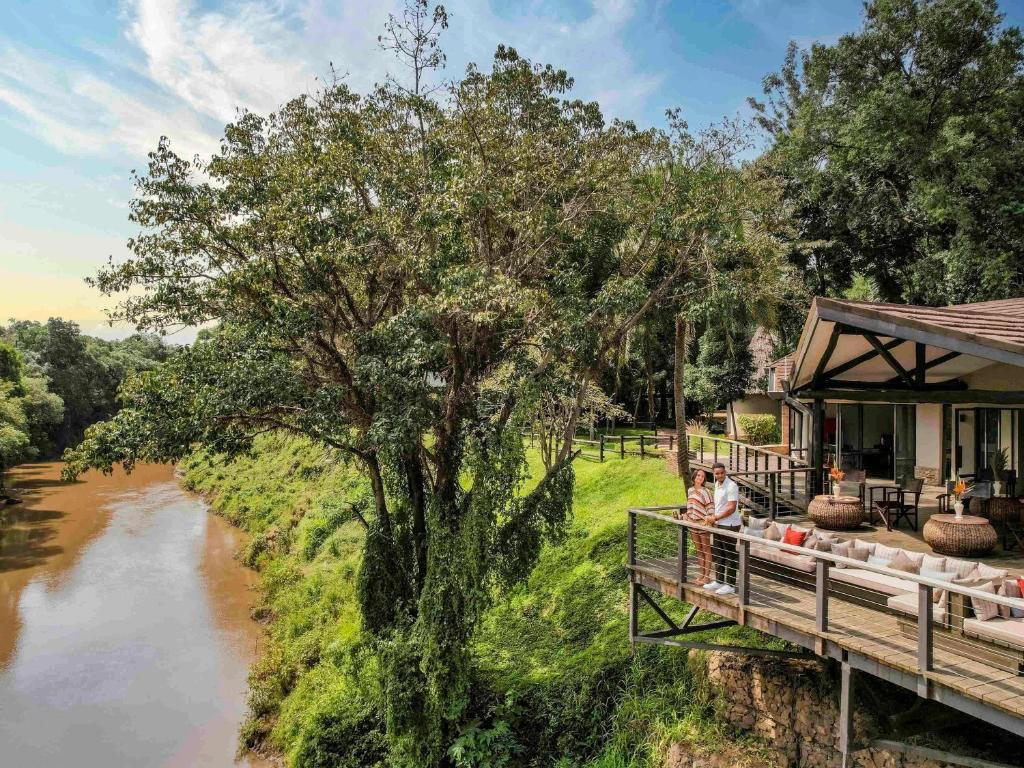
A Riverbank Address in the Aitong Hills
Fairmont Mara Safari Club is a 5-star hotel in Masai Mara National Reserve, Kenya. The Aitong Hills form a low ridge that channels wildlife movement toward the Mara River, and it is at the foot of that ridge, where the river bends wide and the banks drop steeply into water thick with hippos, that Fairmont Mara Safari Club sits. The physical placement is not incidental: the camp was designed around the river's edge rather than positioned at a convenient distance from it, and that decision shapes almost everything about the stay, from the sightlines off private tent decks to the ambient sound that replaces silence after dark.
Across the Maasai Mara's premium tier, camps divide broadly between those oriented toward open savannah views and those anchored to the river system. The former offer wider visual range and typically better big-cat sighting frequency on flat ground. The latter, of which Fairmont Mara Safari Club is one of the larger examples, trade that breadth for intensity: the Mara River is where the wildebeest crossing happens, where crocodiles surface beside wallowing hippos, and where the camp's 51 tents maintain an unbroken relationship with moving water rather than static plain. Properties like andBeyond Bateleur Camp in Maasai Mara National Reserve and Great Plains Mara occupy the same premium conversation, though each with different positioning within the reserve's geography.
The Tent as Architecture
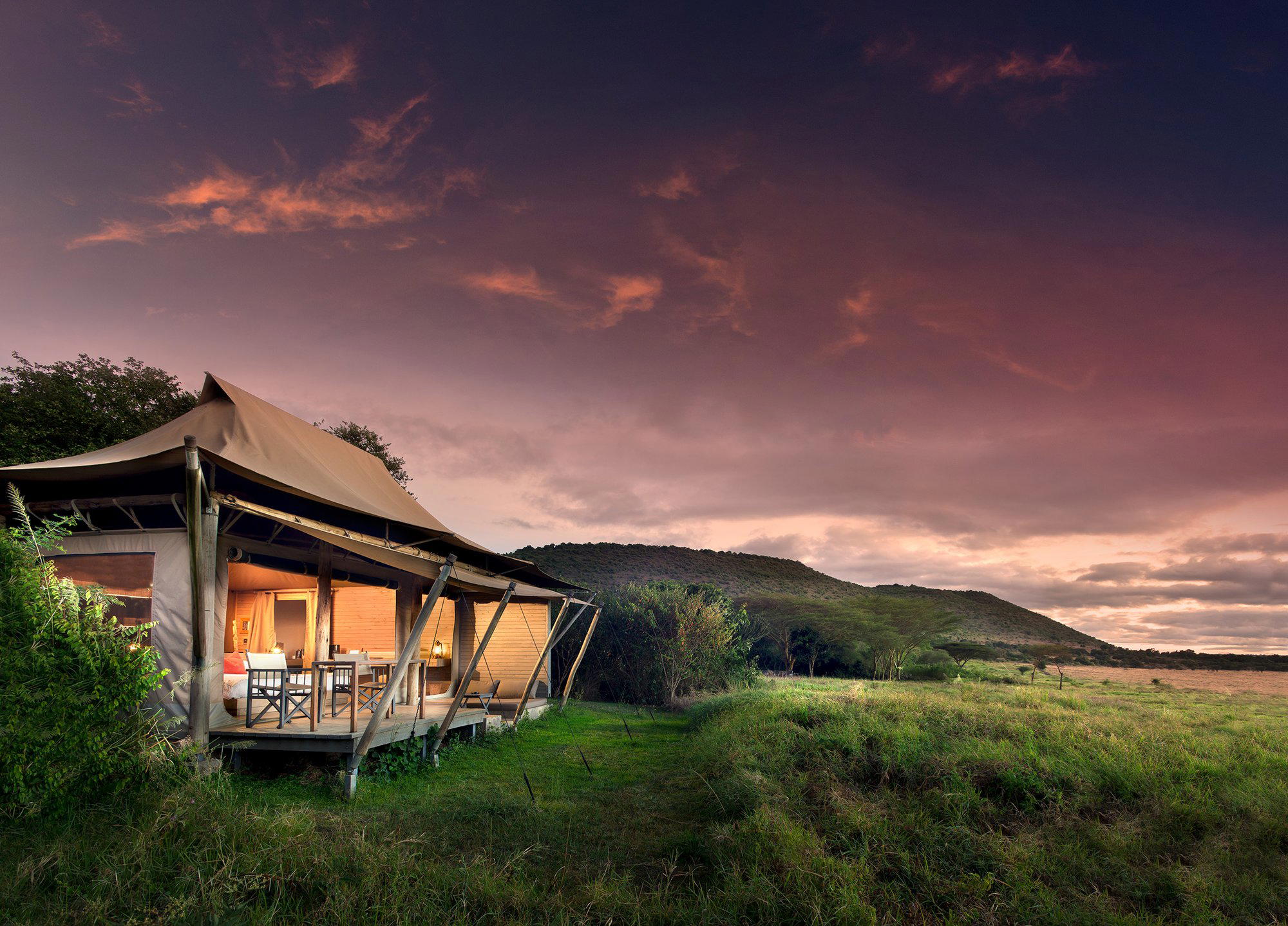
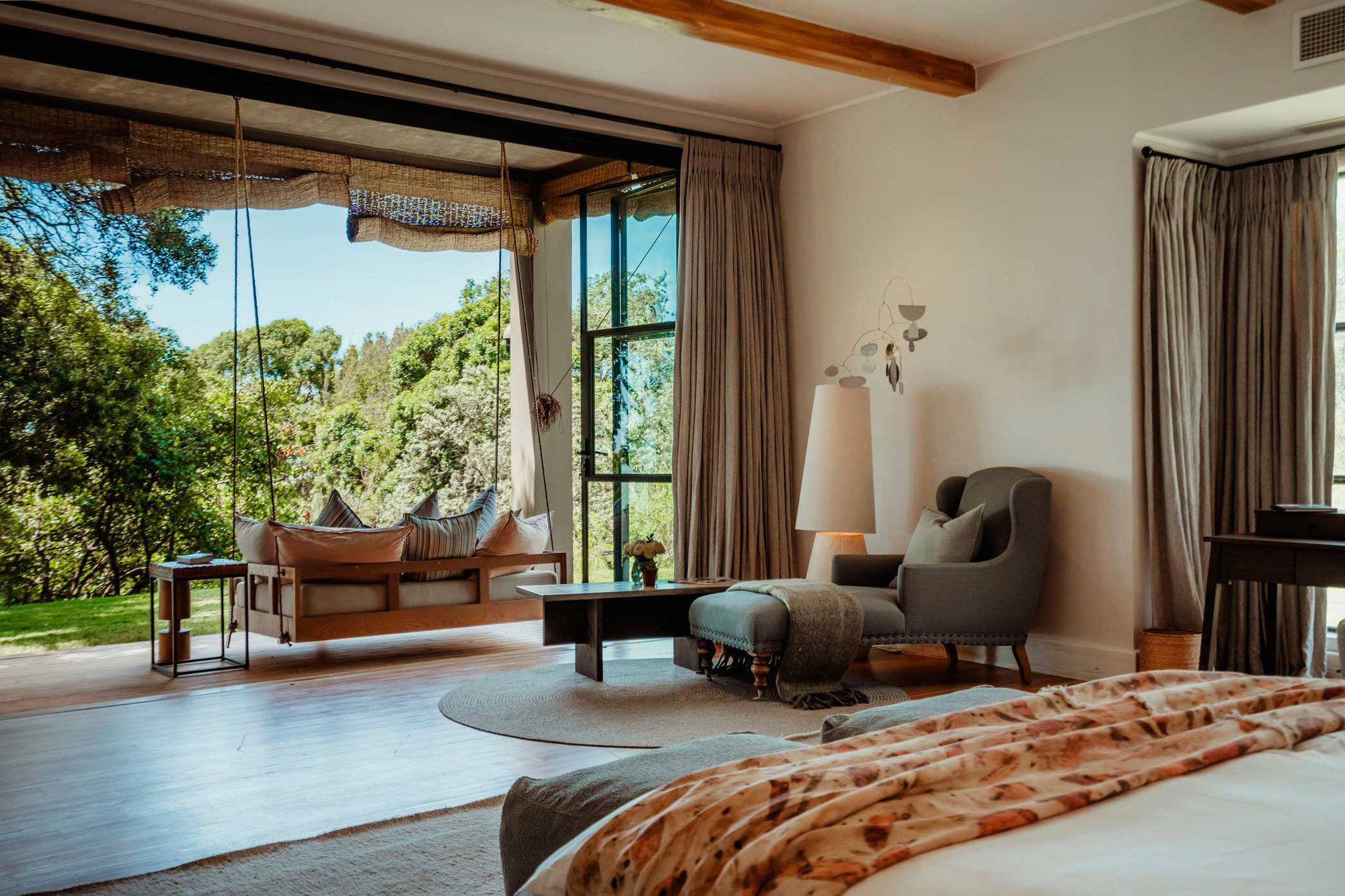
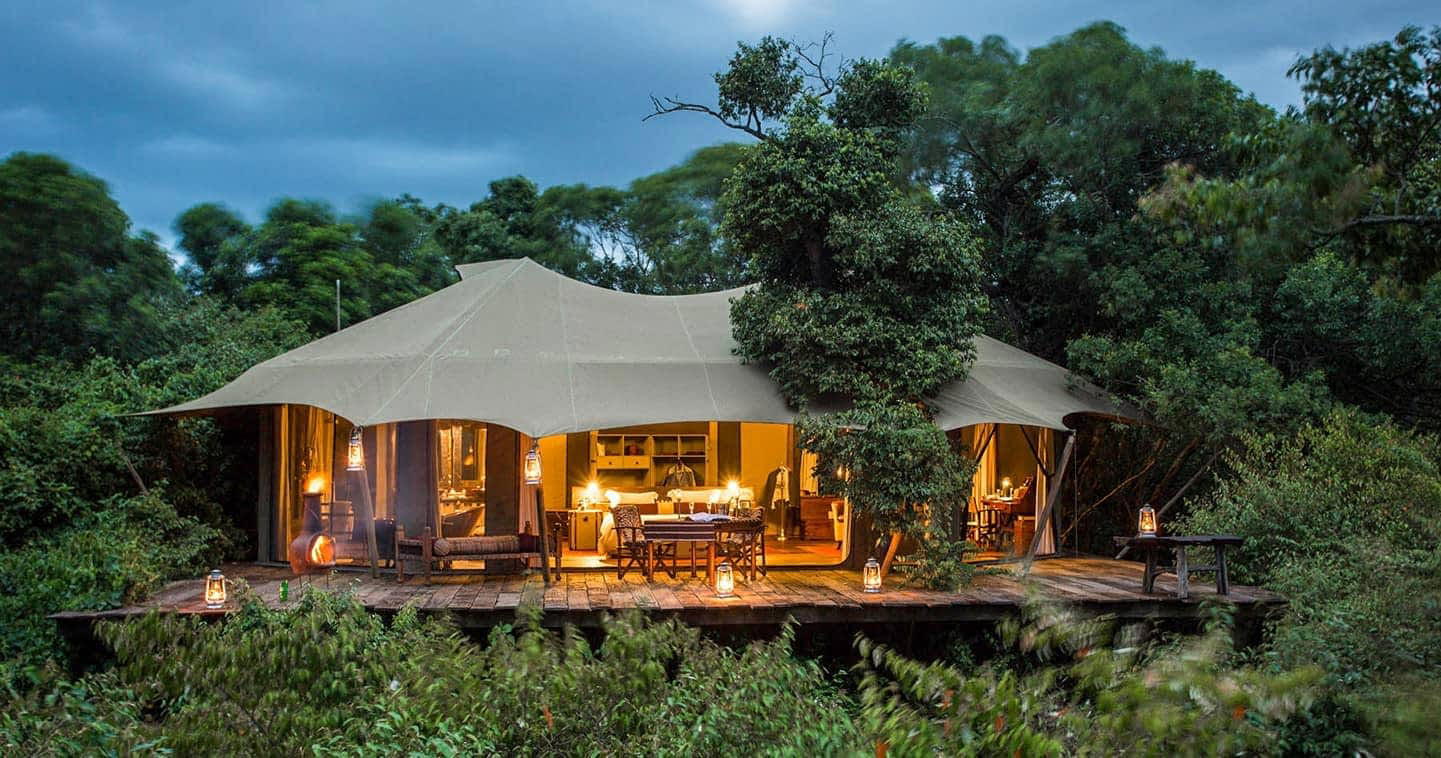
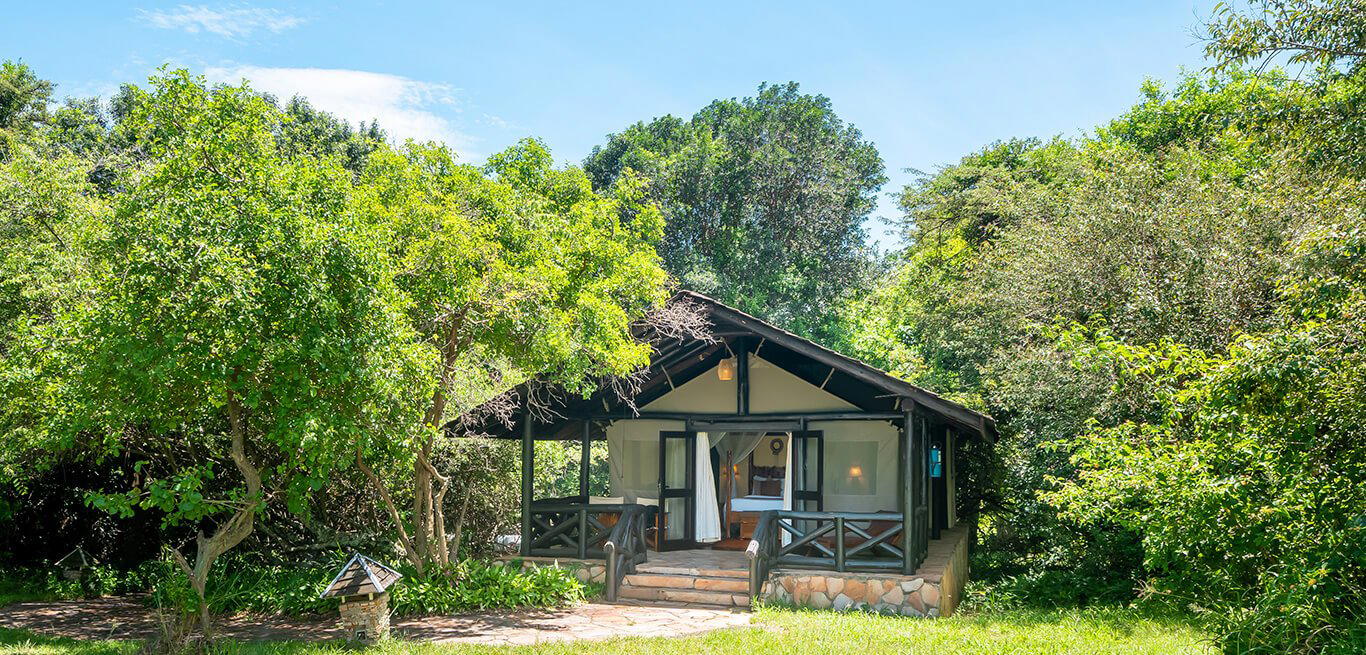
Tented camps operate within a specific design logic that distinguishes them from both permanent lodge buildings and lightweight fly-camps. The canvas structure signals impermanence and connection to the bush, while the interior fit-out determines whether that connection feels considered or merely rough. At Fairmont Mara Safari Club, the 51 tents carry four-poster beds, en suite facilities, and private decks, a configuration that places them in the furnished-luxury tier of tented accommodation rather than the stripped-back end of the spectrum.
The deck is the tent's most architecturally significant feature in a riverfront setting. Facing the Mara River, it functions as a private observation point: the water below carries hippo pods and crocodiles at measurable proximity, and the opposite bank holds whatever wildlife has come to drink. This is the kind of sightline that larger lodge buildings, by virtue of their refined communal terraces and shared orientation, cannot replicate at an individual level. The private deck at a well-positioned tent delivers a more immediate relationship with the river than any shared lounge platform, regardless of how well the lounge is furnished.
The Aitong Hills backdrop adds a vertical element rarely present in flat-savannah camps. The hills create a sense of enclosure on the landward side that makes the river feel more like a corridor than an edge, concentrating activity in the strip of riverine habitat that runs directly in front of the tents. For guests arriving from open-plain camps, the shift in scale is noticeable.
The Migration and the River Crossing
Great Wildebeest Migration is the largest terrestrial animal movement on earth, involving roughly 1.5 million wildebeest moving between the Serengeti in Tanzania and the Maasai Mara in Kenya in a pattern that repeats annually. The Mara River is the migration's most dramatised passage point: the crossings, which occur when herds gather at the bank and finally commit to the water against the crocodiles waiting below, happen in unpredictable concentrations between approximately July and October. No camp can guarantee a crossing on any given day, but proximity to the river eliminates travel time when intelligence comes in, and the hotel's position on the bank means guests can be at a crossing site without a long drive from camp.
Outside migration season, the river ecosystem remains active. Hippo pods hold their ground year-round, and the riverine tree canopy supports bird life that open savannah does not. Guests visiting between November and June will find different but consistent wildlife activity, and the lower camp density during non-migration months changes the mood of game drives considerably. For context on how the broader Mara ecosystem shifts across seasons,
Dining and Shared Spaces in the Bush
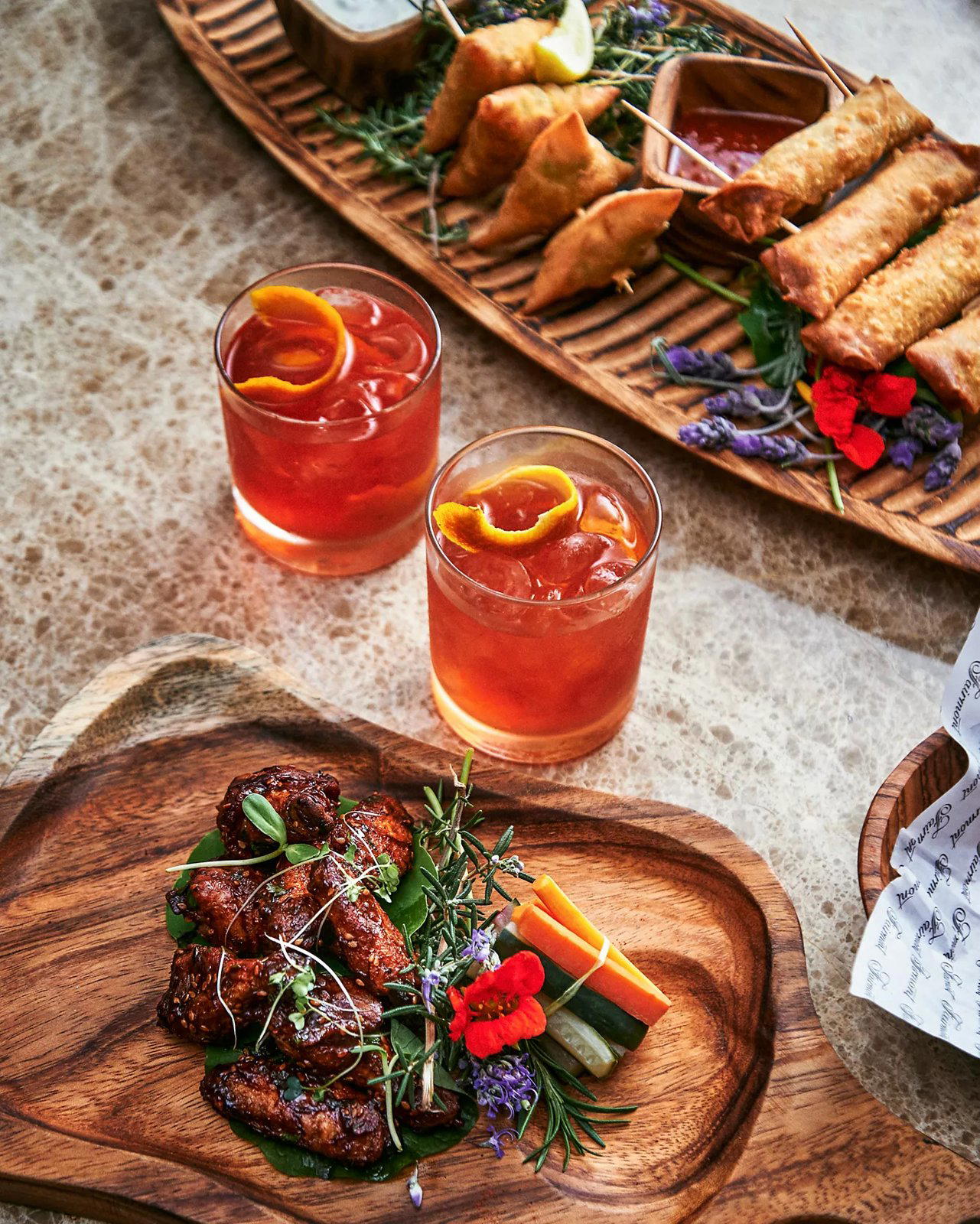
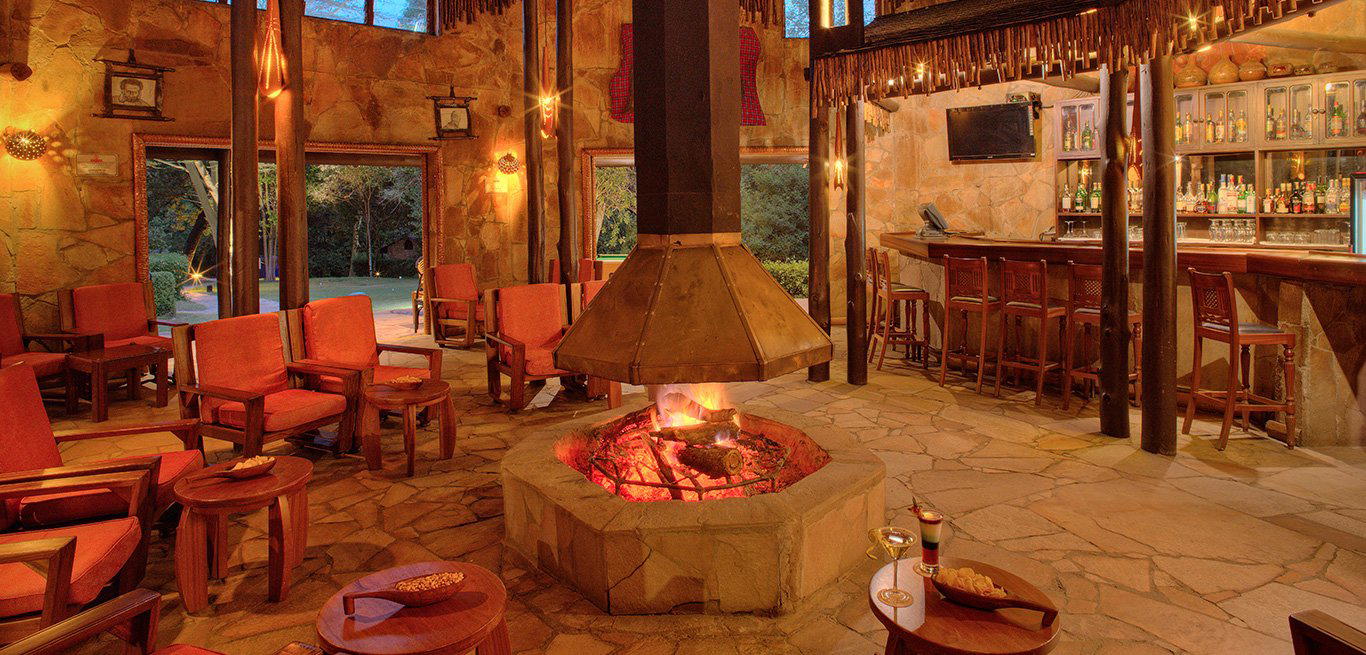
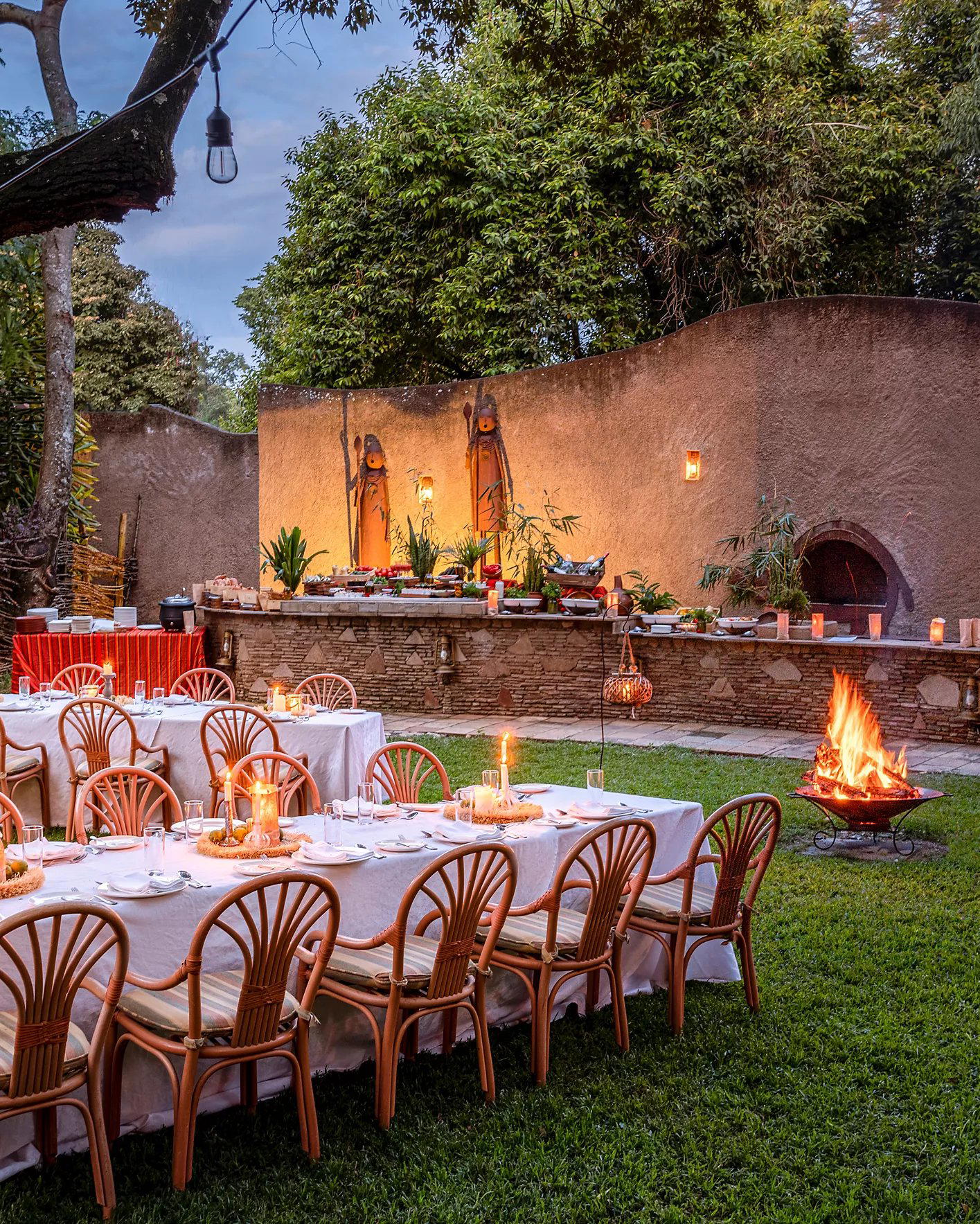
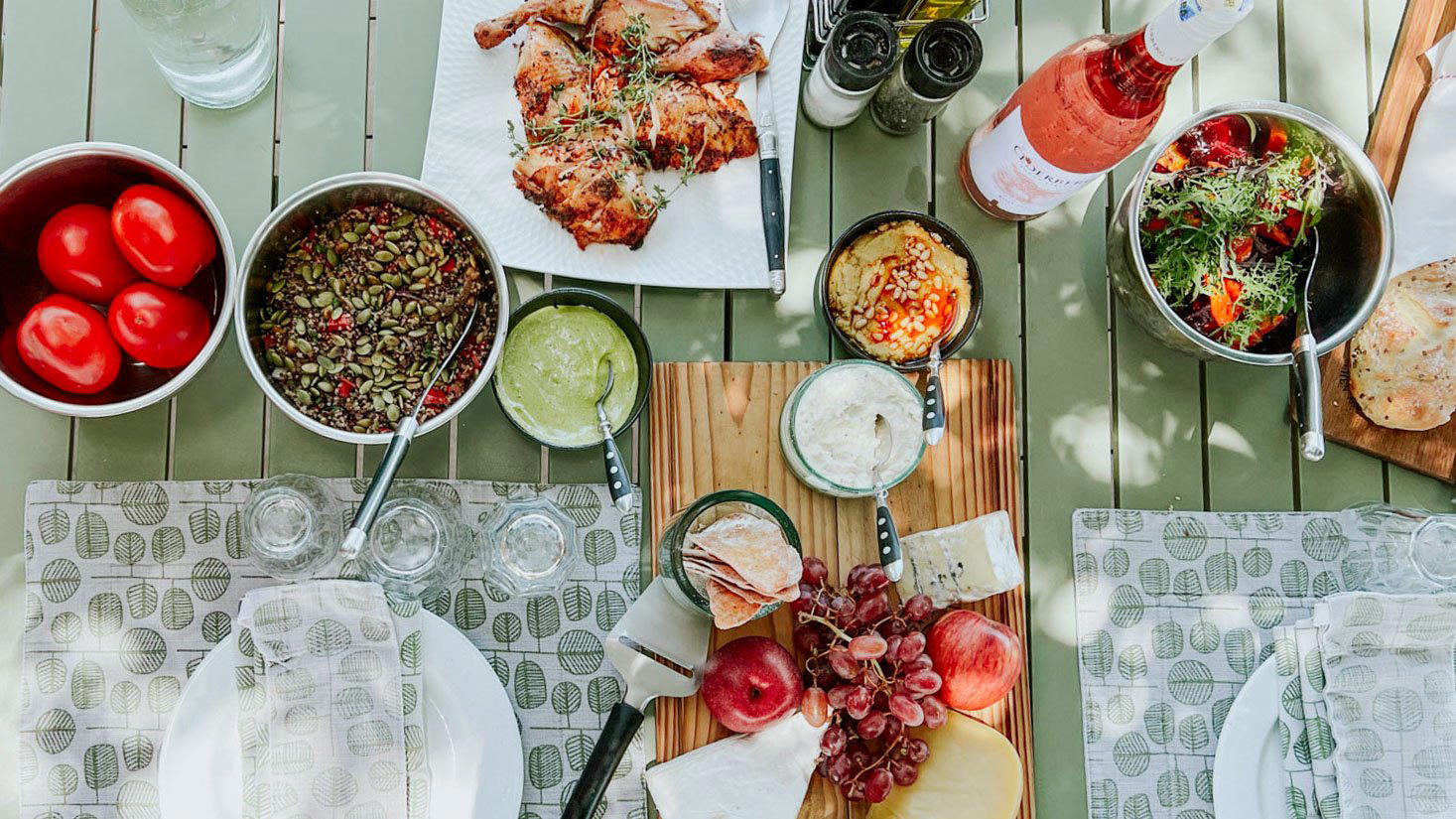
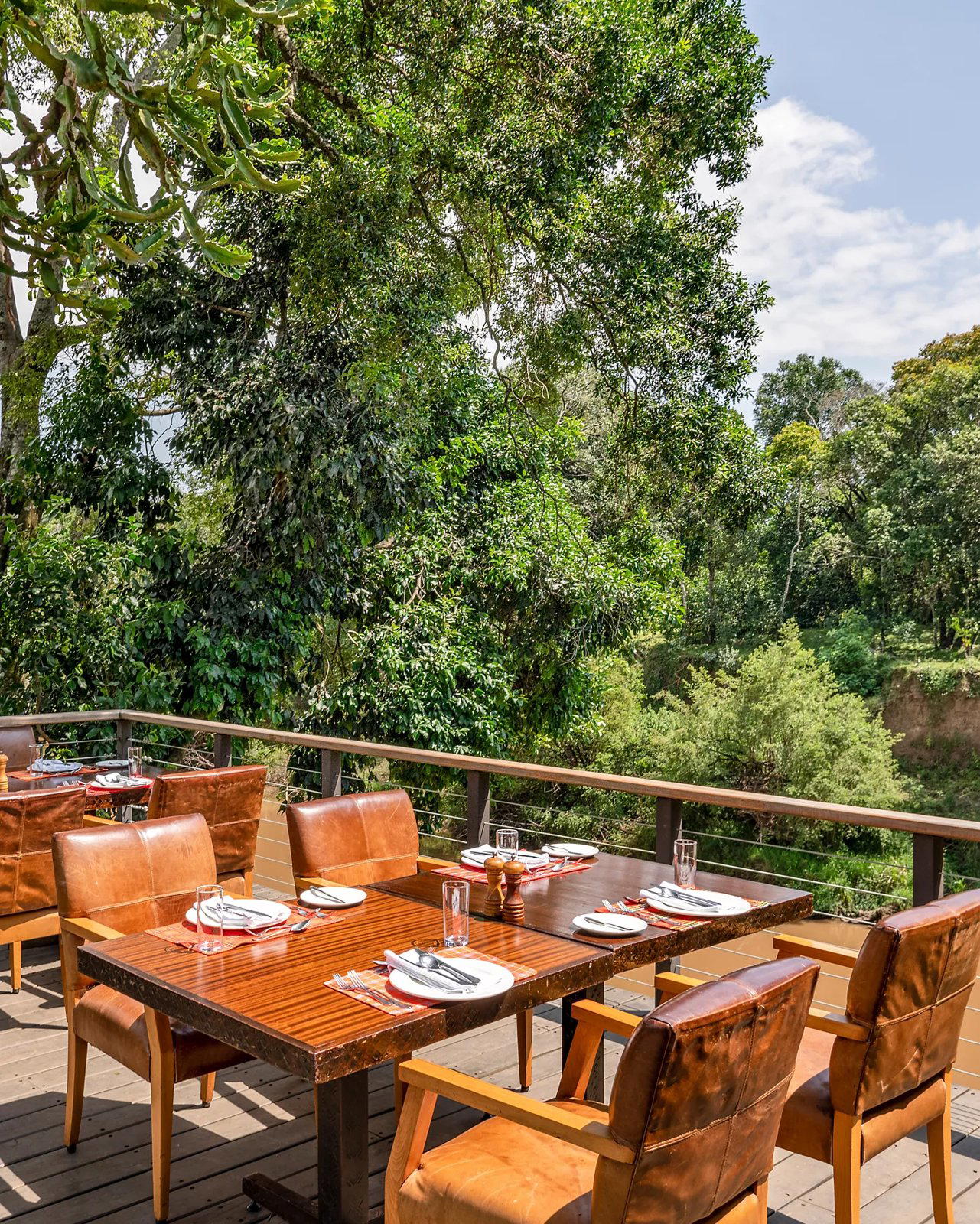
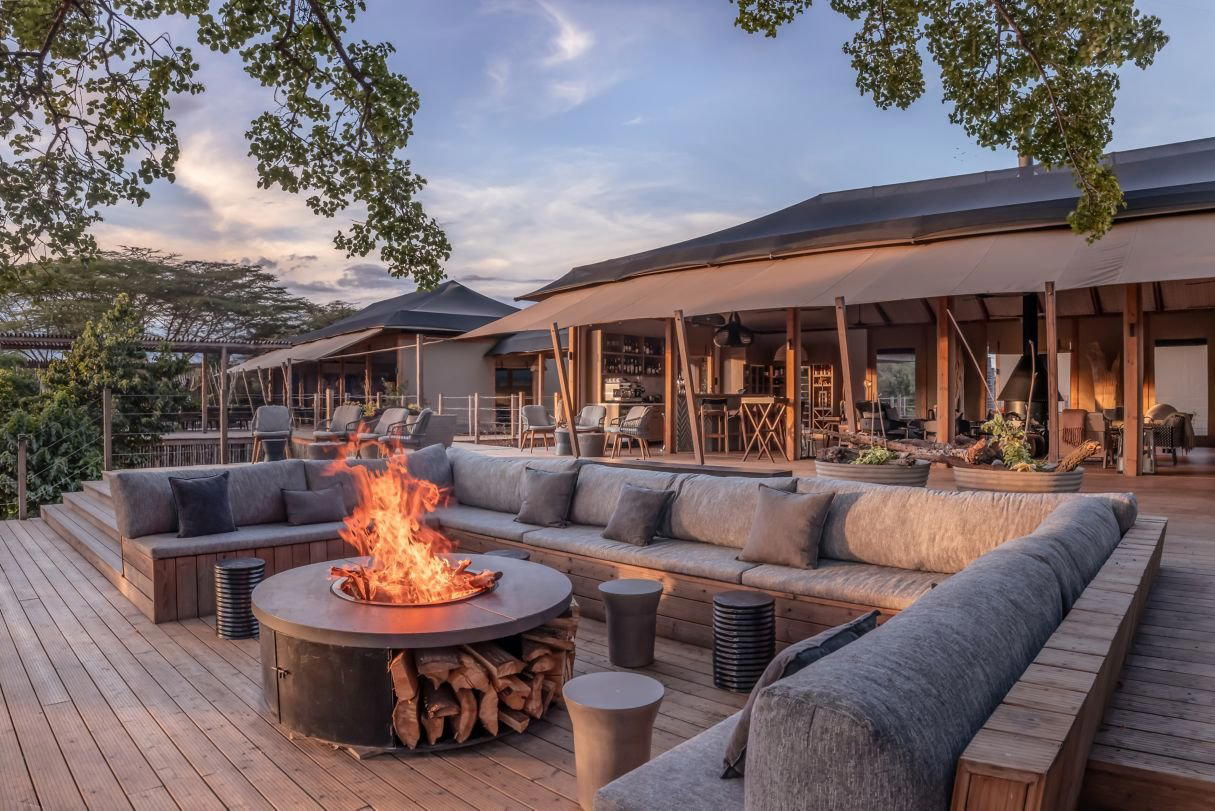
Bush dining in the Mara has moved well beyond the standard buffet-under-canvas format of earlier decades. The outdoor restaurant and lounge at the hotel operate within the established luxury-camp structure: communal meals that serve as the social architecture of the day, positioned to capture the river view, and sundowner cocktail service carried out in the field rather than at a fixed bar. The sundowner tradition, in which vehicles pause at a scenic point after the afternoon game drive for drinks and light food before returning to camp, is now a standard feature across the Mara's premium tier and functions as one of the more reliable ways to experience the savannah at the specific quality of late-afternoon light.
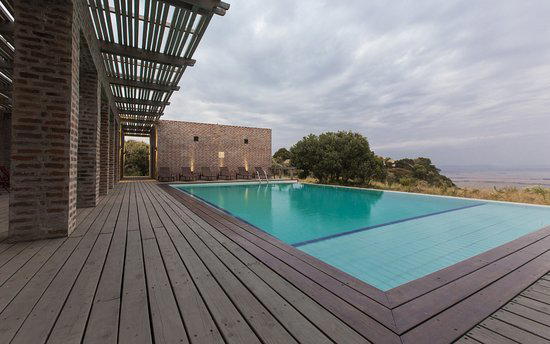
The outdoor swimming pool completes the shared infrastructure, providing the kind of mid-day pause point that bush camps at this tier now treat as a standard expectation rather than a differentiating feature. That said, in a riverfront camp where the water below is occupied by hippos and crocodiles, the pool earns its relevance differently than it would at an inland property.
Where Fairmont Mara Safari Club Sits in the Mara's Competitive Field
At 51 tents, the hotel operates at the larger end of the tented camp format, which has implications for both the shared-space atmosphere and the game drive logistics. Larger camps typically run more vehicles and can cover more ground on drives, while smaller camps such as Enaidura Camp in Masai Mara or Mahali Mzuri in Olare Motorogi Conservancy use limited guest numbers to offer more exclusive access to specific areas.
Fairmont brand places the property within a global hospitality chain with standardised service training and loyalty programme integration, which appeals to travellers who want the bush experience without fully departing from a known service framework. Properties operated by specialists such as andBeyond Kichwa Tembo Tented Camp in Kawai or Cottar's Safaris in Narok come from a different tradition, where safari-specific expertise is the primary credential rather than global hotel infrastructure. Neither model is categorically superior; they serve different risk tolerances and travel philosophies.
For travellers building a wider Kenya itinerary, the Mara typically anchors the wildlife component before or after coastal time at properties like Chale Island or Sirai Beach in Kilifi, or highland stays at Borana Lodge in Laikipia or Solio Lodge in Nyeri. Villa Rosa Kempinski in Nairobi. Access to the Mara itself is typically by scheduled or charter flight to the Mara Masai airstrip, with road transfer from there to the northern camps taking under an hour depending on conditions.
Planning Your Stay
The migration crossings cluster between July and October. The low season between April and June brings lower occupancy and different wildlife patterns, with fewer crossings but less competition at key sighting locations. Other Kenya properties across the EP Club network, including Elewana Elsa's Kopje in Meru National Park, Elewana Loisaba Tented Camp in Loisaba Conservancy, Saruni Samburu in Samburu, and ol Donyo Lodge in Chyulu Hills, offer complementary ecosystems for travellers covering more of the country in a single trip.
Comparable Spots, Quickly
Comparable venues nearby, for context on price, style, and recognition.
| Venue | Cuisine | Price | Awards | Notes |
|---|---|---|---|---|
| Fairmont Mara Safari ClubThis venue — the venue you are viewing | luxury tented safari camp blending Maasai heritage with modern comforts | $$$$ | 5-Star | Not listed |
| Great Plains Mara | classic luxury safari tented camp | $$$$ | 5-Star | Olare Motorogi Conservancy |
| SAROVA MARA GAME CAMP | luxury tented safari camp blending modern comforts with natural wilderness | $$$$ | 5-Star | Maasai Mara Game Reserve |
| andBeyond Kichwa Tembo Tented Camp | Luxury safari camp combining timeless canvas tents with modern amenities, grounded in Maasai-inspired design and natural materials set within a private concession. | $$$$ | 5-Star | Kawai |
| Cottar's Safaris | Heritage luxury safari camp blending five generations of family safari expertise with sustainable conservation practices and authentic 1920s colonial design. | $$$$ | 5-Star | Olderkesi Conservancy, Narok |
| Segera Retreat | Eco-luxury safari retreat harmonizing with nature featuring timber and thatch villas polished above botanical gardens. | $$$$ | 5-Star | Nanyuki Town |
Recognition history
Dated appearances from independent guides and award organizations, with the underlying list record or original source where available.
Virtuoso Luxury Hotel Partner
Virtuoso
Continue exploring
More in Maasai Mara
Hotels in Maasai Mara
Browse all →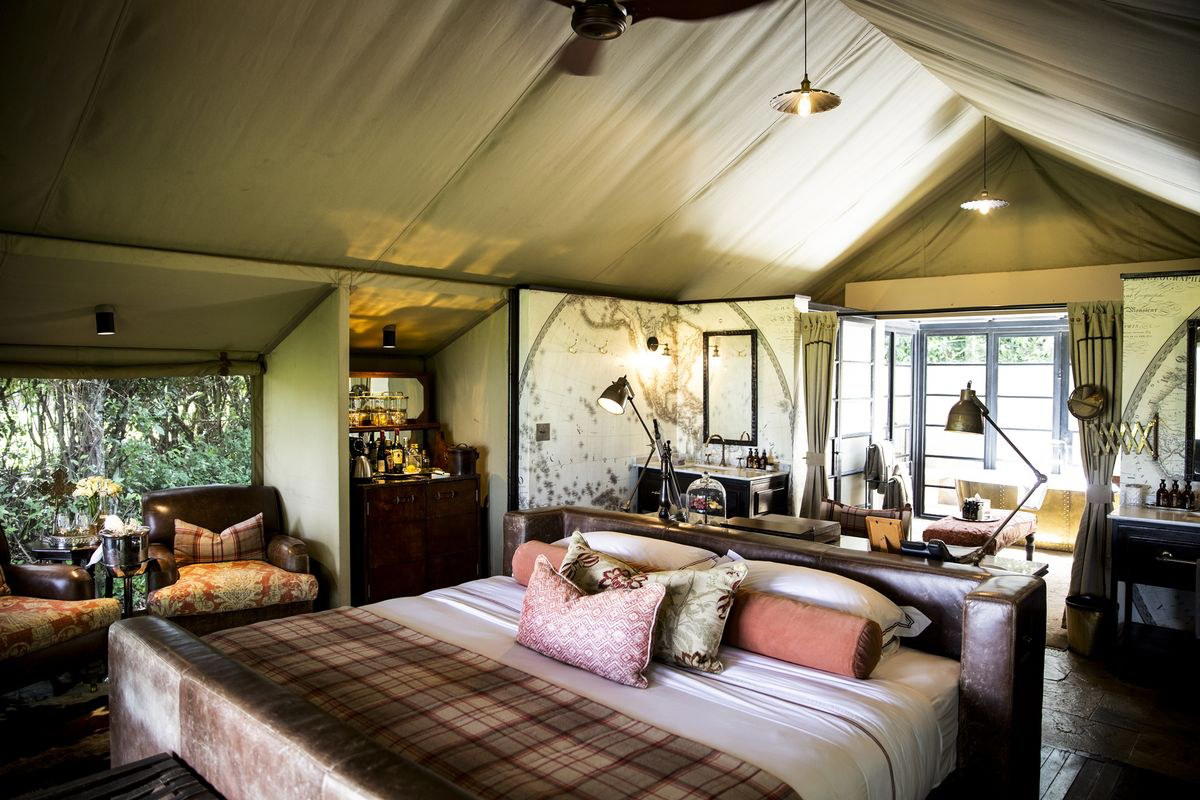
Bars in Maasai Mara
Browse all →
At a Glance
- Scenic
- Elegant
- Rustic
- Sophisticated
- Ornate
- Honeymoon
- Romantic Getaway
- Family Vacation
- Weekend Escape
- Panoramic View
- Private Dining
- Terrace
- Pool
- Spa
- Room Service
- Concierge
- Wi Fi
- Garden
- Garden
- Pool
- Spa
- Room Service
- Concierge
- Wi Fi
- Garden
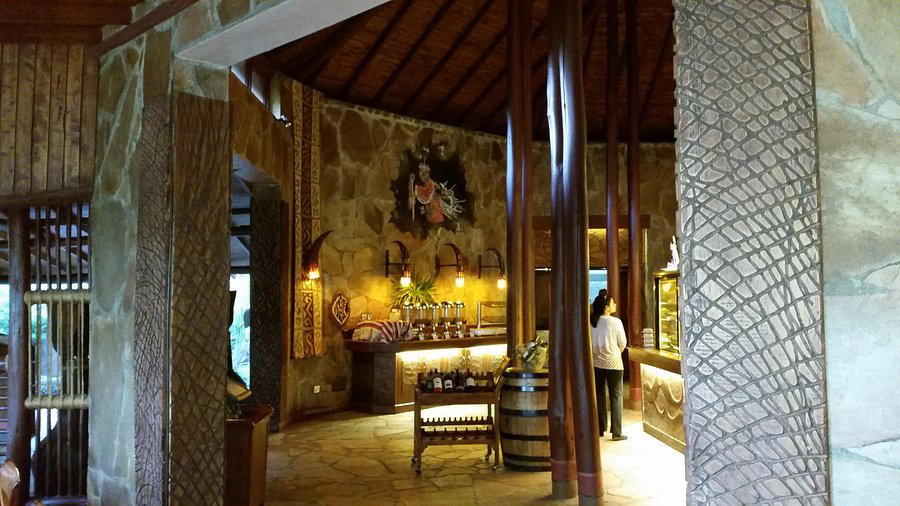
Serene and immersive natural atmosphere with sounds of hippos and wildlife at night, cozy lounge with African decor, and relaxing poolside vibes.