



Michelin Selected · Mr & Mrs Smith Seal of Approval · Virtuoso Luxury Hotel Partner
ROMEO Napoli is a five-star design hotel on Via Cristoforo Colombo, facing the Port of Naples, with 79 rooms and suites designed by Kenzo Tange and Associates. The property houses Il Ristorante Alain Ducasse Napoli on the ninth floor and a rooftop infinity pool club on the tenth, positioning it at the upper tier of Naples harbour-front accommodation.

Pearl is the En Primeur Club membership app — saves, bookings, and concierge access live there. Same editors, same standards.
- Address
- Via Cristoforo Colombo, 45, 80133 Napoli NA
- Phone
- +39 081 017 5001
- Website
- theromeocollection.com
- Directions
- Get directions
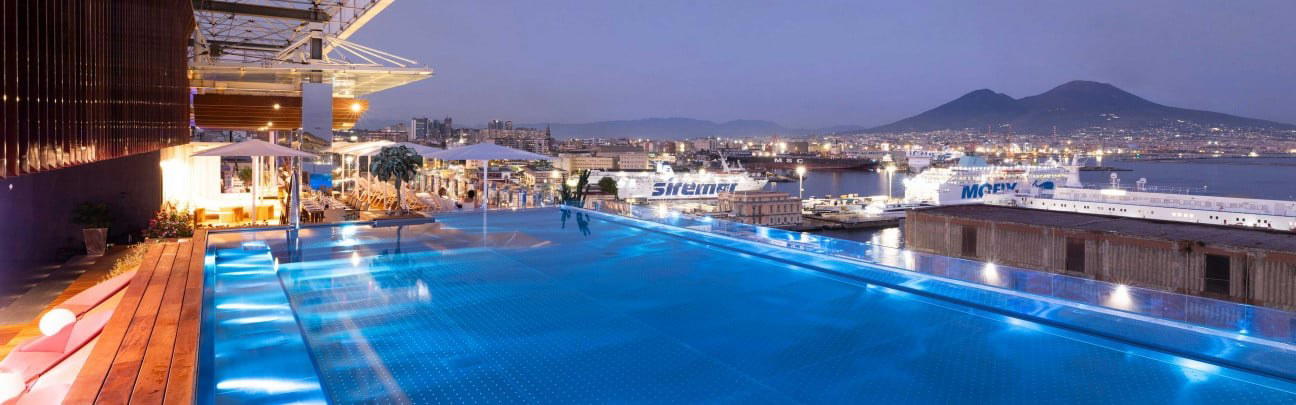
Where the Port Meets the Plate: Naples from the Harbour Up
Stand at the edge of Via Cristoforo Colombo and the view compresses everything Naples is into a single frame: the medieval mass of Maschio Angioino to your left, the ferries loading for Capri and Ischia directly ahead, Vesuvius sitting above the bay in the middle distance. ROMEO Napoli occupies that vantage point physically, its glass façade rising above the waterfront where the city opens to the sea. The building itself is the work of Kenzo Tange and Associates, and the architectural language reads from the outside as deliberately international — a counterpoint to the baroque and neoclassical grammar that dominates most of Naples' historic centre.
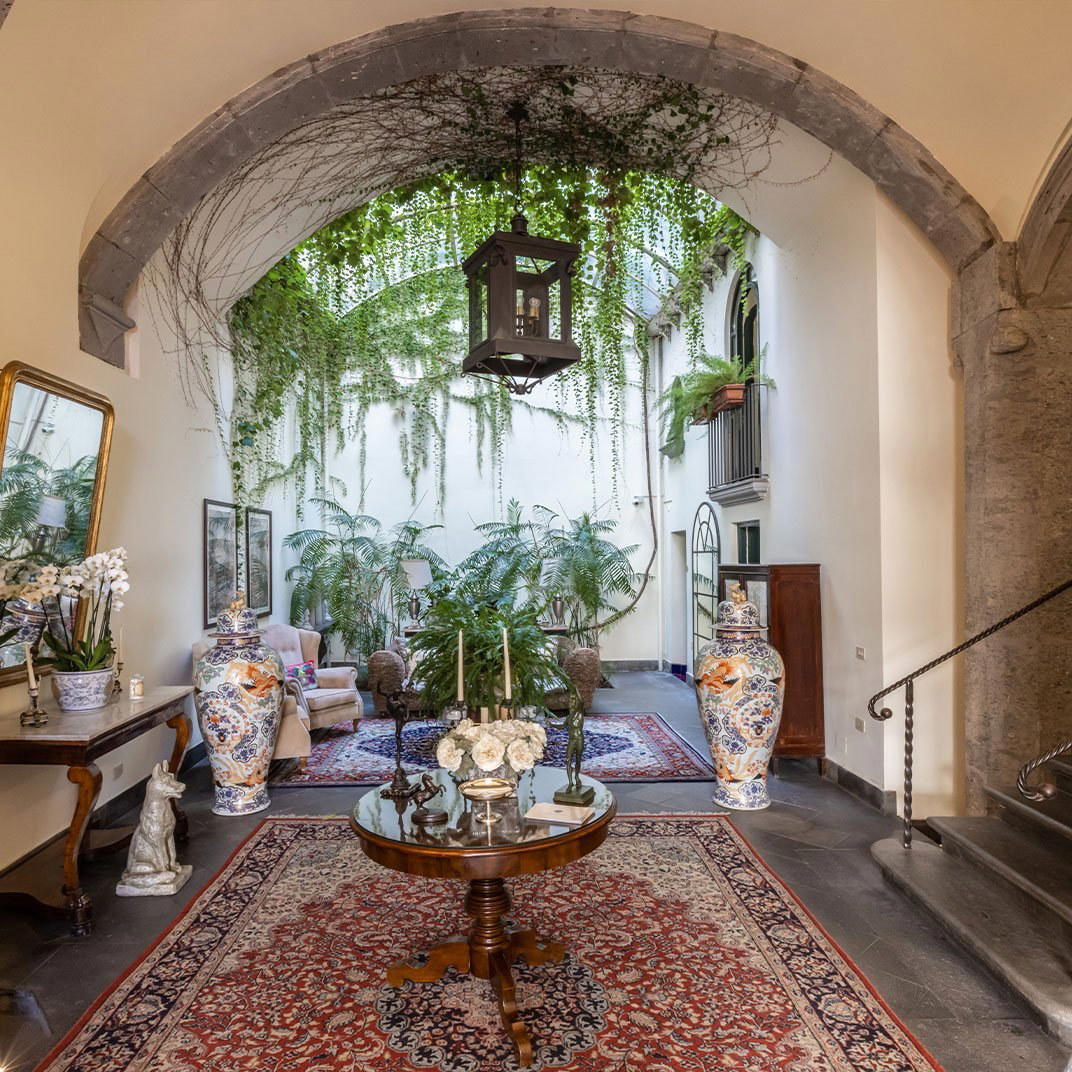
Inside, the design logic is layered rather than uniform: contemporary art alongside vintage pieces, photography collections set against designer furnishings and luxury antiques. This curatorial approach, which the ROMEO Collection group applies across its properties, reads as an argument that Italian luxury need not defer to period pastiche. It sits at the higher end of Naples' hotel market, in a cohort that includes long-established harbour addresses and historic palazzo conversions. For the full range of five-star options in the city, the full Naples restaurants and hotels guide maps the alternatives by location and character.
The Ninth Floor and the Logic of Alain Ducasse in Naples
Southern Italian cuisine has a sourcing argument built into its DNA. Campania's volcanic soils, the Bay of Naples fisheries, the San Marzano tomato designation, the buffalo mozzarella production centred on Caserta — these are not incidental details but the foundation of a regional food culture that predates modern fine dining by centuries. The more serious question for any luxury hotel restaurant in Naples is how it positions itself relative to that tradition: does it work within the local supply chain, or does it operate alongside it?
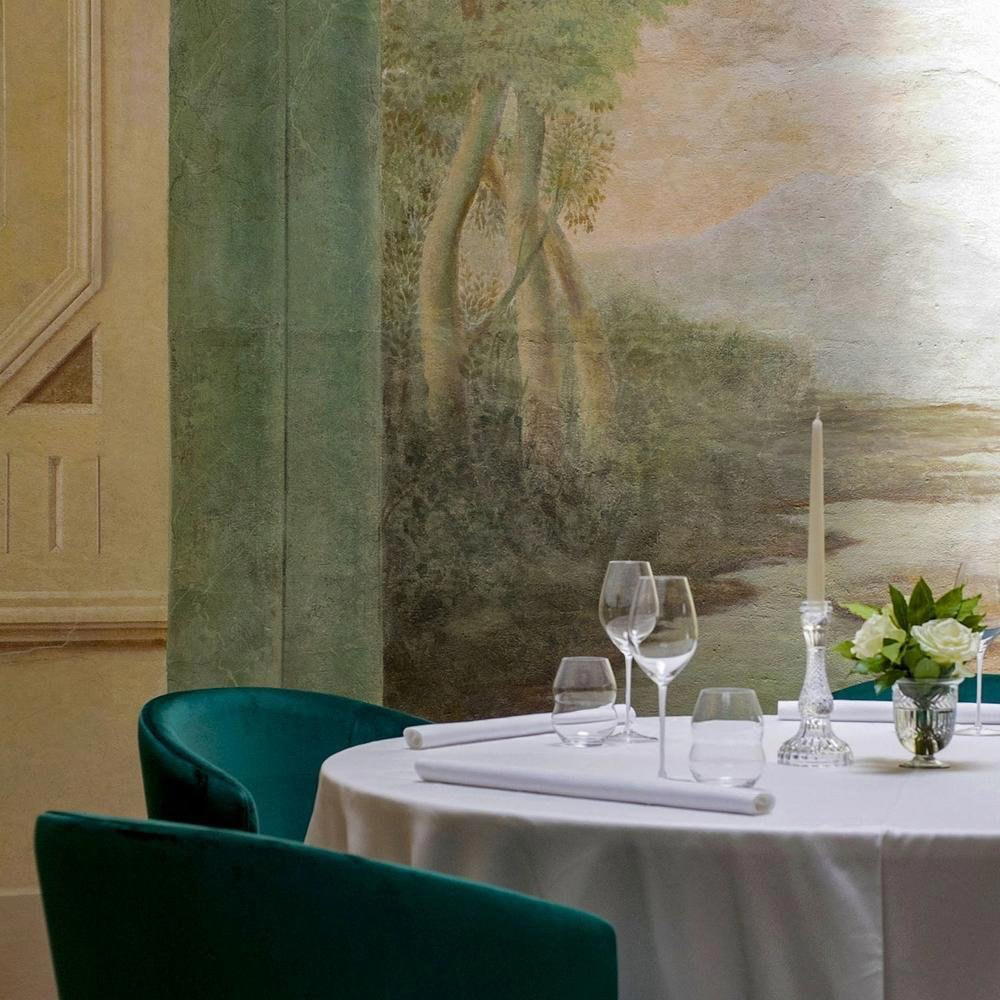
Il Ristorante Alain Ducasse Napoli, on the ninth floor of ROMEO Napoli, enters that conversation with significant weight behind it. The Ducasse name carries a sourcing philosophy that has been applied consistently across the group's restaurants: an emphasis on ingredient provenance, seasonal alignment, and what the kitchen describes as a natural approach to preparation. In Naples specifically, that means the restaurant operates within one of Europe's most material-rich regional contexts. The Gulf of Naples seafood supply, the Campanian vegetable and citrus production, the local pastry and bread traditions, all of these represent sourcing opportunities that a kitchen of this calibre is positioned to use deliberately. The ninth-floor setting, with its views over the bay, frames that sourcing logic geographically: what arrives on the plate has a visible relationship to the water and land outside the window.
Breakfast by Alain Ducasse is served on the same floor each morning, extending the culinary programme through the full hotel day. This is not incidental, running breakfast under a named chef programme is a deliberate signal about the consistency of sourcing and preparation standards across service periods, not just during dinner.
LA TERRAZZA and the Rooftop Economy of Naples
Rooftop venues in Naples occupy a specific category in the city's hospitality offer. The bay views from elevation are among the most recognisable in the Mediterranean, and the better properties have understood for decades that those views constitute a distinct product. LA TERRAZZA on the tenth floor of ROMEO Napoli operates as a pool club rather than simply a rooftop bar: an infinity pool, loungers and cabanas, an all-day food menu, and a Champagne programme anchored by Krug. That last detail is a tier marker, Krug sits at the prestige end of the Champagne market, and its presence as the house selection signals the price positioning and intended guest profile of the space.
The rooftop format at ROMEO is worth comparing against peers. Properties like the Grand Hotel Vesuvio and the Grand Hotel Santa Lucia have their own refined terrace programmes along the Santa Lucia waterfront. Grand Hotel Parker's operates from the Posillipo hillside. ROMEO's distinction is the combination of a functioning pool at that height and the Ducasse food programme running through both floors, it is a more complete vertical hospitality stack than most comparable addresses in the city.
Location as Infrastructure
The harbour address on Via Cristoforo Colombo functions as genuine logistical infrastructure for guests using Naples as a base. The ferry terminal for Capri and Ischia is directly in front of the hotel; hydrofoil services reach both islands in approximately 45 minutes. Amalfi and Positano are within 50 minutes by car. Capodichino Airport is 30 minutes by car, and Naples Centrale train station is 10 minutes. The Frecciarossa high-speed service connects Naples to Rome in one hour, which means the hotel functions equally well as a primary destination or as a southern Italy transit point.
Teatro San Carlo, Europe's oldest working opera house, established in 1737, and Maschio Angioino are both within walking distance. For guests combining cultural visits with the islands, the position removes the logistical friction that affects hotels further from the port or in the historic centre.
This harbour-front positioning contrasts with properties like Decumani Hotel de Charme, which sits deeper in the Decumani neighbourhood and offers a different relationship to the city's street-level character. Neither position is inherently superior; they serve different priorities.
ROMEO in the Italian Design Hotel Context
Within Italy, properties that occupy comparable territory include Portrait Milano and Four Seasons Hotel Firenze at the design-meets-history end of the spectrum, or Aman Venice at the palazzo-converted extreme. The Kenzo Tange building gives ROMEO a different architectural character from all of these, modernist rather than historic, which is either a distinction or a disconnection depending on what a guest is looking for in Italy.
Further afield, the combination of architect-designed building, named-chef restaurant, and curated art programme is a format shared by properties like Bulgari Hotel Roma and, internationally, Aman New York. For guests travelling the southern Italy circuit, Borgo Santandrea on the Amalfi Coast, Il San Pietro di Positano, and JK Place Capri represent the natural next tier of the regional itinerary, each with its own relationship to coastline, sourcing, and design.
Planning a Stay
ROMEO Napoli holds 79 rooms and suites, all oriented toward the bay and city views. The hotel offers a full spa under the Sisley Paris programme, natural therapies, hot tubs, saunas, sensory showers, and a Kneipp path, alongside a Technogym-equipped gym. Room service runs around the clock. The dining stack covers breakfast, all-day rooftop food and drinks, and dinner through the Ducasse restaurant on the ninth floor.
For guests building a broader Italian programme, Borgo Egnazia in Puglia, Rosewood Castiglion Del Bosco in Montalcino, Castello di Reschio in Umbria, and Casa Maria Luigia in Modena each represent a different regional character. Those planning coastal Campania specifically will find Il Pellicano in Porto Ercole and Corte della Maestà in Civita di Bagnoregio worth considering as part of a longer southern route.
Cuisine-First Comparison
Comparable venues nearby, for context on price, style, and recognition.
| Venue | Cuisine | Price | Awards | Notes |
|---|---|---|---|---|
| ROMEO NapoliThis venue — the venue you are viewing | Fusion of Japanese minimalism and Italian elegance with contemporary art and antiques. | Not listed | Michelin Selected · Mr & Mrs Smith Seal of Approval | Not listed |
| Grand Hotel Vesuvio | Historic luxury hotel blending Neapolitan tradition with contemporary elegance. | $500–750 | Michelin Selected · Leading Hotels of World Member | San Ferdinando |
| Grand Hotel Parker's | Historic luxury heritage hotel blending 19th-century Neapolitan elegance with contemporary comfort; positioned as the oldest and most prestigious hotel in Naples. | $200–300 | 1 Michelin Key · Virtuoso Luxury Hotel Partner | Chiaia |
| Italian Style Villas | Historic 18th-century noble villa blending timeless elegance with modern comforts. | Not listed | Virtuoso Luxury Hotel Partner | Capodimonte |
| Grand Hotel Santa Lucia | Historic 1900 Art Nouveau palace with classical architectural character, recently renovated while maintaining period details including Murano chandeliers and frescoed ceilings. | $200–300 | Preferred Hotels Member | San Ferdinando |
| Artemisia Domus Giardino | Historic period residence renovated as boutique hotel with modern spa amenities | Not listed | Michelin Selected | San Ferdinando |
Recognition history
Dated appearances from independent guides and award organizations, with the underlying list record or original source where available.
Michelin Selected
Michelin
Mr & Mrs Smith Seal of Approval
Mr & Mrs Smith
Virtuoso Luxury Hotel Partner
Virtuoso
Small Luxury Hotels of the World Member
Small Luxury Hotels of the World
Continue exploring
More in Naples
Hotels in Naples
Browse all →
Bars in Naples
Browse all →
Restaurants in Naples
Browse all →
Details
- Modern
- Elegant
- Sophisticated
- Romantic Getaway
- Honeymoon
- Business Trip
- Weekend Escape
- Rooftop Pool
- Panoramic View
- Historic Building
- Wi Fi
- Pool
- Spa
- Fitness Center
- Room Service
- Concierge
- Restaurant
- Valet Parking
- Waterfront
- Skyline
- Wheelchair Accessible
- Elevator
Sleek modern design with artistic installations, lively lighting, and a chic, luxurious atmosphere praised for its warmth and style.