
Falstaff Winery - Listed
Aversa’s Asprinio tradition is the point of gravity here: volcanic tuff, Alberata training, and a cellar cut 15 meters below the historic center. Cantina Carlo Menale works as a compact introduction to a local wine culture that sits between Naples and Caserta but speaks in a dialect of its own.

Pearl is the En Primeur Club membership app — saves, bookings, and concierge access live there. Same editors, same standards.
- Address
- Aversa, Campania, Italien
- Directions
- Get directions
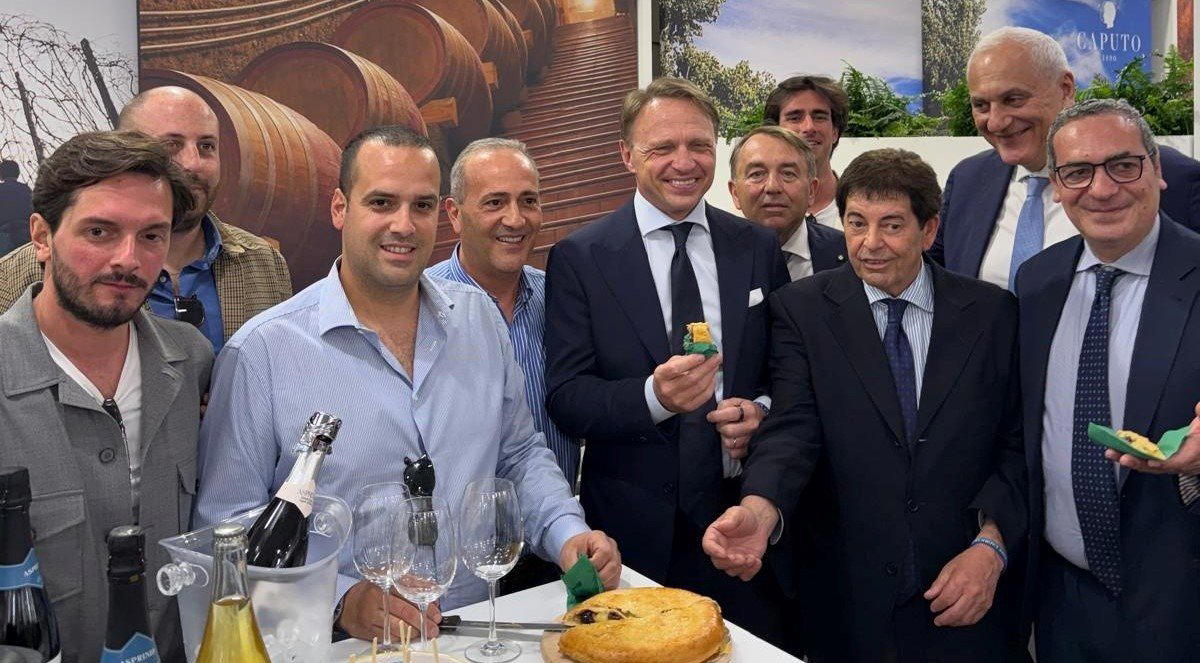
The descent matters before the glass does. In Aversa, Cantina Carlo Menale is defined by a historic, cave-like tufa cellar from the early 1900s, carved 15 meters underground. The setting is cool, intimate, rustic, and hidden away, with an atmosphere that makes time feel slowed. The focus is on Asprinio and local wines rather than on spectacle, so the visit begins with a sense of place before it becomes a tasting or a stop on an itinerary. What stands out is not a grand claim or a polished hospitality script, but the feeling of entering a space shaped by tuff, depth, and local continuity.
Asprinio, tuff, and Aversa
Cantina Carlo Menale’s appeal is tightly tied to place: Aversa, Asprinio, local wines, and an underground tufa cellar that gives the experience its character. Rather than leaning on claims about a wider appellation story, the safest way to understand the venue is through what is clearly known: it is a scenic, classic cellar setting where the local wine identity is central. That local identity matters because the venue does not need to be framed as a destination of scale; its strength is the way a specific city, a specific wine focus, and a specific underground structure meet in one compact experience.
The cellar’s material presence is the strongest detail. Carved 15 meters below ground, it creates a naturally cool and intimate environment. That historic underground space gives Cantina Carlo Menale a sense of depth and quiet that distinguishes it from more conventional dining or drinking rooms in Aversa. The tufa is not simply a backdrop in this description; it is part of the atmosphere, helping explain why the room feels sheltered, rustic, and removed from the surface pace of the city. The early-1900s character adds another layer, giving the cellar a historic texture without requiring exaggerated storytelling.
A cellar visit built around place, not spectacle
The experience is best framed around atmosphere and locality. The venue’s cave-like tufa cellar is not incidental décor; it is the defining feature, shaping the mood and giving the focus on Asprinio and local wines a clear setting. The result is classic and rustic rather than polished or performative. That distinction is important for setting expectations: this is the kind of place whose value lies in the underground room, the coolness, the intimacy, and the connection to local wine, not in theatrics layered over the experience.
For travellers mapping Aversa beyond a single stop, the broader city context is useful: other dining in Aversa can help frame a fuller itinerary around the town rather than treating the cellar as an isolated detour. Cantina Carlo Menale works especially well when understood as one expression of Aversa’s local character. It can anchor a wine-focused pause, while the rest of the visit can remain open to the city around it. In that sense, the cellar is not just a hidden room below ground; it is a way of reading Aversa through wine, stone, and atmosphere.
Where it fits among smaller Italian cellar experiences
Italian wine travel is often defined by famous regions and elaborate hospitality formats, but Cantina Carlo Menale’s strength is simpler: a historic underground tufa cellar, a cool and intimate atmosphere, and a focus on Asprinio and local wines in Aversa. Its appeal is less about scale or ceremony and more about a place-specific setting. For visitors who respond to smaller, quieter wine experiences, that restraint is part of the charm. The venue does not need to be compared with grand estates or highly produced tastings; it is better appreciated on its own terms, as a cellar where the physical environment carries much of the meaning.
For readers comparing wine-focused experiences more broadly, Cantina Carlo Menale is best understood as a hidden-gem cellar rather than as a venue to judge by rankings, formats, or service claims. The reason to consider it is the combination of Aversa, the 15-meter-deep early-1900s tufa cellar, and the emphasis on local wine identity. Those elements are enough to make the visit distinct, particularly for travellers who are drawn to atmospheric spaces and regional specificity. The point is not to overstate what is known, but to recognize how concentrated the known strengths are.
The critical reason to go is Aversa itself. A cellar 15 meters underground, an early-20th-century tufa structure, and a focus on Asprinio and local wines create a concise lesson in local atmosphere. For first-time visitors to the area, that makes Cantina Carlo Menale a grounded way to experience the city’s wine culture without relying on unconfirmed details. It is a venue to approach with attention to setting: the descent, the temperature, the quiet, the rustic surfaces, and the way the local wine focus feels more coherent because it is encountered underground, in the material context of Aversa.
Recognition history
Dated appearances from independent guides and award organizations, with the underlying list record or original source where available.
Falstaff Winery - Listed
Falstaff
Continue exploring
More in Aversa
Wineries in Aversa
Browse all →

Bars in Aversa
Browse all →
Restaurants in Aversa
Browse all →
Details
- Classic
- Rustic
- Intimate
- Scenic
- Wine Education
- Group Outing
- Solo Exploration
- Special Occasion
- Cave Tasting
- Historic Building
- Private Tasting
- Asprinio
- Aglianico
- Regional White Blend
- Regional Red Blend
- Sparkling
- Still White
- Still Red
- Pet Nat
- Cellar Tour
- Guided Tasting
- Italian
Historic, cave-like tufa cellar from the early 1900s, carved 15 meters underground, creating a cool, intimate atmosphere where time feels slowed and the focus is on Asprinio and local wines.