
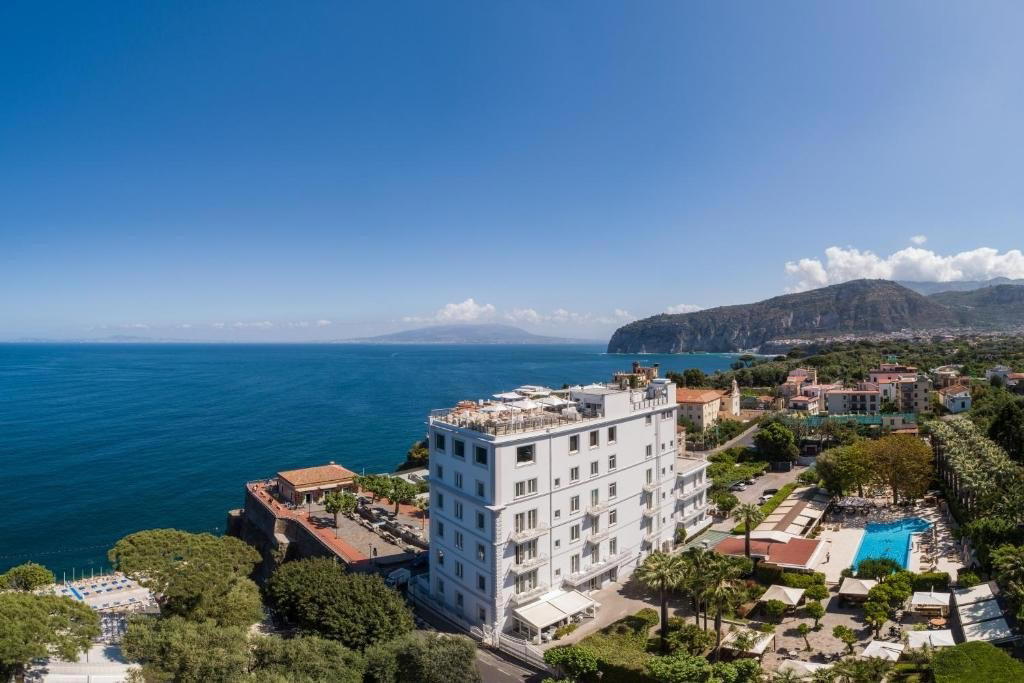
Grand Hotel Santa Lucia occupies among the more commanding positions on Via Partenope, facing the Gulf of Naples directly across the Castel dell'Ovo. With 85 rooms, it belongs to the smaller end of Naples' historic waterfront hotel tier, large enough for full service, compact enough for a degree of personal attention that larger properties on the lungomare rarely manage.
Pearl is the En Primeur Club membership app — saves, bookings, and concierge access live there. Same editors, same standards.
- Address
- Via Partenope, 46, 80121 Napoli NA
- Phone
- +39 081 764 0666
- Website
- santalucia.it
- Directions
- Get directions
 Saves & bookings on Pearl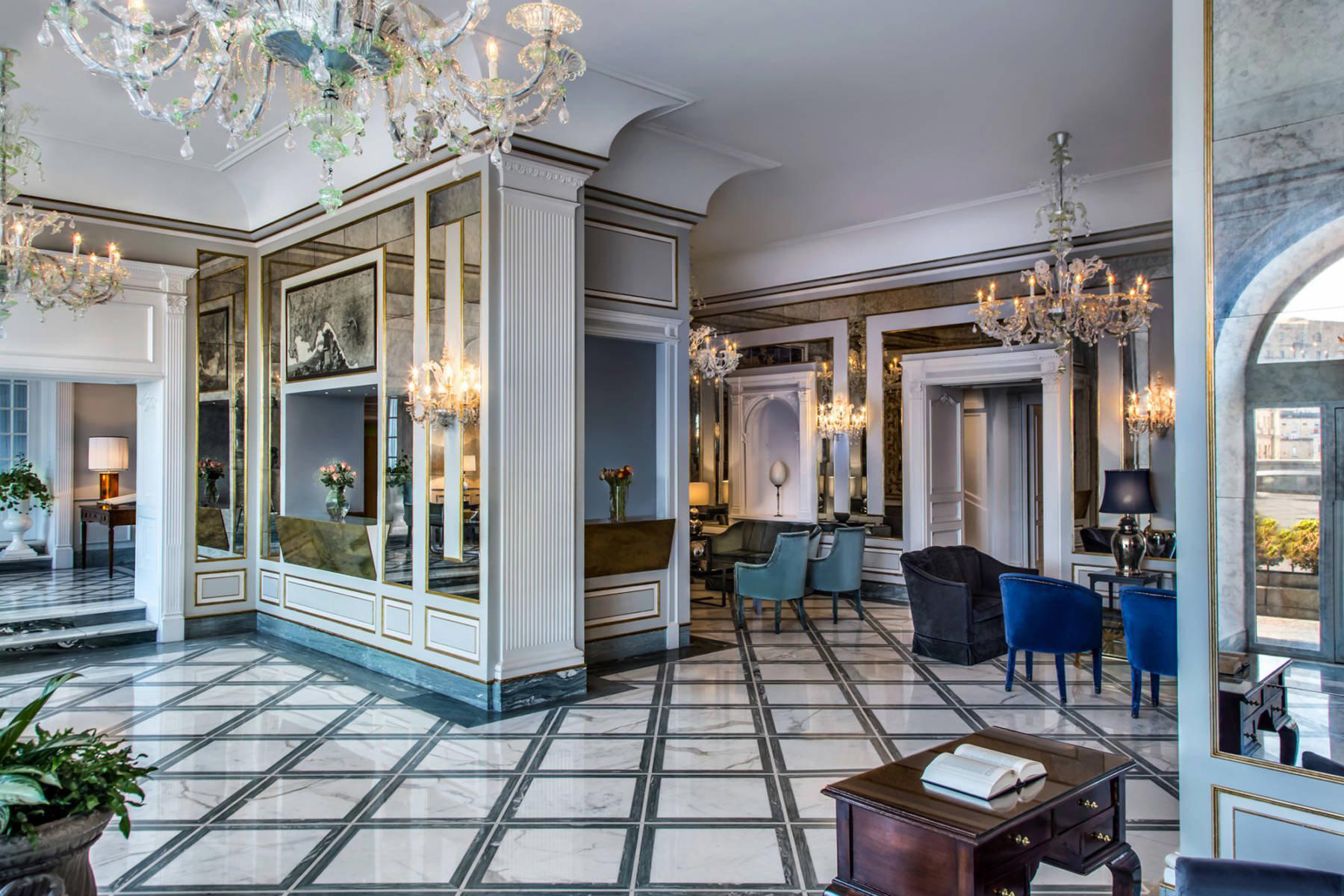
The Lungomare Hotel Tier and Where Santa Lucia Sits
Via Partenope is Naples' answer to the grand European seafront promenade, a curving stretch of traffic and salt air where the city's historic hotel stock faces the Gulf and the silhouette of Vesuvius with a directness that few Italian waterfronts can match. The hotels here belong to a specific competitive tier: establishments old enough to carry institutional weight, positioned on a boulevard where the address itself is part of the product. Grand Hotel Santa Lucia, at number 46, has 88 rooms, which places it at the more contained end of this waterfront category. For comparison, the Grand Hotel Vesuvio and Grand Hotel Parker's both operate at different scales and with different orientations to the city. Parker's sits on the hill above the centro storico; Vesuvio commands the widest stretch of the lungomare. Santa Lucia fits between those poles, a property with classical architecture, a direct water outlook, and a room count that implies a certain ceiling on the impersonal.
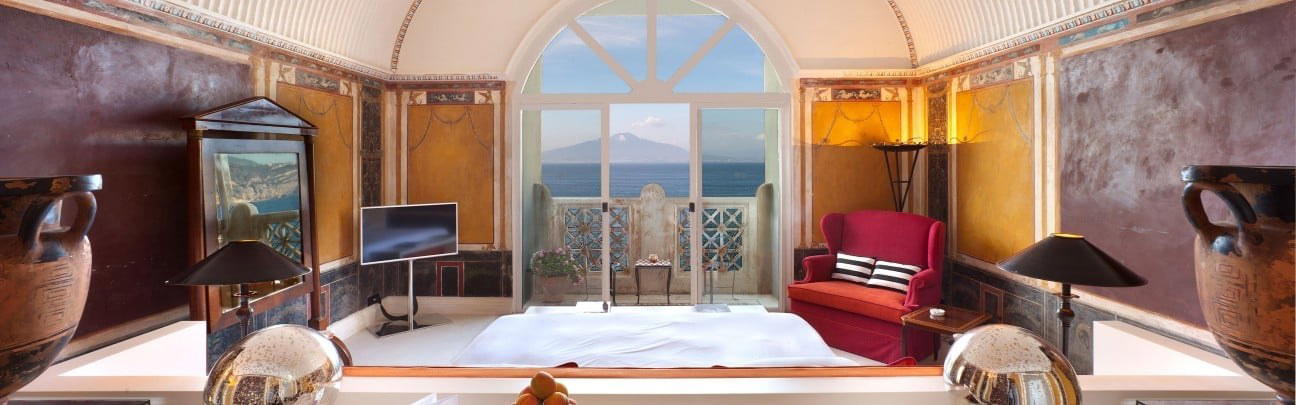
The waterfront position here is not incidental. Via Partenope runs along the base of the Pizzofalcone promontory, with Castel dell'Ovo visible from most sea-facing rooms at close range. That medieval castle, built on the island of Megaride, frames nearly every photograph taken from this block of the lungomare, and it frames the guest experience in a more material way: the light changes across it through the day, the evening illumination is visible from the rooms, and the pedestrian path along the water puts the castle within a few minutes' walk. This is not the Naples of the centro storico's baroque density, it is a cleaner, airier version of the city that has historically attracted travellers who want proximity to Neapolitan intensity without full immersion in it.
Service Architecture on the Waterfront
In a city where hospitality ranges from the warmly improvised to the formally international, waterfront hotels at the Santa Lucia end of the spectrum tend to operate on a model rooted in European grand hotel tradition, concierge-led, with staff familiar enough with the city to function as a practical interface between the hotel and Naples' more complicated logistics. That matters in Naples more than it does in most Italian cities. Getting to Capri on the right hydrofoil, timing a day on the Amalfi Coast around traffic, or understanding which neighbourhood to visit in what order requires local knowledge that a well-staffed concierge desk can compress into a ten-minute conversation.
An 88-room property sits in an interesting structural position here. It is large enough to maintain full front-desk and concierge coverage at all hours, but not so large that guests disappear into anonymity after check-in. That size also means the hotel does not carry the convention infrastructure of the larger waterfront properties, which tends to concentrate the guest profile toward leisure and independent travellers rather than conference groups, a distinction that shapes the atmosphere considerably. For those comparing options along this stretch of the lungomare, the service character here is more likely to feel residential than transactional.
Naples is a city that rewards orientation. The Quartieri Spagnoli, the centro storico, Spaccanapoli, Posillipo, the port, each has a distinct character, and the connections between them are not always obvious from a map. A hotel whose staff knows this terrain well, and communicates it effectively, is not a luxury extra in this context; it is a functional advantage. a good concierge at a Via Partenope property should be able to translate those recommendations into a working itinerary based on timing, transport, and preference.
The Case for This End of the Waterfront
The Santa Lucia neighbourhood takes its name from the old fishing quarter that once occupied this part of the bay, reclaimed and formalised in the late nineteenth century when the lungomare was created. The hotels that established themselves here in that period, and in the decades following, are among the longer-standing presences in Neapolitan hospitality. That institutional continuity is part of what distinguishes this strip from newer hotel districts: there is a sense that these buildings have absorbed generations of travellers heading to or from Capri, Ischia, the Amalfi Coast, or the ruins at Pompeii and Herculaneum.
For guests using Naples as a base for day trips rather than a single destination, Via Partenope has a practical advantage: the hydrofoil and ferry terminals at Molo Beverello are within walking distance, and the Mergellina port, which serves additional island routes, is accessible along the seafront. This matters most in summer, when the island connections are the primary reason many visitors are in Naples at all. The hotel's 85-room scale means it does not generate the lobby congestion that larger properties can experience during peak ferry season.
Travellers calibrating their Italian itinerary at the luxury waterfront level have a range of reference points elsewhere in the country. Aman Venice and Bulgari Hotel Roma represent the internationally branded, architecturally dramatic end of the Italian urban hotel spectrum. Four Seasons Hotel Firenze and Portrait Milano illustrate what design-led domestic operators do in the northern cities. Closer to Naples, Borgo Santandrea on the Amalfi Coast and Il San Pietro di Positano occupy the cliffside resort tier on the Sorrentine Peninsula. Grand Hotel Santa Lucia sits in a different register from all of these: a historic city hotel on a famous waterfront, oriented toward guests who want Naples itself rather than a retreat from it.
Within Naples, the comparison set is tighter. The Grand Hotel Vesuvio is especially formally positioned property on the lungomare. Decumani Hotel de Charme offers an alternative entry point for guests who prefer the centro storico's baroque density over waterfront access. Santa Lucia occupies the middle ground, a waterfront address with a manageable room count and a service model that reflects the European hotel tradition this part of Naples has maintained for well over a century.
Planning Your Stay
Grand Hotel Santa Lucia is located at Via Partenope, 46, in the Santa Lucia waterfront district of Naples. The property has 88 rooms. Booking is leading handled directly or through a qualified travel specialist with current availability. The waterfront location puts the Castel dell'Ovo, the lungomare walking path, and the ferry terminals at Molo Beverello within easy reach on foot. Spring and autumn are particularly comfortable seasons for a Naples stay; July and August bring heat and higher demand across the city's hotel stock, particularly among guests using the city as a gateway to the islands. For guests extending their Italian itinerary toward the Amalfi Coast, Borgo Santandrea and JK Place Capri represent the logical next tier south along that coastline.
Category Peers
Comparable venues nearby, for context on price, style, and recognition.
| Venue | Cuisine | Price | Awards | Notes |
|---|---|---|---|---|
| Grand Hotel Santa LuciaThis venue — the venue you are viewing | Historic 1900 Art Nouveau palace with classical architectural character, recently renovated while maintaining period details including Murano chandeliers and frescoed ceilings. | $$$ | 5-Star | Not listed |
| Grand Hotel Parker's | Historic luxury heritage hotel blending 19th-century Neapolitan elegance with contemporary comfort; positioned as the oldest and most prestigious hotel in Naples. | $$$$ | 5-Star | Chiaia |
| Hotel Costantinopoli 104 | Historic neoclassical palazzo converted into a contemporary boutique hotel with emphasis on art, design, and aristocratic hospitality traditions. | $$$ | 4-Star | Mater Dei |
| Grand Hotel Vesuvio | Historic luxury hotel blending Neapolitan tradition with contemporary elegance. | $$$$ | 5-Star | San Ferdinando |
| Caruso Place Boutique & Wellness Suites | Historic boutique hotel in 16th-century palace with modern comforts | $$$$ | 4-Star | San Ferdinando |
| ROMEO Napoli | Fusion of Japanese minimalism and Italian elegance with contemporary art and antiques. | $$$$ | 5-Star | San Ferdinando |
Recognition history
Dated appearances from independent guides and award organizations, with the underlying list record or original source where available.
Preferred Hotels Member
Preferred Hotels
Continue exploring
More in Naples
Hotels in Naples
Browse all →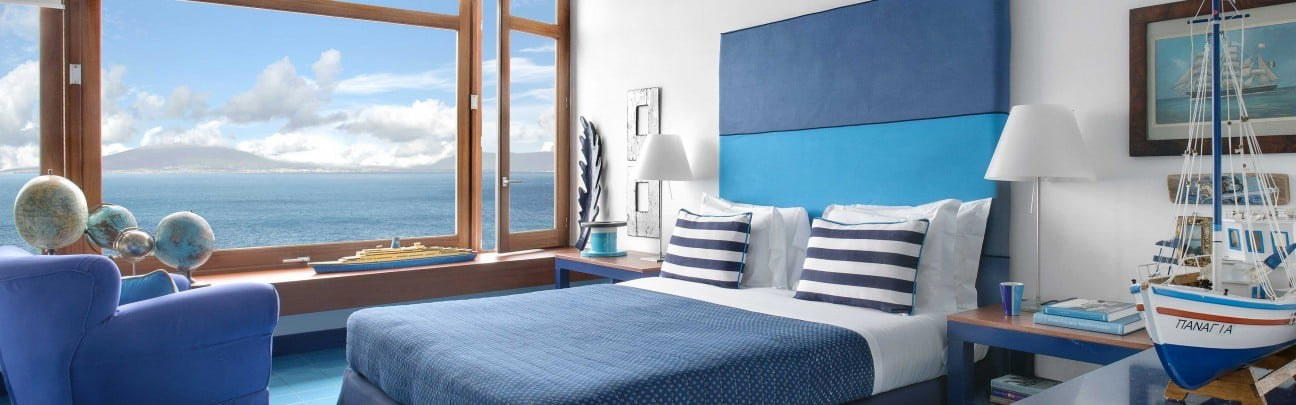
Bars in Naples
Browse all →
Restaurants in Naples
Browse all →

At a Glance
- Elegant
- Romantic
- Classic
- Sophisticated
- Romantic Getaway
- Honeymoon
- Anniversary
- Family Vacation
- Weekend Escape
- Waterfront
- Historic Building
- Panoramic View
- Garden
- Terrace
- Wi Fi
- Fitness Center
- Restaurant
- Bar
- Room Service
- Concierge
- Business Center
- Valet Parking
- Airport Shuttle
- Bicycle Rental
- Garden
- Waterfront
- Wi Fi
- Fitness Center
- Restaurant
- Bar
- Room Service
- Concierge
- Business Center
- Valet Parking
- Airport Shuttle
- Bicycle Rental
- Garden
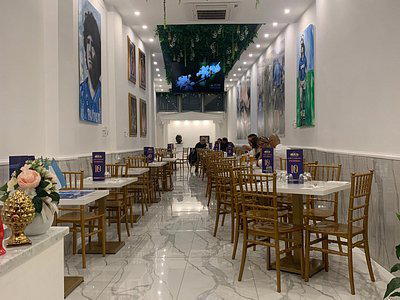
Refined and elegant with ornate marble accents, classical decor, and romantic lighting; guests praise the beautiful lobby and bar areas as relaxing spaces with sophisticated ambiance.