
Michelin Selected
A Michelin Selected property on Via Santa Lucia, Artemisia Domus Giardino occupies one of Naples' most historically layered addresses along the Santa Lucia waterfront. The garden-courtyard format places it in a smaller, design-conscious tier of Neapolitan accommodation, distinct from the grand seafront palaces nearby. For travellers prioritising atmosphere and architectural character over full-service hotel infrastructure, it represents a considered alternative.

Pearl is the En Primeur Club membership app — saves, bookings, and concierge access live there. Same editors, same standards.
- Address
- Via Santa Lucia, 62, 80132 Napoli NA, Italy
- Phone
- +39 081 1840 5826
- Website
- artemisiadomusgiardino.com
- Directions
- Get directions
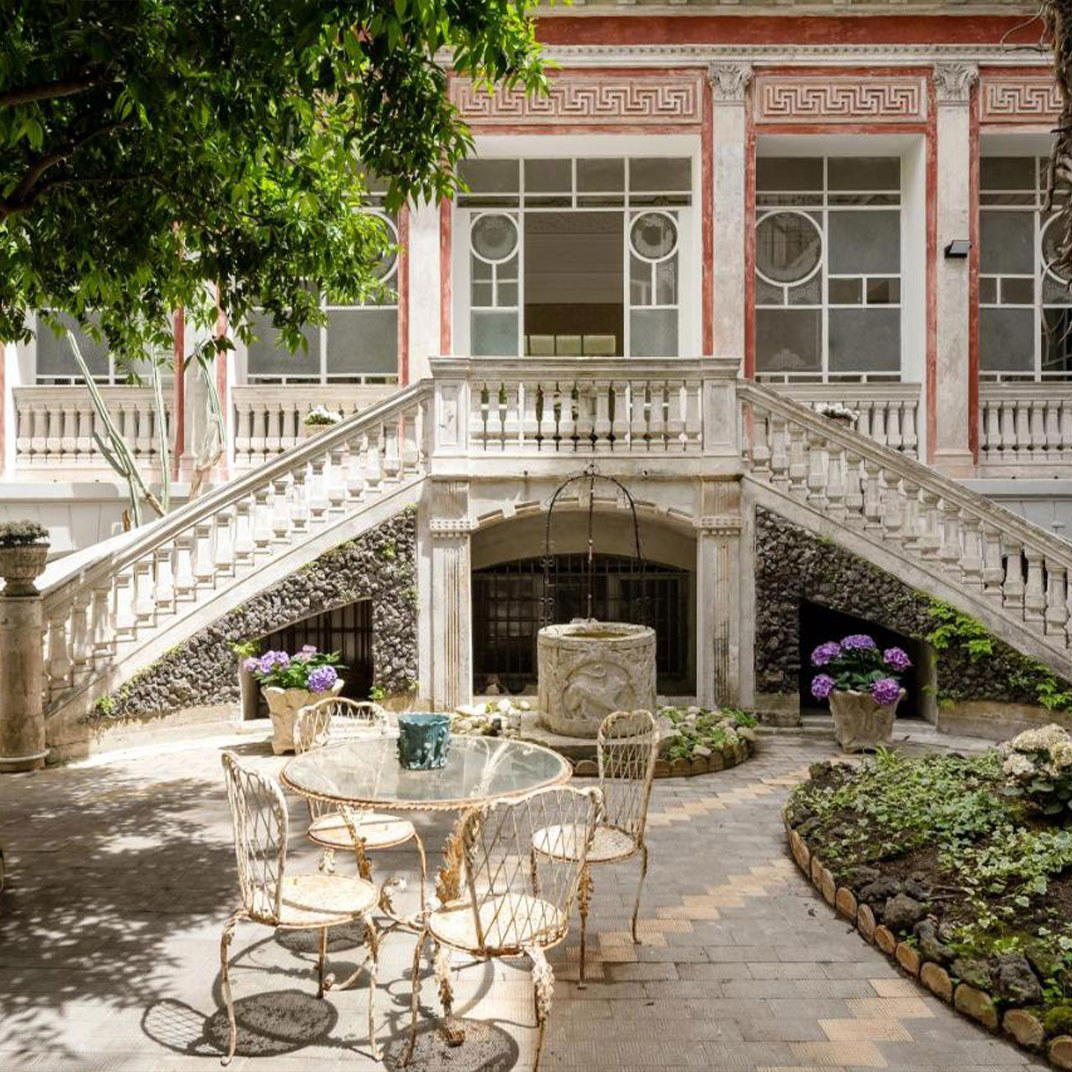
Via Santa Lucia and the Architecture of Neapolitan Intimacy
The Santa Lucia district has long carried a particular weight in Naples' self-image. The waterfront boulevard that runs from Castel dell'Ovo toward the Chiaia neighbourhood is lined with addresses that have housed foreign diplomats, writers, and the kind of traveller who comes to Naples not for the museums alone but for the city's particular quality of light and noise. Via Santa Lucia 62 sits within this residential-diplomatic fabric, and the domus-garden format of Artemisia signals something specific about how a smaller tier of Neapolitan accommodation has evolved: away from the grand-salon model of the historic seafront palaces and toward enclosed, courtyard-anchored properties that trade scale for spatial intimacy.
Naples' accommodation spectrum has split into two fairly distinct camps. On one side sit the landmark seafront hotels, the palazzos-turned-grand-hotels like Grand Hotel Vesuvio and Grand Hotel Santa Lucia, which offer bay views, formal restaurants, and the kind of institutional heft that comes from a century of hosting heads of state. On the other sit smaller, often palazzo-converted properties that foreground architectural character and neighbourhood integration over service infrastructure.
The Garden Courtyard as Architectural Argument
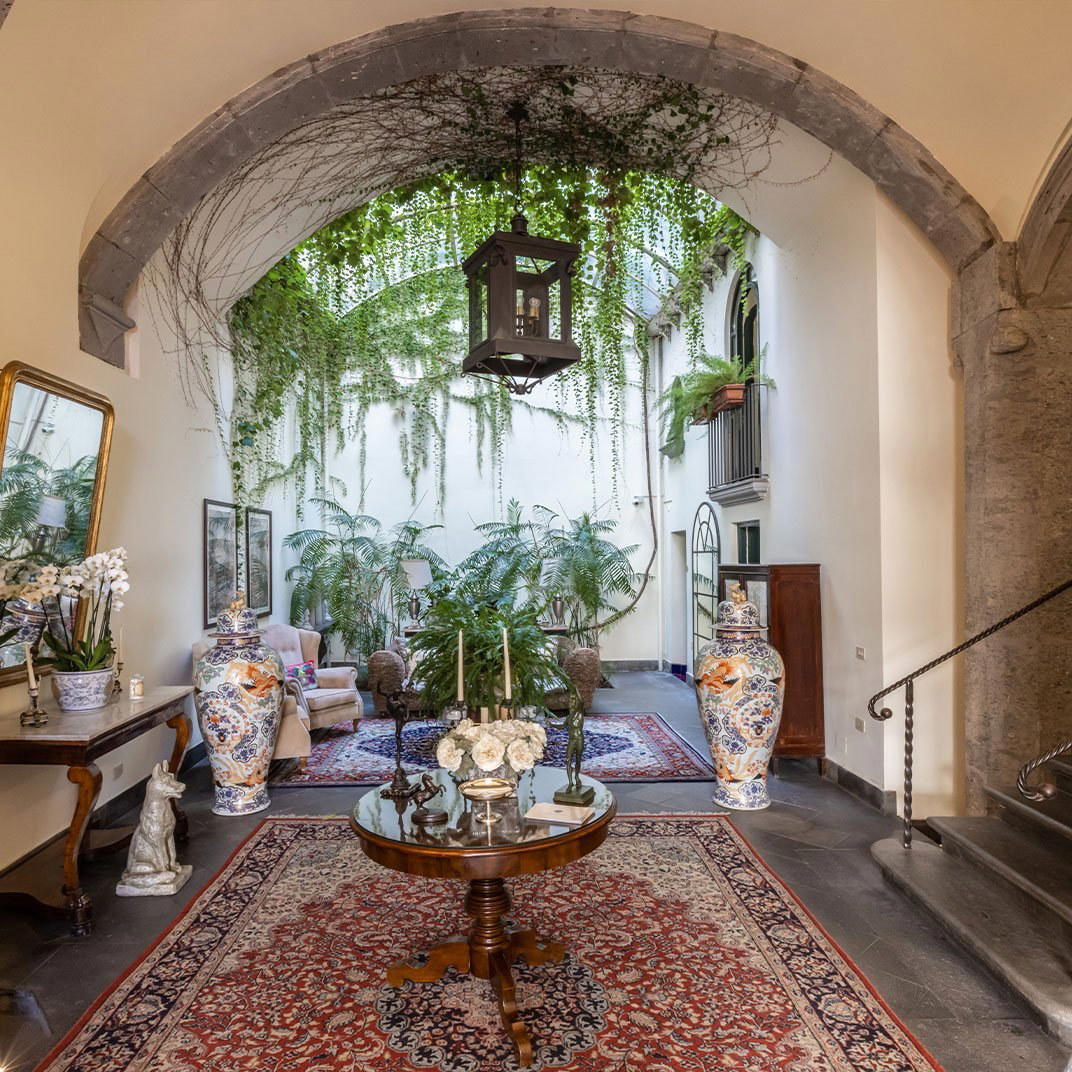
The domus-and-giardino pairing in the name is not incidental. The courtyard garden format is a specifically southern Italian spatial tradition, one that turns inward against the street noise and heat of a dense Mediterranean city. In Naples, where building density is among the highest in Italy and exterior street-level space is scarce, a functioning inner garden operates as a genuine architectural asset rather than a decorative afterthought. Properties that maintain this format within the historic city fabric are preserving a spatial logic that predates modern hotel construction by several centuries, dating back to the Roman atrium house that gave the domus its name.
This matters editorially because it frames what kind of experience Artemisia is offering. The garden is not an amenity in the hotel-marketing sense. It is a structural feature that changes the acoustic and thermal profile of the property, creating a buffer zone between the street life of Santa Lucia and the interior rooms. Travellers accustomed to the terrace-and-bay-view format of the seafront grand hotels will find a different spatial proposition here: one oriented inward and downward into the city's layered history, rather than outward toward the bay.
For comparison, the design-led boutique tier in Naples also includes properties like Hotel Costantinopoli 104, which similarly uses a garden-courtyard format in the historic centre, and Decumani Hotel de Charme, which positions itself through the architectural vocabulary of the Spaccanapoli district. Each represents a different neighbourhood interpretation of the same instinct: that the physical container of the stay should do some of the editorial work.
Position Within Naples' Broader Accommodation Tier
The Michelin Selected designation, current for 2025, places Artemisia within the guide's quality-acknowledged but non-starred hotel tier. Michelin's hotel selection for Italy has expanded considerably in recent years and now covers a range from rural agriturismi to urban design hotels, with the Selected category functioning as a quality floor rather than a ceiling. Within Naples specifically, the guide's coverage spans the full spectrum from large-footprint international brands like the Naples Beach Club, A Four Seasons Resort to smaller character properties in the historic city.
Artemisia's positioning on Via Santa Lucia is geographically significant. The address sits between the formality of the Chiaia hotel district and the working density of the Spanish Quarters and historic centre. Santa Lucia itself has undergone a quiet requalification over the past decade, with the area around Castel dell'Ovo attracting a more considered set of independent restaurants and accommodation. This is not the tourist-facing Spaccanapoli corridor, nor the established luxury strip of the Lungomare. It occupies a middle register that suits travellers who want proximity to the seafront without committing to the rates and operational scale of the grand-palace tier.
Travellers looking for full-service luxury infrastructure, including multiple dining outlets, spa facilities, and the concierge depth of an international brand, should look at the Grand Hotel Parker's on the Corso Vittorio Emanuele hillside, or consider options along the Amalfi Coast such as Borgo Santandrea or Il San Pietro di Positano in Positano. The Artemisia format is calibrated for a different trip architecture, one where the hotel functions as a well-considered base rather than a destination in itself.
Within Italy more broadly, the same design-led boutique instinct that Artemisia represents appears in properties like Caruso Place Boutique and Wellness Suites in Naples, or further afield in Casa Maria Luigia in Modena and Corte della Maestà in Civita di Bagnoregio. The common thread is a prioritisation of spatial and architectural character over programmatic depth, with Michelin recognition acting as a quality signal for travellers who use the guide as a filter.
Planning Your Stay
Via Santa Lucia 62 is walkable to the Lungomare waterfront, Castel dell'Ovo, and the Piazza del Plebiscito civic axis. The Chiaia shopping and restaurant district lies within a short walk toward the Mergellina direction. For travellers arriving by train, Napoli Centrale connects to the Santa Lucia area via taxi or the Municipio metro station.michelin.com, where the property appears under its 2025 Selected status, or through third-party booking platforms that carry the listing. For broader context on where Artemisia fits within the city's restaurant and hotel scene, see our full Naples guide.
The property's garden-courtyard format makes it particularly suited to the shoulder seasons, when Naples' street temperature drops to a point where the indoor-outdoor dynamic of a domus-style building works at its most effective. High summer in Naples runs hot and loud; the enclosed garden offers some acoustic relief from the street but will not match the thermal management of a fully air-conditioned grand hotel. Spring and autumn arrivals, typically March through May and September through October, align with the conditions the domus format handles leading.
Further Reading: Italy's Smaller Design-Led Properties
For travellers building a wider Italian itinerary around this category of property, the following represent comparable approaches in their respective cities and regions: Aman Venice for the palazzo-conversion format taken to its highest price tier; Castello di Reschio in Lisciano Niccone for a rural Umbrian interpretation of architectural restoration; Four Seasons Hotel Firenze for the garden-palazzo format at full institutional scale; and Portrait Milano for the urban boutique tier in the north. Beyond Italy, the same instinct toward architectural character over programmatic scale appears in Passalacqua in Moltrasio on Lake Como and, at a different price register entirely, in JK Place Capri.
Comparison Snapshot
Comparable venues nearby, for context on price, style, and recognition.
| Venue | Cuisine | Price | Awards | Notes |
|---|---|---|---|---|
| Artemisia Domus GiardinoThis venue — the venue you are viewing | Historic period residence renovated as boutique hotel with modern spa amenities | Not listed | Michelin Selected | Not listed |
| Decumani Hotel de Charme | Historic 18th-century palace with Baroque common areas and elegantly furnished rooms. | $100–200 | Not listed | Vomero |
| Caruso Place Boutique & Wellness Suites | Historic boutique hotel in 16th-century palace with modern comforts | $300–500 | Michelin Selected | San Ferdinando |
| Hotel Costantinopoli 104 | Historic neoclassical palazzo converted into a contemporary boutique hotel with emphasis on art, design, and aristocratic hospitality traditions. | $200–300 | Michelin Selected | Mater Dei |
| Grand Hotel Santa Lucia | Historic 1900 Art Nouveau palace with classical architectural character, recently renovated while maintaining period details including Murano chandeliers and frescoed ceilings. | $200–300 | Preferred Hotels Member | San Ferdinando |
| ROMEO Napoli | Fusion of Japanese minimalism and Italian elegance with contemporary art and antiques. | Not listed | Michelin Selected · Mr & Mrs Smith Seal of Approval | San Ferdinando |
Recognition history
Dated appearances from independent guides and award organizations, with the underlying list record or original source where available.
Michelin Selected
Michelin
Continue exploring
More in Naples
Hotels in Naples
Browse all →
Bars in Naples
Browse all →
Restaurants in Naples
Browse all →

Details
- Romantic
- Quiet
- Elegant
- Intimate
- Cozy
- Romantic Getaway
- Anniversary
- Weekend Escape
- Garden
- Historic Building
- Terrace
- Wi Fi
- Spa
- Sauna
- Massage
- Room Service
- Concierge
- Garden
- Street Scene
Sleek minimalist modern design blending with historic frescoes, stuccoes, and aged stone; tranquil and secretive garden oasis with cozy, refined lighting and intimate atmosphere.