Google: 4.5 · 188 reviews

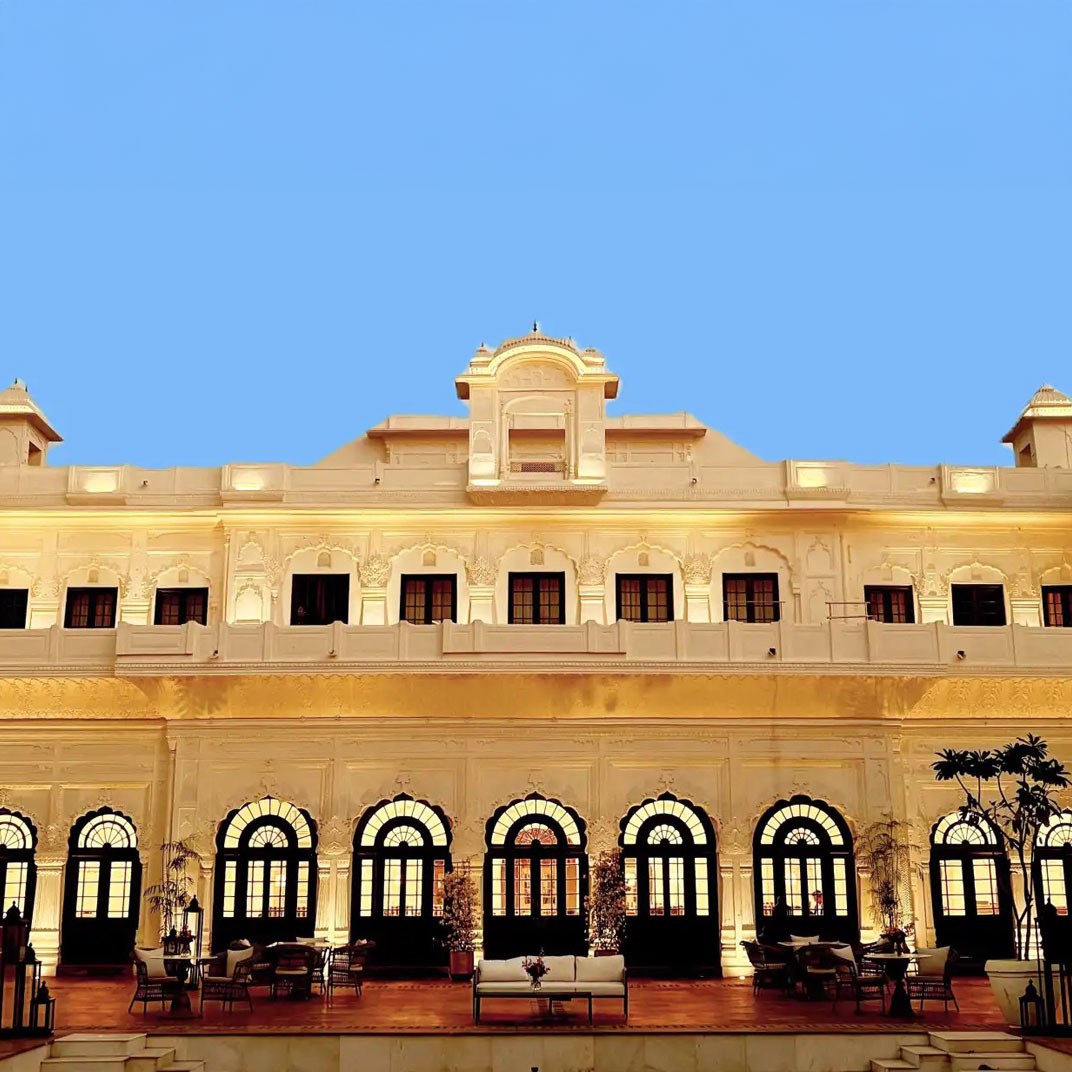
A Michelin Key-awarded heritage property in Patiala's Adalat Bazar quarter, Ran Baas The Palace occupies a category where royal architecture and considered hospitality converge. The 2025 Michelin Key recognition places it in a select tier of Indian stays where the physical fabric of the building is itself the offering, not merely its backdrop.
 Discover on Pearl
Pearl is the En Primeur Club membership app — saves, bookings, and concierge access live there. Same editors, same standards.
A Royal City and Its Architecture of Hospitality
Patiala has long occupied an understated position in the Punjab's cultural geography. The former capital of the Patiala princely state, the city retains a density of Sikh-era architecture that few cities of comparable size in northern India can match: fortified gates, havelis with painted facades, and palace compounds that once housed one of the subcontinent's wealthiest royal families. Within that context, a heritage property is not a novelty but an expectation — the city's built history essentially demands it. What separates genuine heritage hospitality from mere proximity to old walls is whether the building's spatial logic shapes the guest experience, or whether the experience simply ignores the building. Ran Baas The Palace sits firmly in the former camp, a fact confirmed by its 2025 Michelin One Key distinction, a recognition that the Michelin guide reserves for hotels where character, quality, and sense of place are demonstrably present.
What the Michelin Key Signals in This Context
The Michelin Key system, introduced formally for hotels, applies the same underlying rigour as the restaurant stars: it is not an award for luxury by square footage, but for considered hospitality with a legible point of view. In 2025, Ran Baas The Palace received One Key — placing it alongside a cohort of Indian properties that prioritise architectural integrity and experiential coherence. For the Indian heritage hotel category, that signal carries particular weight. Properties such as Taj Lake Palace in Udaipur and Suryagarh in Jaisalmer demonstrate what the upper tier of this category looks like at fuller scale; Ran Baas operates at a quieter, more specific frequency, rooted in Patiala's own dynastic history rather than a region-wide heritage tourism circuit. Travellers comparing it against larger Michelin-recognised Indian stays such as The Oberoi Amarvilas in Agra or Amanbagh in Ajabgarh should understand that Ran Baas offers a different proposition: city-anchored, historically specific, less insulated from the surrounding urban texture.
The Architecture as the Experience
Heritage hotels in India fall into broadly two approaches. The first, common among larger palace conversions, treats the historic shell as spectacle , grand corridors, chandeliered halls, and period furniture deployed as atmosphere. The second approach, more demanding to execute, asks the building's original spatial grammar to determine how guests move through, rest in, and relate to the property. The distinction matters because it determines whether the architecture feels like a stage set or a living argument for a particular way of inhabiting space. Ran Baas The Palace, located in the Adalat Bazar area at the heart of Patiala's older urban fabric, belongs to the category of properties where the surrounding city is not screened out but contextualised. The Adalat Bazar quarter is Patiala's commercial and historical core, and staying within it means the property operates as a point of legibility for the city rather than as a retreat from it. That orientation aligns Ran Baas with a strand of Indian heritage hospitality that treats urban texture as an asset rather than a liability , an approach shared, in different geographies, by properties such as Vivanta Vrindavan in its pilgrimage-town context, or Taj Swarna in Amritsar relative to the Golden Temple precinct.
Patiala's Position on the Northern India Heritage Circuit
Most international itineraries for Punjab concentrate on Amritsar, with its singular draw of the Harmandir Sahib. Patiala functions on a different register: it rewards visitors who have already done the Golden Temple and want to understand the secular architectural ambitions of Sikh-era patronage. The Qila Mubarak complex, the Moti Bagh Palace, and the Baradari Gardens collectively represent a scale of royal building that is undervisited relative to its quality. For that kind of traveller , oriented toward architecture and cultural history rather than ticking off landmarks , a stay at a property embedded in the old city makes practical and experiential sense. The logistics support it: Patiala is approximately 70 kilometres from Chandigarh, which has the nearest substantial air connectivity, making it a manageable extension from either a Chandigarh base or a broader Punjab circuit. Those building northern India itineraries that include both spiritual and architectural threads might usefully compare the Patiala stop against Welcomhotel by ITC Hotels in Pahalgam for the Kashmir extension, or consider how properties like Ananda in the Himalayas in Narendra Nagar fit into a longer northern arc.
How It Compares Within India's Broader Heritage Hotel Field
India's Michelin Key cohort spans a wide range of scales and contexts, from urban palace conversions to wildlife-adjacent tented camps. Suján Jawai in Pali and Suján Sher Bagh in Ranthambhore represent the conservation-camp end of that spectrum; The Leela Palace Jaipur and The Leela Palace New Delhi sit at the large-format palace-hotel end. Ran Baas The Palace occupies a more intimate, city-specific register. It is not competing for the same guest as a 200-key Rajasthan palace resort, nor positioning itself as a wellness or safari destination. Its peer set is smaller: heritage properties in secondary Indian cities where the building's history is inseparable from the place's identity, and where the Michelin Key recognition functions as a signal to architecture- and culture-led travellers specifically. For those planning a wider South Asia trip with similar priorities, the contrast with Kumarakom Lake Resort in Kumarakom or Anantya By The Lake in Kaliyal is instructive: those properties lead with landscape and water; Ran Baas leads with urban heritage and dynastic architecture.
Planning a Stay: What to Know
Because specific booking channels, room categories, and pricing for Ran Baas The Palace are not publicly confirmed in current distribution data, direct contact through the property's own reservation process is the most reliable approach. The Michelin One Key recognition in 2025 is likely to increase interest from internationally mobile travellers, which makes early planning advisable for peak Punjab travel windows , broadly October through March, when the weather across northern India is most hospitable for cultural sightseeing. Those arriving via Chandigarh should factor in road transfer time. For travellers building a longer India itinerary that extends across multiple Michelin-recognised properties, our full Patiala guide provides broader context on the city's dining and cultural infrastructure. International comparisons for the palace-hotel format , where the building's history is the primary credential , include Badrutt's Palace Hotel in St. Moritz and Hôtel de Paris Monte-Carlo, both of which demonstrate how a property's architectural identity can sustain relevance across generations without requiring constant reinvention.
How It Stacks Up
These are the closest comparables we have in our database for quick context.
| Venue | Cuisine | Price | Awards | Notes |
|---|---|---|---|---|
| Ran Baas The Palace | This venue | |||
| The Oberoi Amarvilas | World's 50 Best | |||
| The Taj Mahal Palace, Mumbai | World's 50 Best | |||
| InterContinental Marine Drive-Mumbai | ||||
| The St. Regis Mumbai | ||||
| ITC Maratha, A Luxury Collection Hotel, Mumbai |
Continue exploring
More in Patiala
Hotels in Patiala
Browse all →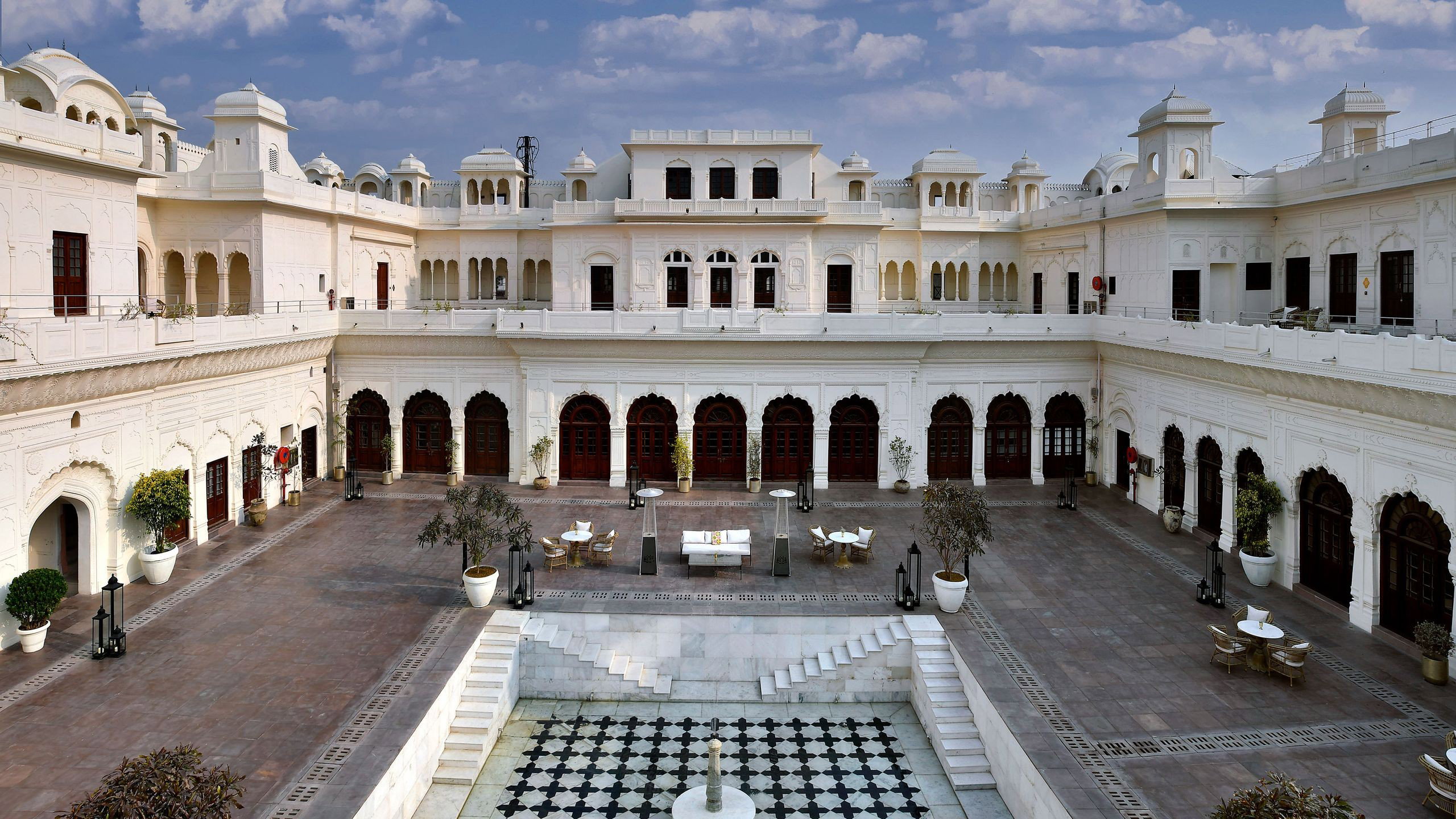


At a Glance
- Elegant
- Opulent
- Historic
- Sophisticated
- Classic
- Romantic Getaway
- Honeymoon
- Anniversary
- Historic Building
- Terrace
- Pool
- Spa
- Wifi
- Room Service
- Concierge
- Restaurant
- Bar
- Gym
- Sauna
- Hot Tub
- Garden
Opulent heritage atmosphere with twinkling chandeliers, silk carpets, gilded arches, and blush-pink walls framed by tropical greenery.