Ekyam Sattvic Kitchen
Our verdict
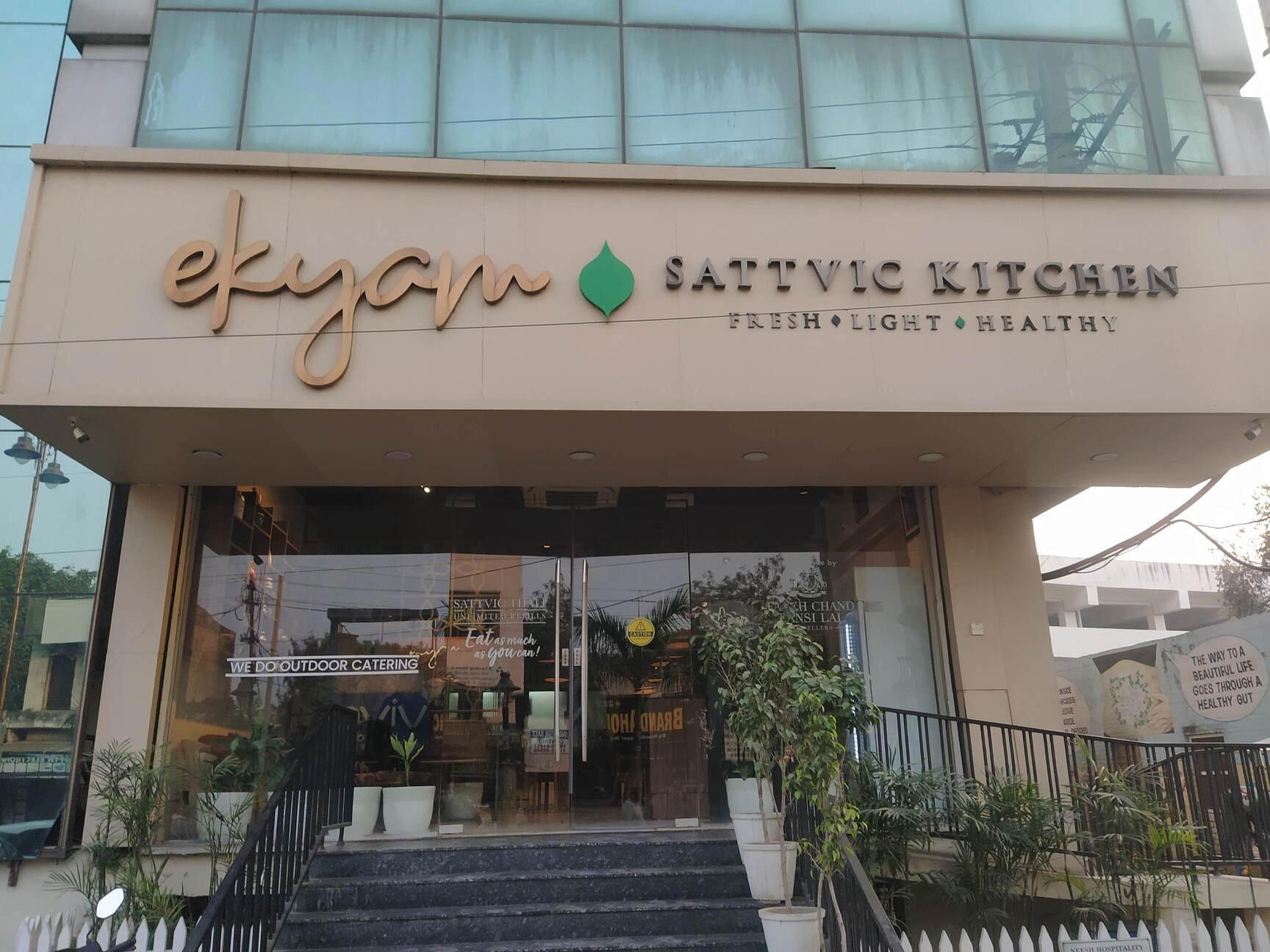
In Ambala Cantonment's modest Railway Station Road corridor, Ekyam Sattvic Kitchen represents a specific and increasingly relevant category in Indian dining: the sattvic table, where the sourcing philosophy is the menu. The kitchen operates within an Ayurvedic food tradition that excludes onion, garlic, and meat entirely, positioning it alongside India's small but growing cohort of principled vegetarian restaurants.

Pearl is the En Primeur Club membership app, where members save venues, book tables and use the concierge.
The menu
What to order
- Unlimited Sattvic Thali
- Masala Idli
- Masala Dosa
Where the Sourcing Philosophy Is the Menu
Ambala Cantonment is not a city that typically appears in conversations about destination dining. The town sits on the Punjab-Haryana border, roughly equidistant between Delhi and Chandigarh, its character shaped by its military garrison history and the volume of road traffic moving along National Highway 44. The food here tends toward the practical: highway dhabas, sweet shops, and the kind of Punjabi thali houses that sustain truckers and families alike. Against that backdrop, a sattvic kitchen on Railway Station Road at Football Chowk reads as a deliberate statement rather than a casual opening. For a broader view of the city's dining options, see our full Ambala Cantonment restaurants guide.
The Sattvic Tradition and What It Demands of Ingredients
Sattvic cooking is one of the oldest structured dietary philosophies in the world, drawn from Ayurvedic principles that classify foods by their effect on the mind and body. The sattvic category, associated with clarity and lightness, excludes not only meat and fish but also onion, garlic, leeks, and in stricter interpretations, certain other pungent alliums. What remains is a cuisine built on seasonal produce, whole grains, legumes, dairy, nuts, and gentle spicing. The practical consequence is that sourcing becomes the primary creative act. Without the flavour foundation that onion and garlic provide in most North Indian cooking, the kitchen must rely on the inherent quality of its raw materials. A mediocre tomato or a stale cumin seed has nowhere to hide.
This is what separates a principled sattvic kitchen from a restaurant that simply omits certain ingredients. The tradition demands ingredient discipline at the sourcing level, which is why the better-regarded sattvic and Jain restaurants in India tend to be deeply connected to specific suppliers or growing regions. In a city like Ambala Cantonment, where the surrounding Haryana belt produces wheat, mustard, and seasonal vegetables in quantity, a kitchen working within this tradition has material to work with, if it chooses to use it intentionally. Ekyam Sattvic Kitchen's positioning on Railway Station Road, close to the transit infrastructure that moves produce through the region, is not incidental to how this type of restaurant operates.
Ingredient Logic in North Indian Sattvic Cooking
North Indian sattvic cooking occupies a different register than its South Indian or Rajasthani counterparts. The regional pantry here includes the dairy richness of the Indo-Gangetic plain, the winter vegetables of the Punjab growing cycle, and the spice combinations associated with Vaishnava temple kitchens. Ghee from local dairy, seasonal saag prepared without garlic tempering, and dal preparations that rely on asafoetida as the aromatic base are characteristic of the tradition. What makes this cooking instructive for anyone tracking where Indian vegetarianism is heading is the way it resolves the tension between flavour intensity and ingredient restriction. The leading kitchens in this category do not produce food that tastes restrained; they produce food that tastes purposeful.
That distinction matters increasingly in the context of Indian dining broadly. Restaurants like Farmlore in Bangalore have made sourcing provenance the editorial spine of their menus in a different register. Royal Vega in Chennai operates within a similarly principled vegetarian framework, backed by the ITC Hotels infrastructure. Even at the higher end of the spectrum, from Inja in New Delhi to Adaa at Falaknuma Palace in Hyderabad, the shift toward ingredient intentionality is visible across formats and price points. Ekyam operates at a different scale and market position than any of those, but the underlying logic, that sourcing determines quality in Indian vegetarian cooking, connects them.
Ambala Cantonment as Context
For travellers moving along the Delhi-Chandigarh corridor, Ambala Cantonment is most often a stop rather than a destination. That positions a restaurant like Ekyam differently from, say, Naar in Kasauli, which draws visitors who have made a specific travel decision to reach the hills, or Neel in Patiala, anchored in a city with its own heritage draw. Ekyam's location near the railway station speaks to a different audience: residents of the cantonment, travellers in transit, and the regional population for whom sattvic eating is a dietary and spiritual practice rather than a curiosity.
That local embeddedness is an asset in a category where regularity matters. Sattvic eating is not an occasional dining format for most of its adherents; it is a daily practice. A kitchen that serves this community builds its reputation through repetition and consistency rather than destination reviews. This is a different credibility structure than that of restaurants that compete for awards or international recognition, and it is worth understanding on its own terms.
Planning a Visit
Ekyam Sattvic Kitchen is located at 123/1, Railway Station Road, Palledar Mohalla, Football Chowk, Ambala Cantonment, Haryana 133001. The address places it in direct proximity to the cantonment's main rail and road transit points, making it accessible whether you are arriving by train or passing through by road on NH-44. Visitors travelling between Delhi and Chandigarh will find Ambala Cantonment a manageable stop on that corridor. Given that no booking line or website is currently listed in the public record, the practical approach is to arrive directly; this is consistent with how most neighbourhood sattvic kitchens in North India operate, serving set timings that align with traditional meal hours. Travellers should verify current opening hours locally before planning around a specific visit.
For those with a broader interest in principled regional cooking across India, the country's most considered vegetarian and ingredient-focused tables span a wide geographic range. Alongside the examples already mentioned, Kappa Chakka Kandhari in Chennai, The Malabar House in Fort Cochin, Leela Kerala Terrace in Trivandrum, Bomras in Anjuna, Palaash in Yavatmal, Ran Baas The Palace in Qila Mubarak, Dining Tent in Jaisalmer, and View in Madurai each represent a distinct regional interpretation of how Indian cooking can be rooted in place and practice. At the more globally referenced end of the spectrum, Americano in Mumbai, Le Bernardin in New York City, and Lazy Bear in San Francisco show how ingredient sourcing operates as a foundational discipline across formats and cuisines.
Frequently asked questions
Is Ekyam Sattvic Kitchen good for families?
Sattvic kitchens are structurally well-suited to mixed-age family meals. The cooking excludes onion, garlic, meat, and fish, producing mild, easily shared food that aligns with dietary norms across generations. Located on Railway Station Road in Ambala Cantonment, Ekyam sits in the neighbourhood-restaurant tier where walk-in family dining is the standard format rather than the exception.
What kind of setting is Ekyam Sattvic Kitchen?
Ekyam operates at 123/1, Railway Station Road, Palledar Mohalla, Football Chowk, a working commercial address in Ambala Cantonment rather than a formal dining district. That places it squarely in the neighbourhood-kitchen register: functional, approachable, and oriented toward regular local custom rather than destination footfall. Travellers passing through on the Delhi-Chandigarh corridor should calibrate expectations accordingly.
Is Ekyam Sattvic Kitchen suitable for people avoiding onion and garlic for religious or dietary reasons?
Sattvic cooking by definition omits onion and garlic, which makes Ekyam Sattvic Kitchen in Ambala Cantonment one of the few restaurant formats where that exclusion is structural rather than a special request. For Jain diners, devotees observing Ekadashi or other fasting protocols, or those following Vaishnava dietary norms, a sattvic kitchen removes the need to verify individual dishes, the entire menu operates within those constraints.
What dish is Ekyam Sattvic Kitchen famous for?
No specific signature dish is documented in the public record for Ekyam Sattvic Kitchen. Within the sattvic tradition practised in North India, dals, khichdis, and seasonal vegetable preparations built around the Haryana-Punjab pantry are the category staples. These dishes are defined by what they exclude, onion, garlic, and pungent spices, as much as by any single preparation.
What's Ekyam Sattvic Kitchen's location?
Ekyam Sattvic Kitchen is located at 123/1, Railway Station Road, Palledar Mohalla, Football Chowk, Ambala Cantt, Haryana 133001, India, Ambala Cantonment.
Side-by-Side Snapshot
Comparable venues nearby, for context on price, style, and recognition.
| Venue | Cuisine | Price | Notes |
|---|---|---|---|
| Ekyam Sattvic KitchenThis venue (the venue you are viewing) | Sattvic Indian Vegetarian | $1–10 | Not listed |
| Krafty Kitchen | Multi-Cuisine Indian & Chinese | $1–10 | Sector 9C |
| Hotel Aganta Green | Indian Multicuisine | $1–10 | Fardapur |
| Sagar Ratna | South Indian Vegetarian | $1–10 | GT Road |
| SodaBottleOpenerWala | Authentic Parsi & Bombay Street Food | Not listed | Khan Market |
| Wow Momo | Tibetan Momos | $1–10 | Sector 62 |
Continue exploring
More in Ambala Cantonment
Restaurants in Ambala Cantonment
All restaurants in Ambala Cantonment →
Hotels in Ambala Cantonment
Browse all →
Details
- Cozy
- Family
- Casual Hangout
- A La Carte
- Vegetarian Friendly
Current opening hours
- Monday
- 8:30 AM–10:30 PM
- Tuesday
- 8:30 AM–10:30 PM
- Wednesday
- 8:30 AM–10:30 PM
- Thursday
- 8:30 AM–10:30 PM
- Friday
- 8:30 AM–10:30 PM
- Saturday
- 8:30 AM–10:30 PM
- Sunday
- 8:30 AM–10:30 PM
Hours can change for holidays and private events. Hours as of .
Family-friendly atmosphere focused on healthy, nourishing sattvic meals.