
Pomâlo Inn occupies a stone address on Vis Town's central square, earning Michelin Selected recognition in 2025 among a small cohort of properties on Croatia's most remote inhabited Adriatic island. The inn represents the quieter, architecturally grounded end of Croatian boutique hospitality, where island materiality and measured scale replace resort spectacle. For travellers who reach Vis by ferry from Split, it is a considered base in a town that has resisted the overdevelopment visible on closer islands.
Pearl is the En Primeur Club membership app — saves, bookings, and concierge access live there. Same editors, same standards.
- Address
- Trg Patija 4, 21480, Vis, Croatia
- Phone
- +385 99 393 7260
- Website
- pomaloinn.com
- Directions
- Get directions
 Saves & bookings on Pearl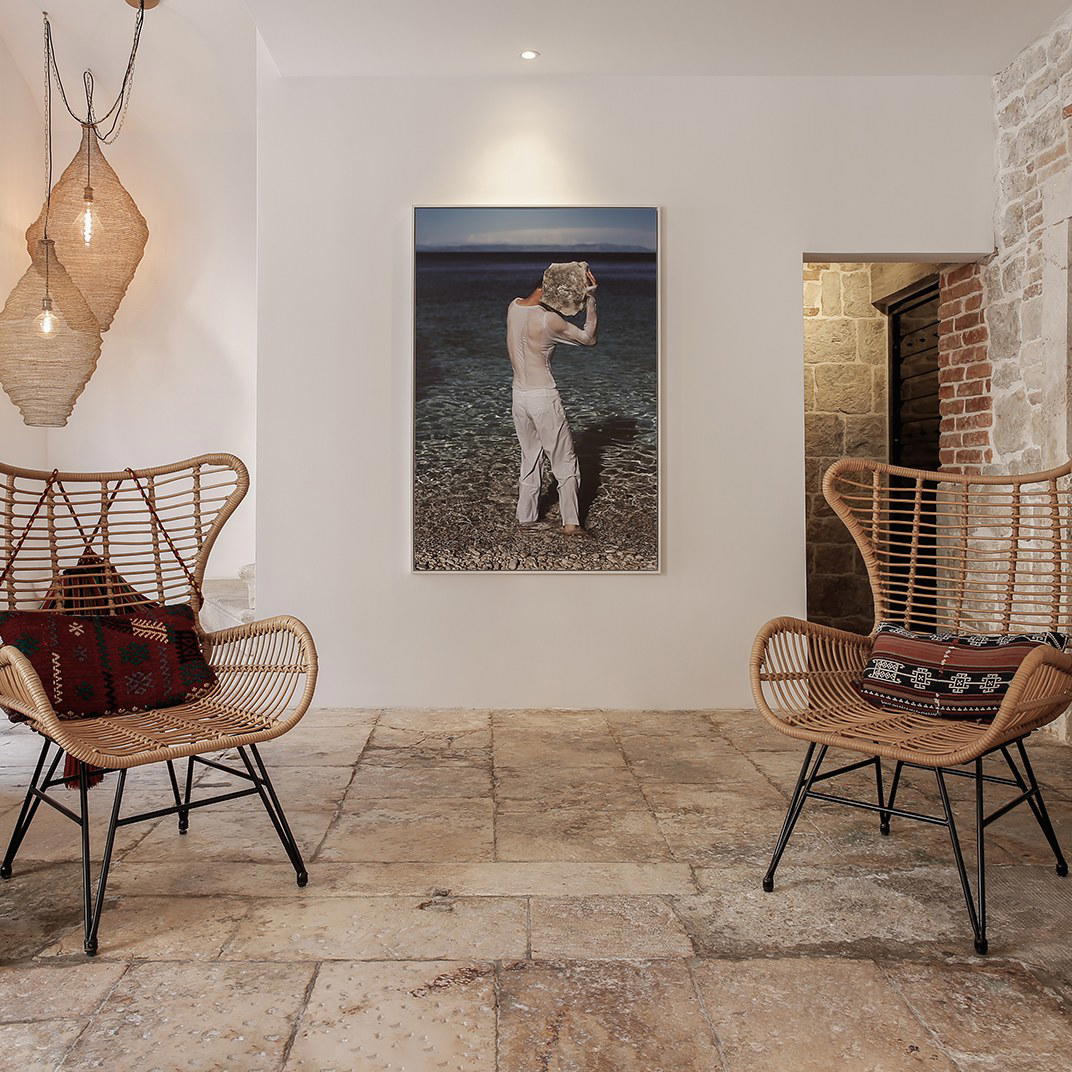
Stone, Square, and the Architecture of Island Restraint
Vis Town's central square, Trg Patija, is not a manicured tourist plaza. It is the functional heart of a small Adriatic settlement that spent decades closed to foreign visitors during Yugoslav-era military restrictions, a circumstance that preserved its built fabric in ways that more accessible Croatian islands cannot claim. The stone facades around the square carry their age without renovation theatre, and the piazza's rhythm is set by locals as much as by the ferry arrivals from Split. Pomâlo Inn sits on that square at number four, and its position is an architectural argument in itself: this is a property that does not need to be discovered at the end of a private road to signal exclusivity. The address does it.
Among Croatia's boutique hotel tier, the design conversation has split in two directions. One current runs toward resort scale and amenity stacking, represented by properties like Grand Park Hotel Rovinj by Maistra Collection in Rovinj or Lone Hotel by Maistra Collection. The other runs toward small-key, material-led properties that derive their identity from the specificity of their location rather than from branded programming. Pomâlo Inn belongs to the second current. On an island accessible only by a two-and-a-half-hour ferry crossing from Split, the decision to occupy a historic stone building on the main square is a design statement that rewards anyone who reads it correctly.
What Michelin Selection Signals on Vis
Michelin's hotel selection programme, which operates separately from its restaurant star system, applies a considered editorial filter to accommodation rather than a points-based formula. Inclusion in the 2025 Michelin Selected Hotels list positions Pomâlo Inn within a Croatian peer group that includes properties making deliberate choices about scale, character, and site-responsiveness. On Vis specifically, that recognition carries additional weight because the island's accommodation offer is thin by comparison with Hvar or Brač, and the properties that do earn external recognition tend to do so by leaning into the island's particular character rather than importing a generic Adriatic luxury template.
For context on what Michelin selection means in the regional competitive set: Lešić Dimitri Palace in Korčula operates in a similar southern Dalmatian island register, where heritage architecture and restrained scale define the proposition. Villa Korta Katarina & Winery in Orebić represents the wine-anchored variation of that same coastal boutique model. Pomâlo Inn's selection places it in that company, even if its island context is arguably more remote and, for that reason, more singular.
The Island That Resisted the Template
Understanding what Pomâlo Inn offers requires understanding what Vis is. The island was closed to civilian foreigners until 1989 due to its role as a Yugoslav Navy base, a history that effectively suspended its tourism development for three decades while Hvar and Korčula were being shaped by international visitors. The consequence is an island with an unusually intact vernacular architecture, a working fishing economy that predates the tourist season, and a food culture built around Viška pogača, the local anchovy and onion flatbread, and wines from the indigenous Vugava and Plavac Mali grapes grown on vineyards that predate most of the modern Croatian wine industry.
Travellers reaching Vis are, by definition, self-selected. The ferry from Split runs regularly but the crossing time filters out day-trippers in numbers that affect closer islands. This creates a guest profile for properties like Pomâlo Inn that differs from the mainstream Dalmatian coast market, and it shapes the kind of property that makes sense to operate here. For those arriving by ferry and seeking alternative Dalmatian island accommodation, the comparison tier also includes Hotel Osam in Supetar on Brač and Kastil in Bol, though both operate on islands with significantly shorter crossing times and higher tourist volumes.
Vis Town as Architectural Context
The built environment of Vis Town is a layered record of its history. Roman baths sit near Venetian-era loggia structures, Austrian period townhouses face the harbour, and the domestic architecture of the Yugoslav decades interrupts the sequence in ways that are more honest than jarring. The square on which Pomâlo Inn stands is a compressed version of that layering, with the inn's stone exterior participating in a streetscape that has not been uniformly renovated for visitor consumption. This is a different architectural register from, say, San Canzian Hotel & Residences in Buje, where a medieval Istrian village has been carefully restored into a hospitality proposition, or Hotel Kastel in Motovun, where the hilltop position makes the setting its primary architectural argument. On Vis, the fabric has survived more by circumstance than by conservation design, and that gives properties embedded in it a different kind of authenticity.
For broader Croatian coastal design references, the contrast is also instructive when set against purpose-built resort architecture: D-Resort Šibenik, Girandella Resort in Rabac, or Falkensteiner Hotel & Spa Iadera in Zadar all represent the amenity-led end of the Croatian hospitality spectrum. Pomâlo Inn operates at the opposite end of that spectrum, in a register closer to VERBENICUM in Vrbnik or Villa Nai 3.3 on Dugi Otok, where island remoteness and material specificity define the offer.
Planning Your Stay
Vis is reached by Jadrolinija ferry from Split, with the crossing taking approximately two and a half hours. The island has no airport, which concentrates arrivals at Vis Town's harbour. Pomâlo Inn's address at Trg Patija 4 places it within walking distance of both the ferry landing and the main harbour promenade. The Adriatic summer season runs from June through September, with July and August bringing the island's highest visitor volumes, though Vis remains measurably quieter than Hvar during those months. Shoulder season arrivals in May, June, or September find the island's restaurants and wine bars operating without the peak-season pressure. For those planning a broader Dalmatian itinerary, Le Meridien Lav Split provides a base on the mainland before the ferry, while STAYEVA11 in Dubrovnik extends an itinerary southward. For full dining and activity context on the island, our full Vis restaurants guide covers the key addresses. Booking Pomâlo Inn directly is the recommended approach given the island's limited accommodation inventory; specific availability and pricing should be confirmed at time of booking, as the property's small scale means rooms move quickly during summer.
How Pomâlo Inn Vis compares with similar nearby venues.
| Venue | Awards |
|---|---|
| Pomâlo Inn | MICHELIN Guide, Hotels Selected (2025) |
Recognition history
Dated appearances from independent guides and award organizations, with the underlying list record or original source where available.
Michelin Selected
Michelin
Continue exploring
More in Vis
Hotels in Vis
Browse all →
Bars in Vis
Browse all →
Restaurants in Vis
Browse all →


At a Glance
- Quiet
- Cozy
- Intimate
- Scenic
- Minimalist
- Romantic Getaway
- Weekend Escape
- Historic Building
- Wi Fi
- Bicycle Rental
- Mountain
- Wi Fi
- Bicycle Rental
Tranquil haven of luxury with polished service, Italian embroidered linens, and authentic details like fishing net-inspired lamps creating a relaxed, unhurried atmosphere.
Know Before You Go
- Getting there
- Trg Patija 4, 21480, Vis, Croatia