


Michelin Selected · Mr & Mrs Smith Seal of Approval · Small Luxury Hotels of the World Member
D-Resort Šibenik occupies the Mandalina waterfront with a concrete-and-timber design that makes a considered architectural argument for 21st-century Dalmatian hospitality. Where Šibenik's UNESCO-listed old town offers medieval stone, the resort answers with sweeping contemporary lines that mirror the marina curve below. It sits in a small tier of Croatian coastal properties where design ambition, not room count, sets the competitive register.

Pearl is the En Primeur Club membership app, where members save venues, book tables and use the concierge.
Where the Marina Meets the Modern
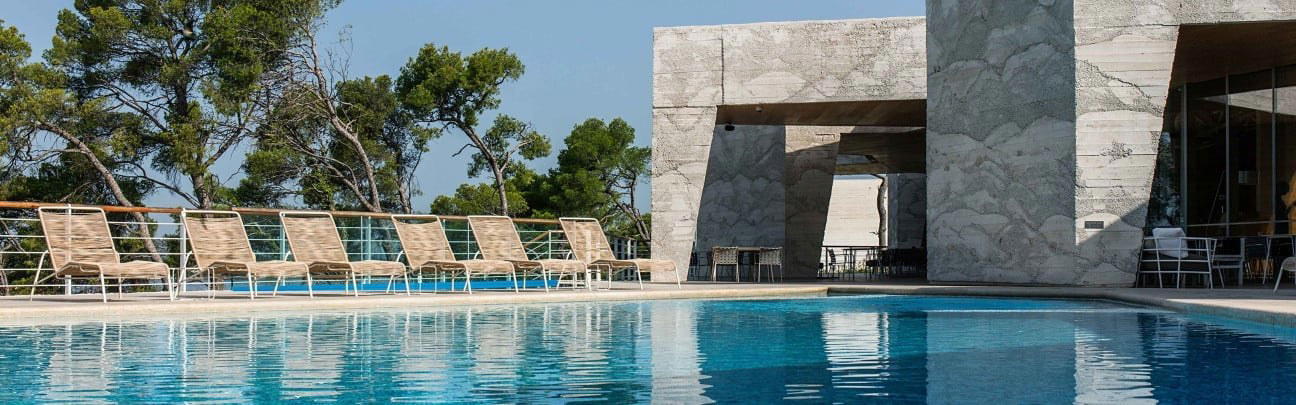
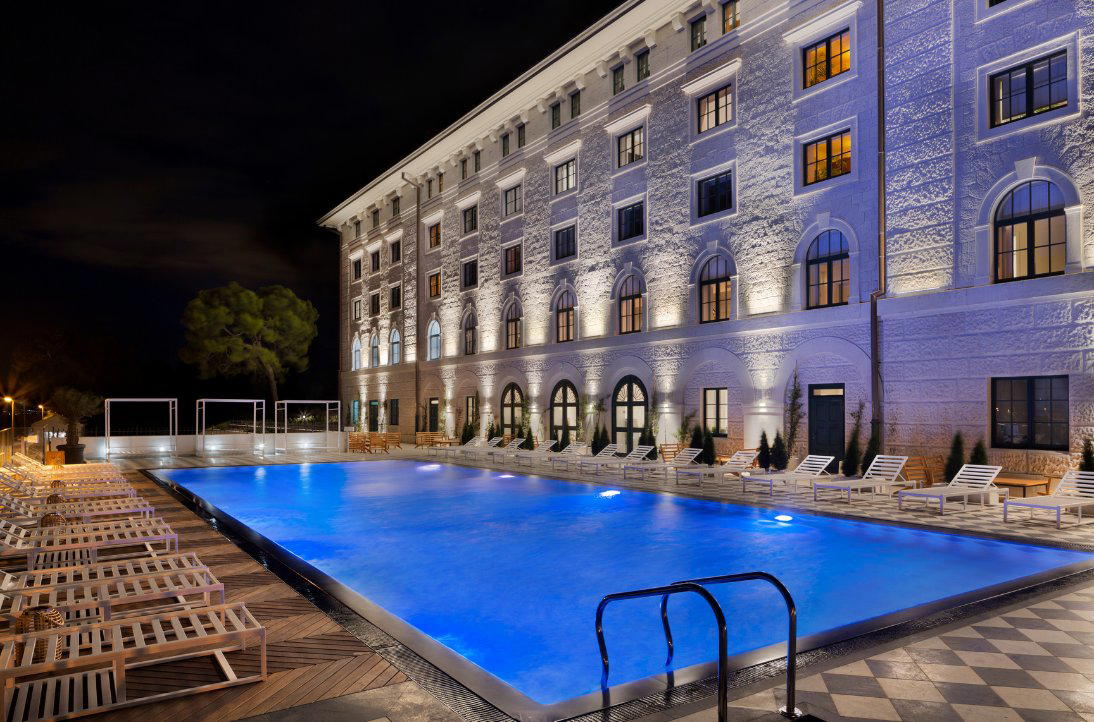
Approaching D-Resort Šibenik from the Mandalina marina, the geometry arrives before anything else. Concrete cantilevers and timber screens extend toward the Adriatic in a sequence of horizontal planes that read less like a hotel facade and more like a civic statement about what contemporary architecture can do with a Dalmatian waterfront. Šibenik is one of Croatia's oldest port cities, its skyline dominated by the 15th-century Cathedral of St. James, a UNESCO World Heritage Site, and a stack of medieval fortifications climbing the hillside behind. Against that backdrop, D-Resort's design does not attempt to blend in. It makes a deliberate counterpoint, and that tension is precisely where it draws its interest.
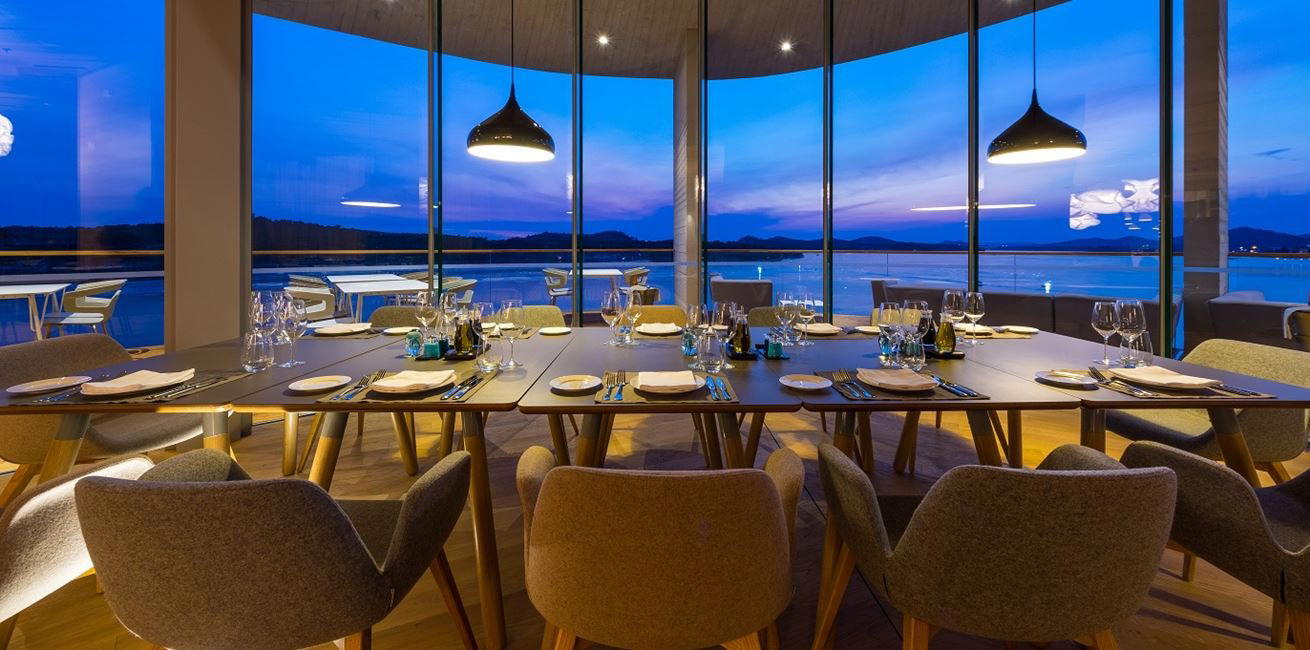
Croatia's premium coastal hotel market has split in recent years between large resort complexes anchored by international flags and smaller, design-led properties where architecture carries more weight than amenity count. D-Resort Šibenik belongs to the latter category, positioning itself not through scale but through the specificity of its built environment. The relationship between interior and exterior is the central design proposition: the boundary between them is deliberately permeable, so that the water, the marina activity, and the Dalmatian light read as part of the interior experience rather than as a backdrop seen through glass.
That architectural porousness is most legible in the communal spaces, where the sweeping lines of the facade continue inside and the transition from terrace to lobby to water's edge feels calibrated rather than accidental. For context across the Adriatic design spectrum, Grand Park Hotel Rovinj by Maistra Collection in Rovinj pursues a comparable contemporary ambition on the Istrian coast, while Lone Hotel by Maistra Collection represents the same Maistra group's modernist experiment further north. D-Resort operates outside those group structures, which gives its architectural identity a singular rather than branded quality.
The Šibenik Context
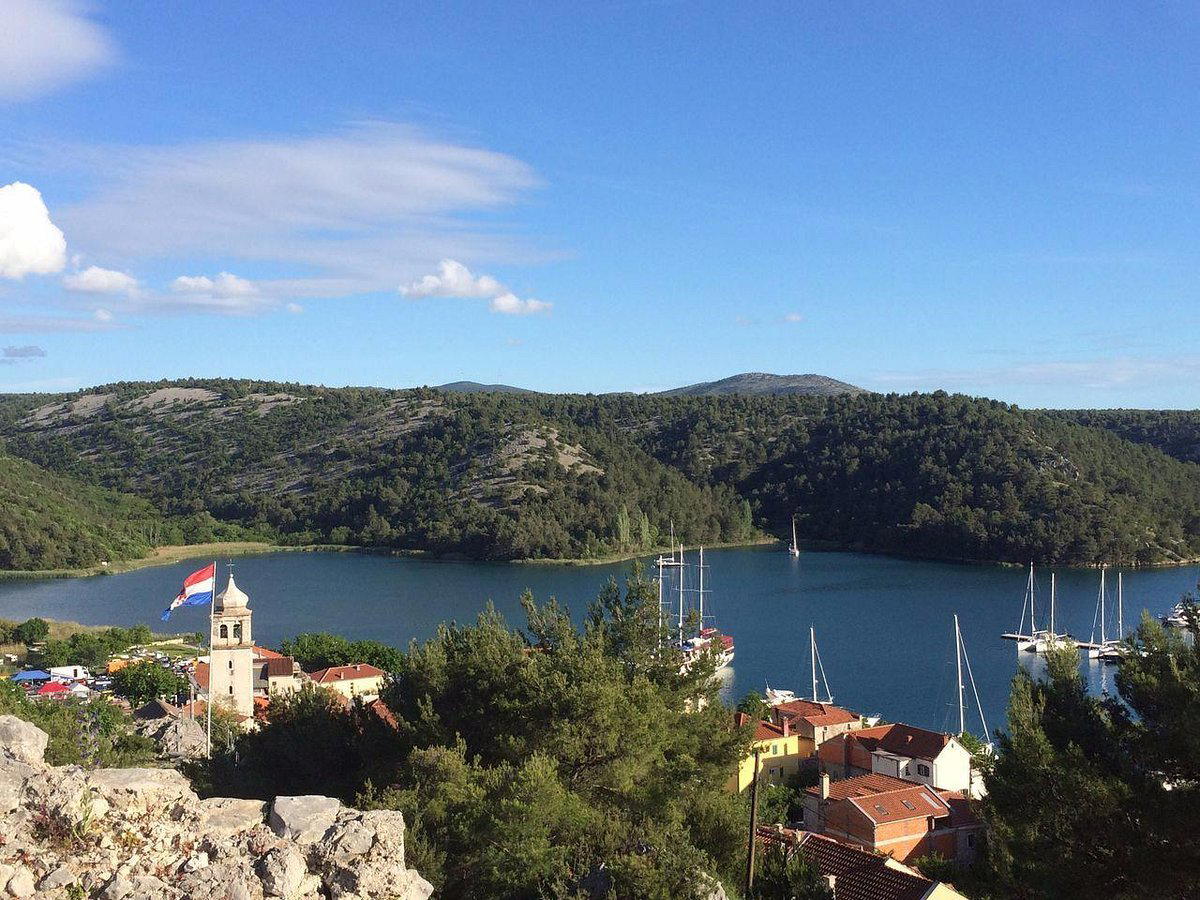
Šibenik has spent the better part of the last decade asserting itself as more than a transit point between Split and Zadar. The city's old town is genuinely medieval in character, its lanes too narrow for vehicles and its cathedral among the finest Gothic-Renaissance buildings on the eastern Adriatic. The Mandalina development sits at the edge of that historic fabric, close enough to walk to the old town but spatially distinct from it, occupying a marina zone that has become the locus of the city's contemporary hospitality investment.
For travellers calibrating Dalmatian itineraries, Šibenik offers a different register from Split's density or Dubrovnik's saturation. It draws a smaller international crowd, which has the practical benefit of a less compressed summer experience. The Kornati Islands National Park lies offshore, Krka National Park is accessible within an hour by road, and the city's fortresses, including the recently restored St. Nicholas Fortress, also UNESCO-listed, give it a cultural weight that outlasts a single afternoon. See our full Sibenik restaurants guide for the dining picture that surrounds the resort.
The Dalmatian coast offers a range of property types for those building a multi-stop itinerary. Properties such as Lešić Dimitri Palace in Korčula, Aminess Korčula Heritage Hotel, and Brown Beach House Croatia in Trogir each occupy distinct positions across the island and coastal town spectrum. D-Resort's marina location in a mid-size city gives it a different urban character from the island retreats, closer in type to Hotel Ambasador Split in terms of city-adjacent positioning, though its design register is more architecturally specific.
Design as the Primary Credential
The resort's architectural language draws on materials that sit comfortably in the Dalmatian context, concrete and timber, while refusing the vernacular pastiche that characterises much of the region's hotel development. The concrete work is precise rather than brutalist, the timber warm rather than decorative. Together they produce an aesthetic that reads as contemporary without the clinical quality that sometimes accompanies design-led hospitality in this price tier.
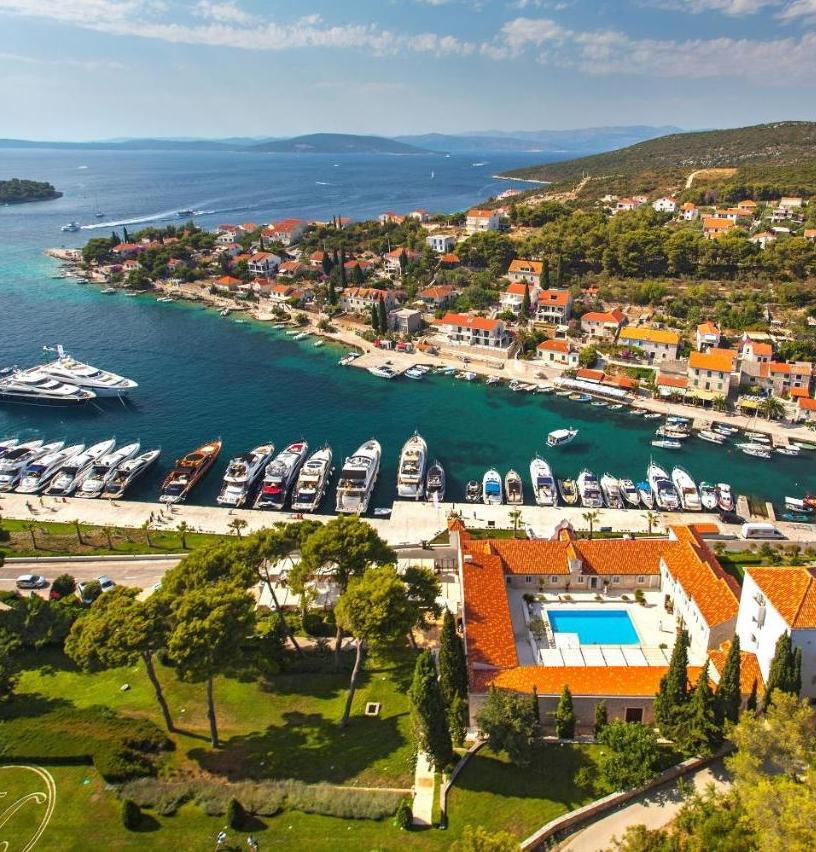
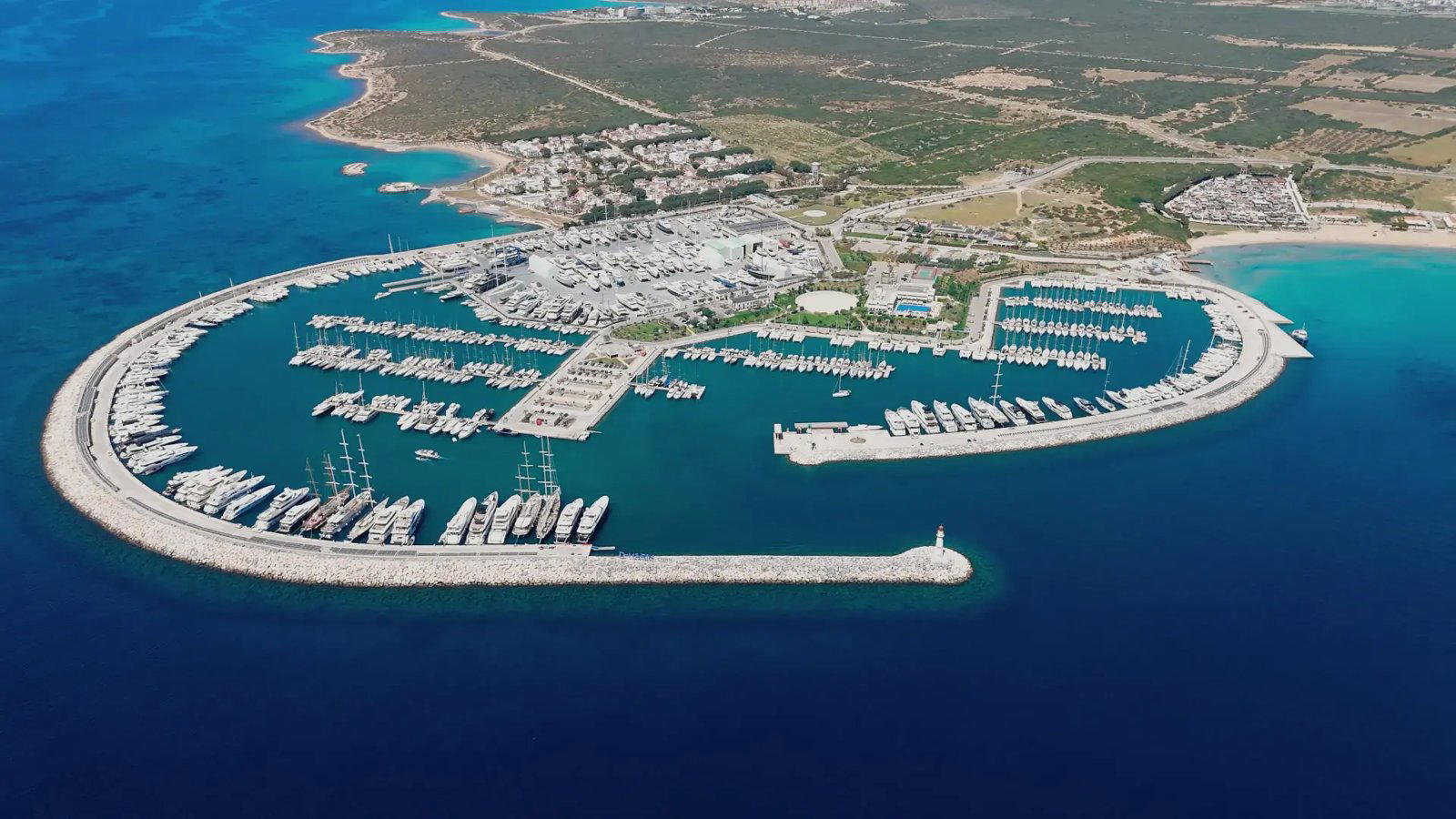
Relationship to the marina is not incidental. D-Marin Mandalina is one of the larger yacht berths on the central Dalmatian coast, and the resort's curved facade mirrors its layout in a way that suggests the two were conceived in relation to each other. Whether arriving by yacht or by road, the approach from the water offers the cleanest read of the architectural intention: the building curves with the bay, its horizontal planes stacked in a way that maximises water aspect across multiple levels.
For design-conscious travellers benchmarking Adriatic options, it is worth noting how this property compares to others that use architecture as a primary differentiator. Boutique & Design Hotel Navis in Opatija takes a similarly specific design position on the Kvarner coast, while Meneghetti Wine Hotel & Winery in Bale foregrounds a different kind of design sensibility, rooted in Istrian rural architecture rather than coastal modernism. Both represent the broader Croatian pattern of properties using design ambition to occupy a premium niche without relying on international brand affiliation.
Planning a Stay
The Mandalina address places the resort within walking distance of Šibenik's old town, making it practical as a base for exploring the city's cathedral, fortresses, and waterfront without dependence on a vehicle. The peak Dalmatian season runs from late June through August, when marina traffic is heaviest and the old town draws its largest crowds; May, early June, and September offer the same architectural experience of the property with a noticeably quieter surrounding city. For island excursions to the Kornati archipelago or Krka waterfalls, the marina location simplifies access to day-trip boat operators.
Travellers building longer Croatian itineraries from this base might consider how D-Resort fits within a sequence that includes Hotel Kompas Dubrovnik to the south or Falkensteiner Hotel & Spa Iadera in Petrčane to the north near Zadar. For those extending further into Istria, Hotel Kastel in Motovun, Palazzo Rainis Hotel & Spa in Novigrad, and Hotel Vela Vrata in Pinguente each represent distinct points on the Istrian accommodation map. Other island options worth considering alongside D-Resort include Littlegreenbay Hotel in Hvar, Kastil in Bol, B&B; Heritage Villa Apolon in Stari Grad, LIOQA Resort in Ugljan, and Boutique Hotel Alhambra in Mali Lošinj for Kvarner coverage. Hotel Supetar in Cavtat rounds out the southern Dalmatian options for those prioritising proximity to Dubrovnik.
Fast Comparison
Comparable venues nearby, for context on price, style, and recognition.
| Venue | Cuisine | Price | Awards | Notes |
|---|---|---|---|---|
| D-Resort ŠibenikThis venue (the venue you are viewing) | Contemporary luxury boutique resort with minimalist design philosophy that complements rather than competes with the medieval architecture of nearby Šibenik. | $300–500 | Michelin Selected · Mr & Mrs Smith Seal of Approval | Not listed |
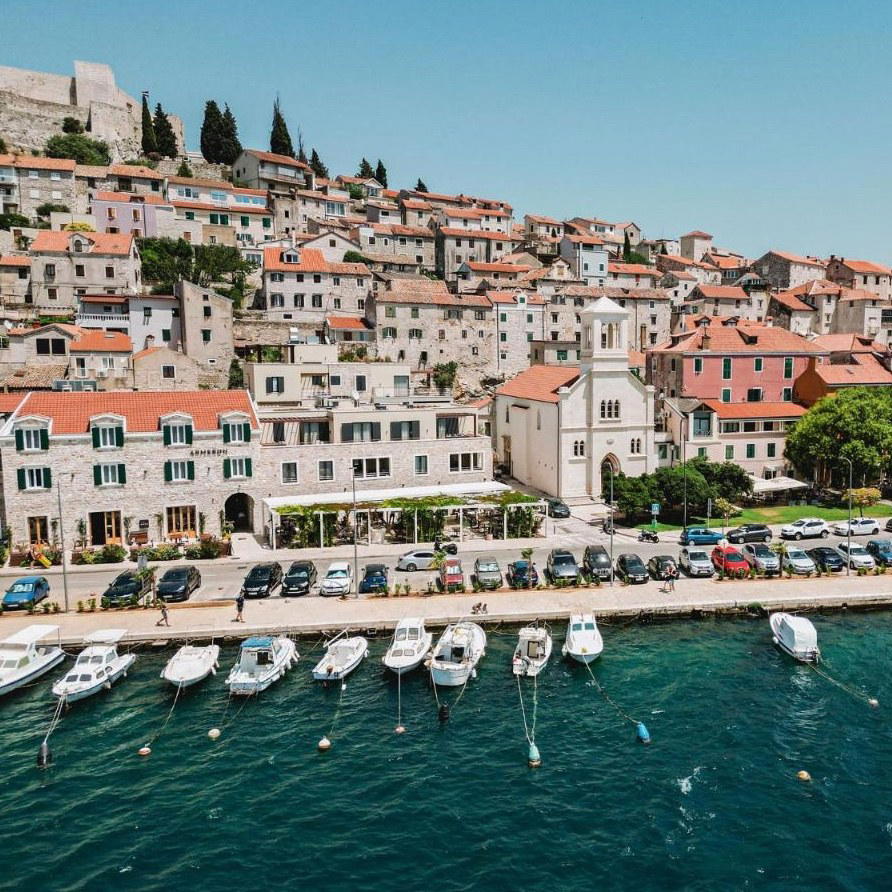
| Armerun Heritage Hotel & Residences | Timeless villa hotel blending Dalmatian heritage with luxury. | $100–200 | Michelin Selected | Old Town |
| Heritage Hotel Life Palace | Restored 15th-century Renaissance palace with exclusive city hotel interior | $1–100 | Michelin Selected | Sibenik Old Town |
| The Byron Dubrovnik | Renovated UNESCO heritage building blending historic charm with modern boutique luxury. | Not listed | Michelin Selected | Old Town |
| Brown Beach House & Spa | Mediterranean-inspired resort in restored historic edifice | $100–200 | Michelin Selected | historical district |
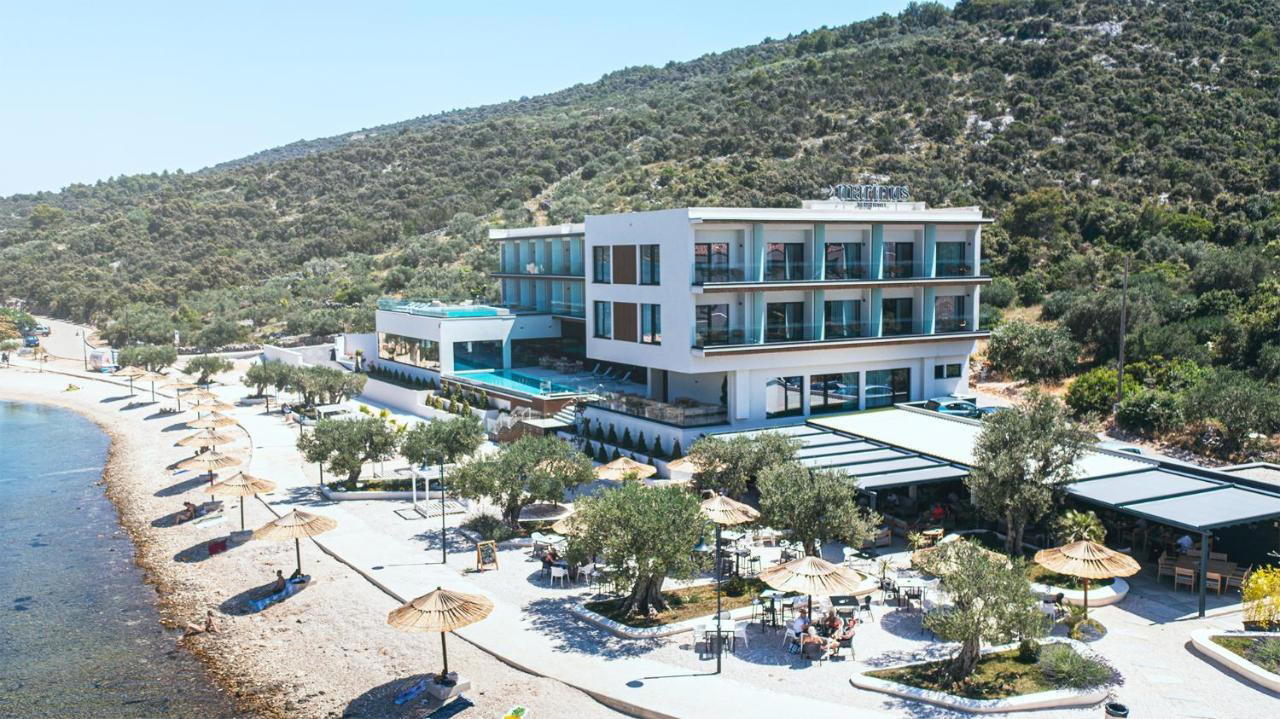
| Marinus Beach Hotel | Modern beachfront boutique | Not listed | Michelin Selected | Marina |
Recognition history
Dated appearances from independent guides and award organizations, with the underlying list record or original source where available.
Michelin Selected
Michelin
Mr & Mrs Smith Seal of Approval
Mr & Mrs Smith
Small Luxury Hotels of the World Member
Small Luxury Hotels of the World
Continue exploring
More in Sibenik
Hotels in Sibenik
All hotels in Sibenik →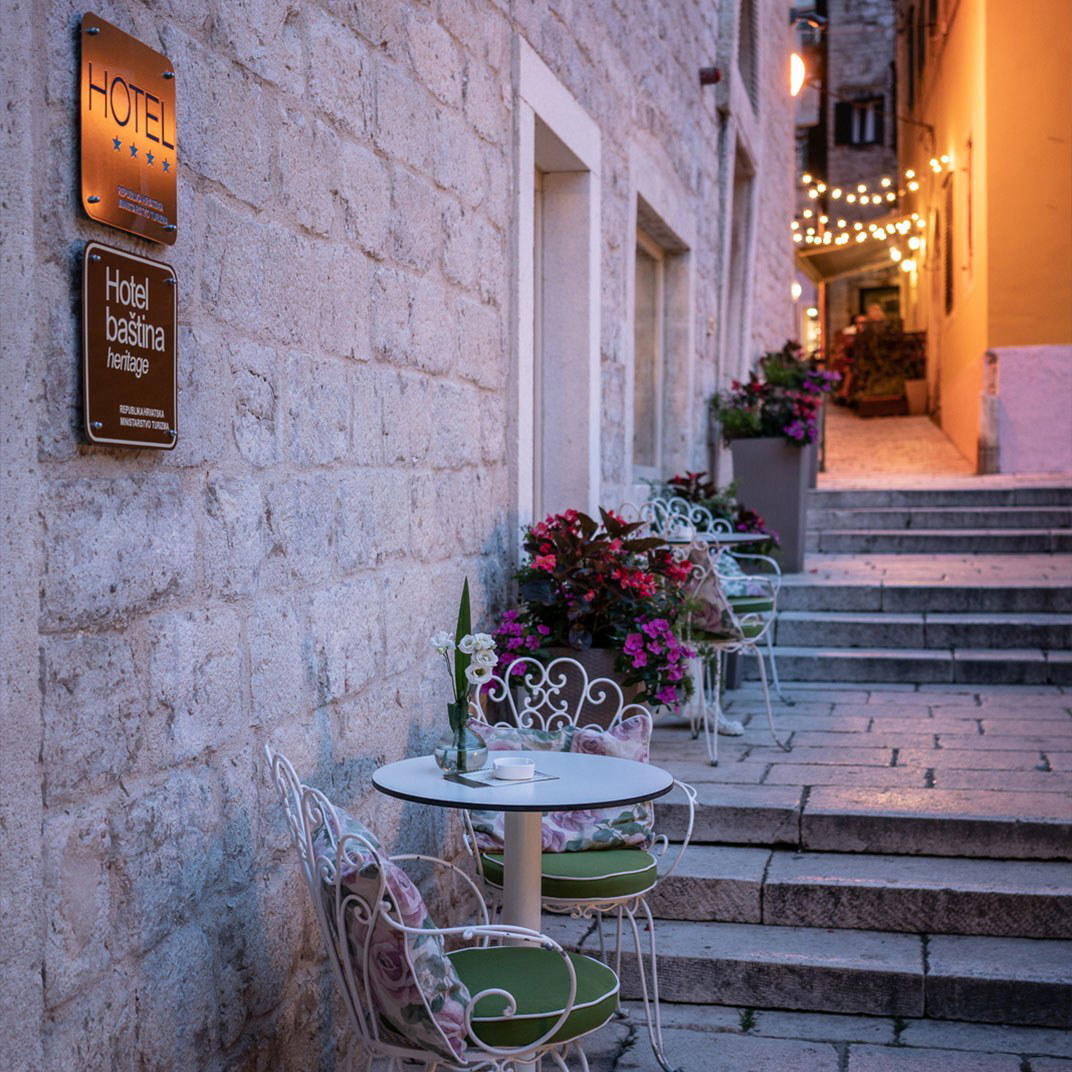
Bars in Sibenik
All bars in Sibenik →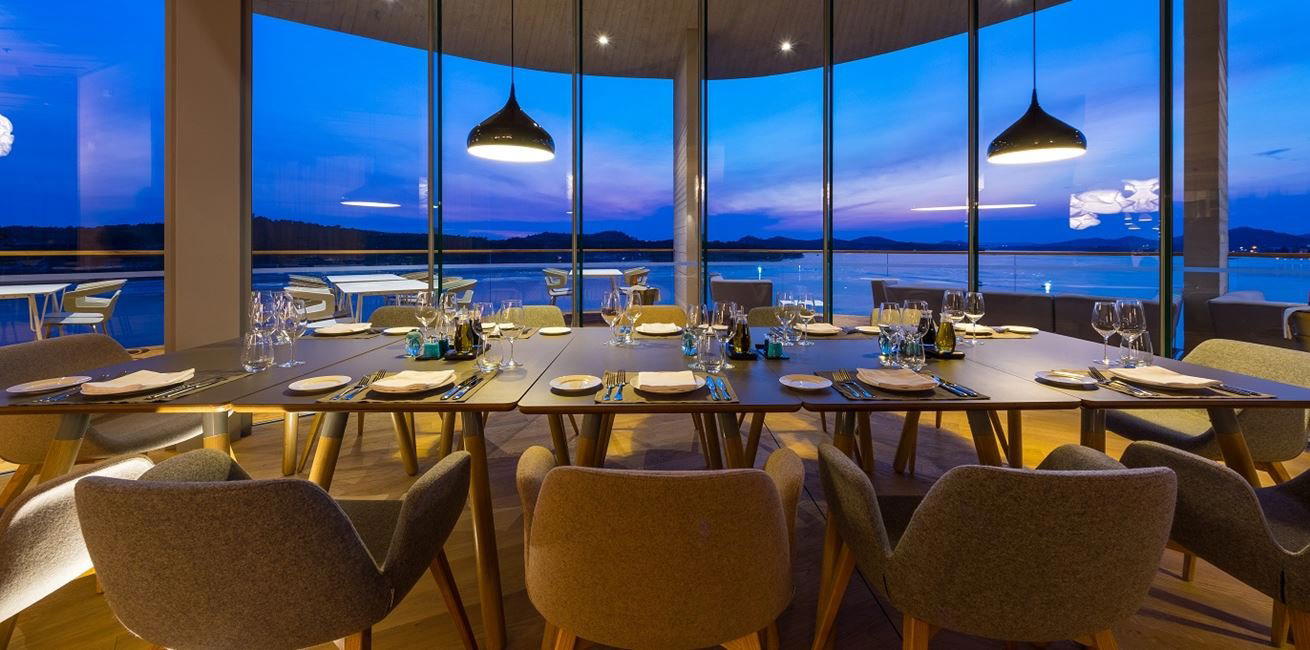


Details
- Romantic
- Modern
- Sophisticated
- Scenic
- Elegant
- Honeymoon
- Romantic Getaway
- Family Vacation
- Wellness Retreat
- Anniversary
- Beachfront
- Infinity Pool
- Private Villa
- Rooftop Pool
- Destination Spa
- Waterfront
- Panoramic View
- Private Dining
- Wi Fi
- Pool
- Spa
- Fitness Center
- Room Service
- Concierge
- Business Center
- Valet Parking
- Kids Club
- Restaurant
- Bar
- Sauna
- Waterfront
- Skyline
- Wheelchair Accessible
- Elevator
- Accessible Restroom
- Accessible Parking
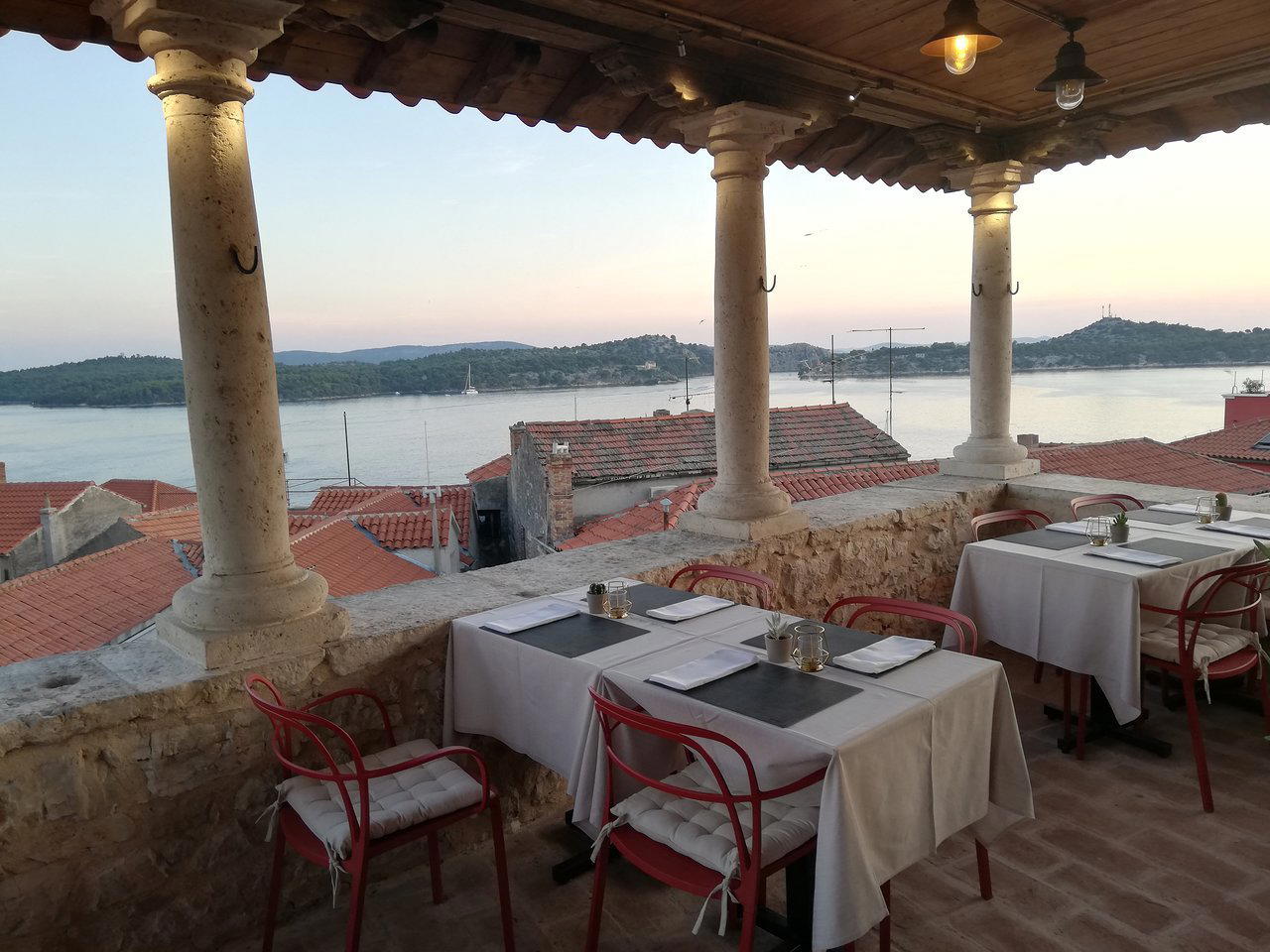
Bright, light-filled spaces with floor-to-ceiling windows flooding interiors with natural light; sophisticated yet unhurried atmosphere with elegant minimalist design and contemporary art throughout.