Villa Mabrouka

Villa Mabrouka is a ten-suite riad in Tangier's historic medina, where restored Andalusian architecture meets contemporary craft: carved plaster, hand-woven textiles, and a central fountain courtyard that anchors the property's quiet authority. The rooftop looks across the Strait of Gibraltar, and the restaurant draws on locally sourced Moroccan produce. It sits in a small category of design-led Tangier properties that price against intimacy rather than scale.
Pearl is the En Primeur Club membership app — saves, bookings, and concierge access live there. Same editors, same standards.
- Address
- 1 Sidi Bouknadel, Tanger 90000
- Phone
- +212 6 66 60 48 42
- Website
- villamabrouka.com
- Directions
- Get directions
 Saves & bookings on Pearl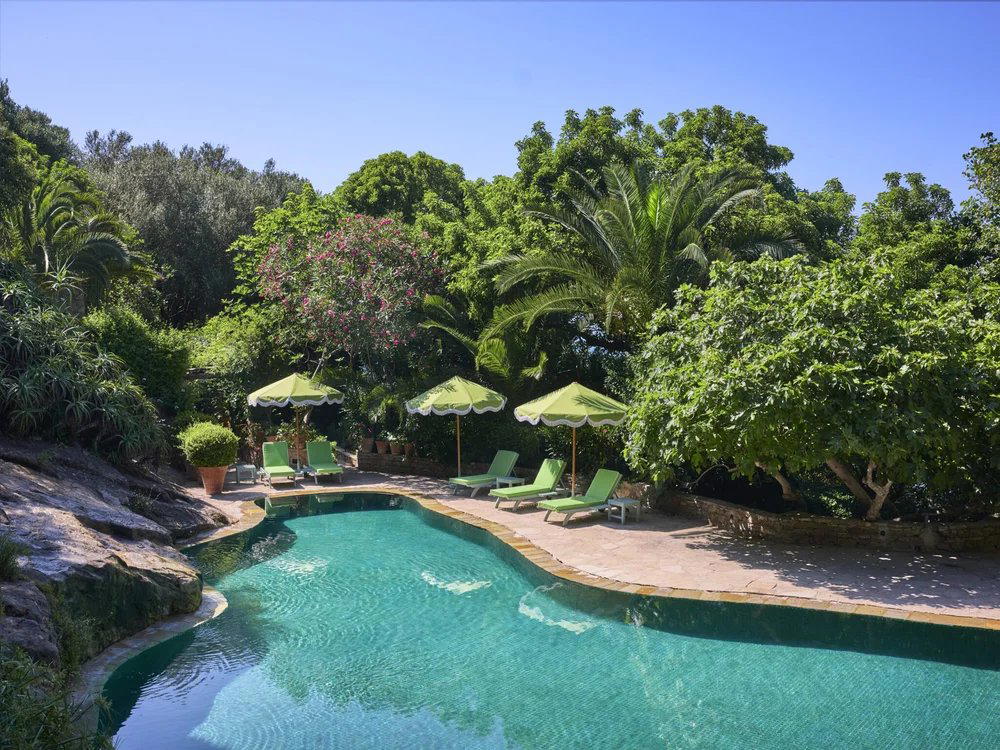
Riad Architecture in the Medina: A Study in Restoration
Tangier occupies a particular position in the Moroccan hotel conversation. Where Marrakesh has long attracted the headline properties — La Mamounia, the Four Seasons, the Mandarin Oriental — the northern port city has developed a quieter, more architecturally specific tier of boutique accommodation. These are properties defined less by their amenity count and more by the quality of their spatial restoration: how faithfully, and how inventively, they have brought a historic Moroccan building back into habitable use. Villa Mabrouka belongs to that tier.
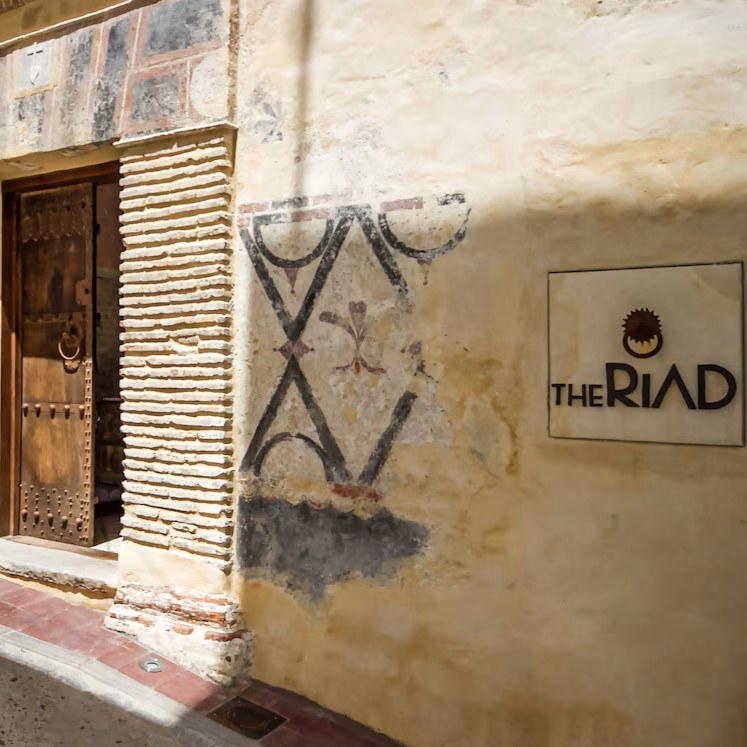
The property occupies a riad in the historic medina, with ten suites and rooms distributed across a structure that reads, at its core, as a traditional inward-facing Moroccan house. The vocabulary of the restoration is precise: intricate tilework on the lower walls, carved plaster (stucco, in its local iteration as tadelakt and geps) on the upper registers, and hand-woven textiles throughout. These are not decorative gestures applied over a neutral interior; they are load-bearing to the building's visual logic. Remove any one of them and the spatial argument collapses.
The central courtyard is the organizing principle of the architecture, as it is in any serious riad. A fountain anchors the space and provides the acoustic background that defines riad living: the particular white noise of moving water that separates you, psychologically, from the medina's narrower lanes outside. Private terraces extend the logic of threshold and enclosure that makes the riad typology work, each suite claims a slice of the exterior without surrendering the property's interior coherence.
Where Villa Mabrouka Sits in the Tangier Market
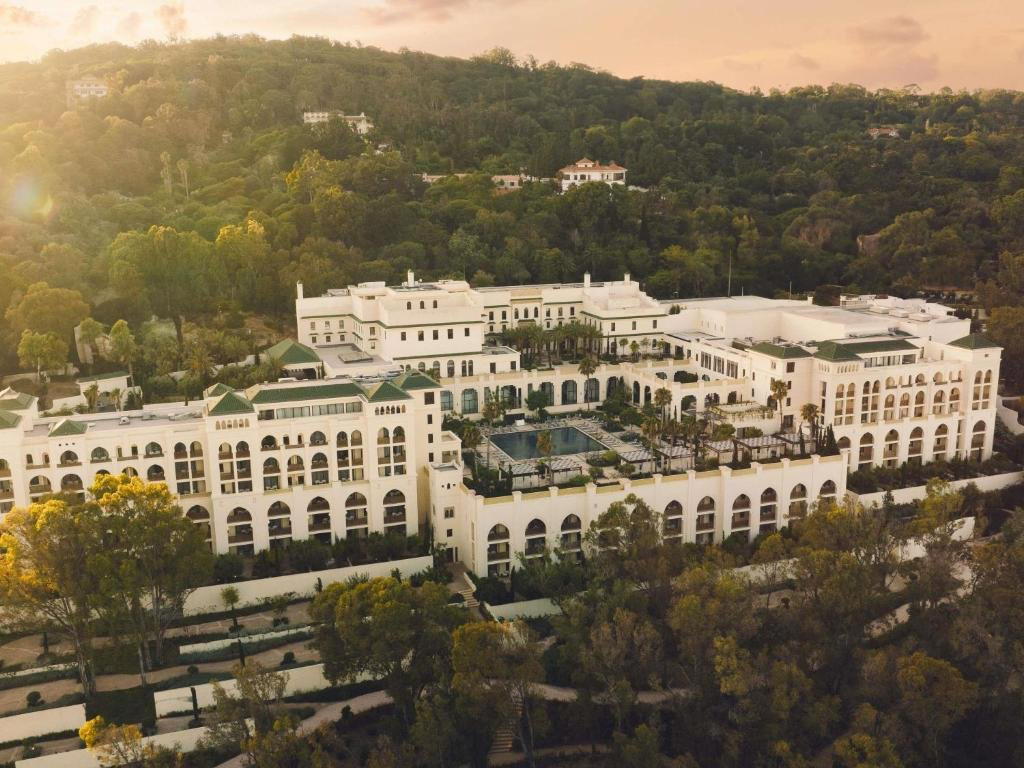
Tangier's premium accommodation options have split along a familiar axis: large international brands offering known-quantity service and considerable room counts on one side, and smaller design-led properties on the other. The Fairmont Tazi Palace Tangier represents the former category, a full-service hotel with a larger footprint and brand infrastructure. Villa Mabrouka occupies the other end: ten keys, no loyalty programme, and a value proposition built around spatial intimacy and craft specificity rather than breadth of amenity.
This split is not unique to Tangier. Across Morocco, the premium category has increasingly bifurcated between large resort-scaled properties, Hilton Taghazout Bay, Mazagan Beach and Golf Resort, Hyatt Regency Casablanca, and smaller, design-first riads and kasbahs that compete on atmosphere and specificity. Properties like Dar Ahlam in Ouarzazate, Dar al Hossoun in Taroudant, and Dar Maya in Essaouira all operate within this smaller-footprint, craft-led niche.
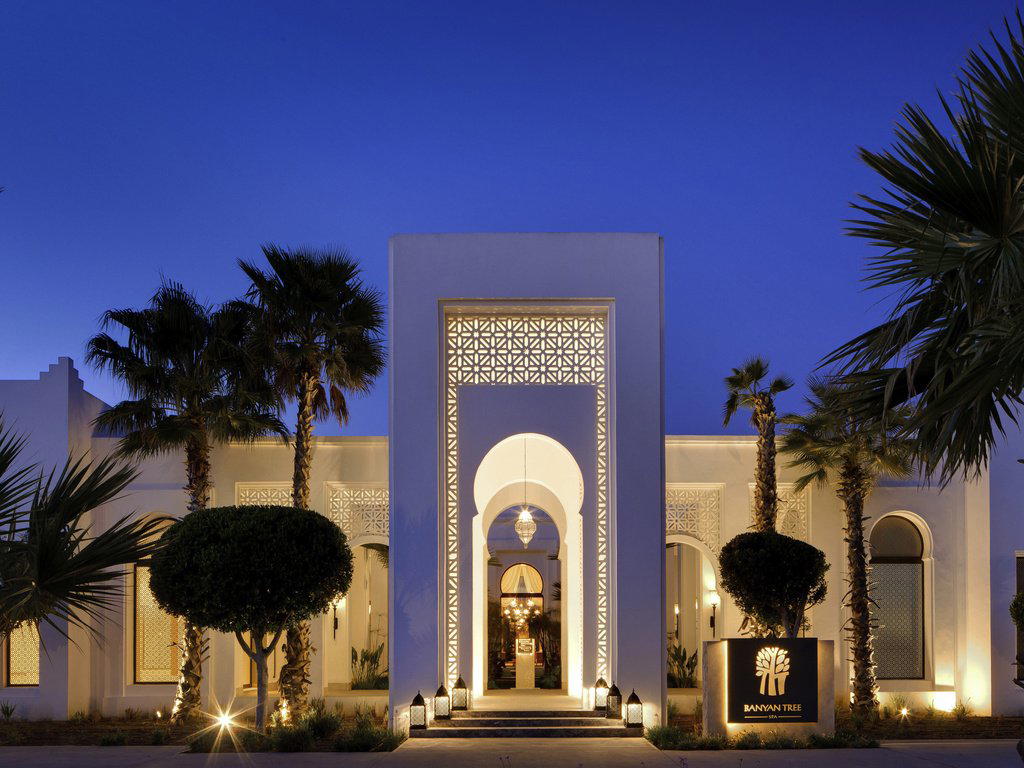
Within Morocco's northern corridor specifically, the comparison set is narrower. Banyan Tree Tamouda Bay in Fnideq serves a different market, beach resort, Mediterranean-facing, brand-anchored. La Fiermontina Ocean in Larache offers another point of reference for smaller-scale, design-conscious accommodation along this coastline. For those approaching from the medina-riad tradition more broadly, properties like Jnane Tamsna in Marrakech and Rebali Riads in Sidi Kaouki serve as useful comparative anchors, even if their geography is distant.
The Rooftop and the Restaurant: Two Distinct Experiences
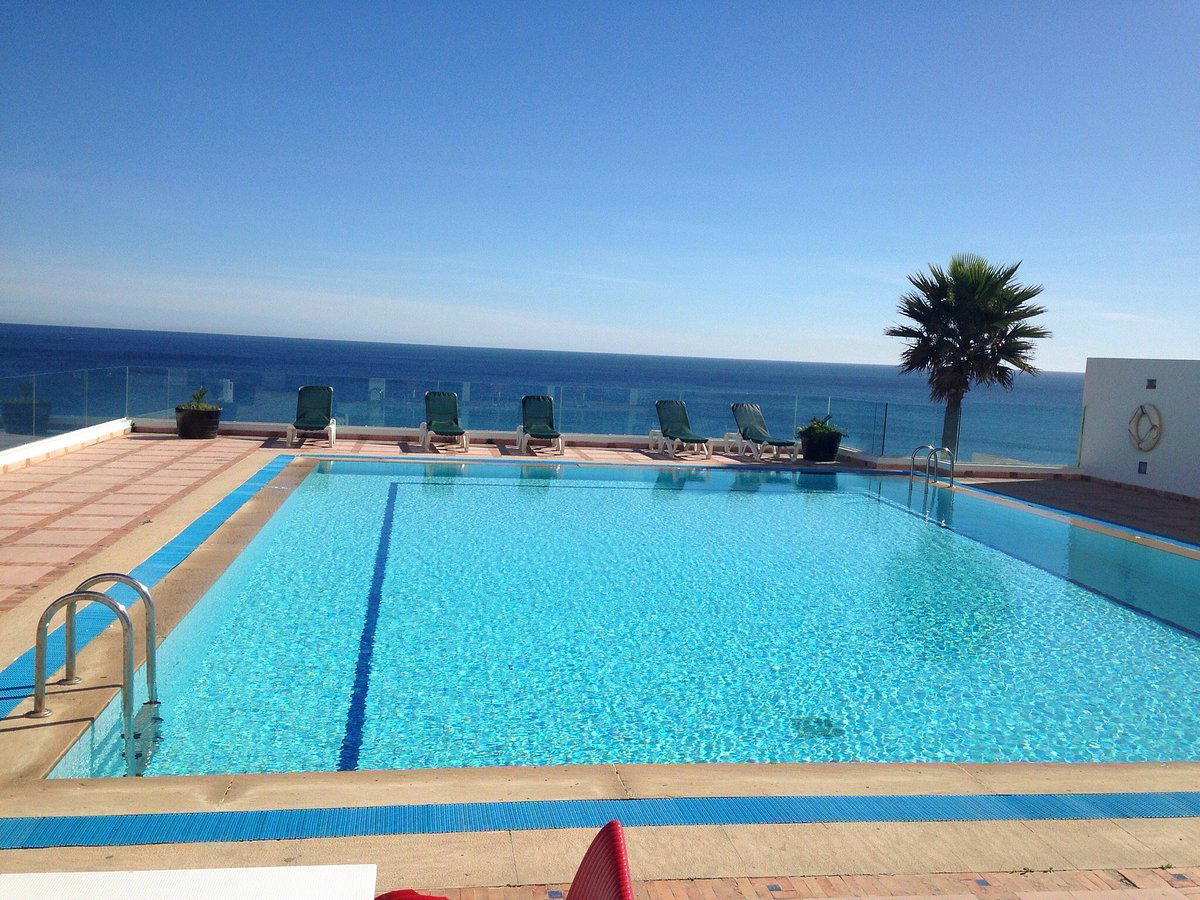
The rooftop terrace functions as Villa Mabrouka's primary public gesture toward the city and the sea. Tangier's geographic position, at the point where the Mediterranean opens into the Atlantic, with the Strait of Gibraltar visible on clear days, gives any refined vantage point within the medina a quality of vista that properties in Marrakesh or Fes cannot replicate. The view from a Tangier rooftop is not simply urban; it is geopolitical, the narrow channel that separates two continents held in a single frame.
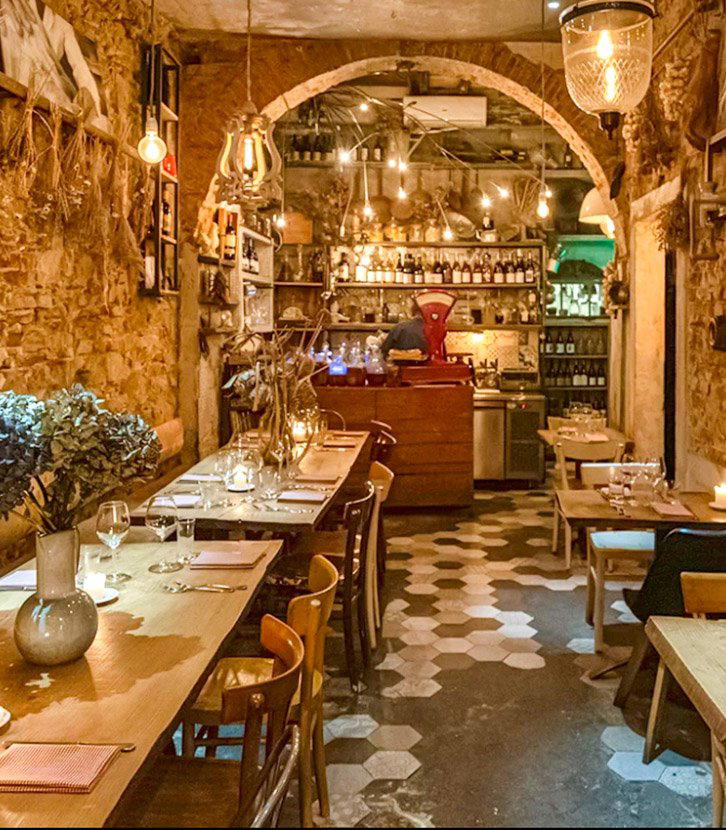
The restaurant operates within the riad's ground-level logic, drawing on locally sourced Moroccan ingredients. The refined Moroccan cuisine format is now well-established across the premium tier of Moroccan hospitality, Hotel Sahrai in Fes and Kasbah Tamadot in Asni both operate within versions of this same model, but at a ten-key property, the kitchen serves a contained guest count rather than a dining-destination volume. That distinction shapes both the menu's ambition and its consistency. A spa with traditional hammam treatments alongside contemporary wellness therapies rounds out the in-house offering, placing Villa Mabrouka within the standard amenity set for this tier of Moroccan boutique property.
Planning a Stay: Practical Orientation
Villa Mabrouka's address places it in Tangier's historic medina, which means access follows medina logic: narrow lanes, limited vehicular access near the property, and orientation by landmark rather than street grid. Guests arriving from Tangier Ibn Battouta Airport, approximately 15 kilometres southwest of the city centre, will typically transfer by taxi or arranged hotel transport to the medina perimeter, then continue on foot or with porter assistance to the property. The medina location gives immediate access to Tangier's cultural fabric: the souks, the Grand Socco, the Kasbah and its associated museum, and the Petit Socco, which remains the social centre of the old city. The Mediterranean coastline is within the city's reach, though the beach areas of Tangier proper require a short transfer from the medina. For broader regional context, our full Al Hoceima restaurants guide covers the wider northern Morocco dining scene, while the EP Club Morocco hotel selection spans the country's range: from Michlifen Resort and Golf in Ifrane in the Middle Atlas to La Sultana Oualidia on the Atlantic coast, and Fairmont La Marina Rabat Salé in the capital corridor.
Booking should be made directly through the property or through a specialist operator familiar with the northern Morocco boutique tier. At ten keys, the property has limited availability, and peak periods, spring and early autumn, when Tangier's climate is most approachable, will fill substantially in advance.
Recognition history
Dated appearances from independent guides and award organizations, with the underlying list record or original source where available.
Robb Report The 50 Greatest Luxury Hotels on Earth #10
Robb Report
At a Glance
- Romantic
- Elegant
- Sophisticated
- Quiet
- Scenic
- Romantic Getaway
- Anniversary
- Honeymoon
- Celebration
- Rooftop Pool
- Garden
- Terrace
- Historic Building
- Design Destination
- Panoramic View
- Private Dining
- Waterfront
- Wi Fi
- Pool
- Spa
- Room Service
- Restaurant
- Bar
- Airport Transfer
- Massage
- Waterfront
- Garden
- Skyline
- Wi Fi
- Pool
- Spa
- Room Service
- Restaurant
- Bar
- Airport Transfer
- Massage
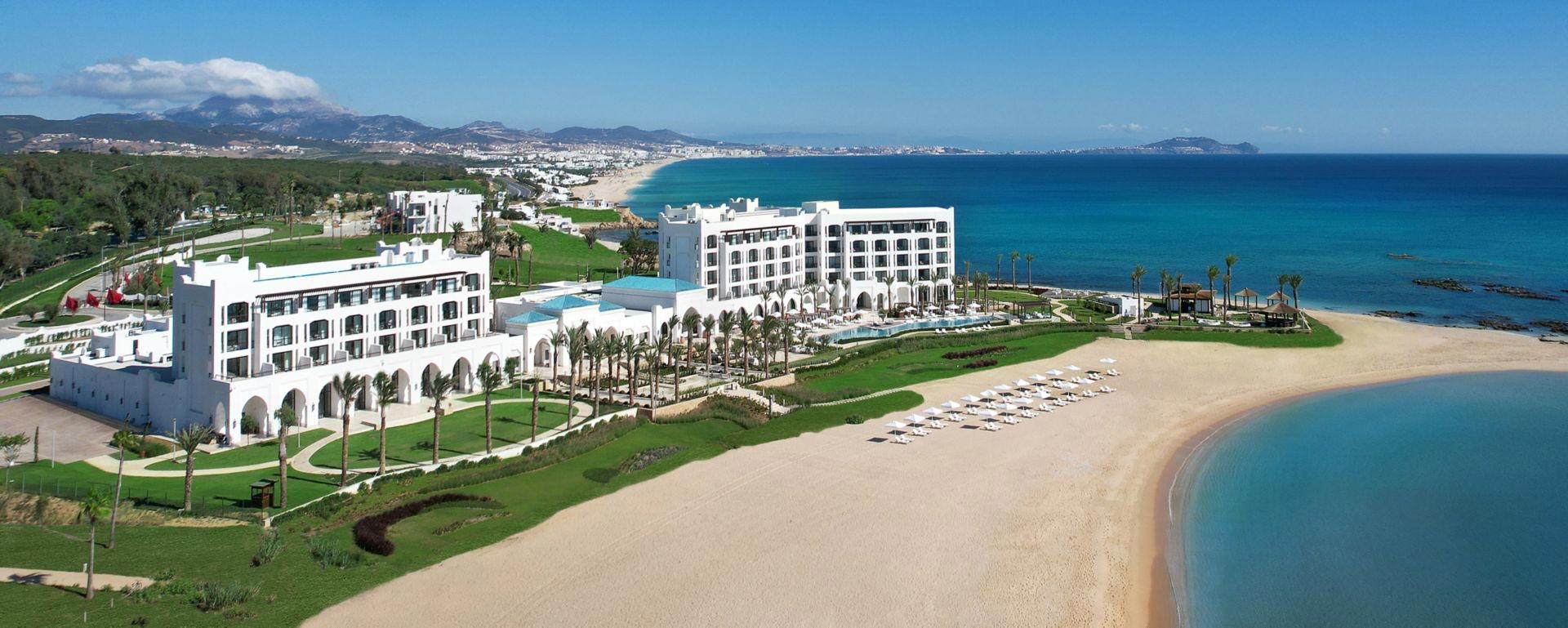
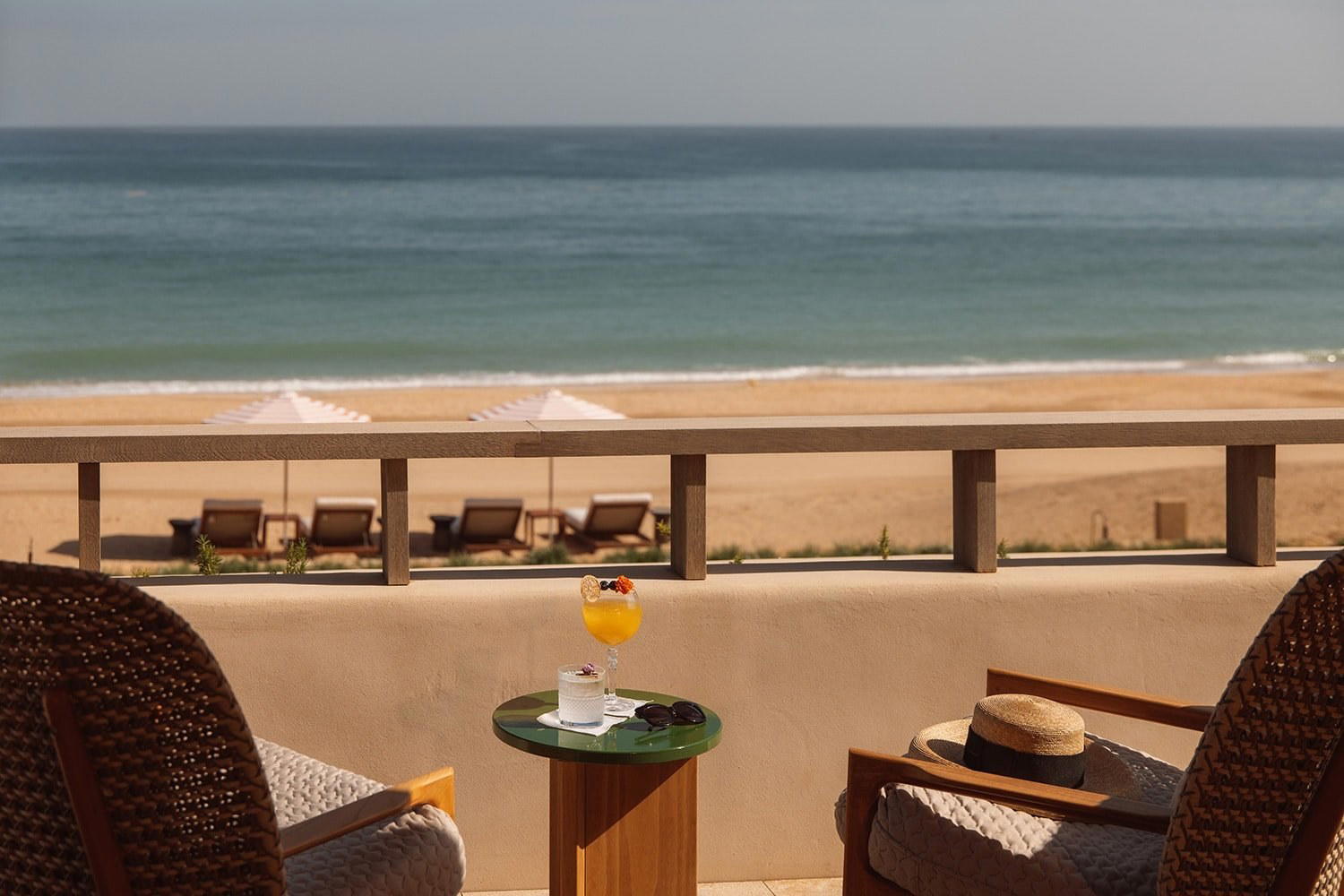
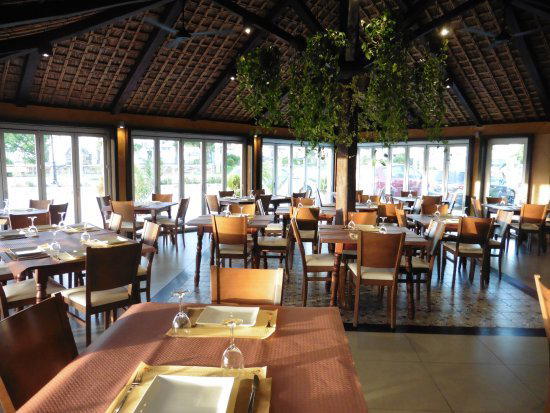
Serene and refined with abundant natural light flooding through floor-to-ceiling windows, elegant furnishings blending traditional Moroccan elements with contemporary design, and peaceful garden settings overlooking the sea.
Know Before You Go
- Getting there
- 1 Sidi Bouknadel, Tanger 90000