


1 Michelin Key · Virtuoso Luxury Hotel Partner · Gault & Millau Exceptional Hotel
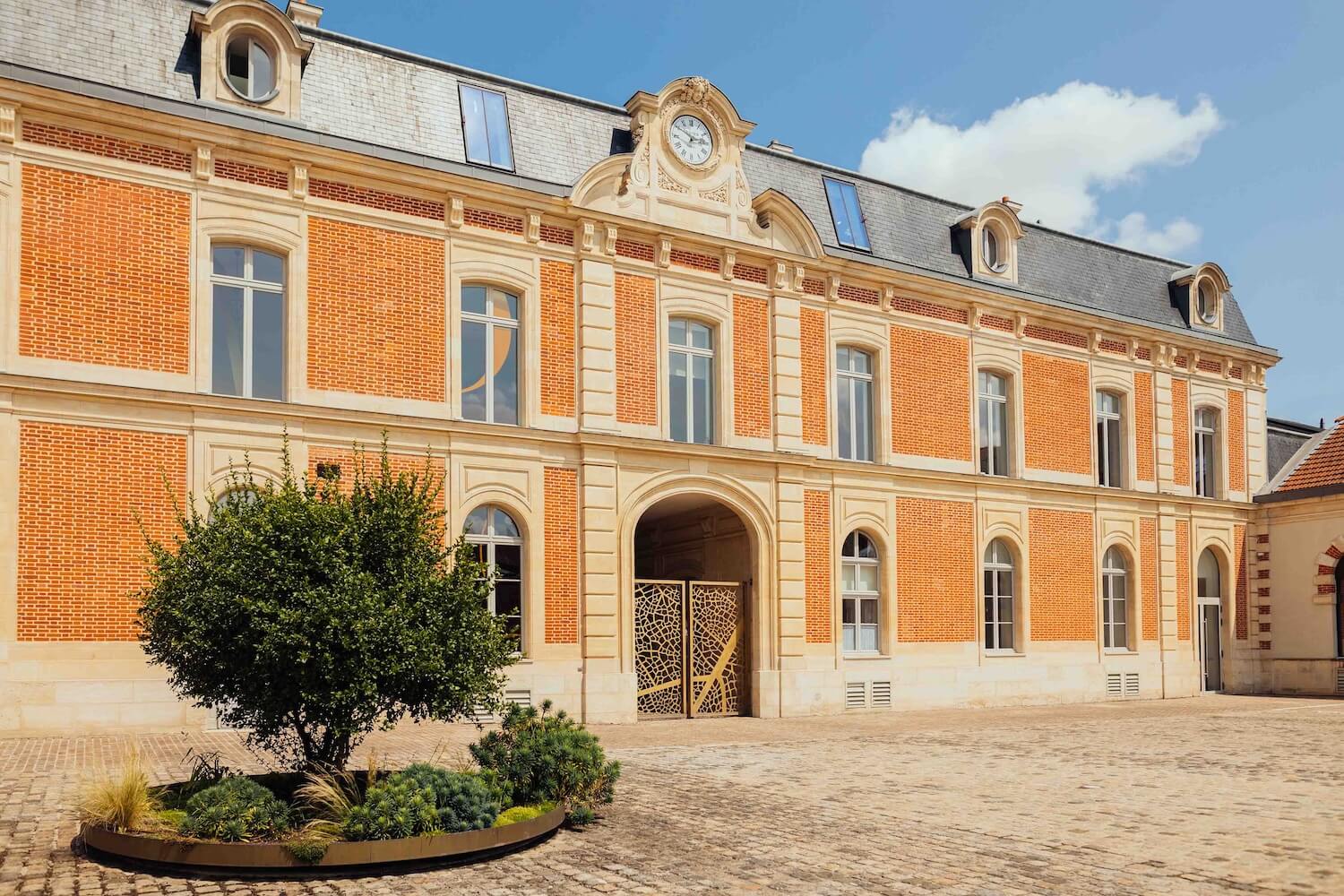
Set behind a discreet entrance on Place des Vosges, Le Pavillon de la Reine occupies a 17th-century mansion in the Marais and holds both a Michelin Key and a Gault & Millau Exceptional Hotel designation for 2024–2025. Its 57 individually decorated rooms sit above a garden courtyard and a spa by Codage, while Restaurant Anne carries a Michelin Star, rare for a hotel of this scale and neighbourhood position.

Pearl is the En Primeur Club membership app, where members save venues, book tables and use the concierge.
The Quietest Address on the Most Famous Square in Paris
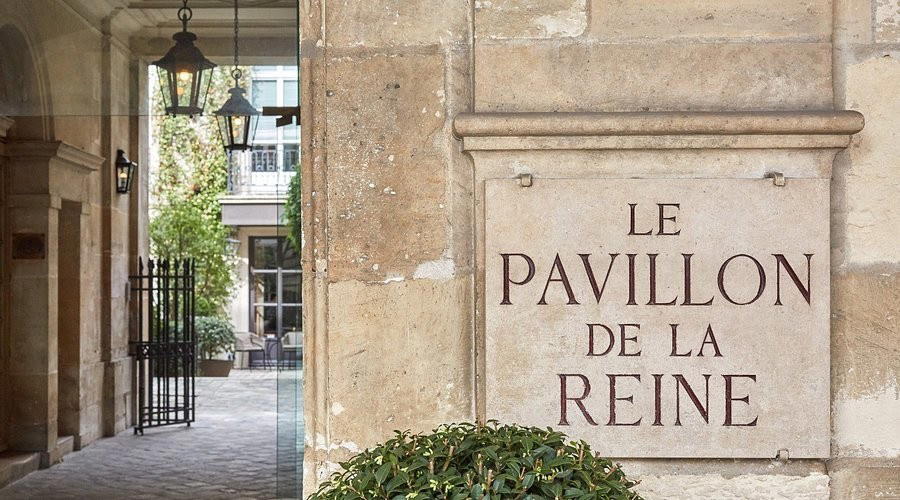
Place des Vosges is not a quiet place. On a warm afternoon, its arcades draw a steady flow of visitors, gallery browsers, and café-goers who circle the formal gardens before spilling onto the rue de Bretagne. The hotels and apartments that ring the square are exposed to all of it. Le Pavillon de la Reine sits on the north side of the square and absorbs almost none of it, the entrance is set back through a stone arch, the courtyard absorbs sound, and the 17th-century mansion walls do the rest. This is the architectural condition that defines the hotel's appeal: proximity to one of the great urban set-pieces in Europe combined with an almost complete insulation from it.
That combination is harder to engineer in Paris than it sounds. The city's most prestigious hotel addresses Cheval Blanc Paris, Hotel Plaza Athénée, Le Bristol Paris, occupy grand boulevard positions where the city's energy is part of the product. The Marais operates differently. Its prestige is neighbourhood-scaled: the density of historic architecture, the calibre of the galleries, the absence of the tourist infrastructure that dominates the 8th arrondissement. Le Pavillon de la Reine's position on Place des Vosges sits at the centre of that logic. The square itself, commissioned by Henri IV and completed in 1612, is the oldest planned square in Paris and one of the few remaining examples of early 17th-century Parisian urban design at full, unaltered scale. The hotel's building is part of that architectural fabric, clad in greenery and facing the manicured gardens through tall windows.
What the Awards Are Actually Measuring
In 2024, Le Pavillon de la Reine received a Michelin Key, the guide's hotel-specific recognition, launched that year to identify properties offering a distinctive and considered hospitality experience. The hotel also holds a Gault & Millau Exceptional Hotel designation for 2025, awarded five points. These are not awards that travel automatically to large, well-resourced palace hotels. Michelin Key recognition at the one-key level tends to land with properties where the physical environment, service character, and in-house dining form a coherent whole, rather than properties simply meeting a checklist of amenities.
The coherence argument is harder to make at most Parisian boutique hotels. Le Pavillon de la Reine has an asset the category rarely produces: Restaurant Anne holds a Michelin Star. Hotel restaurants in Paris occupy a contested tier, the city has Le Meurice and its two-starred dining room, the multi-starred kitchens at Four Seasons George V, the formidable food program at Hôtel de Crillon, but most boutique-scale properties in the 3rd arrondissement do not carry Michelin-starred kitchens. Restaurant Anne's recognition places the hotel in a different competitive tier than its room count alone would suggest. A 57-room property sustaining a starred restaurant in the Marais is a meaningful signal of kitchen ambition and consistency. It also functions as a draw for guests who are not staying at the hotel, which changes the social texture of the dining room in ways that all-guest hotel restaurants rarely achieve.
The Rooms: 17th-Century Architecture, Contemporary Specification
The 57 rooms and suites are individually decorated, a design approach common at this level of Parisian boutique hotel but executed with more care than the category average, according to the Gault & Millau panel. Warm colours, plush fabrics, and period furniture characterise the aesthetic, calibrated to the building's original residential scale rather than retrofitted to meet a corporate luxury template. The architectural bones, ceiling heights, window proportions, stone detailing, are genuinely from the 17th century, which produces spatial qualities that modern construction cannot replicate. Properties like La Réserve Paris operate in a comparable spirit of intimate, design-led luxury in Paris, though from a different neighbourhood position and with a different scale of ambition.
Rates from $781 per night position the hotel at the lower end of Paris's five-star tier. That pricing reflects the boutique scale rather than a downgrade in quality: the property carries full five-star classification alongside its dual awards recognition. For context, palace-tier addresses like Airelles Château de Versailles or Four Seasons George V operate at substantially higher nightly rates. Le Pavillon de la Reine's pricing gives it a broader accessible band within the five-star category than most Paris palace hotels occupy.
The Spa and the Courtyard
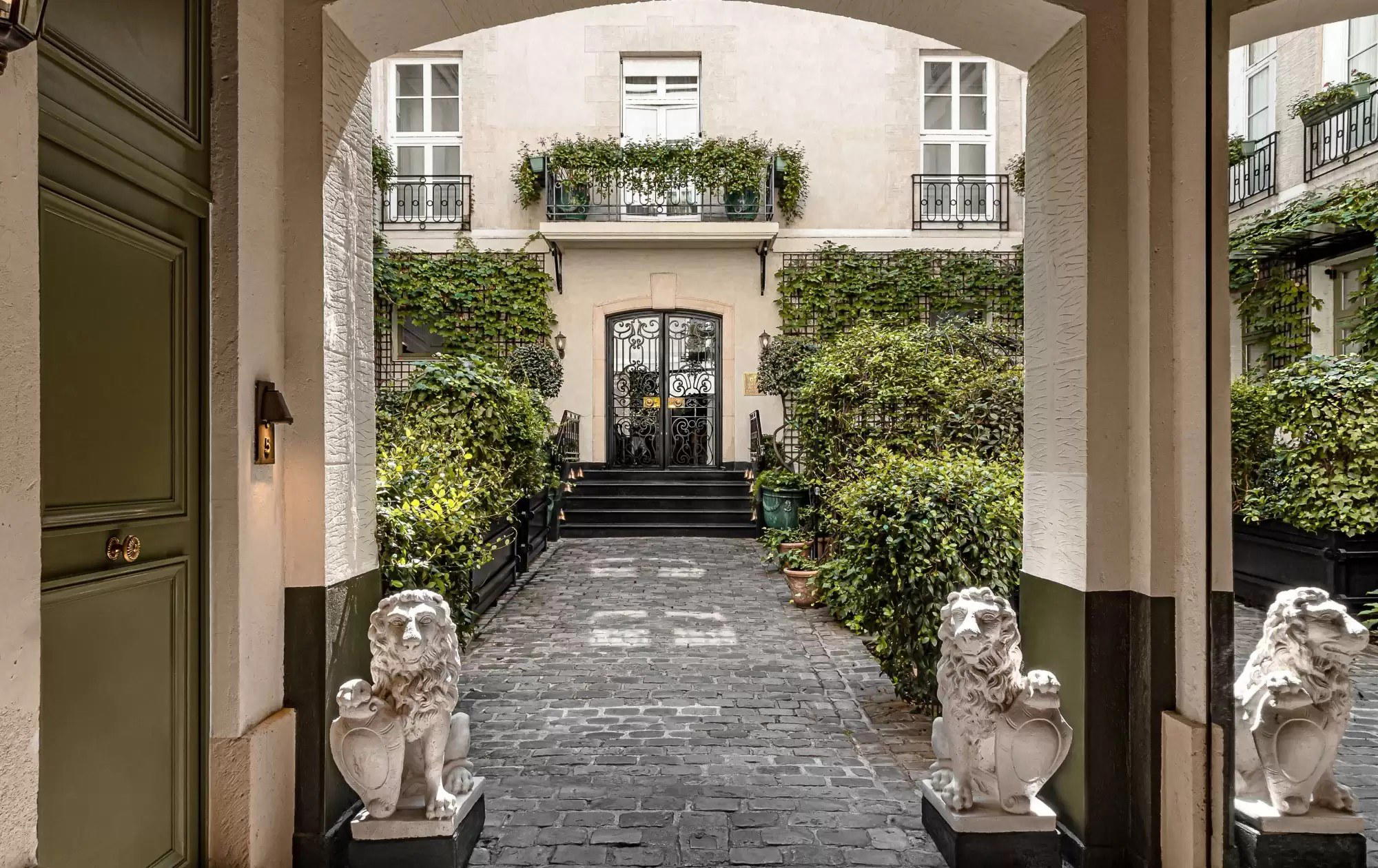
The Spa de la Reine is operated by Codage, a French skincare brand whose spa partnerships tend to run at the more technically focused end of the wellness market. This is not the generic hotel spa model, Codage's approach prioritises diagnostic and treatment specificity over ambient programming. The fitness centre operates with trainers available on request rather than as a fixed-schedule facility, which suits the hotel's predominantly independent-traveller profile. The flower-filled courtyard and fireplace lounge function as the hotel's social infrastructure, providing the kind of interior public space that boutique hotels often lack. In a Parisian hotel of 57 rooms, having a garden courtyard as a genuine amenity rather than a visual gesture is a material differentiator.
The Marais Context
The hotel's neighbourhood position matters more than it might at a property in a more homogeneous arrondissement. The Marais in 2025 operates as one of Paris's most architecturally concentrated districts, the density of preserved hôtels particuliers, the Jewish quarter on rue des Rosiers, the design and contemporary art infrastructure around the Centre Pompidou, and the evolving food scene along rue de Bretagne and the Marché des Enfants Rouges all sit within walking range of Place des Vosges. Guests using Le Pavillon de la Reine as a Paris base gain direct pedestrian access to this range without the transit infrastructure required from Right Bank palace addresses further west. The 3rd and 4th arrondissements have a different urban rhythm from the 8th, and the hotel's position is calibrated precisely to that rhythm.
For travellers planning a broader French itinerary, the domestic comparisons are instructive. Properties like Domaine Les Crayères in Reims, Les Sources de Caudalie in Bordeaux, or Baumanière Les Baux-de-Provence offer the country-house register in regional settings; La Bastide de Gordes, Villa La Coste, and La Réserve Ramatuelle anchor the south. For travellers whose itinerary also reaches the Riviera, Hotel Du Cap-Eden-Roc in Cap d'Antibes and The Maybourne Riviera in Roquebrune-Cap-Martin sit in a comparable luxury register. For Alpine extensions, Cheval Blanc Courchevel and Four Seasons Megève are the natural pairings. Le Pavillon de la Reine's Paris positioning works well as the city anchor in a multi-property French circuit. Internationally, travellers who respond to this format of historically grounded boutique luxury might also consider Aman Venice for comparable architectural gravitas, or Aman New York and The Fifth Avenue Hotel for the American equivalent of the neighbourhood-embedded luxury model. See our full Paris restaurants and hotels guide for wider city context.
Know Before You Go
- Address: 28 Place des Vosges, 75003 Paris
- Classification: 5-star hotel
- Rooms: 57 rooms and suites, individually decorated
- Rate from: $781 per night
- Awards: Michelin Key 2024, Gault & Millau Exceptional Hotel 2025 (5 points); Restaurant Anne holds a Michelin Star
- Spa: Spa de la Reine by Codage, with fitness centre and on-request trainers
- Neighbourhood: Le Marais, 3rd arrondissement, directly on Place des Vosges
Cuisine and Recognition
Comparable venues nearby, for context on price, style, and recognition.
| Venue | Cuisine | Price | Awards | Notes |
|---|---|---|---|---|
| Le Pavillon de la ReineThis venue (the venue you are viewing) | Historic luxury mansion in the heart of Le Marais | Not listed | 1 Michelin Key · Virtuoso Luxury Hotel Partner | Not listed |
| Château des Fleurs | Intimate Belle Époque-inspired boutique hotel positioned as a luxury alternative to large chains, emphasizing personalized service and refined Parisian elegance. | $500–750 | 1 Michelin Key · Mr & Mrs Smith Seal of Approval | Golden Triangle |
| Hôtel Madame Rêve | Luxury boutique in historic post office building | $300–500 | 1 Michelin Key · La Liste Top Hotels | 1st Arrondissement |
| Château Voltaire | elegant modern inn in historic 17th-century buildings | Not listed | 1 Michelin Key · Vogue 2026 Vogue Best Hotels in Paris | Saint-Honoré |
| La Fantaisie | Five-star boutique hotel designed as an urban haven with garden and rooftop escapes. | Not listed | 1 Michelin Key · Mr & Mrs Smith Seal of Approval | 9th arrondissement |
| Brach Paris | Modernist design hotel blending 1930s architecture with contemporary aesthetics, featuring raw natural materials, curated art collections, and avant-garde furnishings. | $750–1,000 | 1 Michelin Key · Gault & Millau Exceptional Hotel | 16th arrondissement (Paris 16) |
Recognition history
Dated appearances from independent guides and award organizations, with the underlying list record or original source where available.
Michelin 1 Key
Michelin
Virtuoso Luxury Hotel Partner
Virtuoso
Gault & Millau Exceptional Hotel
Gault & Millau
Full recognition history (5 entries)
Michelin 1 Key
Michelin
Michelin 1 Key
Michelin
Continue exploring
More in Paris
Hotels in Paris
All hotels in Paris →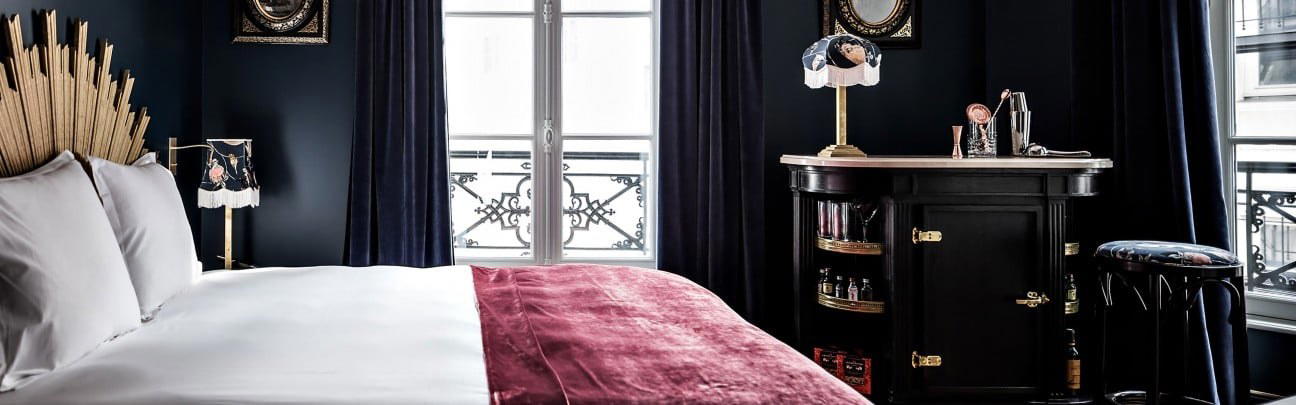
Bars in Paris
All bars in Paris →
Restaurants in Paris
All restaurants in Paris →
Details
- Romantic
- Elegant
- Classic
- Intimate
- Sophisticated
- Romantic Getaway
- Honeymoon
- Anniversary
- Historic Building
- Garden
- Terrace
- Spa
- Pool
- Fitness Center
- Room Service
- Concierge
- Wi Fi
- Restaurant
- Valet Parking
- EV Charging
- Garden
- Elevator
- Wheelchair Accessible
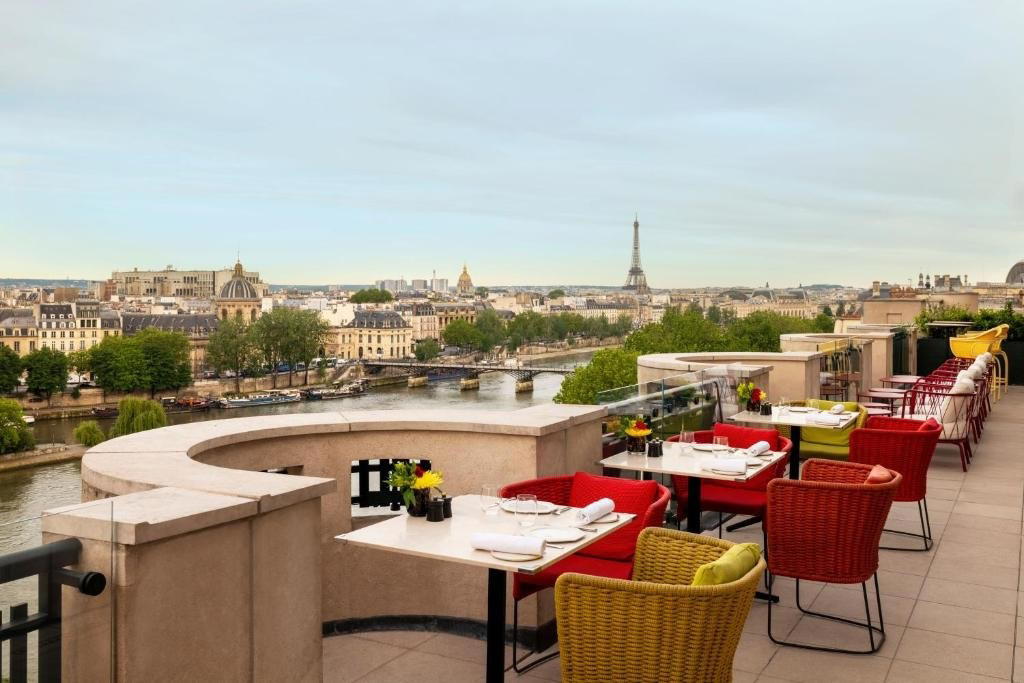
Intimate and elegant with tasteful decor, stylish lounges, cozy library, and serene courtyard terrace ideal for aperitifs.