Hotel Punta Caliza
On Isla Holbox, where cars are banned and the Caribbean meets the Gulf, Hotel Punta Caliza occupies a quieter register than the peninsula's more marketed resorts. The property sits on the island's calmer edge, its architecture working with the flat, sandy terrain rather than against it. For travellers who find the Riviera Maya circuit overbuilt, Holbox represents a legitimate alternative, and Punta Caliza is among its more considered addresses.
Pearl is the En Primeur Club membership app — saves, bookings, and concierge access live there. Same editors, same standards.
- Address
- Paseo Kuka, Por Robalo, Isla Holbox, 77310 Isla Holbox, Q.R., Mexico
- Phone
- +52 998 316 8140
- Website
- puntacaliza.com
- Directions
- Get directions
 Saves & bookings on Pearl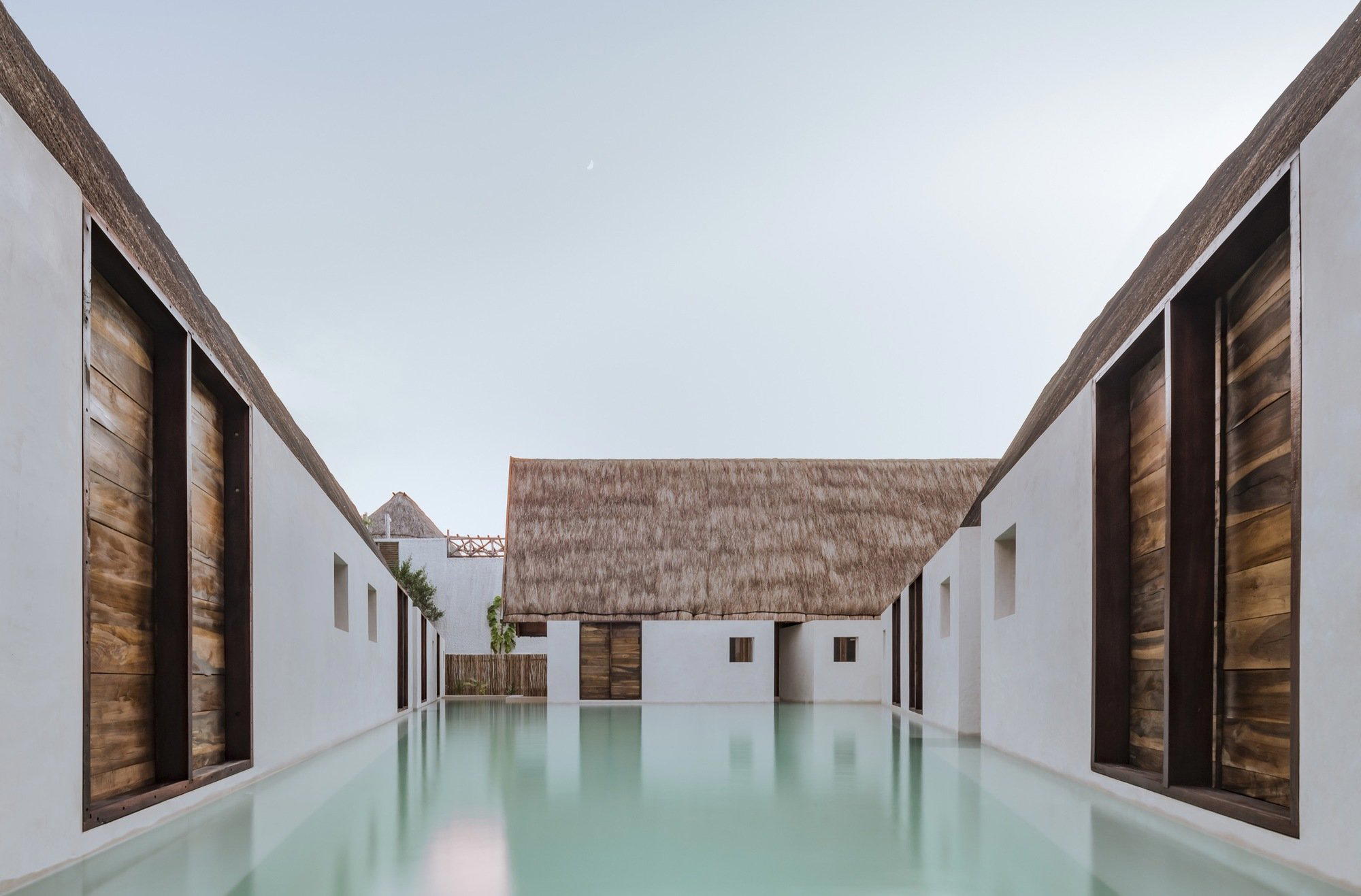
Where the Island Sets the Terms
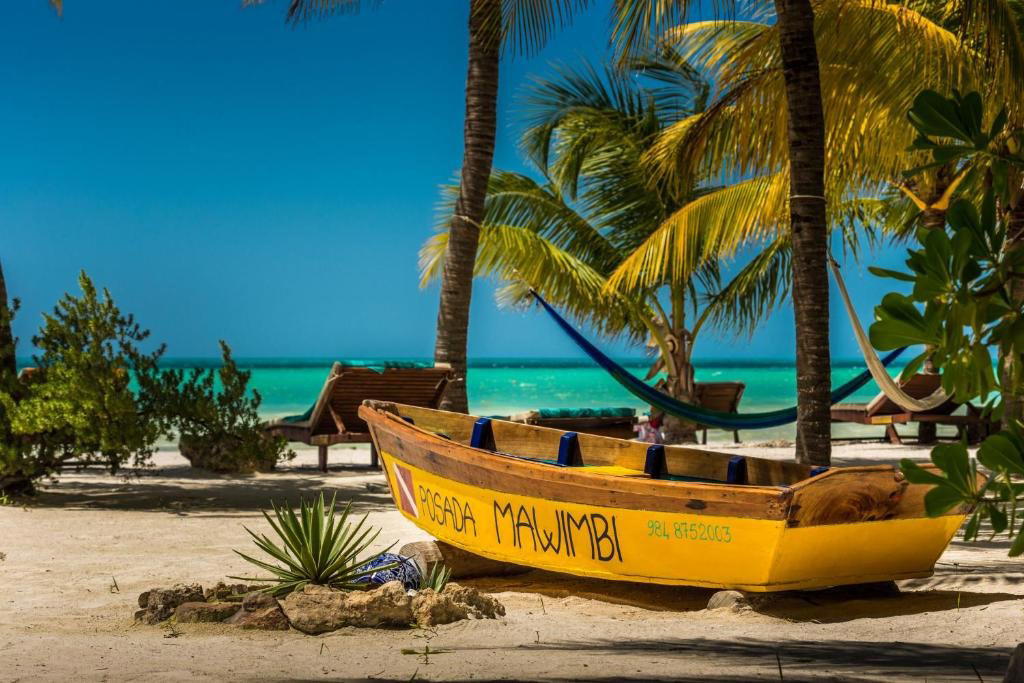
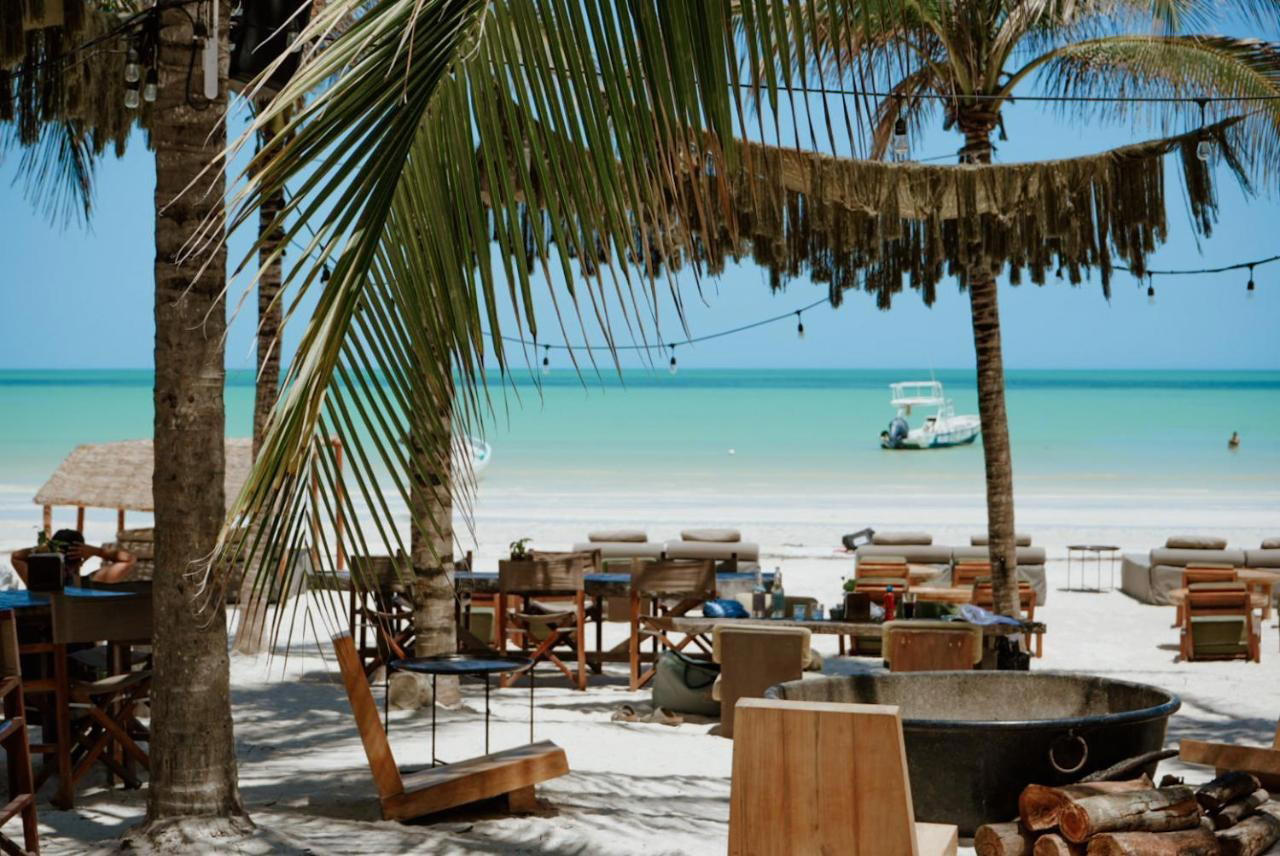
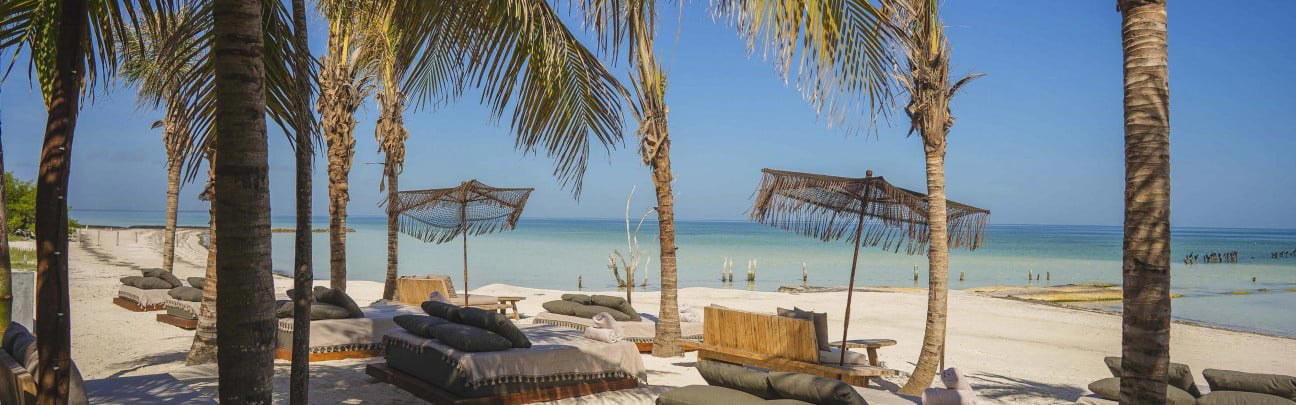
Isla Holbox operates under a different logic than most of Mexico's Caribbean coast. Cars are prohibited. The streets are sand. The island sits at the point where the Gulf of Mexico meets the Caribbean Sea, producing a shallow, turquoise flatness that doesn't photograph the way Tulum's cenote pools do, but rewards a longer attention span. The hotels here don't compete on pool-bar spectacle or DJ programming. They compete on how well they get out of the way and let the place speak.
It belongs to a cohort of Mexican beach properties, including Xinalani in Quimixto and Playa Viva in Juluchuca, that treat ecological and architectural restraint as product features rather than marketing footnotes.
The Architecture of Doing Less
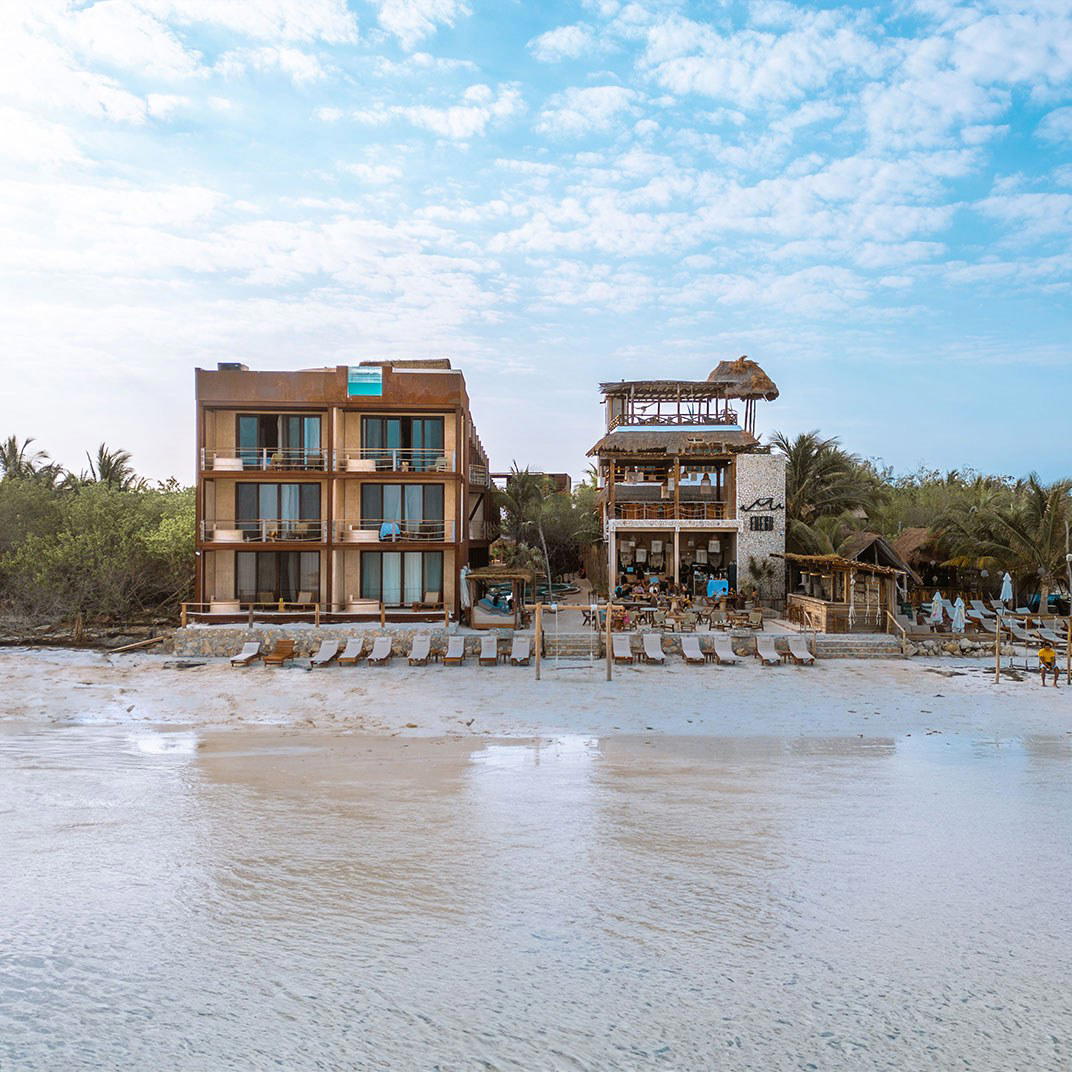
Holbox's building envelope is genuinely constrained. The island's protected status under the Yum Balam biosphere reserve limits construction height and density in ways that larger resort zones on the Yucatán Peninsula are not subject to. What that means in practice is that hotels here tend to sit low against the horizon, with palapa roofing, open-air corridors, and materials that read as local rather than imported. This isn't a stylistic preference so much as a structural condition of operating on the island.
The architectural conversation at Punta Caliza is continuous with that constraint. Where properties like Etéreo, Auberge Resorts Collection in Punta Maroma or Maroma in Riviera Maya work with dramatic jungle canopy and cenote geology, Holbox properties work with flatness: the sweep of shallow water, the low tree line of the mangrove, the quality of light that comes off open sea. The design intelligence required to make that setting feel considered rather than sparse is distinct from what inland or clifftop properties demand.
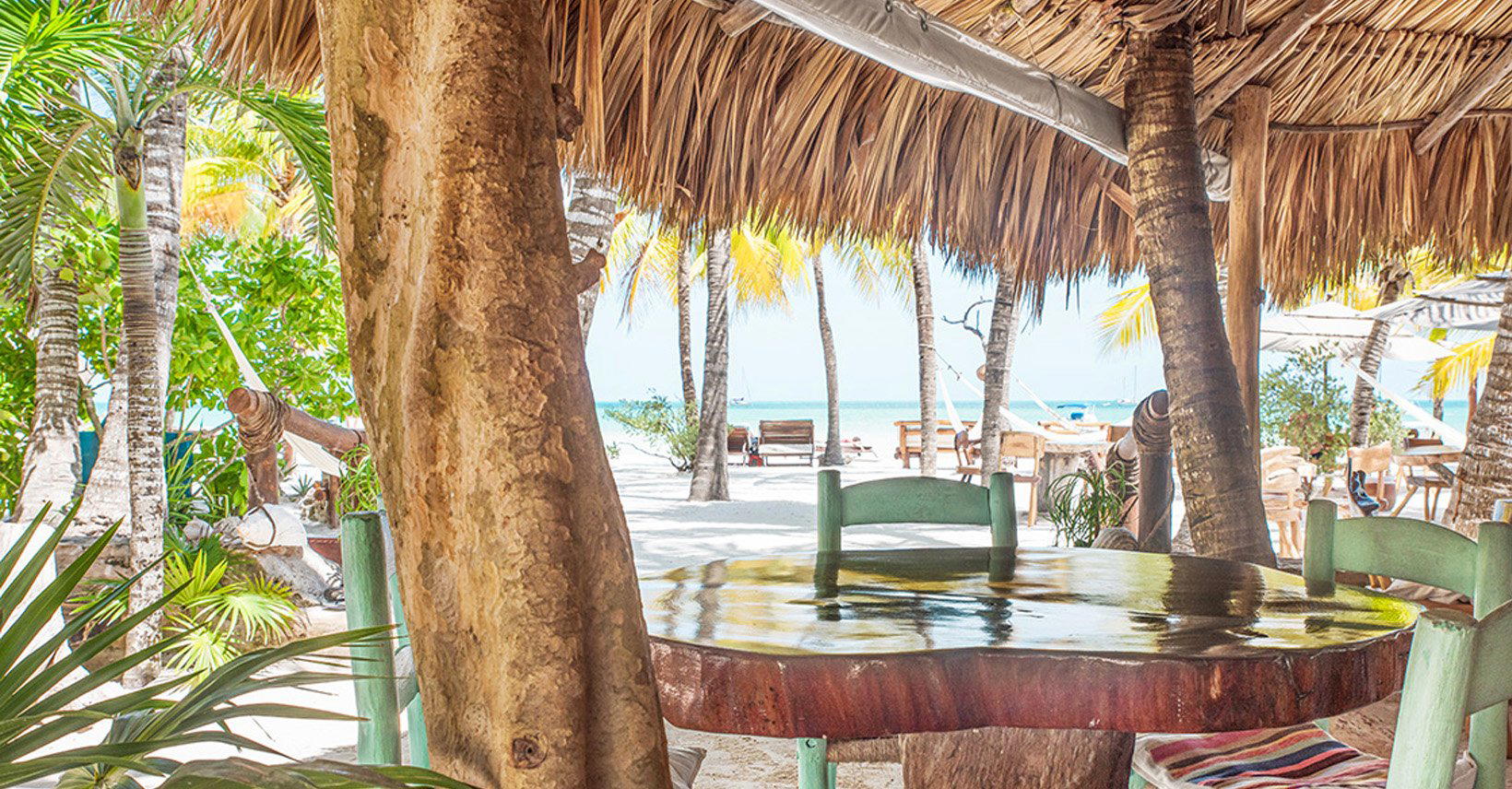
Palapa construction, which uses dried palm thatch over timber or bamboo frames, has deep roots in the coastal Yucatán vernacular. It performs genuinely well in the climate, providing insulation from midday heat and allowing air movement that mechanical cooling struggles to replicate in open-plan spaces. When properties on Holbox use it, they're not adopting an aesthetic affectation; they're working within a building tradition that is climatically rational.
Holbox in Its Regional comparable set
Mexico's premium beach hotel market has stratified in the past decade into identifiable tiers. At the leading end sit large-footprint resort operations, including One&Only; Mandarina in Riviera Nayarit, Las Ventanas al Paraíso, A Rosewood Resort in San José del Cabo, Montage Los Cabos, and Zadun, A Ritz-Carlton Reserve in Los Cabos, which operate across significant acreage with full-service programming, multiple restaurants, and a guest experience built around comprehensive amenity. Below that sits a smaller cohort of properties that trade scale for specificity, fewer rooms, stronger local material identity, and a guest experience that is more dependent on the landscape itself than on the hotel's internal programming.
Holbox positions naturally in that second group. The island's access constraints, which currently require a ferry crossing from Chiquilá on the mainland, filter the guest profile in ways that larger, road-accessible resorts on the Riviera Maya do not experience. That friction is a feature for some travellers and a deterrent for others, and the hotels that work well on Holbox tend to be ones that understand which type of guest finds value in the crossing.
For comparison across Mexico's design-led beach tier, Las Alamandas in Costalegre and Cuixmala in La Huerta represent a similar philosophy applied to the Pacific coast, where the terrain is more dramatic but the commitment to limited scale and local material identity is comparable. On the Yucatán side, Chablé Yucatán in Merida demonstrates how the region's hacienda tradition can anchor a premium property with architectural depth and historical continuity.
The Wider Mexican Hotel Context
Mexico's interior design-led hotel scene has developed in parallel with its beach properties. Casa de Sierra Nevada, A Belmond Hotel, in San Miguel de Allende, Casa Polanco in Mexico City, Hotel Demetria in Guadalajara, and Casa Antonieta in Oaxaca City each demonstrate how Mexican hospitality at the premium end increasingly emphasises locally rooted design identity over internationally standardised luxury language. Casa Silencio in San Pablo Villa de Mitla and Bruma Valle de Guadalupe in Ensenada extend that logic into wine country and remote rural settings.
The pattern across all of these properties is consistent: the design decision to work with local material and vernacular form is not just an aesthetic position but a claim about what kind of experience the property is providing. On Holbox, that claim takes the form of buildings that sit within the island's ecology rather than impose on it.
For travellers considering Holbox alongside the broader Riviera Maya circuit, Hotel Esencia in Tulum and Palmaïa-The House of AïA in Playa del Carmen represent what the more developed southern coastline offers at the premium end, with stronger infrastructure and easier access but a correspondingly busier operating context. Four Seasons Resort Punta Mita on the Pacific coast and Cuatrociénegas Municipality in Cuatro Cienegas extend the Mexican landscape conversation into entirely different terrain, useful reference points for placing Holbox's particular flatwater ecology in a national context.
How It Stacks Up
Comparable venues nearby, for context on price, style, and recognition.
| Venue | Cuisine | Price | Awards | Notes |
|---|---|---|---|---|
| Hotel Punta CalizaThis venue — the venue you are viewing | Family-owned boutique with traditional Mexican architectural elements reimagined in a modern tropical setting | $$$ | 4-Star | Not listed |
| NEST Tulum | Nature-first luxury boutique with minimalist rustic-chic design emphasizing local artisan craftsmanship and Mayan cultural heritage. | $$$ | 4-Star | Tulum |
| Aloft Tulum | Contemporary boutique hotel with boho-chic inspiration, positioned as an affordable luxury option for digital nomads and travelers seeking modern comfort with local character. | $$$ | 4-Star | Tulum |
| Santa Casa | Historic Mexican Colonial Revival mansion thoughtfully restored with contemporary design elements, positioned as a charming boutique hotel that honors its 1930s heritage while offering modern comforts. | $$$ | 4-Star | Roma Norte |
| Nômade Temple Tulum | Jungle-integrated eco-boutique with treehouses and private pool suites | $$$$ | 4-Star | Tulum |
| Coqui Coqui Papholchac Coba Residence & Spa | Maya-Mexican medley inspired by ancient architecture | $$$$ | 4-Star | Coba |
Continue exploring
More in Lazaro Cardenas
Hotels in Lazaro Cardenas
Browse all →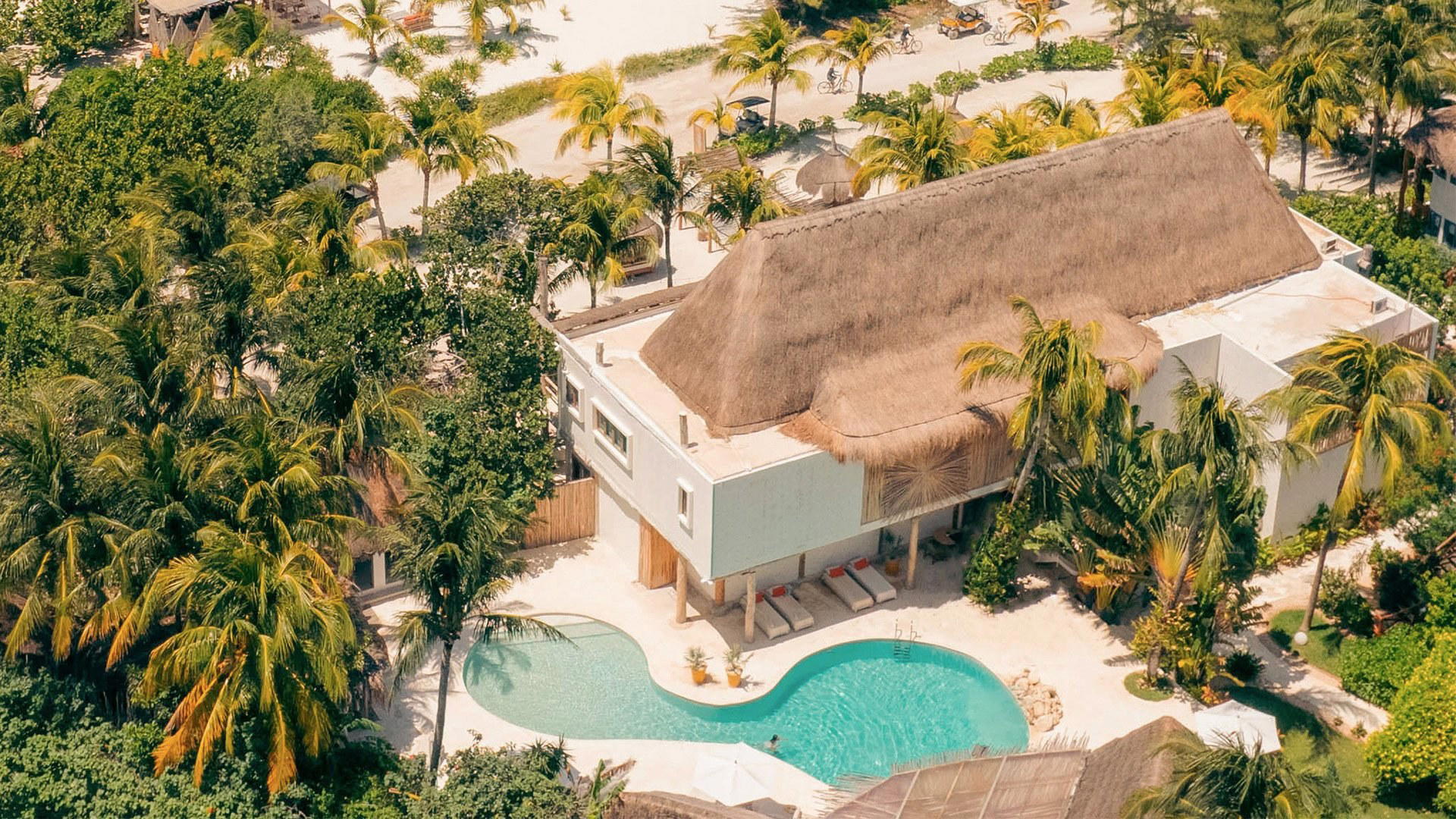
At a Glance
- Quiet
- Romantic
- Minimalist
- Rustic
- Elegant
- Romantic Getaway
- Honeymoon
- Weekend Escape
- Infinity Pool
- Private Villa
- Wi Fi
- Pool
- Spa
- Concierge
- Garden
- Room Service
- Garden
- Wi Fi
- Pool
- Spa
- Concierge
- Garden
- Room Service
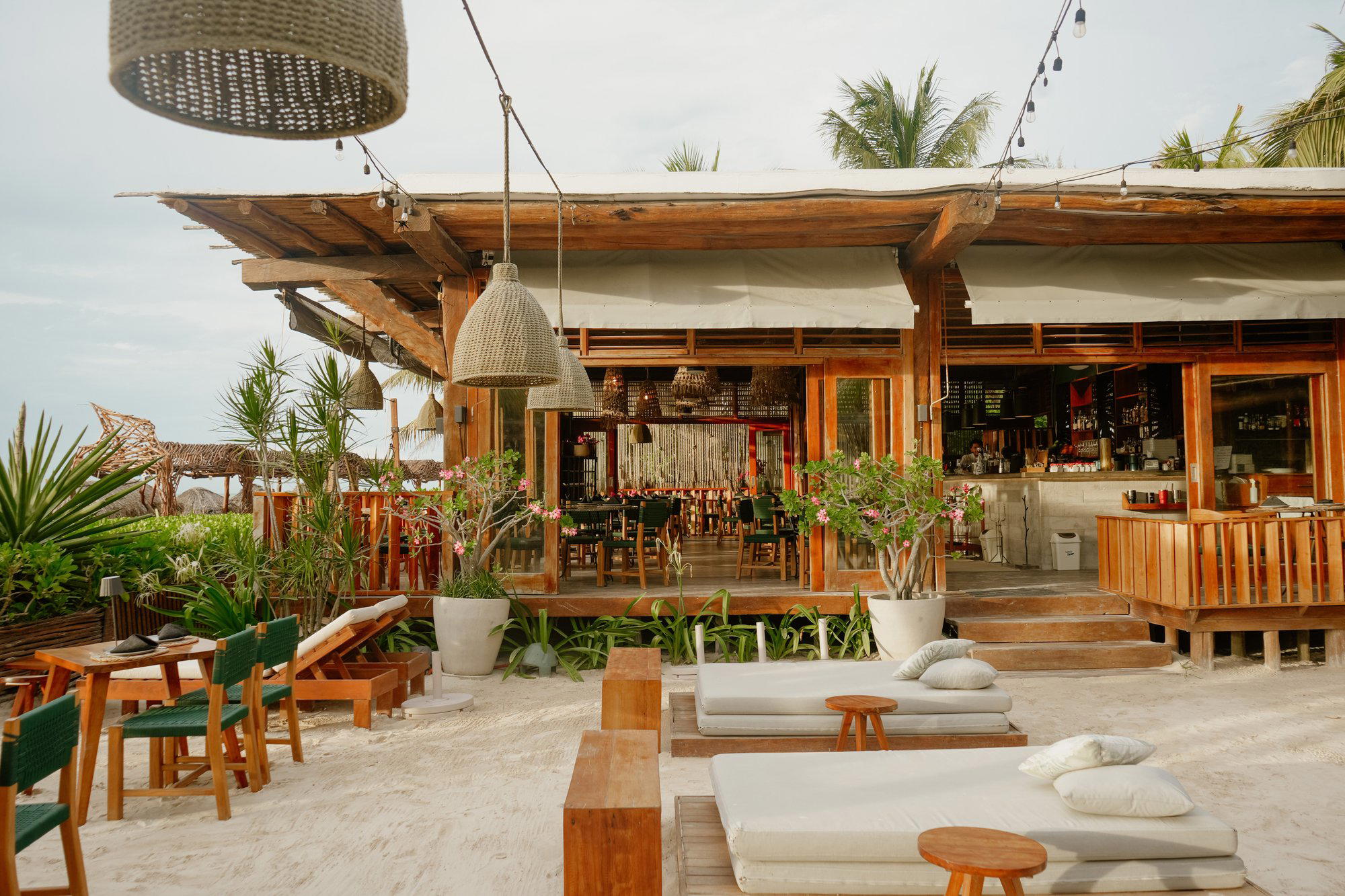
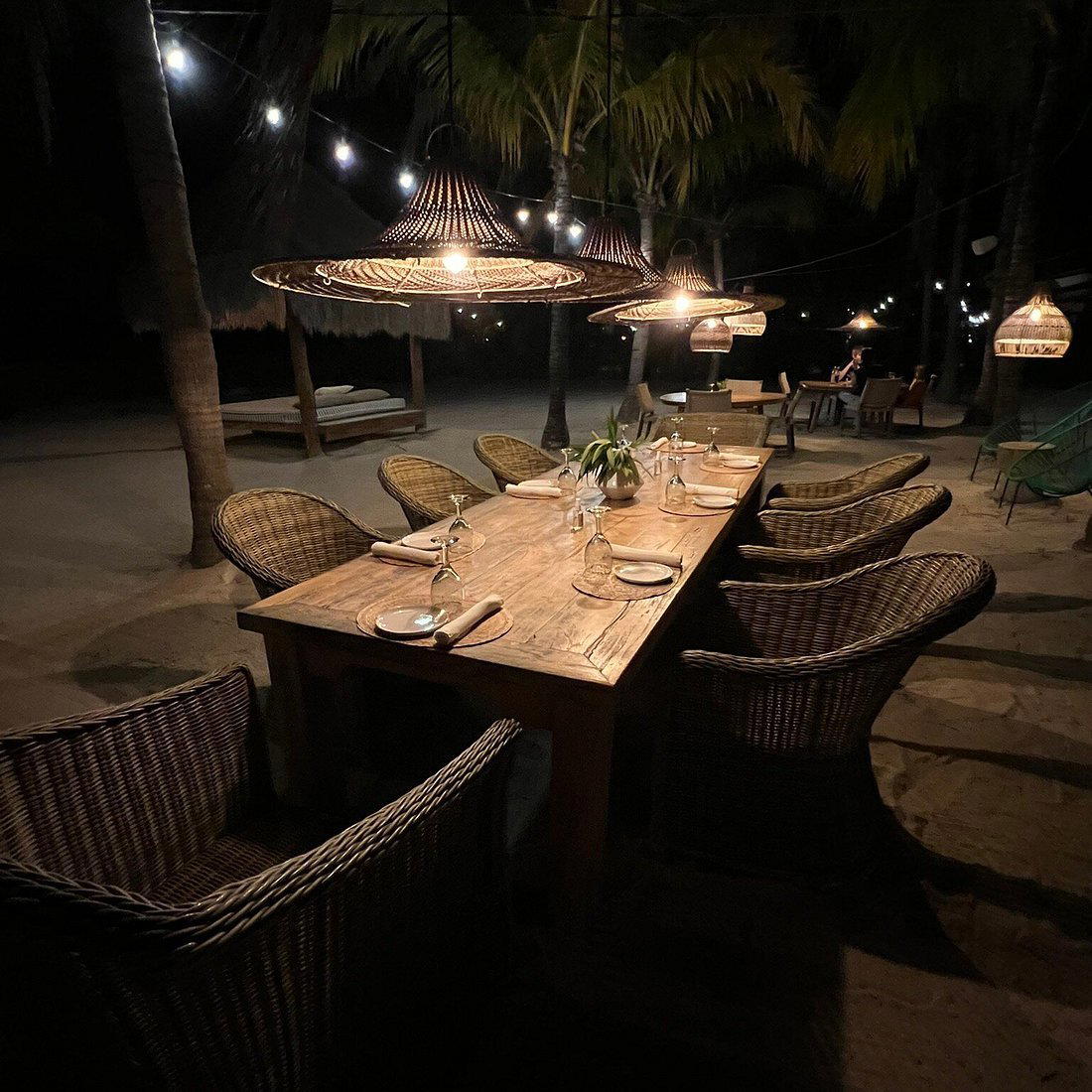
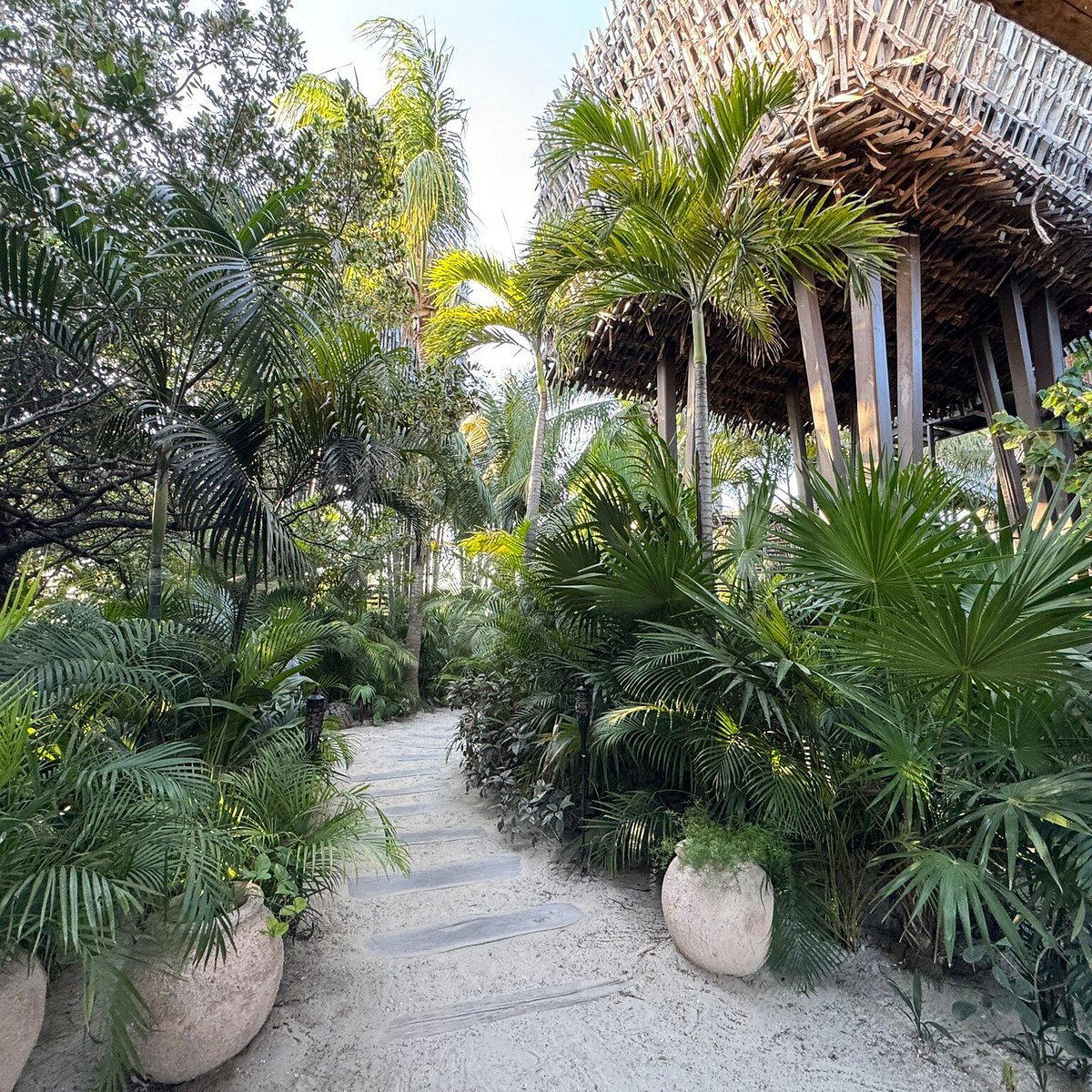
Laidback minimalist atmosphere with natural materials like thatched roofs, limestone, and cedar wood, framed by turquoise pool and leafy garden surrounds for a serene, airy tropical retreat.