Cuatrociénegas Municipality
Cuatrociénegas Municipality sits in the Chihuahuan Desert of Coahuila, Mexico, built around one of the country's most ecologically rare landscapes: a basin of spring-fed pools whose microbial life has been studied for clues to early Earth. The town itself is compact and unhurried, serving as a base for the protected biosphere reserve that surrounds it. Visitors come for the desert silence, the turquoise pozas, and the absence of crowds that more accessible Mexican destinations attract.
Pearl is the En Primeur Club membership app — saves, bookings, and concierge access live there. Same editors, same standards.
- Address
- Coahuila, Mexico
- Directions
- Get directions
 Saves & bookings on Pearl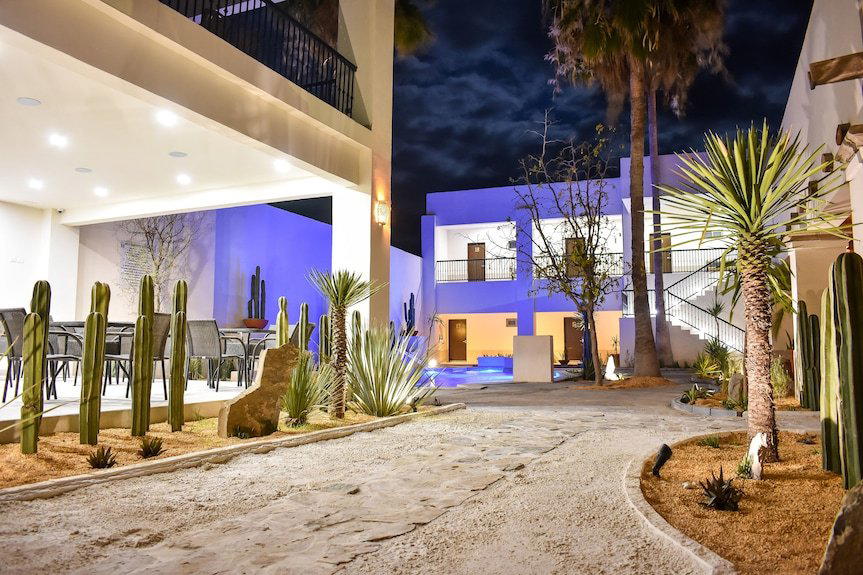
A Desert Town Shaped by Its Geology
The Chihuahuan Desert produces a particular kind of silence. Drive into Coahuila from Monterrey, roughly four hours southeast, and the landscape flattens and bleaches until the horizon feels negotiable. Cuatro Ciénegas appears at the edge of the Sierra de San Marcos y Pinos range as something the desert has allowed rather than something imposed upon it: low buildings, dusty streets, and an atmosphere calibrated to the rhythms of a biosphere reserve rather than to a tourism economy. The town itself has the physical character of a working ranching municipality that sits beside a significant ecosystem in North America.
That context matters architecturally and spatially. The built environment of Cuatro Ciénegas reflects the vernacular of northern Mexican desert towns, where adobe walls, shaded portales, and interior courtyards respond directly to the climate rather than to aesthetic trends. Structures are low, thermal mass is high, and the color palette runs from ochre to pale terracotta. There are no hotel zones laid out for organized arrival. The town's design logic is functional and old, and the surrounding biosphere reserve, formally designated as the Área de Protección de Flora y Fauna Cuatrociénegas, enforces a development boundary that has kept that character intact.
The Pozas: Architecture of Water in Stone
If any single physical element defines the spatial experience of the region, it is the pozas, the spring-fed pools that dot the valley floor. These are not casual swimming holes. The water emerges from an underground system fed by the Sierra, emerging at temperatures and mineral concentrations that have remained largely stable for thousands of years. The pools are visually striking in the way that geological precision tends to be: turquoise water against white gypsum sand and desert scrub, contained by low stone rims formed by mineral deposition over time. The scale is intimate rather than monumental, which makes the experience feel discovered rather than administered.
The architectural analogy is deliberate. The pozas function like a series of small rooms, each with its own thermal character, depth, and microbial community. Scientists have compared the stromatolites found here to formations from Precambrian seas, organisms that predate complex life. Visiting the area means moving through a landscape shaped by biological and geological forces over immense timescales. That is a specific kind of spatial experience, and it draws a visitor type that tends toward the contemplative rather than the recreational.
Getting There and the Logistics of Remoteness
Cuatro Ciénegas does not receive direct flights. The nearest airport with regular service is in Torreón, approximately 200 kilometres to the south, making the journey primarily a road trip proposition. From Monterrey, the drive runs through Saltillo and then west through Cuatrociénegas de Carranza, the municipal seat, before reaching the biosphere access points. The remoteness is not incidental. It is the primary filter that keeps visitor numbers manageable and preserves the reserve's ecological conditions. Access to certain pozas is controlled and rotated by the reserve authority to limit impact, so confirming current entry permissions before arrival is advisable rather than optional.
Accommodation in and around the town runs toward small guesthouses and modest hotels rather than large-format properties. Visitors accustomed to the design-led resort model found at places like One&Only; Mandarina in Riviera Nayarit or Las Ventanas al Paraíso, A Rosewood Resort in San José del Cabo will find Cuatro Ciénegas operating in an entirely different register. It is a different proposition: a place where the landscape absorbs the visit rather than a property absorbing the guest.
Where Cuatro Ciénegas Sits in the Broader Mexico Travel Picture
Mexico's premium travel market has stratified considerably. On one end, coastal resort circuits along the Riviera Maya and Pacific coast have consolidated around large-brand properties. Maroma in Riviera Maya, Montage Los Cabos in Cabo San Lucas, Zadun, A Ritz-Carlton Reserve in Los Cabos, and properties from Auberge and Belmond like Etéreo, Auberge Resorts Collection in Punta Maroma and Casa de Sierra Nevada, A Belmond Hotel, San Miguel de Allende represent a curated infrastructure designed for comfort-first travel. On the other end, a smaller group of destinations rewards effort with access to landscapes that require remoteness as a condition of their existence. Cuatro Ciénegas belongs firmly in that second group.
The comparison with the Yucatán interior is instructive. Chablé Yucatán in Merida and Casa Silencio in San Pablo Villa de Mitla represent Mexico's broader appetite for ecologically and culturally rooted stays. Cuatro Ciénegas operates without that hospitality infrastructure but offers a corresponding rawness: the landscape has not been interpreted for the visitor, it simply exists, and arrival requires the traveler to meet it on its own terms.
The local food scene draws on northern Coahuila's ranching traditions and desert pantry rather than the coastal cuisine more commonly associated with Mexican gastronomy abroad. Other ecologically distinctive Mexican properties worth considering alongside a Coahuila itinerary include Playa Viva in Juluchuca, Cuixmala in La Huerta, and Las Alamandas in Costalegre, each of which sits within protected or ecologically sensitive areas and prioritizes restraint over scale. Properties like Xinalani in Quimixto and Hotel Punta Caliza in Lazaro Cardenas occupy a similar off-grid bandwidth. Further afield for cultural reference points, Casa Antonieta in Oaxaca City and Hotel Demetria in Guadalajara demonstrate how Mexican hospitality translates interior, non-coastal destinations for international travelers.
Practical Considerations
Spring visits, roughly March through early May, offer cooler mornings before the desert heat builds through midday. Summer brings intense heat and occasional afternoon storms that can make poza access uncomfortable, though early morning hours remain workable. The biosphere reserve entry requires coordination with CONANP (Mexico's protected areas authority), and access rules for individual pools change seasonally. Booking any vehicle or guide locally in advance rather than assuming flexible on-arrival arrangements is the more reliable approach. Cell coverage is limited beyond the town center, and fuel stops should be planned from Saltillo onward.
Comparison Snapshot
Comparable venues nearby, for context on price, style, and recognition.
| Venue | Cuisine | Price | Awards | Notes |
|---|---|---|---|---|
| Cuatrociénegas MunicipalityThis venue — the venue you are viewing | colonial hacienda with modern comforts | $$$ | 4-Star | Not listed |
| Majagua Hotel Boutique | Adults-only boutique hotel in a restored midcentury Art Deco mansion in Oaxaca’s historic center. | $$$ | 4-Star | Centro Histórico |
| Real de Minas San Miguel de Allende | Colonial hacienda with modern conveniences | $$$ | 5-Star | Centro |
| One&Only Palmilla Resort | Classic hacienda-style architecture with Baja-chic interiors blending traditional Mexican charm and contemporary design. | $$$$ | 5-Star | Palmilla |
| Santa Casa | Historic Mexican Colonial Revival mansion thoughtfully restored with contemporary design elements, positioned as a charming boutique hotel that honors its 1930s heritage while offering modern comforts. | $$$ | 4-Star | Roma Norte |
| Nobu Hotel Tulum | Luxury lifestyle resort with residences and event-oriented amenities. | $$$$ | 5-Star | Riviera Maya |
Continue exploring
More in Cuatro Cienegas
Bars in Cuatro Cienegas
Browse all →
Restaurants in Cuatro Cienegas
Browse all →
At a Glance
- Rustic
- Scenic
- Cozy
- Romantic Getaway
- Family Vacation
- Wellness Retreat
- Infinity Pool
- Garden
- Terrace
- Pool
- Spa
- Wi Fi
- Room Service
- Restaurant
- Garden
- Mountain
- Garden
- Pool
- Spa
- Wi Fi
- Room Service
- Restaurant
- Garden
Relaxing with lush gardens, courtyards, elegant rooms, firepits, and poolside serenity.