
World Luxury Hotel Awards WLHA Global Winner
The resort draws on the karst geography and agricultural traditions of Ninh Binh province, positioning itself as a considered alternative to the country's coastal luxury circuit.

Pearl is the En Primeur Club membership app — saves, bookings, and concierge access live there. Same editors, same standards.
- Address
- Quần thể danh thắng Tràng An, Tam Coc Rd, Thôn Văn Lâm, Hoa Lư, Ninh Bình 430000, Vietnam
- Phone
- +84 229 3626 688
- Website
- emeraldatamcoc.com
- Directions
- Get directions
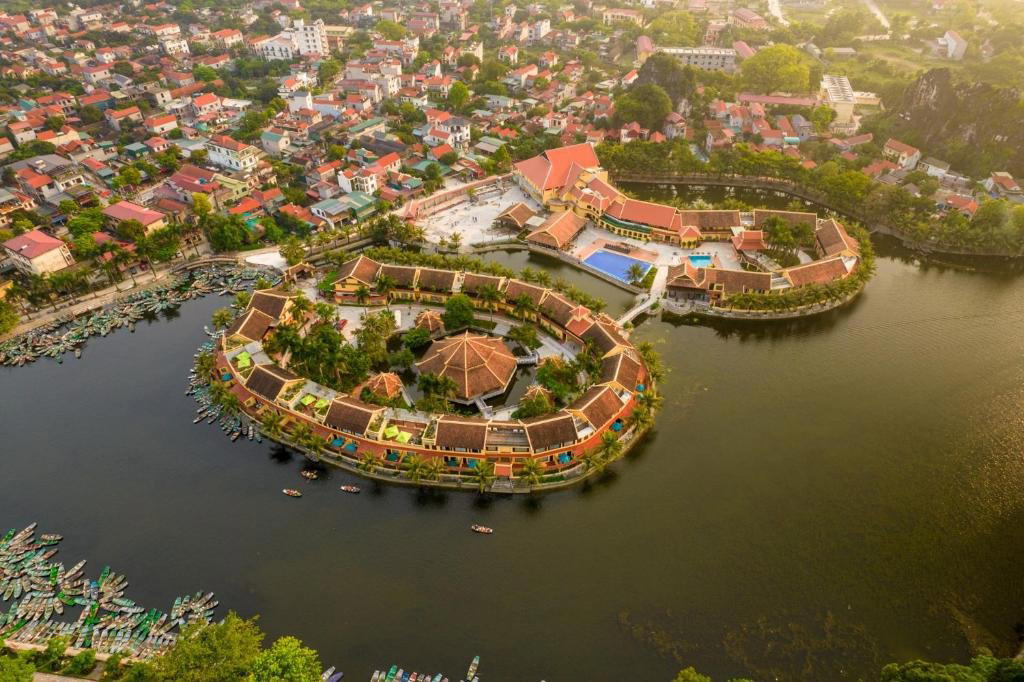
Arriving at the Edge of the Limestone World
The approach to Emeralda Resort Tam Coc sets the terms for everything that follows. The Tràng An landscape complex, a UNESCO World Heritage Site since 2014, surrounds the property with karst peaks, river channels, and rice paddies that have defined this corner of Ninh Binh for millennia. Arriving here, whether by road from Hanoi (roughly two hours south by car) or after a slow boat passage on one of the Tam Coc waterways, carries the particular quality of a threshold crossing: the pace of movement, the scale of the scenery, and the density of the silence all shift at once.enprimeurclub.com/hotels/amanoi-vinh-hy-hotel">Amanoi in Vinh Hy, Anantara Quy Nhon Villas in Quy Nhon, and Amiana Resort Nha Trang representing the coastal tier. Emeralda Tam Coc operates in a different register entirely: inland, heritage-led, and framed by agricultural terrain rather than beachfront. That positioning is not a compromise; it is the point.
A Heritage Category With Its Own Competitive Logic
Emeralda Resort Tam Coc holds the Global Winner award for Luxury Heritage Resort, a designation that carries specific competitive weight.enprimeurclub.com/hotels/intercontinental-hanoi-westlake-by-ihg-hanoi-hotel">InterContinental Hanoi Westlake by IHG) and beach-oriented resorts. Heritage properties are evaluated on a different axis: how coherently the physical setting, architecture, and service culture reinforce a sense of place rooted in history.
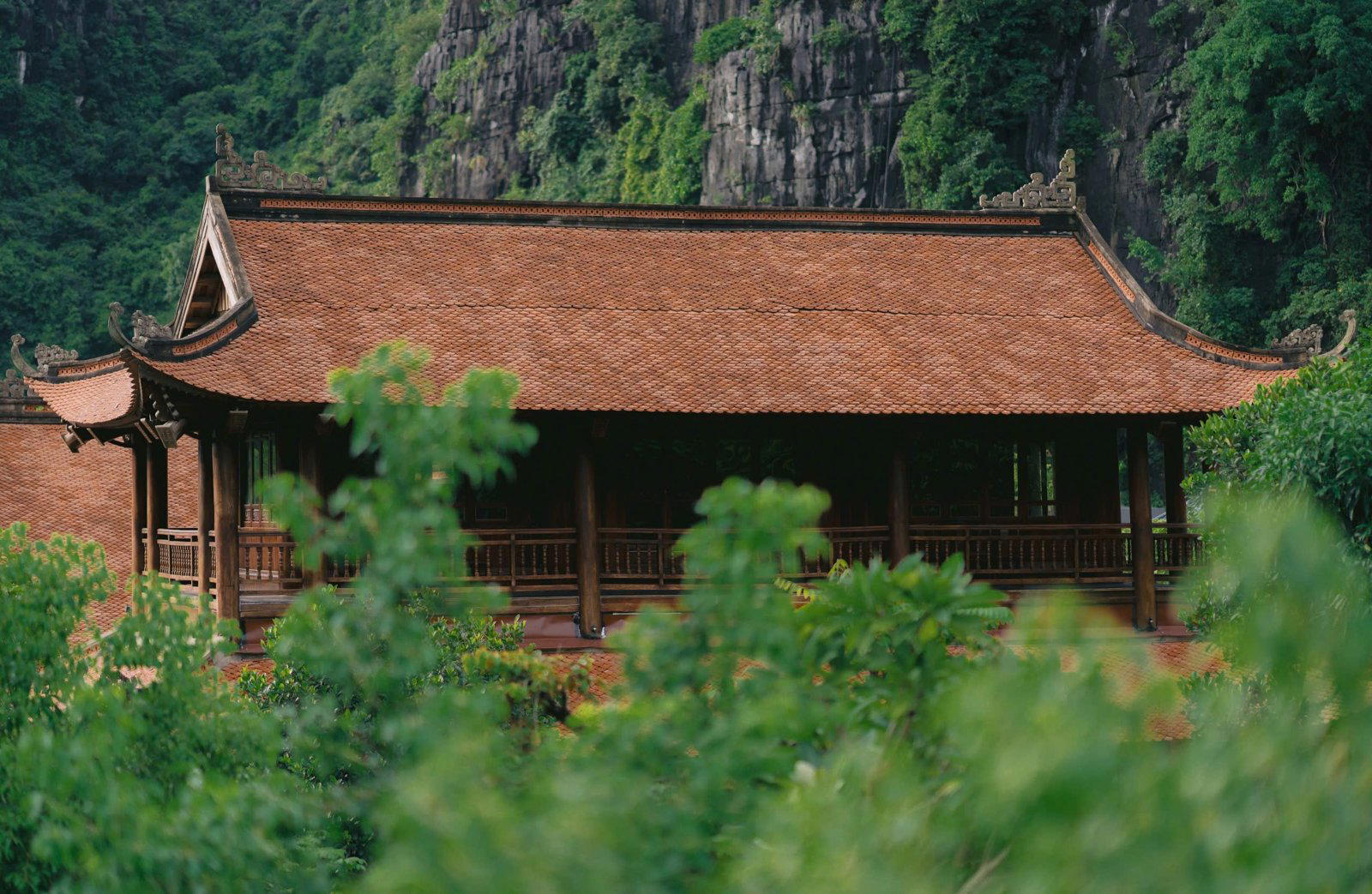
Within Ninh Binh specifically, the competition thins considerably. The Emeralda Resort Ninh Binh and Jiva Hoa Lu Retreat represent the local alternatives at a premium positioning, but neither carries the same international award signal as the Tam Coc property. That distinction matters for travellers calibrating where to allocate a limited number of nights in the north of the country.enprimeurclub.com/hotels/dalat-palace-heritage-hotel-dalat-city-hotel">Dalat Palace Heritage Hotel in the central highlands or Azerai La Residence, Hue — Emeralda Tam Coc trades colonial-era interiors for an architectural language drawn from the vernacular traditions of the Red River Delta: steep-pitched rooflines, local stone, and materials that respond to the surrounding landscape rather than imposing upon it. The result is a property that feels specific to its location in a way that internationally branded luxury frequently does not.
Service Culture in a Landscape-Led Property
The editorial angle that distinguishes Emeralda Tam Coc from properties that simply occupy beautiful terrain is the service culture operating within it. In heritage resort contexts, the gap between atmospheric setting and genuine hospitality quality is wider than it appears from the outside. Properties that lean entirely on landscape as their selling proposition often deliver a passive guest experience: the scenery does the work, and the staff act as logistical facilitators rather than hosts.
The Global Winner designation for Luxury Heritage Resort implies a property where that gap has been closed, where the service philosophy is calibrated to the scale and character of the surroundings rather than imported wholesale from an urban luxury template. In practical terms, this means anticipatory service structured around the rhythms of the landscape: early-morning guidance for boat departures before the tour groups arrive, considered meal timing around the quality of light on the paddies, and an orientation toward the natural and cultural assets of the Tràng An complex that goes beyond distributing maps.
This model of service operates at a different pace from the polished efficiency of city hotels such as Four Seasons Resort The Nam Hai, Hoi An or the Hotel de la Coupole MGallery in Sapa. The landscape imposes its own tempo, and the better heritage properties build their guest culture around that rather than against it. Historically treated as a day trip from Hanoi, the province has accumulated enough cultural depth, the ancient capital at Hoa Lu, the boat passages through the Tam Coc limestone gorges, the cycling routes through Thung Nham, to support a two-to-three night stay. Emeralda Tam Coc, positioned along the Tam Coc Road within the Tràng An heritage complex, sits at the geographic and experiential centre of that offer.
The question of sequencing matters here. Guests arriving from the architectural density of Hoi An (where Almanity Hoi An Wellness Resort or the Hoiana Hotel and Suites sit in a town-focused hospitality mode) often find Ninh Binh a necessary counterweight: fewer crowds on the water, no street-level commerce pressing against the property boundaries, and a skyline defined by geology rather than construction. Those arriving from the beach resorts of the south, Asteria Mui Ne Resort, Ixora Ho Tram by Fusion, or InterContinental Phu Quoc Long Beach Resort, encounter a fundamentally different hospitality grammar. You can also explore our full Ninh Binh restaurants guide for context on the broader dining and cultural scene in the province.
For those building a tighter northern itinerary, Ninh Binh pairs well with Hanoi at the start or end of a trip, with the drive south from the capital taking the route through the Red River Delta's flat agricultural terrain before the karst formations announce themselves at the province boundary. The transition is as much atmospheric as geographical.
Planning a Stay
Emeralda Resort Tam Coc is located on Tam Coc Road within the Tràng An complex in Hoa Lu district, accessible by private car from Hanoi in approximately two hours. The property's setting within a UNESCO heritage zone means access patterns can shift depending on seasonal visitor volumes; the Tràng An boat routes are busiest from March through June and again in September and October, and guests who want the landscape with minimal company on the water should consider arriving mid-week during shoulder months.enprimeurclub.com/hotels/banyan-tree-lang-co-lang-co-hotel">Banyan Tree Lăng Cô and Indochine Palace in Hue City represent logical extensions of a heritage-oriented itinerary. Price range, room categories, and booking channels are best confirmed directly through the property, as online information varies by season and availability tier.
Cuisine and Recognition
Comparable venues nearby, for context on price, style, and recognition.
| Venue | Cuisine | Price | Awards | Notes |
|---|---|---|---|---|
| EMERALDA RESORT TAM COCThis venue — the venue you are viewing | Luxurious riverside resort blending modern comfort with natural scenic beauty. | Not listed | World Luxury Hotel Awards WLHA Global Winner | Not listed |
| EMERALDA RESORT NINH BINH | Traditional Vietnamese village-inspired luxury resort | $1–100 | World Luxury Hotel Awards WLHA Global Winner | Tam Coc |
| Jiva Hoa Lu Retreat | Vietnamese-inspired luxury retreat with handcrafted details and open-air pavilions designed to harmonize with the natural landscape | $200–300 | 1 Michelin Key · Michelin Guide New Hotels New Hotel | Hoa Lu District |
| Hilton Quang Hanh Onsen Resort | Japanese ryokan-style resort with modern Hilton comforts | Not listed | Not listed | Quang Hanh Ward |
| Hotel de l'Opera - MGallery Hanoi | French colonial architecture with contemporary furnishings and operatic interiors | $100–200 | Michelin Selected | Hoan Kiem |
| Fairmont Hanoi | Urban luxury flagship blending a mixed‑use tower with a high‑end Fairmont hotel, spa, and large‑scale event facilities in the historic heart of Hanoi. | $300–500 | Not listed | Hoan Kiem |
Recognition history
Dated appearances from independent guides and award organizations, with the underlying list record or original source where available.
World Luxury Hotel Awards WLHA Global Winner
World Luxury Hotel Awards
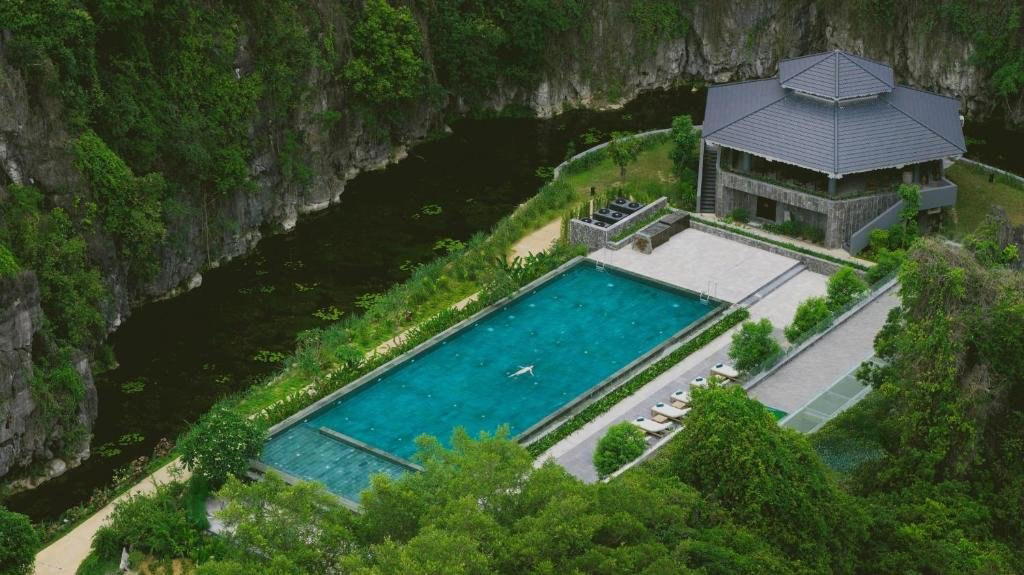
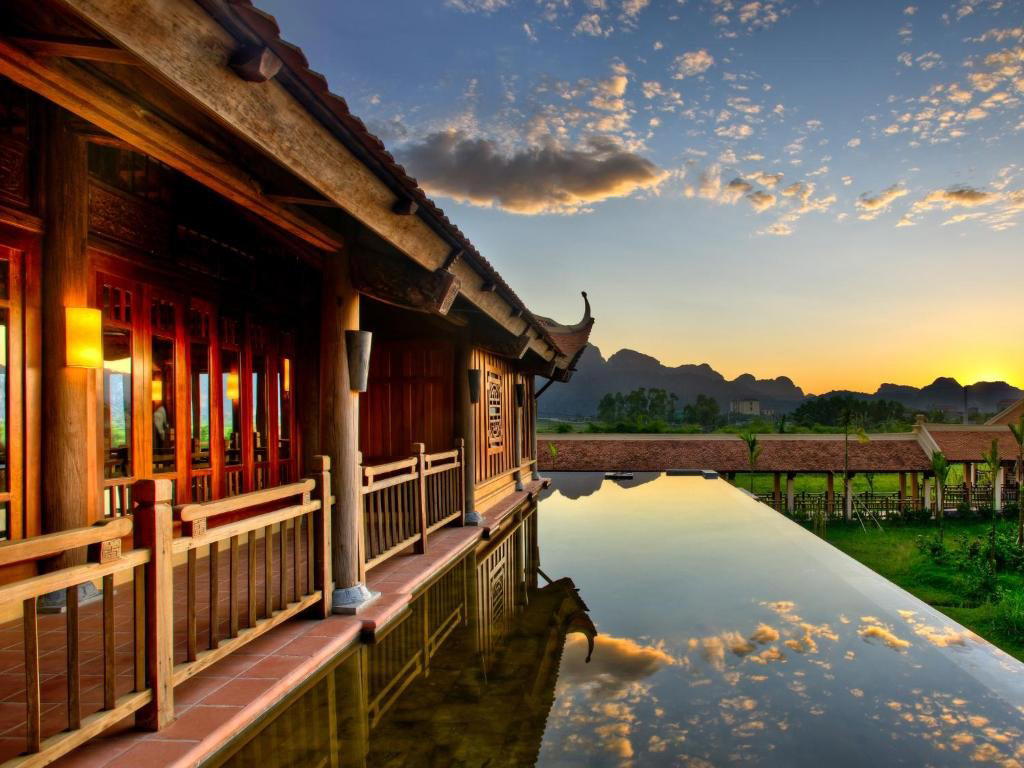

Details
- Scenic
- Elegant
- Quiet
- Romantic
- Romantic Getaway
- Family Vacation
- Weekend Escape
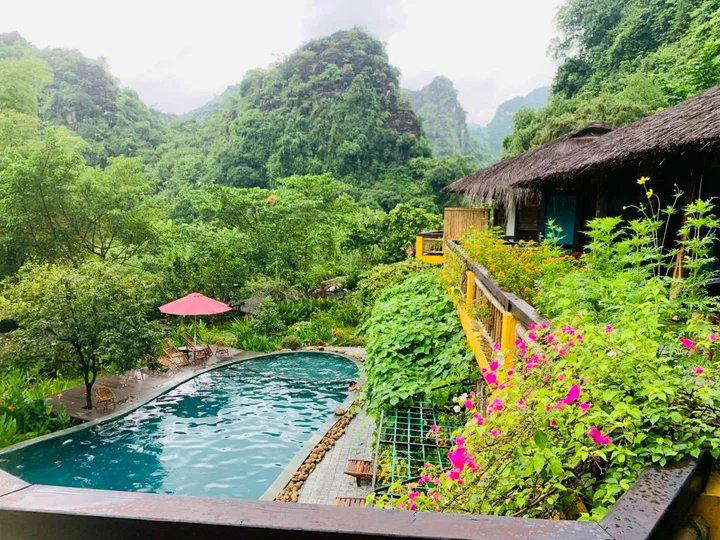
- Infinity Pool
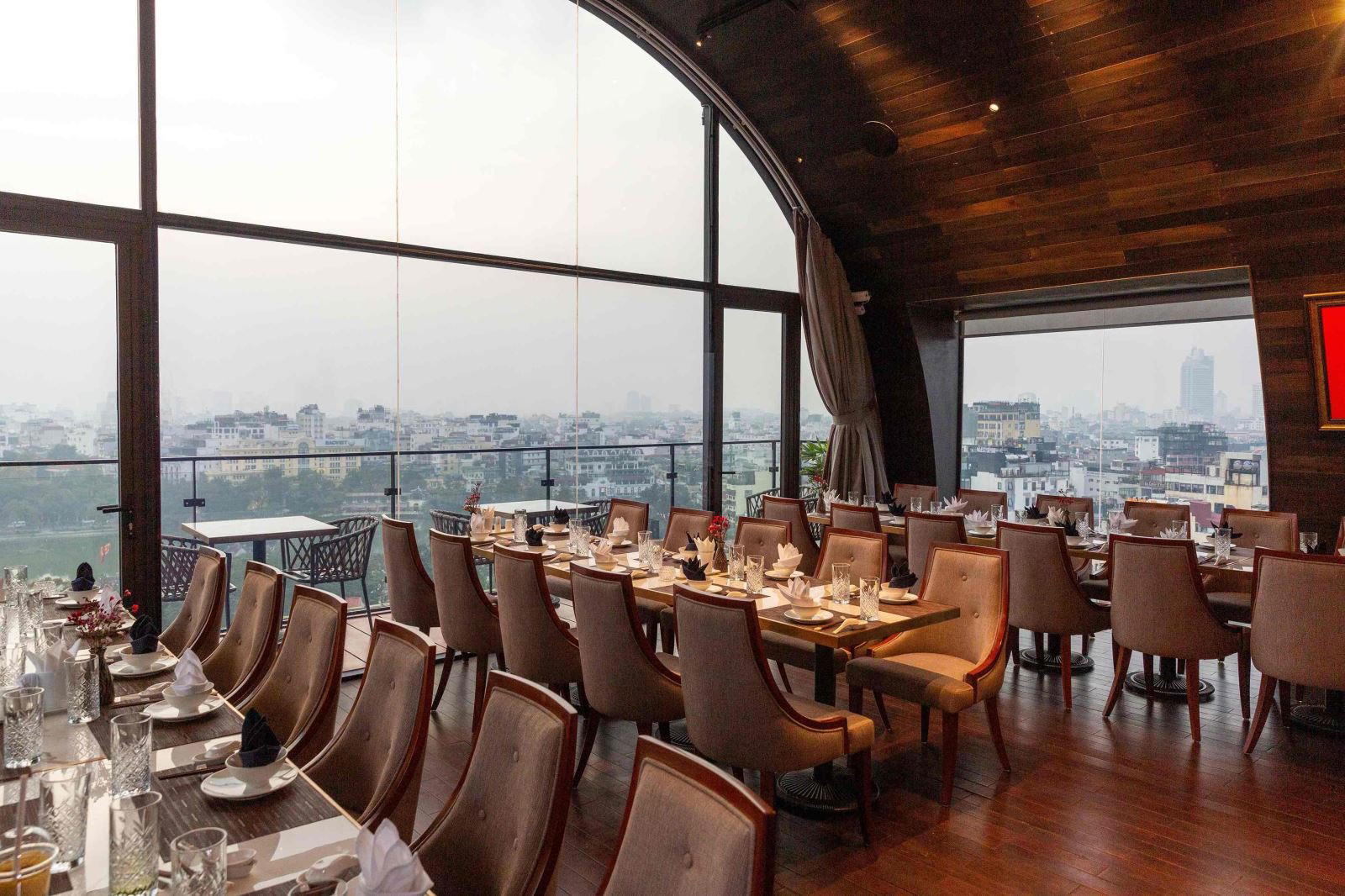
- Panoramic View
- Waterfront
- Garden
- Terrace
- Wi Fi
- Pool
- Spa
- Fitness Center
- Room Service
- Concierge
- Restaurant
- Kids Club
- Waterfront
- Garden
- Mountain
- Elevator
- Step Free Entrance
Serene and relaxed with natural light, open airy spaces, and tranquil river views fostering a calming luxury retreat atmosphere.