

1 Michelin Key · Michelin Guide New Hotels New Hotel · Small Luxury Hotels of the World Member
Set inside Trang An's UNESCO World Heritage corridor, Jiva Hoa Lu Retreat occupies a forested valley where rice paddies, limestone karsts, and slow-moving rivers define the physical setting. The retreat positions itself within a small tier of heritage-adjacent properties in Ninh Binh that trade on landscape immersion and culinary grounding rather than resort scale.

Pearl is the En Primeur Club membership app, where members save venues, book tables and use the concierge.
Where the Valley Sets the Terms
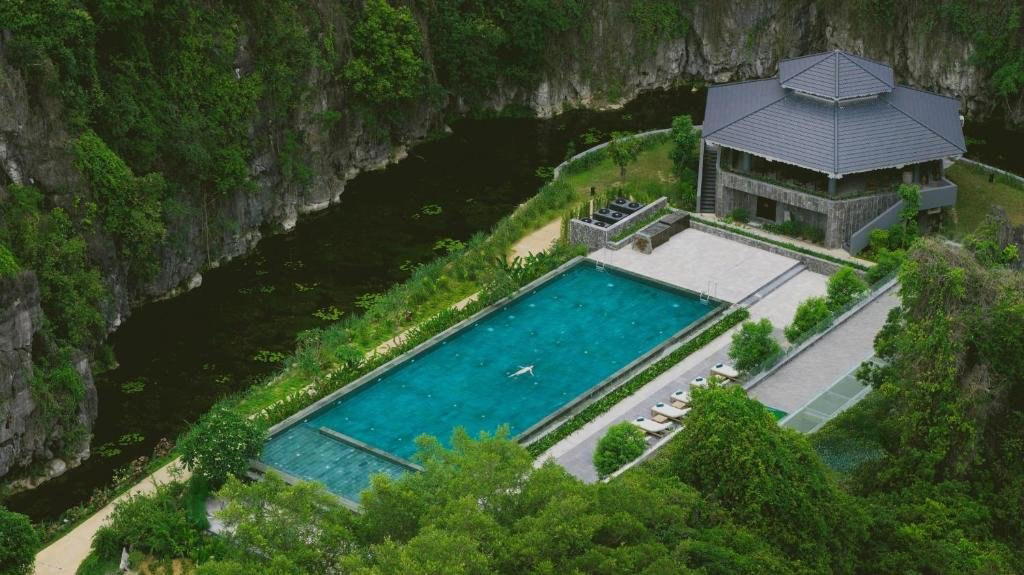
Approaching Jiva Hoa Lu Retreat, the architecture of the surrounding landscape does most of the work before you arrive. The Trang An complex, awarded UNESCO World Heritage status for both its natural and cultural significance, folds limestone karsts, cave networks, and seasonally flooded rice paddies into a single continuous environment. The valley holding the retreat is not merely scenic backdrop, it is the condition that determines everything else: the light, the pace, the cooking ingredients, and the kind of guest the property attracts. This is a category of destination where the site itself functions as the primary amenity.
Ninh Binh sits roughly 90 kilometres south of Hanoi, close enough for a long weekend but far enough in character to register as a genuine change of register. The city's broader accommodation market has expanded in recent years, with larger resort complexes like Emeralda Resort Ninh Binh and Emeralda Resort Tam Coc building significant footprints around the same landscape. Jiva Hoa Lu sits in a smaller, more contained tier, properties that prioritise proximity to the heritage zone over amenity breadth.
The Culinary Frame: Province on the Plate
Vietnam's northern interior provinces have a distinct food culture that differs sharply from the herb-heavy brightness of the south or the refined imperial tradition of Hue. Ninh Binh's kitchen repertoire is anchored in mountain goat, freshwater fish from the karst river systems, and fermented shrimp paste (mắm tép Gia Viễn) that carries a particular regional identity. Any property operating inside the Hoa Lu valley with culinary ambition is working with this material as its base. The retreat's setting in a forested valley positions it to source within short supply chains, a structural advantage that smaller heritage properties in Vietnam are increasingly deploying as a culinary differentiator.
The broader trend across Vietnam's destination hotel dining is a move away from international menus served to heritage-site visitors toward cooking that takes the region seriously as a subject. Properties like Amanoi in Vinh Hy and Anantara Quy Nhon Villas have both built dining programmes that root their offer in local coastal ingredient culture. In Ninh Binh's case, the challenge is that the province's food identity is less internationally legible than Da Nang's seafood or Hoi An's street-food canon, which makes it more interesting, and the hotels that interpret it well carry a genuine editorial advantage over those that default to pan-Asian menus.
Heritage Adjacency as a Category
Across Vietnam, a recognisable category has formed around UNESCO-adjacent accommodation, properties that derive their positioning primarily from proximity to a protected site rather than from hotel-group branding or resort infrastructure. The Hotel de la Coupole MGallery in Sapa and Azerai La Residence in Hue occupy comparable positions in their respective contexts, places where the surrounding cultural or natural designation is the main argument for the room rate. Jiva Hoa Lu operates in the same logic inside Trang An.
What this means practically is that the value proposition is most legible to travellers who are visiting Ninh Binh for the landscape and history rather than those seeking a self-contained resort experience. The Hoa Lu ancient capital, the 10th-century seat of Vietnam's first unified dynasties, is the surrounding cultural context, and the retreat's address in the valley of Đền Thái Vi (the Temple of Thai Vi) places it inside that historical layer. Guests walking the property are, in a literal sense, adjacent to one of Vietnam's founding political sites.
How Jiva Hoa Lu Fits the Ninh Binh Picture
Within Ninh Binh's accommodation tier, the split is broadly between large-format resorts with extensive grounds and activity programming, and smaller properties that trade on atmosphere and site specificity. Jiva Hoa Lu belongs to the second group. This is not a weakness, it is a distinct positioning that appeals to travellers who find the resort format at odds with what a UNESCO valley should feel like. The forested valley address, the rice paddy surroundings, and the limestone karst backdrop are the programme. For some visitors, that is exactly sufficient. For others expecting a full-service spa complex or multiple branded dining outlets, the larger resorts in the Ninh Binh market will be the more appropriate choice.
For those travelling through northern Vietnam who want to compare retreat-style properties across different landscape registers, Almanity Hoi An Wellness Resort offers a comparable small-footprint, wellness-oriented format in a very different geography. At the beach end of the spectrum, Amiana Resort Nha Trang represents the coastal equivalent of a property that uses its setting as the primary amenity argument. Understanding where Jiva Hoa Lu sits relative to these helps clarify the decision.
Travellers routing through the region from Hanoi may also consider the contrast with urban options: InterContinental Hanoi Westlake offers the city-based counterpoint, while properties further south such as Four Seasons Resort The Nam Hai in Hoi An, Banyan Tree Lăng Cô, and Hoiana Hotel and Suites represent what the central Vietnam coast offers at a comparable or higher price tier. See our full Ninh Binh restaurants and hotels guide for broader context on the provincial market.
Planning a Stay
The practical window for visiting Ninh Binh runs from approximately October through April, when the dry season keeps the river routes navigable and the limestone paths clear. The monsoon months bring flooding to the lower valley areas, which affects boat access through the Trang An cave system, the primary activity most guests plan around. Booking ahead for peak dry-season dates, particularly around Vietnamese national holidays and the Tet period (late January to late February), is advisable across all properties in the area, and Jiva Hoa Lu's smaller scale means availability tightens faster than at the larger resorts.
Access from Hanoi is direct by private car or organised transfer, typically 90 to 120 minutes depending on departure point and traffic. The property's address in the Hoa Lu valley places it close to the temple complex and within reach of Tam Coc and the Trang An boat route, meaning most of Ninh Binh's key sites are accessible as day activity from the retreat without requiring a base change.
Booking and Cost Snapshot
Comparable venues nearby, for context on price, style, and recognition.
| Venue | Price | Awards | Notes |
|---|---|---|---|
| Jiva Hoa Lu RetreatThis venue (the venue you are viewing) | $200–300 | 1 Michelin Key · Michelin Guide New Hotels New Hotel | Not listed |
| EMERALDA RESORT TAM COC | Not listed | World Luxury Hotel Awards WLHA Global Winner | Tam Coc, Luxurious riverside resort blending modern comfort with natural scenic beauty. |
| EMERALDA RESORT NINH BINH | $1–100 | World Luxury Hotel Awards WLHA Global Winner | Tam Coc, Traditional Vietnamese village-inspired luxury resort |
| Meritel Hanoi | $100–200 | Michelin Selected · World Luxury Hotel Awards WLHA Regional Winner | Hoan Kiem, Luxury boutique hotel blending Indochine colonial elegance with contemporary Renaissance architectural details and modern amenities. |
| Azerai Ke Ga Bay | Not listed | 1 Michelin Key | Ham Thuan Nam District, Secluded coastal boutique resort with pavilions blending into verdant gardens and beachfront. |
| Legacy Yen Tu - MGallery | Not listed | 1 Michelin Key | Thuong Yen Cong Commune, Heritage-inspired luxury resort echoing ancient Vietnamese palace architecture |
Recognition history
Dated appearances from independent guides and award organizations, with the underlying list record or original source where available.
Michelin 1 Key
Michelin
Michelin Guide New Hotels New Hotel
Michelin Guide New Hotels
Small Luxury Hotels of the World Member
Small Luxury Hotels of the World
Full recognition history (4 entries)
Michelin Selected
Michelin
Continue exploring
More in Ninh Binh
Hotels in Ninh Binh
All hotels in Ninh Binh →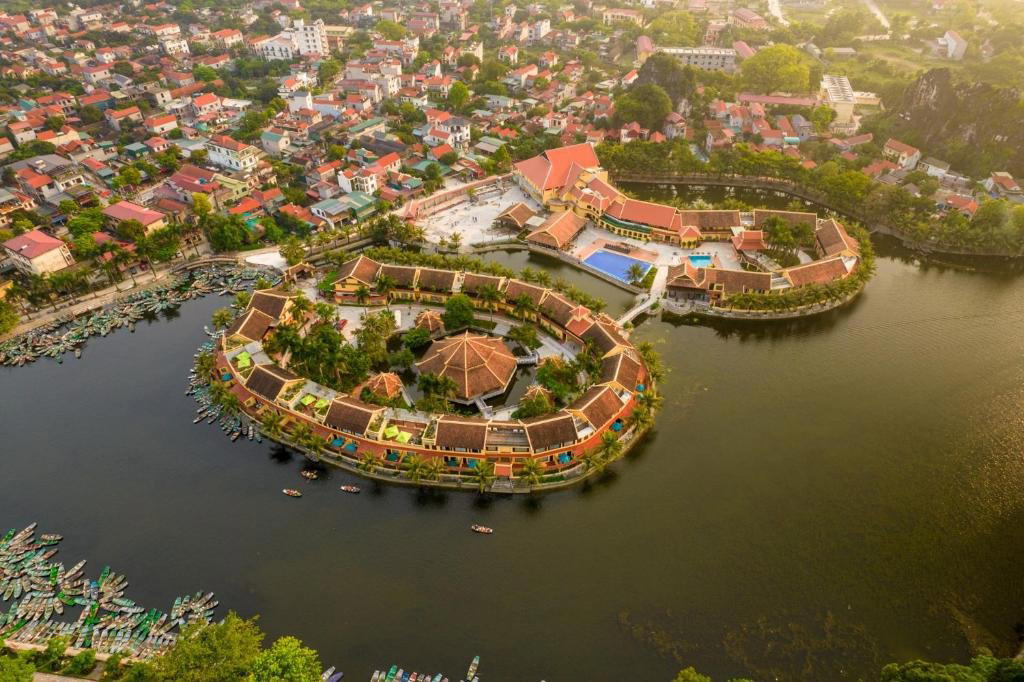
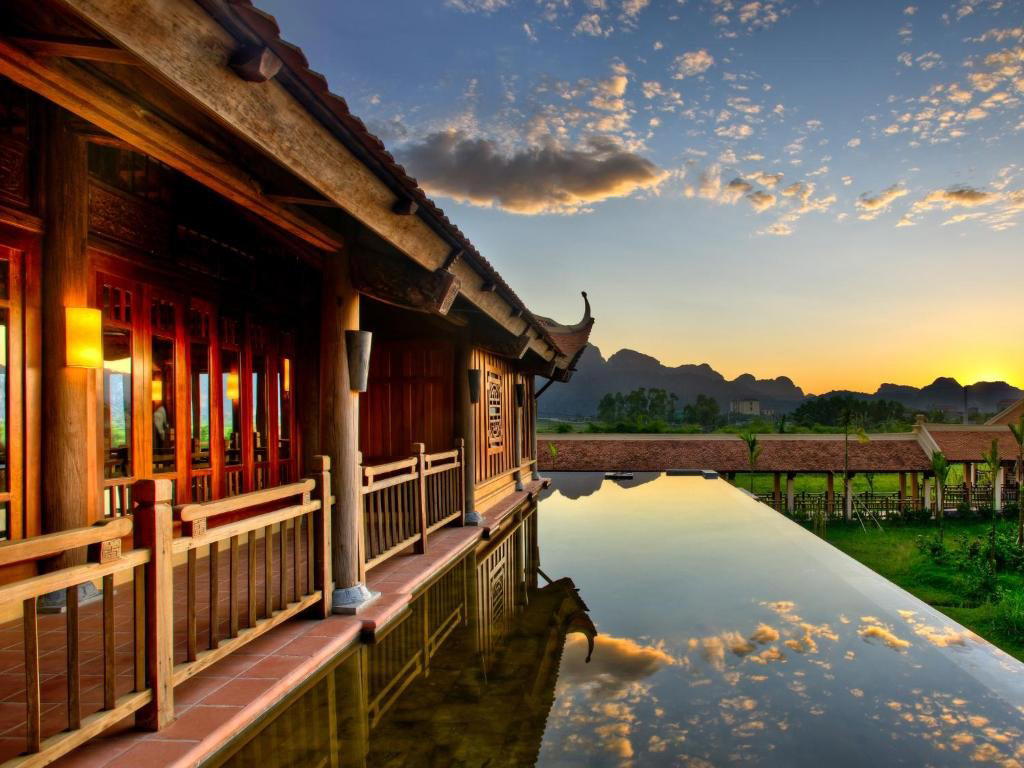
Restaurants in Ninh Binh
Browse all →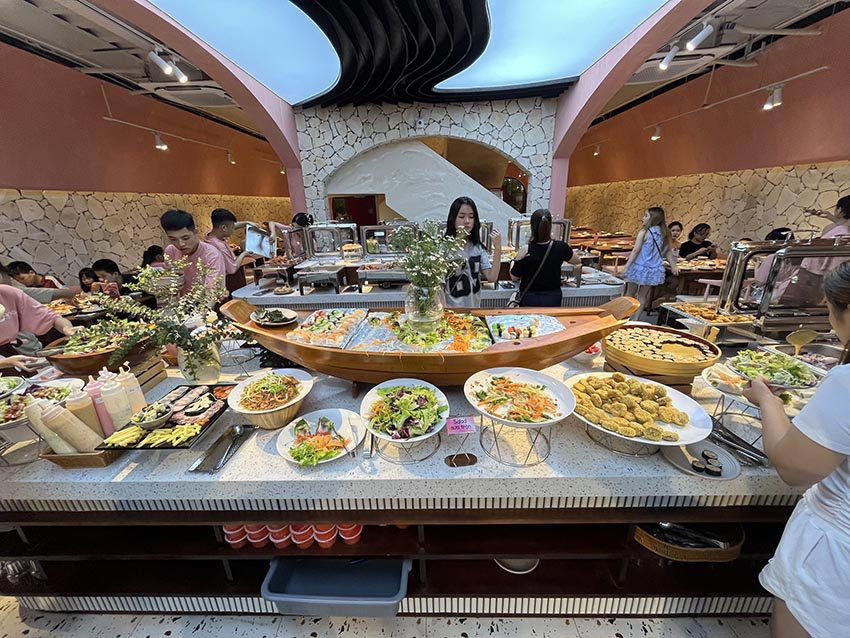
Details
- Romantic
- Quiet
- Scenic
- Elegant
- Wellness Retreat
- Romantic Getaway
- Family Vacation
- Anniversary
- Infinity Pool
- Private Villa
- Destination Spa
- Garden
- Terrace
- Panoramic View
- Wi Fi
- Pool
- Spa
- Fitness Center
- Room Service
- Concierge
- Restaurant
- Mountain
- Garden
- Waterfront
- Wheelchair Accessible
- Accessible Restroom
Peaceful and tranquil with soft natural lighting, open-air pavilions, and a design deeply connected to nature; guests describe it as a place to release stress and reconnect with oneself.