
A Michelin Selected riad in the heart of Marrakech's medina, Dar Assiya sits within the Kaat Bennahid quarter and represents the intimate, architecture-led tier of Marrakech accommodation. Where large palace hotels trade on scale, this address trades on proportion, detail, and the particular silence that thick pisé walls can produce in a city built around noise.
Pearl is the En Primeur Club membership app — saves, bookings, and concierge access live there. Same editors, same standards.
- Address
- 20 Derb Ouali - Kaat Bennahid, Marrakech, Morocco
- Phone
- +212 5243-82180
- Directions
- Get directions
 Saves & bookings on Pearl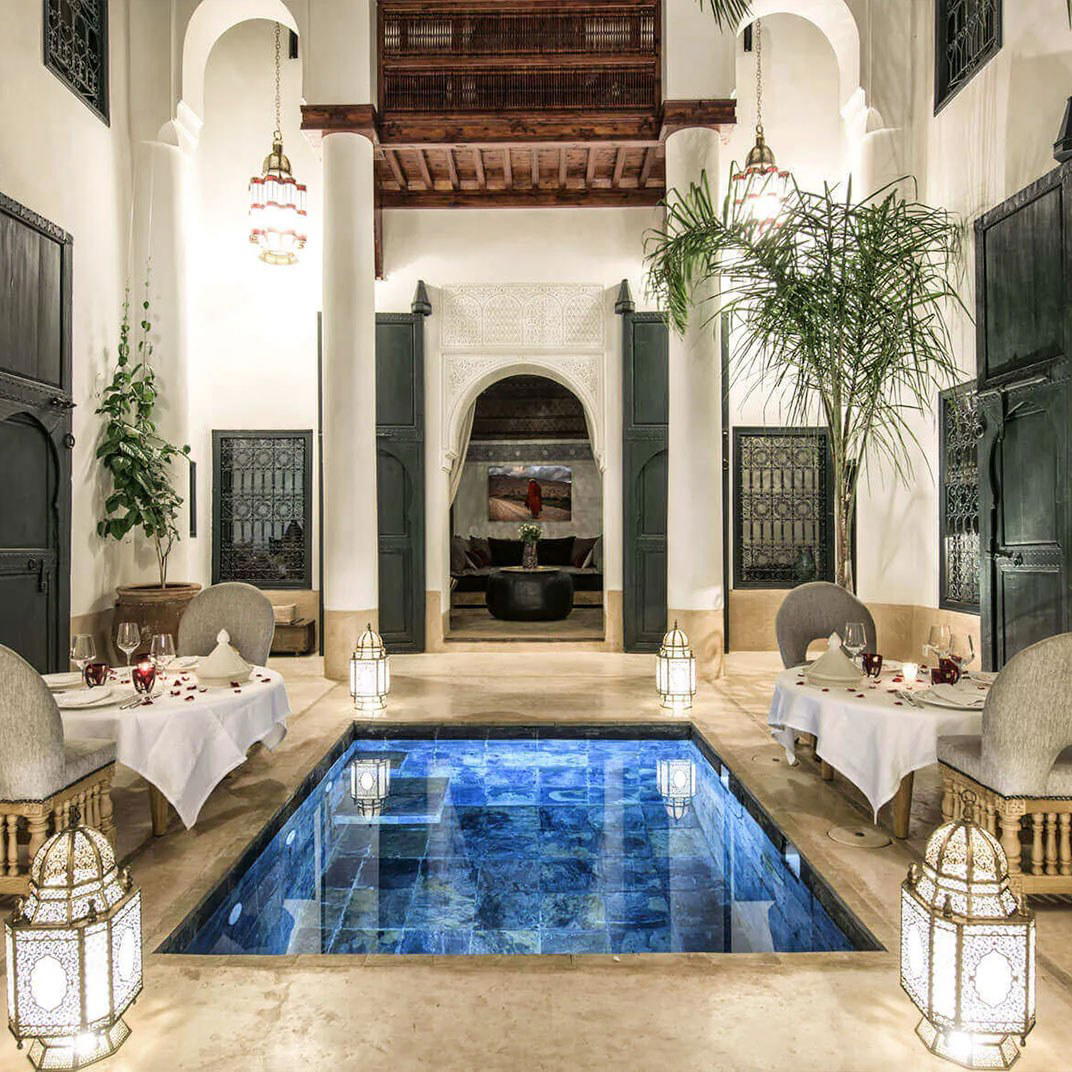
A Medina Address Built Around Silence
Marrakech riad hospitality has sorted itself into two broad camps over the past two decades. On one side sit the palace conversions, properties where room counts run into the dozens and the courtyard has been reengineered into a set piece for social media. On the other sit a smaller cohort of dars and riads where the architecture itself is the proposition: fewer rooms, original structure preserved or carefully restored, and an atmosphere shaped by proportion rather than programming. Dar Assiya is a 4-star hotel at 20 Derb Ouali - Kaat Bennahid, Marrakech, Morocco. Dar Assiya, located at 20 Derb Ouali in the Kaat Bennahid quarter, belongs to the second group. Its 2025 Michelin Selected designation places it in a comparable set that includes similarly scaled properties where selection criteria weight character and consistency over category tick-boxes.
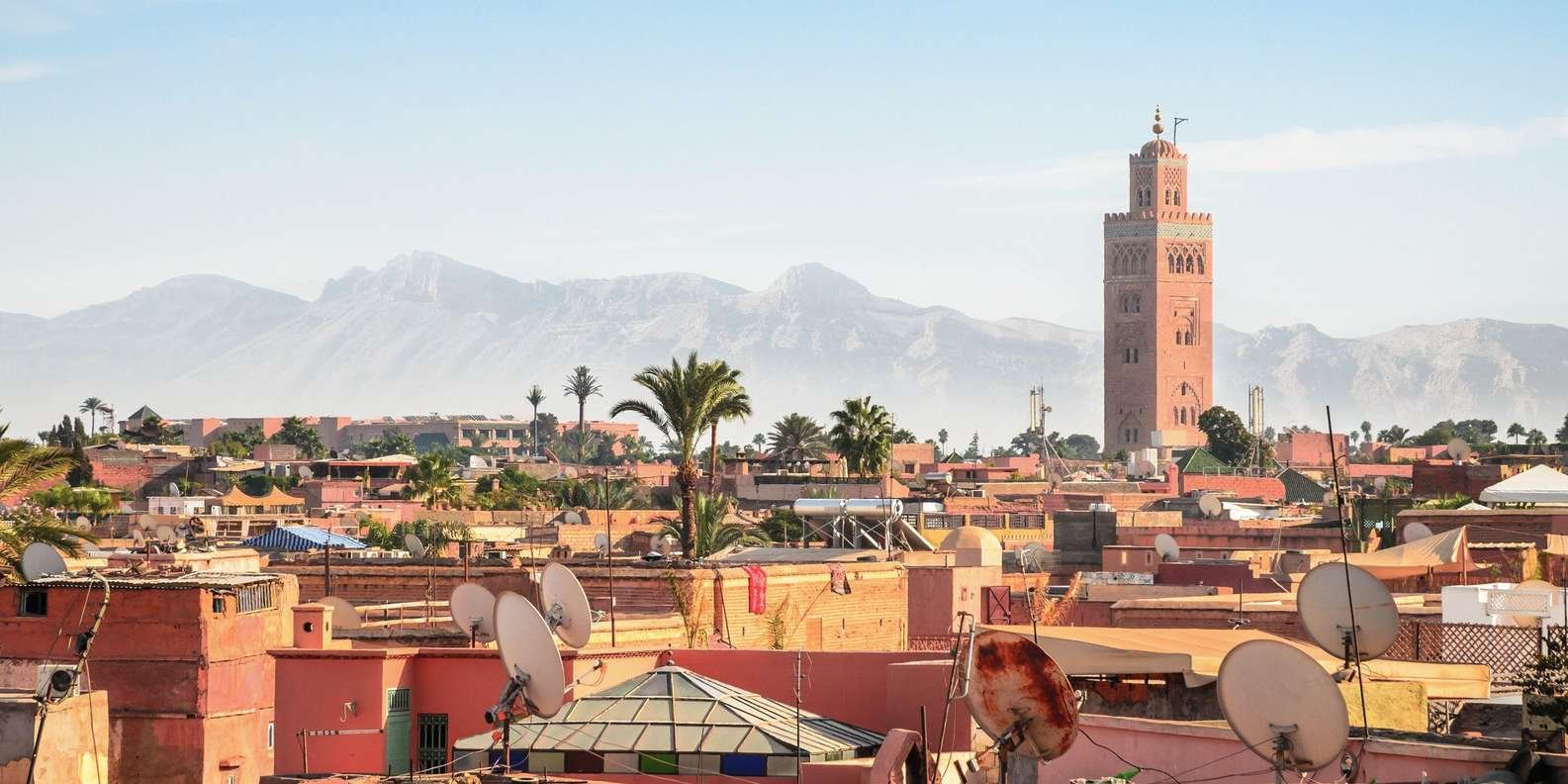
Kaat Bennahid is not the medina's most trafficked neighborhood. That distance from the main drag of Jemaa el-Fna and the souks of the northern medina is part of what defines the stay. Arriving means threading through derbs, the narrow, often dead-end lanes that make up the medina's residential fabric, past doorways that reveal nothing from the street. That opacity is not incidental to the dar typology. It is structural. The building turns inward, organizing its rooms and circulation around a central courtyard rather than presenting itself to a public face. What you find on the other side of the entrance is always a mild recalibration of expectation.
The Logic of the Dar Form
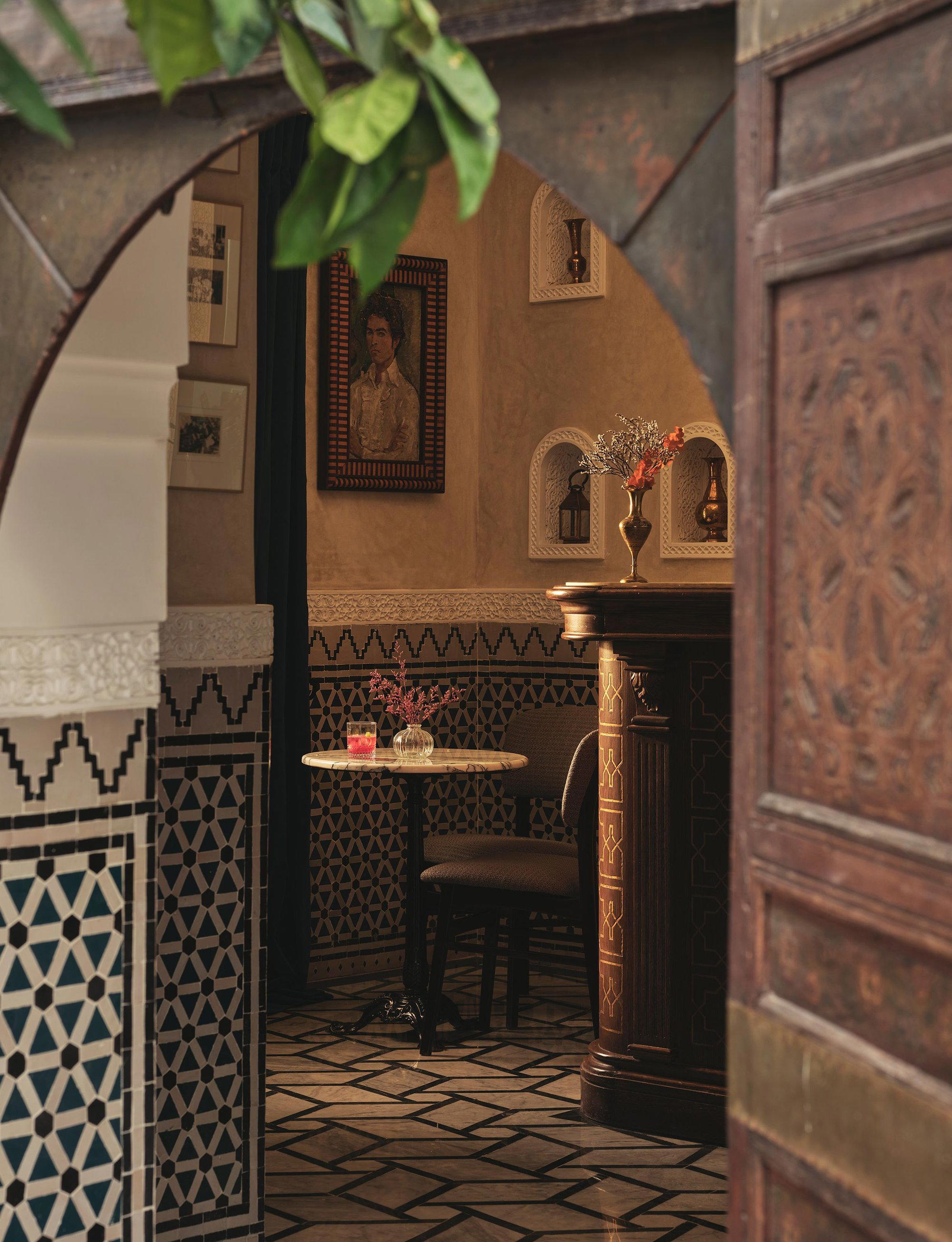
To understand Dar Assiya is to understand the dar as an architectural type. Unlike the riad, which is defined by its interior garden, the dar is organized around a courtyard that may or may not contain planting but which always serves as the light source, thermal regulator, and acoustic anchor for the rooms arranged above it on multiple levels. Thick pisé walls, rammed earth construction that has defined Moroccan domestic architecture for centuries, absorb heat during the day and release it slowly at night, producing the temperature differential that makes medina properties genuinely cooler in summer than their street-level context would suggest. Zellij tilework at the base of the courtyard walls, carved stucco above, and cedarwood screens across the upper openings are not decorative choices imposed on a structure but the natural vocabulary of a building type that has been refined over centuries. Properties in this tier, the hotel included, succeed when they respect rather than override that logic.
The Kaat Bennahid quarter itself carries a residential density and a quieter pedestrian rhythm than the tourist-oriented zones to the northwest. That context shapes what the property can offer. Guests who come expecting the high-energy courtyard-bar experience of some larger riad conversions will be recalibrated quickly. The energy here is closer to a private house than a boutique hotel in the European sense, which is precisely what the dar form was designed to produce.
Positioning Within Marrakech's Intimate Accommodation Tier
Marrakech's intimate riad and dar segment is competitive, and Michelin's 2025 Selected list for hotels offers a useful map of which properties the guide considers to be operating at a consistent level. Properties like Dar Darma, Dar Les Cigognes, and AnaYela occupy similar positions in that tier, each with a distinct architectural character and neighbourhood placement. Dar Mo'Da and Dar Housnia represent further points of comparison for travellers mapping the medina's smaller-scale options, while Dar Kandi sits in the same general conversation. What separates properties within this cohort tends to be the quality of restoration, the calibration of service to the intimate scale, and the degree to which the architectural detail has been preserved rather than genericized.
At the further reaches of the Marrakech accommodation spectrum, La Mamounia and BELDI COUNTRY CLUB represent entirely different scale propositions, and Caravan by Habitas Agafay sits outside the city entirely. For travellers whose priority is medina immersion at a measured pace, the dar tier suits that brief most directly.
For those exploring Morocco beyond Marrakech, the country's accommodation range is considerable: Palais AMANI in Fès and Riad Mayfez Suites & Spa in Fez offer the riad format in a medina of even greater historical density; Dar Ahlam in Ouarzazate and Dar Azawad take the dar typology into the pre-Saharan south; Kasbah Tamadot in Asni sits in the Atlas foothills. Coastal options range from Villa de l'O in Essaouira to Hilton Taghazout Bay, Sofitel Tamuda Bay, and Mazagan Beach & Golf Resort. Internationally, travellers who favour this architectural-intimacy tier might cross-reference with Hôtel de Paris Monte-Carlo, Badrutt's Palace Hotel in St. Moritz, or The Fifth Avenue Hotel in New York City for the broader pattern of properties where the building itself carries the editorial weight. For northern Morocco, Fairmont Tazi Palace Tangier and La Sultana Oualidia round out the country's range of considered small-to-medium properties. Château Roslane adds a wine-country dimension unusual for Morocco.
Planning the Stay
The Kaat Bennahid address sits within the central medina, though the derb network makes first-time navigation slower than distances suggest. Arriving by taxi to the nearest accessible point and following directions on foot is standard practice for any medina property at this depth. Marrakech's medina is a UNESCO World Heritage site, which imposes certain constraints on structural modification and also preserves the neighbourhood character that makes stays like this possible. The property's 2025 Michelin Selected status signals that it is operating at a level the guide considers worth flagging. Booking in advance is advisable.
Fast Comparison
Comparable venues nearby, for context on price, style, and recognition.
| Venue | Cuisine | Price | Awards | Notes |
|---|---|---|---|---|
| Dar AssiyaThis venue — the venue you are viewing | Restored 15th-century riad with central plunge pool and rooftop terrace. | $$$$ | 4-Star | Not listed |
| Dar Mo'Da | Luxury boutique riad blending traditional Moroccan architecture with contemporary comforts. | $$$$ | 4-Star | Mouassine |
| Riad Antara | Luxury boutique riad with heritage restoration and contemporary curation | $$$$ | 4-Star | Marrakech-Médina |
| GreenLife Marrakech | Luxurious eco-resort combining traditional Moroccan architecture with contemporary eco-friendly practices in a rural mountain setting. | $$$$ | 4-Star | Ourika Valley |
| Riad Yasmine | Traditional Moroccan riad with modern luxury | $$$ | 4-Star | Marrakech-Médina |
| Dar Housnia | Traditional Moroccan riad with contemporary comfort, blending authentic Arabian-Andalusian architecture with discrete luxury. | $$$$ | 4-Star | Marrakech-Médina |
Recognition history
Dated appearances from independent guides and award organizations, with the underlying list record or original source where available.
Michelin Selected
Michelin
Continue exploring
More in Marrakech
Hotels in Marrakech
Browse all →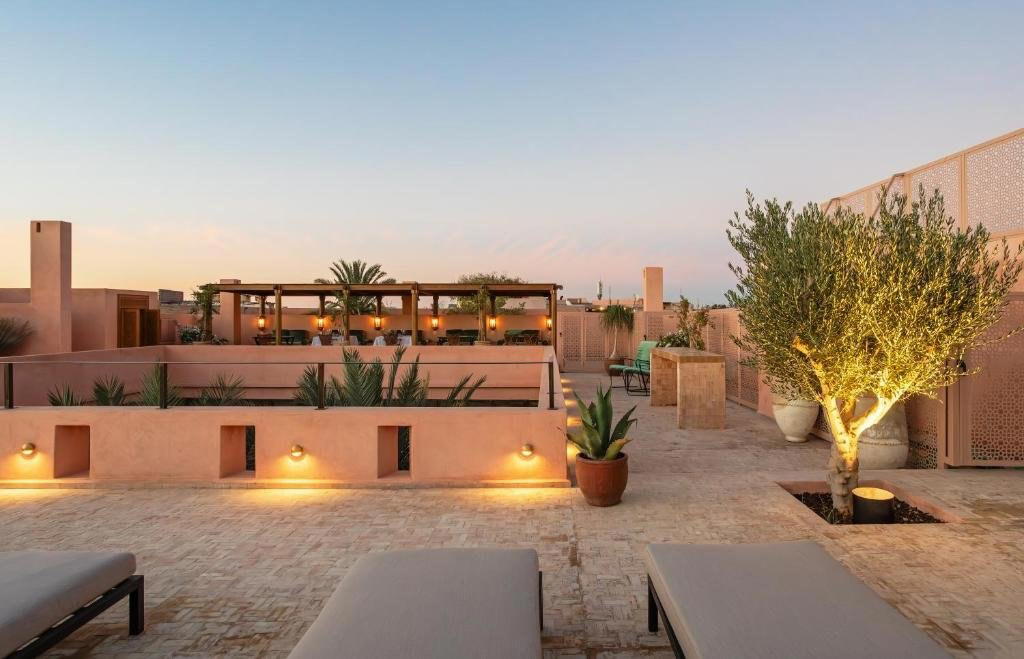
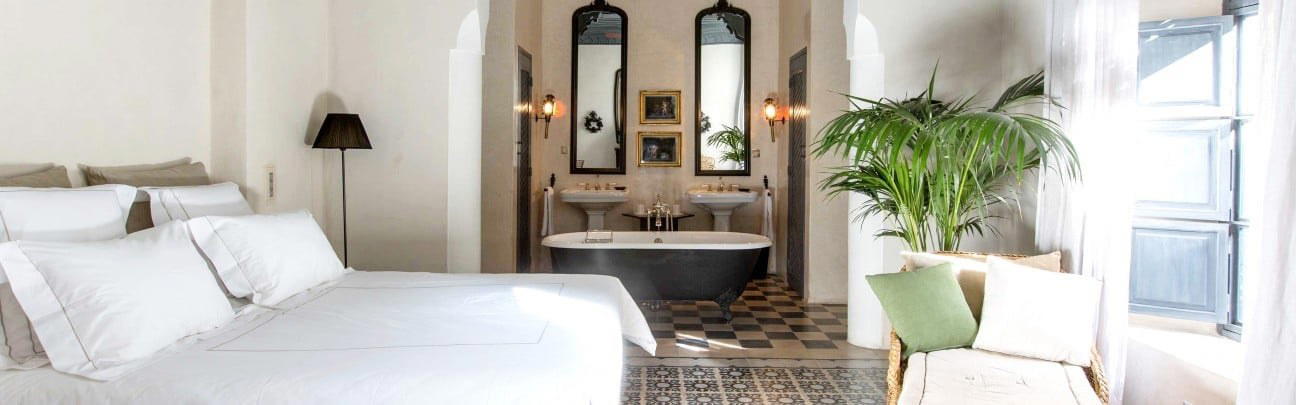
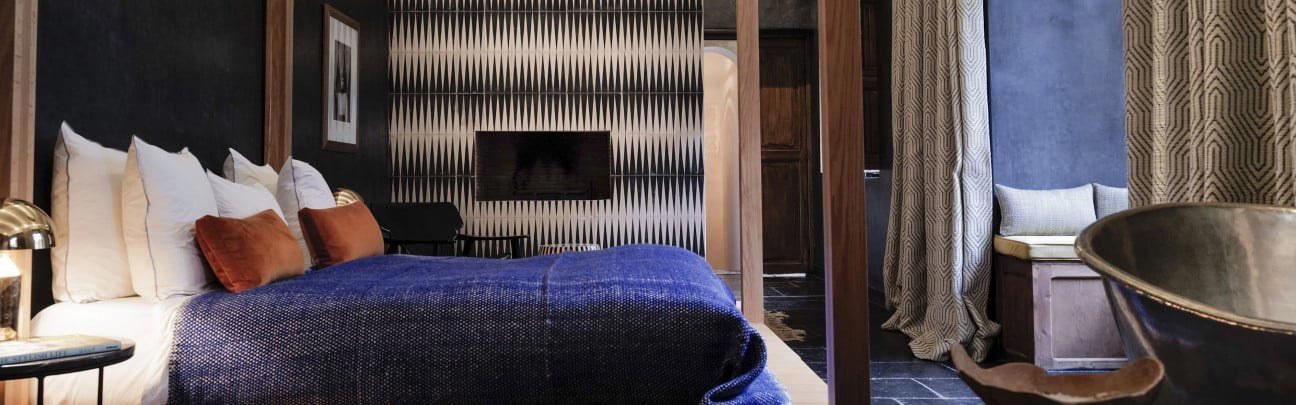
Bars in Marrakech
Browse all →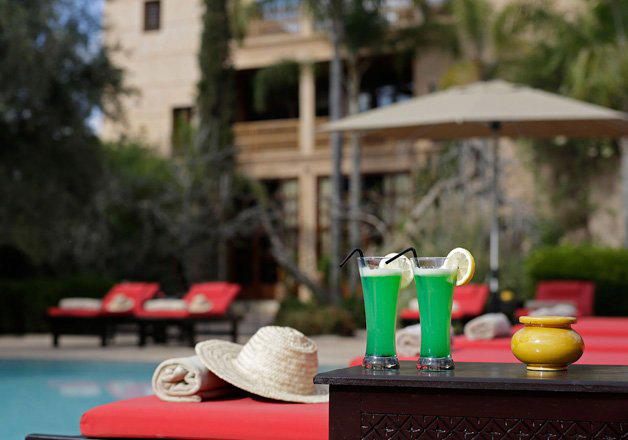
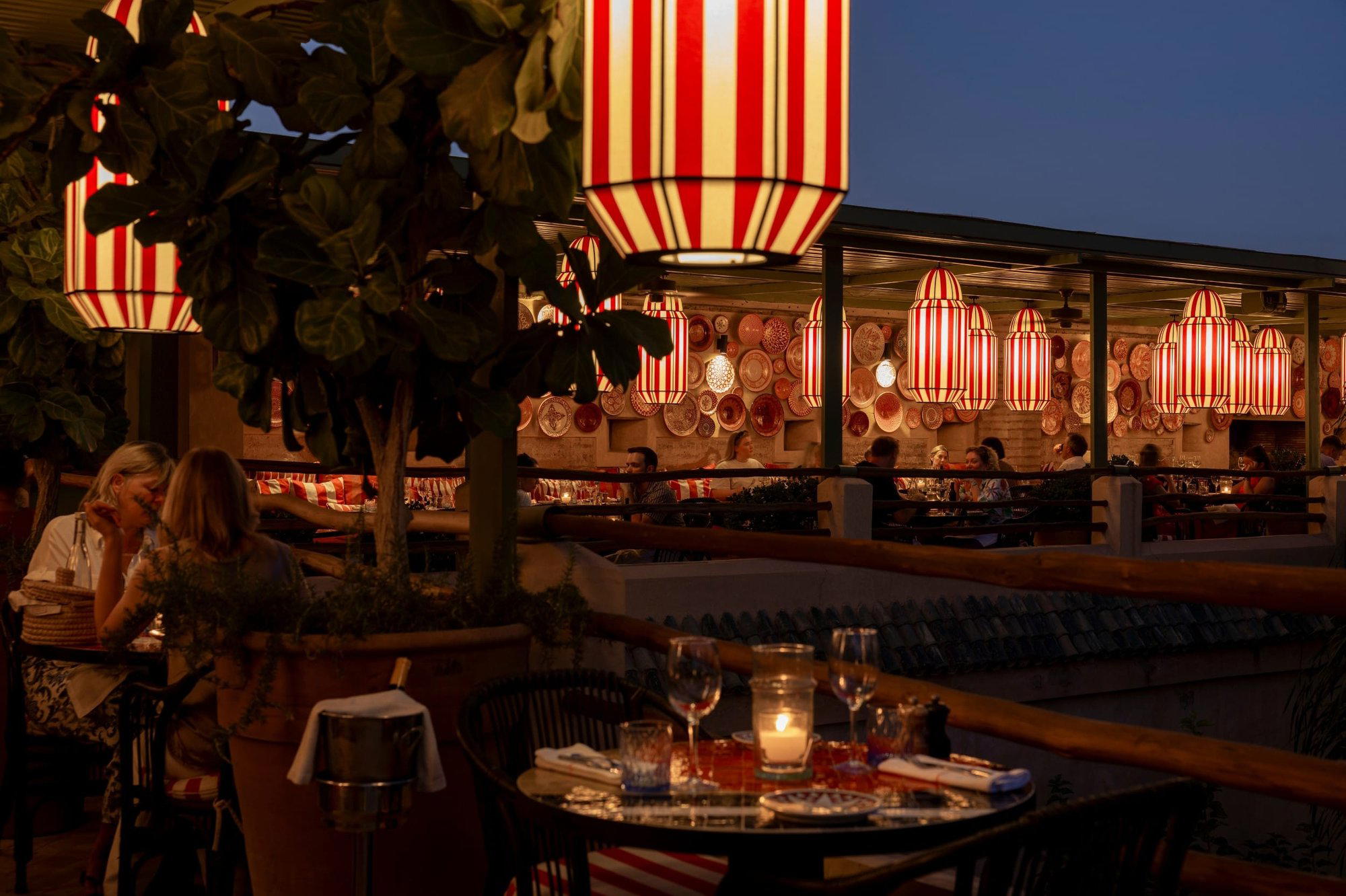
Restaurants in Marrakech
Browse all →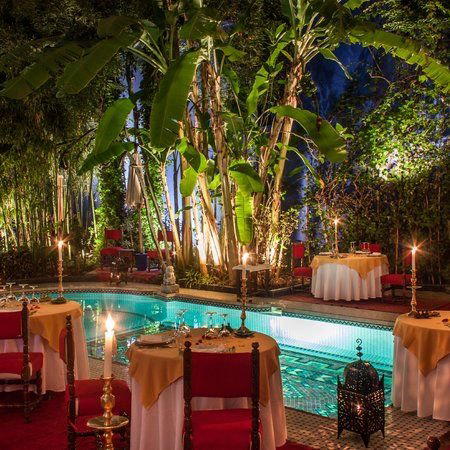

Wineries in Marrakech
Browse all →
At a Glance
- Romantic
- Intimate
- Elegant
- Sophisticated
- Cozy
- Romantic Getaway
- Honeymoon
- Anniversary
- Terrace
- Historic Building
- Pool
- Spa
- Massage
- Room Service
- Concierge
- Wi Fi
- Garden
- Pool
- Spa
- Massage
- Room Service
- Concierge
- Wi Fi
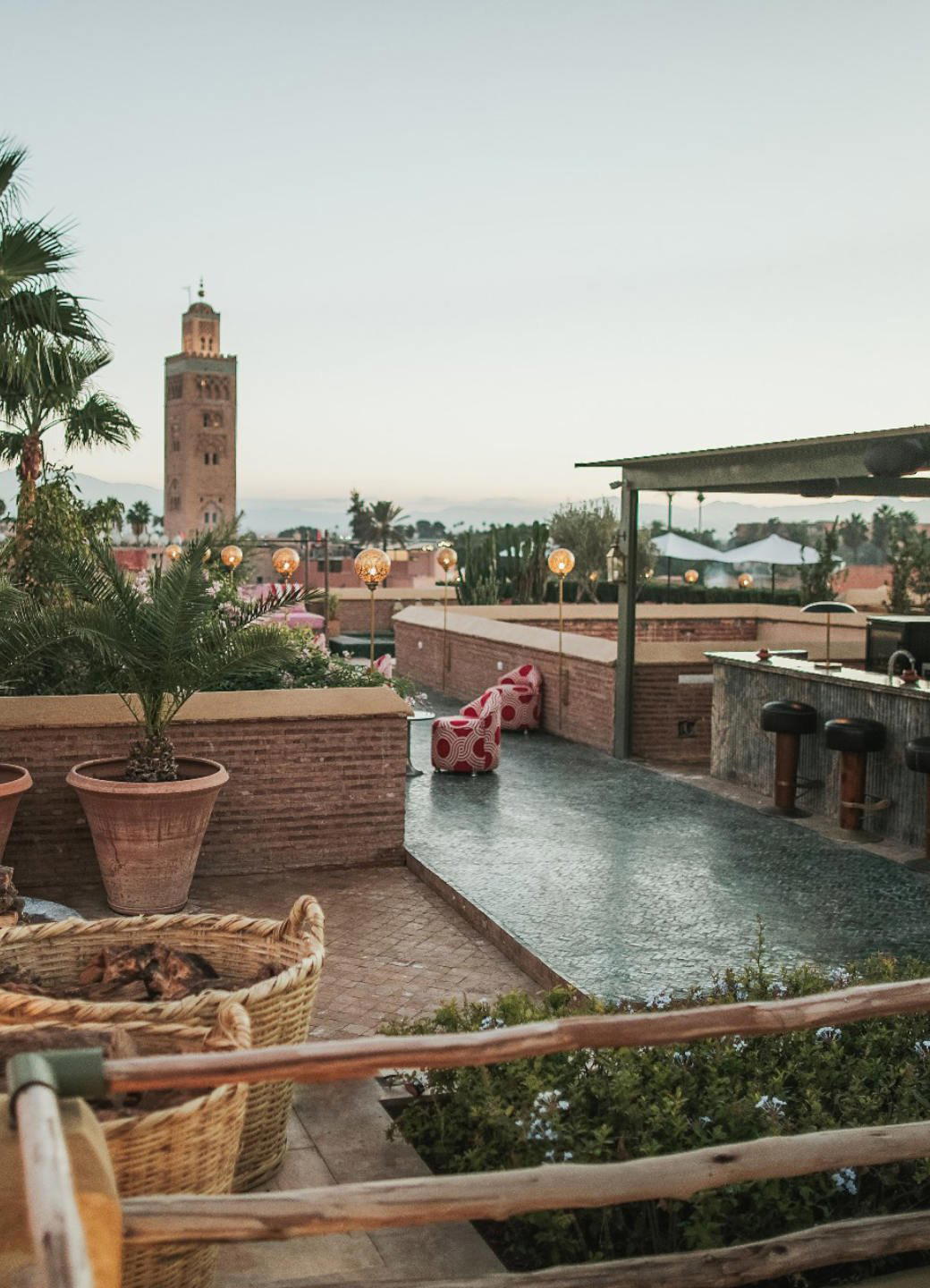
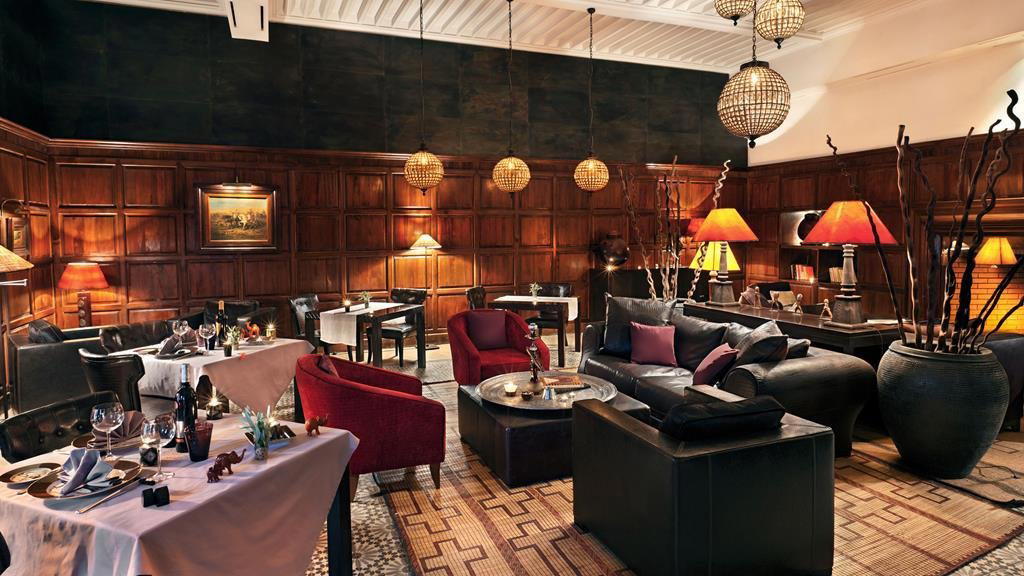
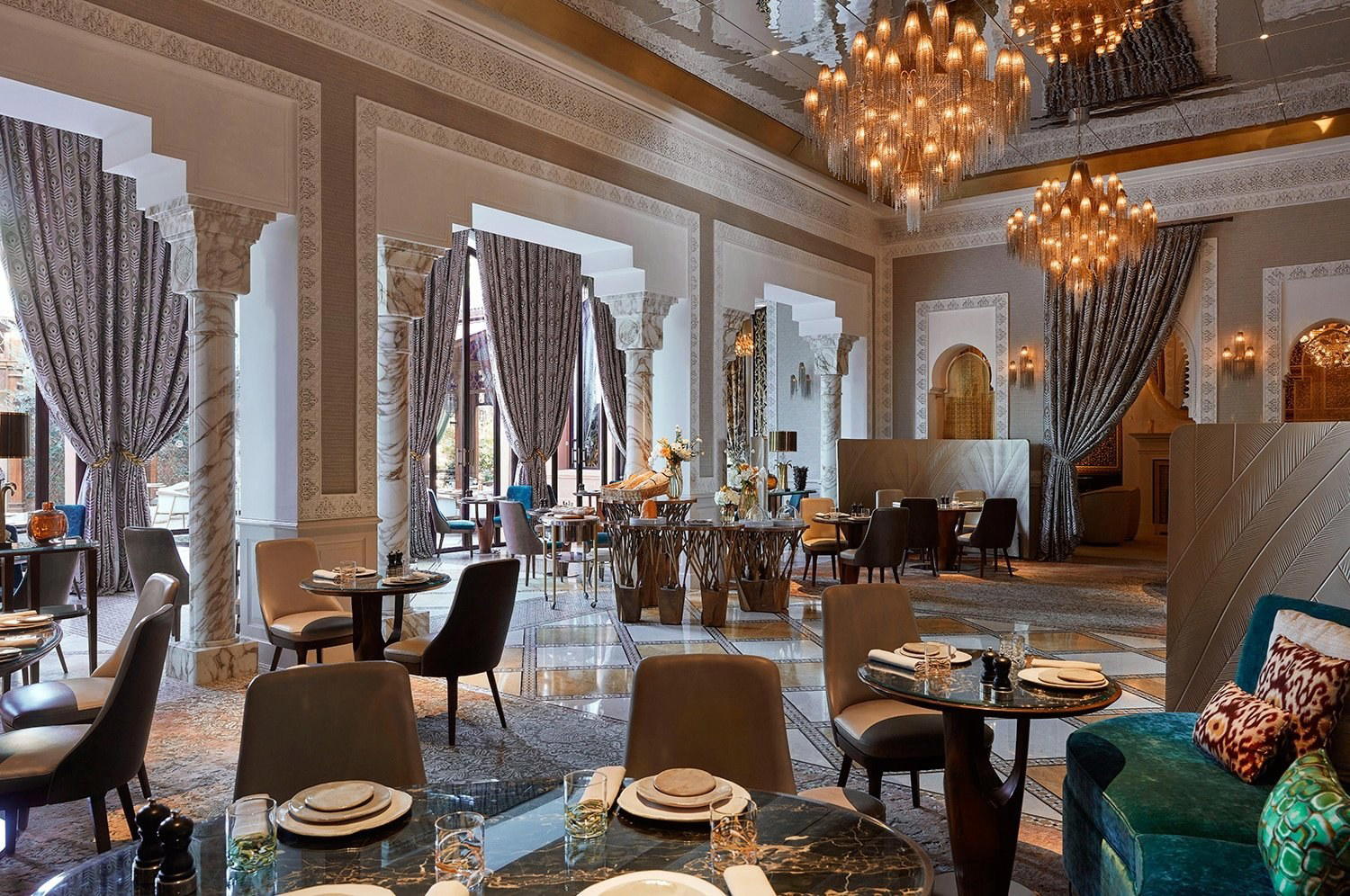
Sophisticated and sultry with soft lantern glow, intricate zellige tiles, marble pillars, and serene courtyard atmosphere.