Alma Historica Boutique Hotel


Michelin Selected · Mr & Mrs Smith Seal of Approval
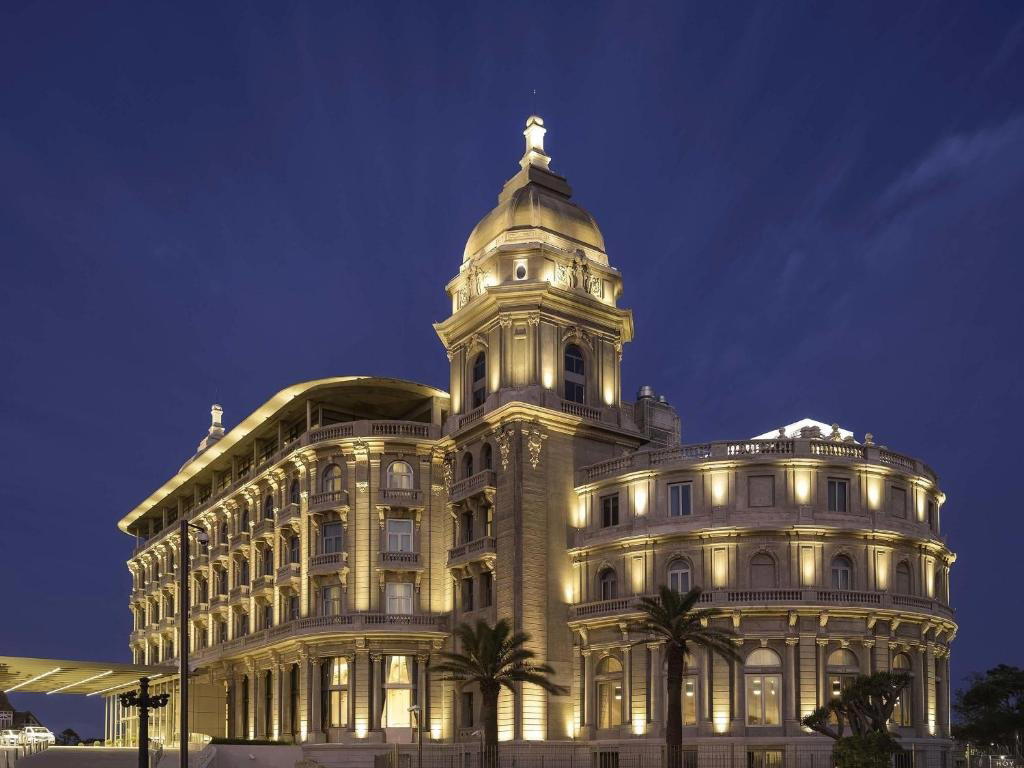
Alma Historica Boutique Hotel occupies a restored historic building on Solís in Montevideo's Ciudad Vieja, earning Michelin Selected recognition in 2025. The property sits within a cohort of small, design-conscious hotels that have repositioned Uruguay's capital as a credible destination for travellers who prioritise architectural character over chain-hotel scale. For Montevideo, that distinction still matters.

Pearl is the En Primeur Club membership app — saves, bookings, and concierge access live there. Same editors, same standards.
- Address
- Solís 1433, 11000 Montevideo, Departamento de Montevideo, Uruguay
- Phone
- +598 2914 7450
- Website
- almahistoricahotel.com
- Directions
- Get directions
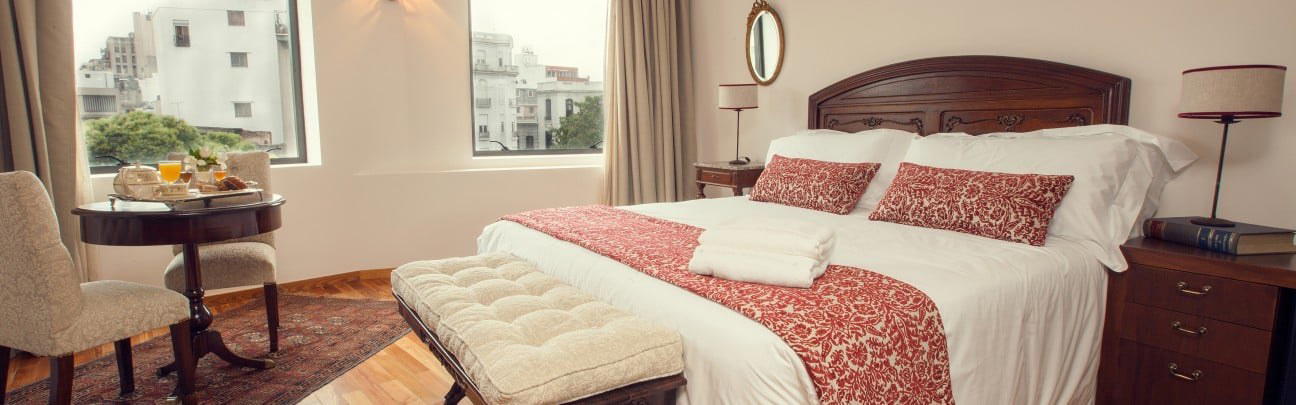
A Street That Sets the Tone
Solís 1433 is not a grand boulevard address. The street runs through Ciudad Vieja, Montevideo's oldest quarter, where nineteenth-century mercantile buildings press close together and the scale stays human even as the city modernises around it. Arriving at Alma Historica Boutique Hotel, the surrounding fabric does half the work: the neighbourhood announces that this is a property engaged with the city's architectural history rather than insulated from it. That positioning, a small hotel embedded in a historically layered district rather than isolated in a resort compound or a glass-and-steel tower, defines a particular type of accommodation that Montevideo has only recently begun to develop with seriousness.
The Michelin hotel guide included Alma Historica in its 2025 Selected list, placing it alongside properties across Uruguay that meet the guide's threshold for quality and character. Michelin Selected does not carry star distinctions, but inclusion signals a reviewable standard, and for a boutique property in a South American capital that remains underrepresented in international travel coverage, the credential carries weight. The boutique tier that Alma Historica occupies is a narrower niche.
What Historic Preservation Looks Like at This Scale
Across Latin America, the conversion of colonial and early-republican buildings into small hotels has produced a recognisable genre: properties where the architectural shell — the high ceilings, the interior courtyards, the ornamental ironwork, the worn stone thresholds — becomes the primary design statement. The intervention philosophy in these conversions tends to emphasise retention over replacement, letting the original materials speak while updating what guests require functionally. Ciudad Vieja lends itself to this approach. Its building stock dates largely from the late 1800s through the early twentieth century, when Montevideo was a prosperous port city drawing European immigration and capital. The architectural vocabulary of that period, Italianate facades, tile work, internal light wells, remains legible across the neighbourhood.
Properties in this category succeed or fail based on how honestly they engage with that inherited fabric. The temptation to impose a contemporary design layer that aestheticises the historic shell without actually understanding it is real, and the results, when that approach dominates, tend to feel like stage sets. The alternative, a more restrained intervention that treats the original structure as genuinely authoritative, produces spaces with a different sensory register: less polished, more specific to place. Where Alma Historica lands on that spectrum is part of what makes it worth evaluating on its own terms rather than by resort-hotel criteria.
Montevideo's Boutique Hotel Tier in Context
Uruguay's accommodation market has historically polarised between the large-footprint properties in Montevideo's Pocitos and Carrasco neighbourhoods and the coastal resort infrastructure around Punta del Este and José Ignacio. The Ciudad Vieja boutique category represents a third register, one that has grown as the neighbourhood itself has attracted investment, cultural institutions, and a dining scene sophisticated enough to give guests reasons to stay close to the old city rather than commuting from other districts.
That broader shift in the neighbourhood makes the Alma Historica's address more legible. A decade ago, recommending Ciudad Vieja as a base for a Montevideo stay required more explanation. The quarter had the architecture and the Mercado del Puerto, but the supporting infrastructure for extended stays was thinner. The development since then, in restaurants, bars, and boutique retail, has changed that calculus. Staying in the old city now makes practical sense as well as atmospheric sense, and properties like Alma Historica are both beneficiaries and contributors to that shift.
For context on where Uruguay's premium accommodation market sits more broadly, the coastal properties at the other end of the country, including Hotel Fasano Punta del Este, Hotel L'Auberge in Punta del Este, Posada Ayana in José Ignacio, and Casa Flor Hotel Boutique in La Barra, operate in a coastal leisure register quite distinct from a city-centre historic property. The Michelin Selected credential Alma Historica holds is more relevant as a signal within the Montevideo urban accommodation tier than as a comparison to the summer-season resort circuit.
Internationally, Where This Format Sits
The small historic-building hotel, fewer than forty rooms, embedded in a city's oldest residential or commercial quarter, with design that foregrounds the original fabric, is a format that has produced some of the most consistently interesting stays in European cities. Properties like Aman Venice and Cipriani, A Belmond Hotel, Venice operate the same instinct at a much higher price point and with greater institutional resources behind the restoration. The format scales down as well as up, and at smaller scale, in cities where the investment case for a major-brand restoration does not exist, independent boutique properties often do the same work with considerably less margin for error.
Alma Historica operates in that lower-budget-per-key end of the historic-conversion format, in a city that does not yet command the room rates of Lisbon or Buenos Aires for comparable properties. That positioning creates a different kind of interest: what the property achieves with the constraints of a mid-tier South American boutique market is a more telling measure of its actual quality than a comparison to Hotel Sacher Wien or Le Bristol Paris would be.
Planning a Stay
Alma Historica sits at Solís 1433 in Ciudad Vieja, the address placing it within walking distance of the neighbourhood's main cultural and dining infrastructure. The Mercado del Puerto, the waterfront rambla, and the Teatro Solís are all reachable on foot. For the broader Montevideo dining and neighbourhood context, our full Montevideo restaurants guide covers the city district by district. Given its boutique scale, availability at peak Montevideo periods, particularly around Carnaval in February and the southern hemisphere summer from December through March, is worth checking early. The Michelin Selected designation suggests the property maintains a reviewable standard of service and condition, but Michelin Selected covers a wide range of price points, and independent verification of current room quality before booking at this tier is always prudent.
How It Stacks Up
Comparable venues nearby, for context on price, style, and recognition.
| Venue | Cuisine | Price | Awards | Notes |
|---|---|---|---|---|
| Alma Historica Boutique HotelThis venue — the venue you are viewing | Restored art nouveau mansion in Montevideo's historic center | $100–200 | Michelin Selected · Mr & Mrs Smith Seal of Approval | Not listed |
| Sofitel Montevideo Casino Carrasco & Spa | Old World luxury with contemporary comfort | Not listed | Michelin Selected · Virtuoso Luxury Hotel Partner | Carrasco |
| FAUNA Montevideo | Boutique lodging in restored heritage building | Not listed | Michelin Selected | Ciudad Vieja |
| Hyatt Centric Montevideo | Contemporary boutique-style beachfront hotel with artistic flair and local design elements celebrating Uruguayan culture. | Not listed | Michelin Selected | Pocitos |
| Hotel Montevideo | Luxury boutique hotel blending classic and modern elements | Not listed | 1 Michelin Key · Leading Hotels of World Member | Pocitos |
| Playa Vik Jose Ignacio | contemporary avant-garde beachfront retreat | Not listed | Michelin Selected · Mr & Mrs Smith Seal of Approval | José Ignacio |
Recognition history
Dated appearances from independent guides and award organizations, with the underlying list record or original source where available.
Michelin Selected
Michelin
Mr & Mrs Smith Seal of Approval
Mr & Mrs Smith
Continue exploring
More in Montevideo
Hotels in Montevideo
Browse all →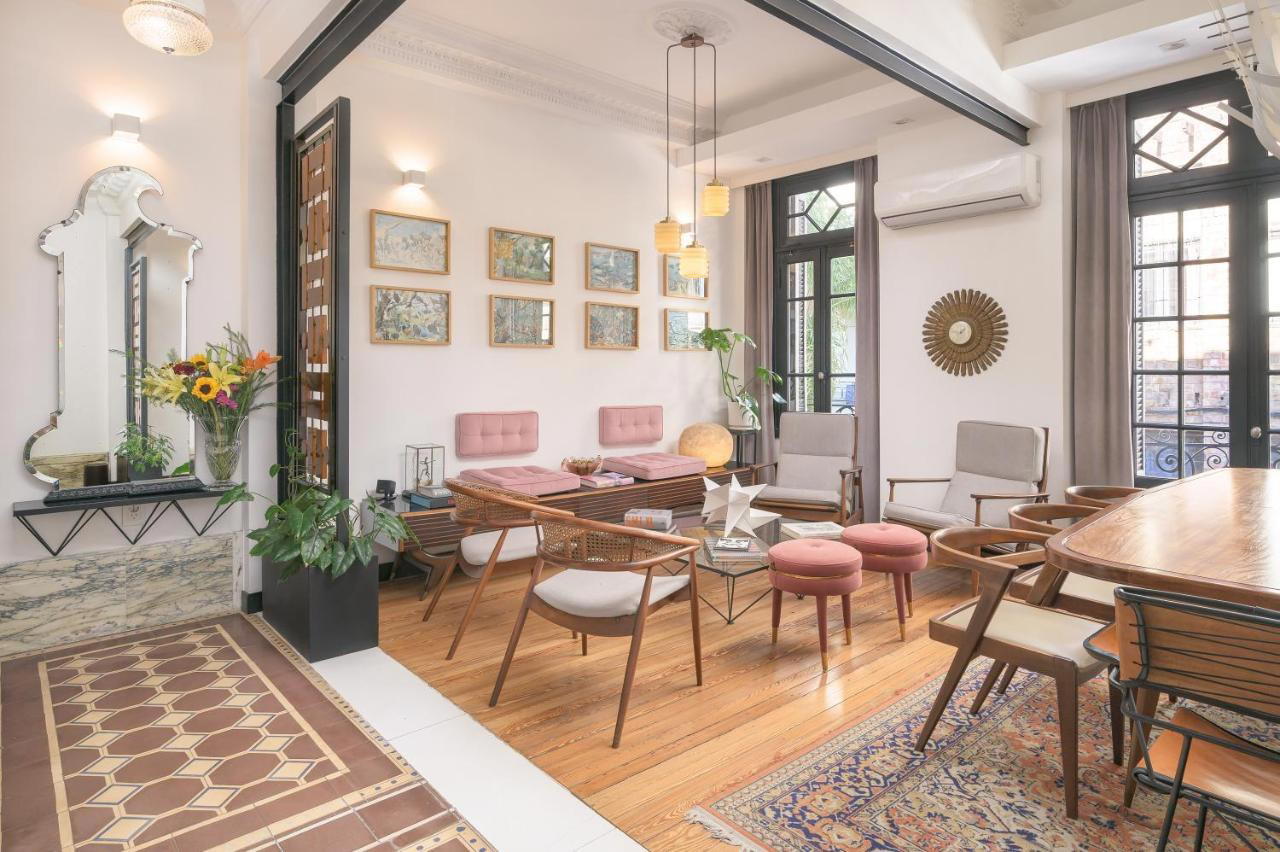
Bars in Montevideo
Browse all →
Restaurants in Montevideo
Browse all →

Details
- Elegant
- Classic
- Intimate
- Sophisticated
- Romantic Getaway
- Anniversary
- Weekend Escape
- Historic Building
- Terrace
- Wi Fi
- Hot Tub
- Room Service
- Street Scene
Old-world charm featuring romantic wrought-iron railings, ornate bed frames, and whimsical decor in a refined, laid-back atmosphere.