← Guides
Three consecutive fine Champagne vintages are hitting the market at once. Here's how to work through the releases — and build a cellar across all three.
Three consecutive fine Champagne vintages are hitting the market at once. Here's how to work through the releases — and build a cellar across all three.
Three consecutive fine Champagne vintages arriving simultaneously is not something that happens often. The 2018, 2019, and 2020 Champagne vintages form one of the region's rare trilogies, sequences of three fine seasons where single-vintage wines are widely produced by the houses, and the first wave of releases is now reaching merchants. For collectors, the window to build across all three years, each with a distinct stylistic identity, is open right now. The question is knowing which bottles to reach for first.
Champagne's vintage calendar is rarely so obliging. Most decades deliver one or two genuinely fine years; back-to-back quality is the exception, not the rule. The 2018, 2019, and 2020 Champagne vintages each featured hot, sunny weather, yet subtle variations in rainfall and temperature gave each year its own character, warm and generous in 2018, precise and complete in 2019, structured and high-acid in 2020. That three-year run is now beginning to land on shelves simultaneously, which means collectors can compare across the trilogy rather than waiting years between releases.
The backdrop makes the trilogy's arrival feel even more pointed. 2017, the year immediately preceding it, was often treated as a disaster in Champagne, with fast-moving acetic rot at harvest destroying much of what had looked, in mid-August, like a vintage of notable promise. Charles Heidsieck cellar master Emilien Erard put it plainly: 'In mid August, the talk was of the vintage of the century, but two weeks later, it was a disaster.' Against that context, the abundance and quality of 2018 felt like a correction. Yields that year were among the more generous ever recorded in Champagne, and there will be few houses that did not produce a vintage wine.
The last comparable run of back-to-back quality, 2012 and 2013, is instructive. Both years are still releasing prestige cuvées now, more than a decade after harvest, which tells you something about the cellaring timelines involved. Building across the 2018, 2019, and 2020 Champagne vintages means thinking in similar terms: some bottles are ready to open within the next two or three years; others will reward patience well into the 2030s.
Champagne's chalk subsoil, belemnite and micraster beneath the Côte des Blancs, a heavier mix of chalk and clay on the Montagne de Reims, interacts differently with warm and cool-finish seasons. In a year like 2018, where heat was sustained through summer, the chalk's moisture retention kept vines from shutting down, preserving freshness beneath the ripeness. In 2019 and 2020, cooler late-season temperatures allowed acidity to rebuild after warm starts, producing wines with more structural tension. That geological consistency is part of why Champagne's trilogy vintages hold together as a set rather than diverging into incompatible styles.
Vintage | Overall Character | Acidity Profile | Drinkability Window | Yield Level | Comparable Past Vintage |
|---|---|---|---|---|---|
2018 | Warm, generous, open-knit | Moderate, freshness preserved by chalk moisture retention | Ready within 2 to 3 years; best examples to 2030s | Among the more generous ever recorded in Champagne | 2009 |
2019 | Precise, complete, balanced | Higher, cooler late-season temperatures rebuilt acidity | Medium-term; rewards 5 to 10 years of cellaring | Widely produced single-vintage wines | 2012 |
2020 | Structured, high-acid, taut | Highest of the trilogy, cool finish to the season | Requires patience; best into the 2030s and beyond | Widely produced single-vintage wines | 2013 |
The first releases from the 2018 Champagne vintages are arriving with a profile that is warm, open-knit, and immediately rewarding, but the stronger houses have avoided the flatness that can afflict heatwave years.
Charles-Armand de Belenet, managing director of Champagne Bollinger, described the season as a fantastic vintage: after the nightmare of 2017, well-suited weather arrived, with generous rainfall at the start of the year followed by beautiful sunshine through the growing season.
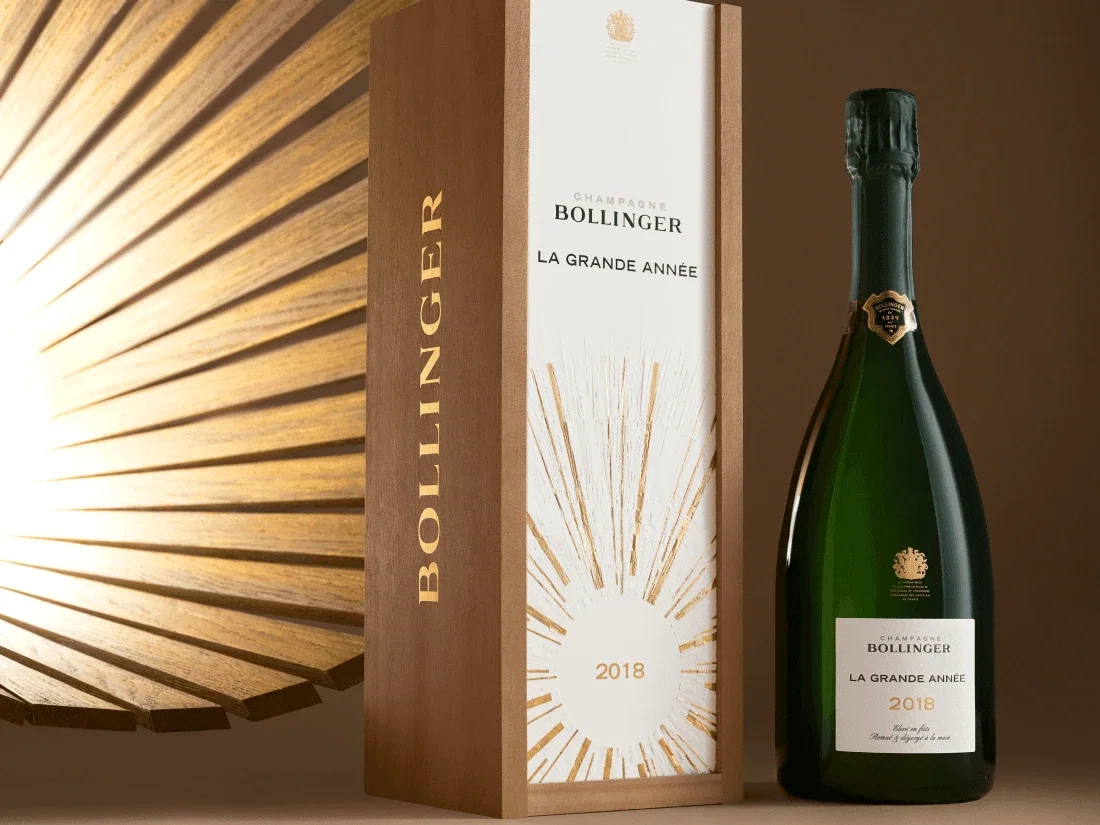
The result, as Bollinger's 2018 La Grande Année demonstrates in both its white and rosé editions, launched this spring, is a year that offers more elegance than previous heatwave summers such as 2015, 2009, 2006, or 2003.
Bollinger La Grande Année 2018 leads with white peach, grilled almond, and sweet raspberry alongside blackberry Pinot fruit, the vintage's generosity and open-knit structure yielding an immediately fine, rewarding wine. The rosé edition shares the same DNA, the friendly, approachable nature of 2018 carrying through with a family resemblance to the white blend. Both are drinking well now but have the architecture to develop further.
Louis Roederer Vintage Cuvée 2018 draws 80% of its fruit from Pinot Noir grown in the northern Montagne de Reims, a deliberate choice in a ripe, approachable vintage where the structure of that sub-region's fruit provides backbone. The Montagne de Reims sits at higher elevation than the Vallée de la Marne, and its north-facing slopes tend to retain acidity even in warm years, which is precisely what a vintage like 2018 needs to avoid tipping into excess.
Laurent-Perrier Vintage 2018 leans into the house's ultra-clean, refreshing style, yielding a wine that is fully approachable, aromatically rewarding, and built for moderate cellaring. The easy charm of 2018 suits Laurent-Perrier's precision well, this is a bottle for drinking over the next five to seven years rather than extended laying down.
The honest question to ask of the 2018 Champagne vintages is whether the low acidity, the vintage's main structural caveat, will limit long-term development. The answer depends on the house. Bollinger and Roederer have the Pinot Noir weight and winemaking discipline to carry 2018 for fifteen years or more. Lighter, more Chardonnay-forward expressions may be better enjoyed in the near term.
Among collectors tracking the 2018, 2019, and 2020 Champagne vintages, 2019 has attracted the consistent praise, widely viewed as especially complete and well-suited among the trilogy. The season delivered warm summer conditions but with enough variation to preserve the tension that defines the leading Champagne. Where 2018 is generous and open, 2019 is precise and expressive, with Pinot Noir showing particular depth and aromatic complexity.
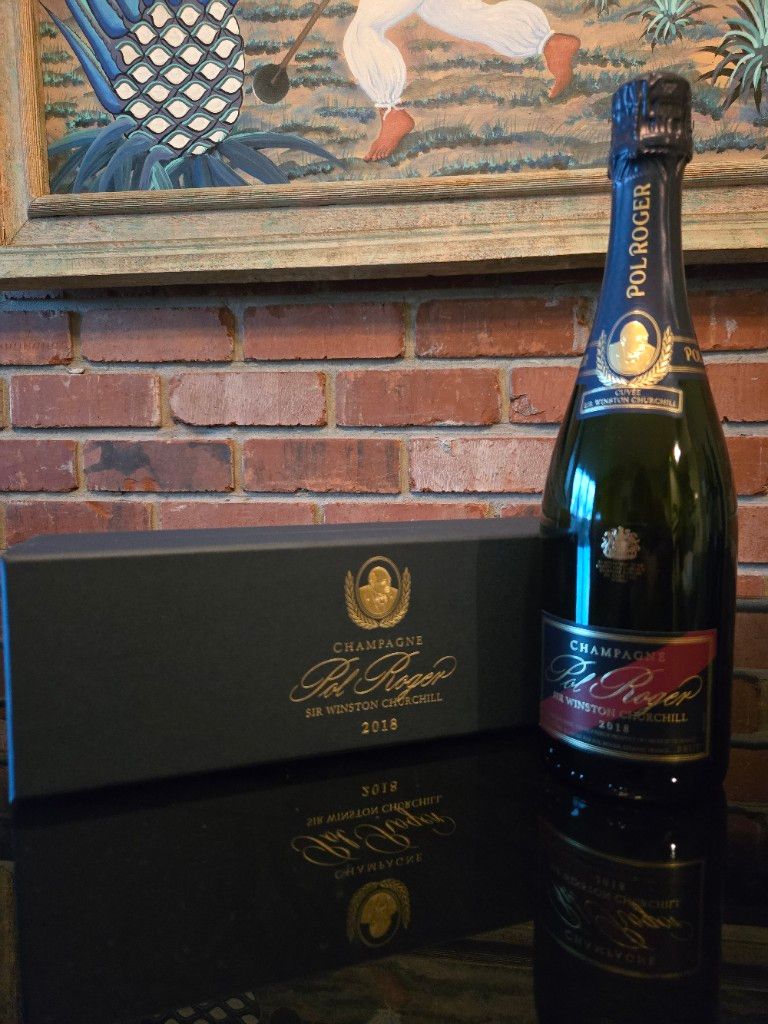
Pol Roger Vintage Rosé 2019 is the standout release of this vintage group, and among the more impressive renditions of this cuvée in recent years. Deeply expressive of Pinot Noir fruit, it carries the completeness that 2019 is known for: a wine that balances richness with definition, and that will reward cellaring well beyond its current approachability. Pol Roger's vintage rosé from 2019 may be the leading the house has produced in this format for a generation.
The Côte des Blancs and Montagne de Reims both performed strongly in 2019, and the Vallée de la Marne, often the variable of Champagne's three major sub-regions, benefited from the season's balance. Houses that source broadly across all three zones had much to work with, and strong 2019 prestige cuvées reflect that breadth.
For collectors building across the trilogy, 2019 is the vintage to allocate cellar space to. Its combination of completeness, aromatic depth, and structural precision gives it the longest theoretical drinking window of the three years, and the prestige cuvées now emerging will continue to develop through the 2030s and into the 2040s for particularly age-worthy expressions.
Of the three vintages in the trilogy, 2020 has attracted the least fanfare, which is, historically, often where strong value and the longest aging potential sit. The season followed a warm, dry summer with a compressed, high-pressure harvest window, and producers reported unusually high natural acidity levels that critics now credit for the vintage's aging potential. Where 2018 gives immediately and 2019 gives generously, 2020 holds back, and that restraint is a feature, not a flaw.
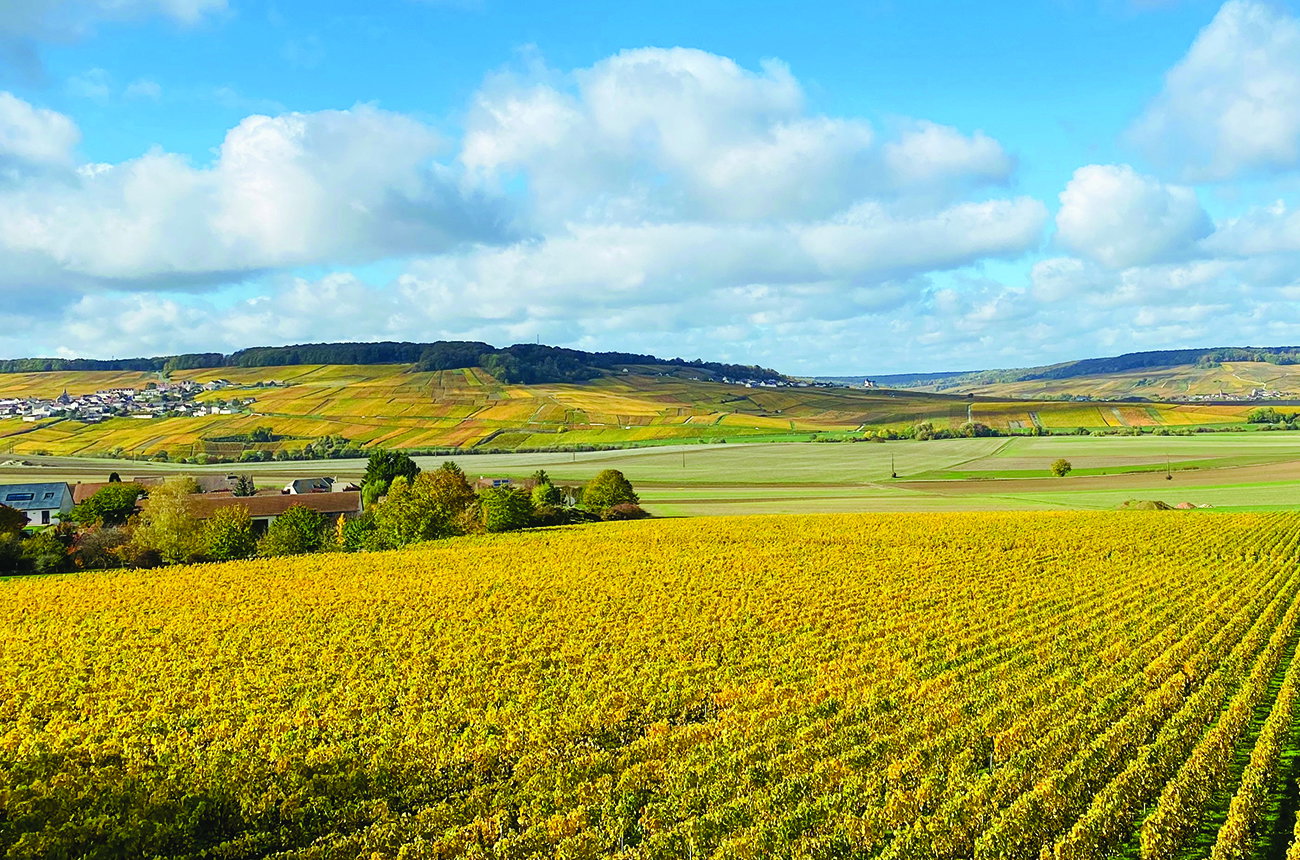
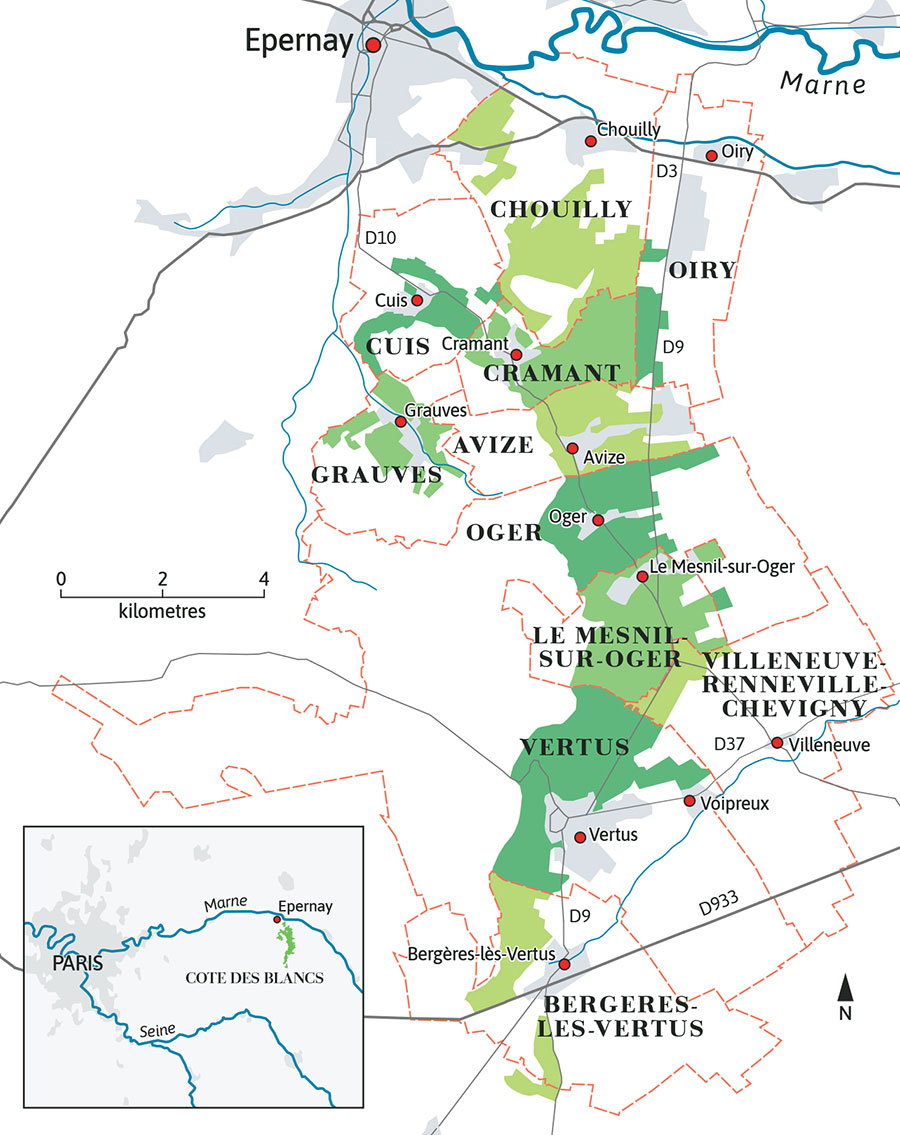
The chalk soils of the Côte des Blancs are particularly well suited to a high-acid vintage. Belemnite chalk, the dominant subsoil beneath Cramant, Avize, and Le Mesnil-sur-Oger, drains rapidly, preventing waterlogging during wet periods and moderating vine stress during dry ones. In 2020, that drainage helped concentrate flavour without sacrificing the freshness that the vintage's acidity provides. Blanc de blancs from the Côte des Blancs will be among the more compelling expressions of 2020 when they arrive.
No 2020 prestige cuvées appear among the current wave of releases, the vintage is still largely in cellar, but its presence in the trilogy is worth tracking. Houses that excelled in 2019 and have the fruit quality from 2020 to match will release wines over the next two to four years that complete the set. Add the 2020 vintage to your watchlist now, before allocations are assigned.
Charles Heidsieck Blanc des Millénaires 2017 is the latest vintage of this prestige blanc de blancs cuvée, a release that exists precisely because of Chardonnay's resilience on the Côte des Blancs. While acetic rot devastated most of Champagne in 2017, the chalky, fast-drying soils of the Côte des Blancs allowed Chardonnay to escape much of the damage, producing a harvest of fine intensity and quality. Cellar master Emilien Erard's assessment of the vintage, the vintage of the century in mid-August, a disaster two weeks later, captures the whiplash of that season. With the exception of isolated growers and a low-volume production of Dom Pérignon, blanc de blancs will be the style of 2017, and Blanc des Millénaires will be among the leading expressions of it. The latest vintage of a cuvée this rare carries its own scarcity logic: allocations will be limited, and the Côte des Blancs fruit quality justifies the attention.
Billecart-Salmon Vintage Blanc de Blancs 2013 and Billecart-Salmon Cuvée Elisabeth Rosé 2013 represent the late-ripening 2013 season at its most considered. Despite 2013's bright acidities and reputation for relative austerity, both cuvées show immediate appeal and elegance, impeccably built wines that are ready to drink now on balance, yet will gain considerably in complexity from further cellaring. The Elisabeth Rosé is gracefully built with red plum and cherry character; the blanc de blancs remains embryonic after two encounters, still keeping its cards close to its chest. Both reward patience.
Lanson Noble Cuvée 2012 draws on grand cru Chardonnay from a vintage whose natural combination of ultra-ripe fruit and bright energy suits Lanson's long-aged prestige style particularly well. The 2012 is drinking now with the confidence of a wine that has had time to resolve, a useful contrast to the tighter 2013 releases from Billecart-Salmon.
Henriot Cuvée des Enchanteleurs 2015 arrives with a name change that collectors should note: this cuvée reverts to its historical name after being called Cuvée Hemera since 2005. The 2015 vintage, hot and dry, forms the backbone of this edition, with fresher 2013 and 2012 in support. The return of the Enchanteleurs name signals a deliberate reconnection with the house's heritage, and the 2015 vintage gives the cuvée the weight to carry that ambition.
Taittinger Comtes de Champagne Rosé 2013 follows the leading-ever release of this lesser-known Pinot Noir-dominant prestige cuvée, the 2012. The 2013 is an entirely different vintage in character, and one that, given a little patience, will prove this cuvée just as deserving as its more famous blanc de blancs sibling.
The arrival of the 2018, 2019, and 2020 Champagne vintages simultaneously is the kind of moment that rewards a structured approach rather than opportunistic buying. Each year has a distinct stylistic register, and a cellar that holds all three gives you a range of drinking occasions across the next fifteen to twenty years.
Start with 2018 for near-term drinking. The vintage's generosity and open-knit structure mean the stronger bottles, Bollinger La Grande Année, Laurent-Perrier Vintage, Louis Roederer Vintage Cuvée, are already showing well and will peak within the next five to ten years. These are the bottles to open at the table now, to share with guests who want Champagne that gives immediately rather than demanding patience.
Allocate greater space to 2019. This is the trilogy's anchor vintage, especially complete and precise among the three, with the longest theoretical drinking window. Pol Roger's 2019 Vintage Rosé is the obvious entry point, but any prestige cuvée from a house with strong Pinot Noir sourcing in 2019 is worth tracking. These bottles will be at their best from the late 2020s through the 2030s, which means buying now and leaving them alone.
Reserve a section for 2020 as releases emerge. The vintage's high natural acidity and structural tension make it especially age-worthy among the three, and the blanc de blancs expressions from the Côte des Blancs will be particularly compelling. Patience is required, most 2020 prestige cuvées are still in cellar, but the allocations will come, and the prices at release are unlikely to reflect the aging potential that critics are already attributing to the vintage.
Alongside the trilogy, the outlier releases deserve cellar space on their own terms. Charles Heidsieck's Blanc des Millénaires 2017 is the latest vintage of a cuvée that appears rarely enough to justify securing an allocation whenever it does. The Billecart-Salmon 2013 pair, blanc de blancs and Elisabeth Rosé, are built for the long term, and the current window to buy them before they become harder to find is narrowing. Lanson Noble 2012 is drinking now; Henriot Cuvée des Enchanteleurs 2015 and Taittinger Comtes de Champagne Rosé 2013 both reward five or more years of additional cellaring.
The broader principle is direct: the 2018, 2019, and 2020 Champagne vintages offer a stylistic range that no single year can provide. A cellar built across all three, with the 2018s earmarked for the near term, the 2019s for the medium term, and the 2020s for the long game, gives you a Champagne collection that covers every occasion and every mood, from the immediately celebratory to the contemplative and age-worthy. Trilogy moments in Champagne are rare. This one is worth acting on while the allocations are still moving.
The 2018 releases are the current wave, but the 2019 prestige cuvées will follow over the next twelve to eighteen months, and the 2020s after that. Houses with strong track records in high-acid vintages (Krug, Salon, Billecart-Salmon, and the grower-producers of Le Mesnil-sur-Oger) are the ones to watch as 2020 releases begin to emerge. The trilogy's final chapter is still being written in cellar, and particularly compelling bottles from 2020 have not yet been seen. Keep your allocation requests open.
What makes the 2018 2019 2020 Champagne vintages a rare buying opportunity?
Three consecutive fine Champagne vintages arriving on shelves simultaneously is exceptionally uncommon, most decades deliver only one or two genuinely fine years. The trilogy allows collectors to compare across all three years at once, each with a distinct stylistic identity, rather than waiting years between releases.
How do the 2018 2019 2020 Champagne vintages differ in style?
The 2018 is warm, generous, and open-knit with immediate appeal; 2019 is described as precise and complete; and 2020 is especially structured among the three, with higher acidity. Subtle differences in rainfall and late-season temperatures account for these distinct characters despite all three being hot, sunny years.
When will the 2018 2019 2020 Champagne vintages be ready to drink?
The window varies by bottle and producer. Some wines from the trilogy are ready to open within the next two to three years, while particularly structured examples, particularly from 2020, will reward patience well into the 2030s. The comparable 2012 and 2013 vintages are still releasing prestige cuvées more than a decade after harvest, giving a sense of the cellaring timelines involved.
What happened to the 2017 Champagne vintage that preceded this trilogy?
2017 was often treated as a disaster in Champagne, with fast-moving acetic rot at harvest destroying much of what had appeared in mid-August to be a vintage of notable promise. Charles Heidsieck cellar master Emilien Erard noted that what looked like 'the vintage of the century' in August became 'a disaster' just two weeks later.
How does Champagne's chalk subsoil influence the character of warm vintages like 2018?
Champagne's chalk subsoil retains moisture during sustained heat, preventing vines from shutting down and preserving freshness beneath the ripeness, a key reason 2018 shows more elegance than previous heatwave years such as 2015, 2009, or 2003. In 2019 and 2020, cooler late-season temperatures allowed acidity to rebuild after warm starts, adding structural tension to the wines.
Tagged
Get the App
Take the shortlist into the En Primeur Club app for concierge access, saved places, and the next step after discovery.
Get Exclusive AccessMore from the editors