On Todi's main corso, Bar Pianegiani occupies a position that Umbrian hill towns rarely afford a drinking establishment: genuine civic centrality. The bar serves as a reference point for the town's daily rhythms, from morning coffee through aperitivo hour, in a setting where the architecture does as much work as whatever is in the glass.

Pearl is the En Primeur Club membership app — saves, bookings, and concierge access live there. Same editors, same standards.
- Address
- Corso Camillo Benso Conte di Cavour, 40, 06059 Todi PG, Italy
- Phone
- +39 075 894 2376
- Hours
- Mon 7 AM–8 PMTue–Sun 7 AM–11:30 PM
- Website
- barpianegiani.it
- Directions
- Get directions
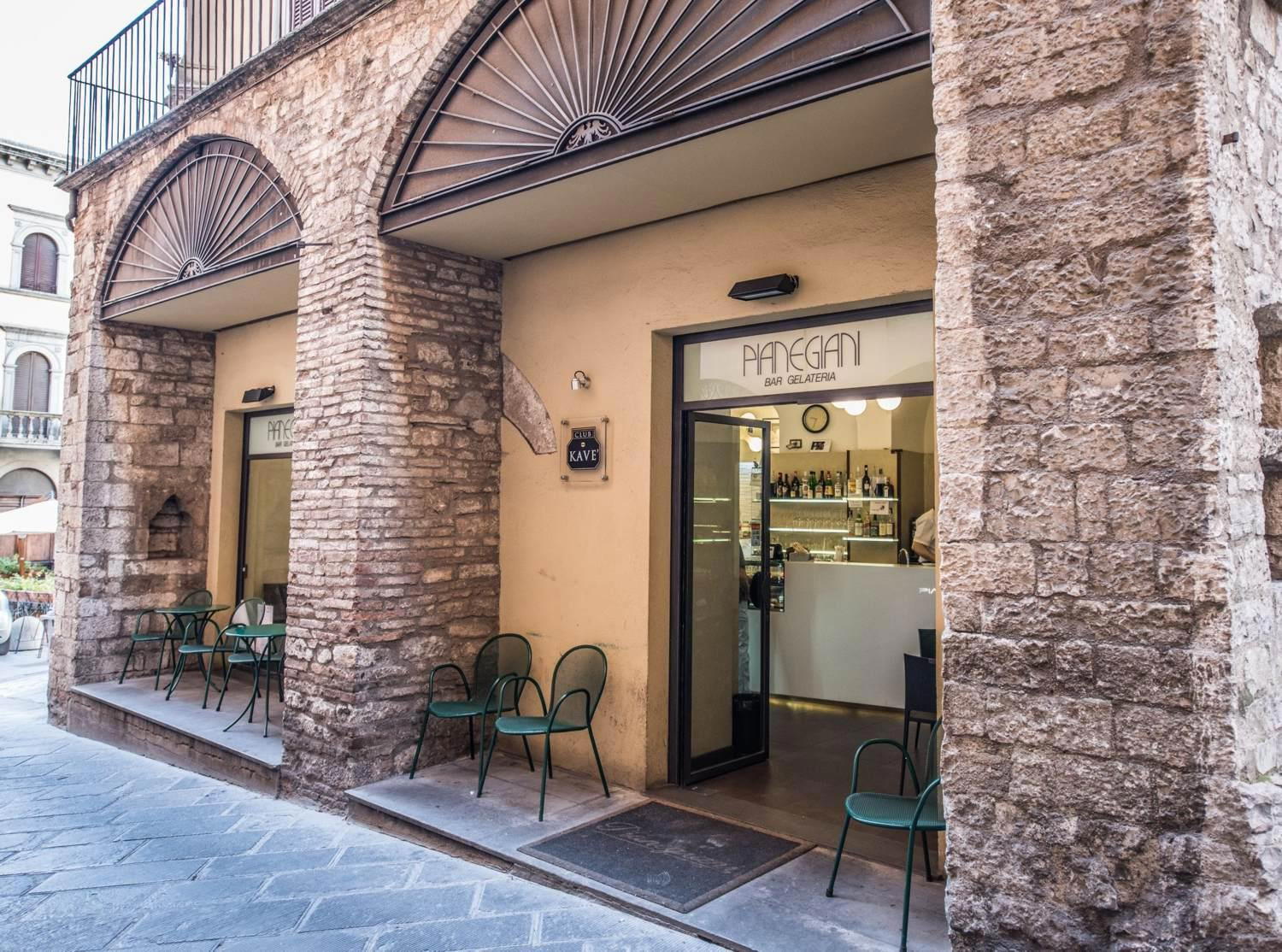
Where Todi Takes Its Coffee and Its Evening
Umbrian hill towns have a particular relationship with their central bars. Unlike the destination cocktail bars that have reshaped Rome's Pigneto district or Milan's Isola neighbourhood, the bars that anchor a corso in a medieval comune like Todi function as civic infrastructure first and drinking establishments second. Bar Pianegiani, on Corso Camillo Benso Conte di Cavour in the heart of Todi, sits within that tradition. The address itself is an editorial statement: the main corso of a town of roughly 16,000 residents, where foot traffic moves between the Piazza del Popolo and the residential streets climbing the hillside.
Arriving at a bar like this on a weekday morning, you encounter a scene that Italy's larger cities have largely lost to rent pressure and tourism segmentation. The espresso counter is a functional node, not a curated experience. By late afternoon, the same space shifts register: the aperitivo hour that Umbria shares with the broader Central Italian drinking culture asserts itself, and the corso outside fills with the kind of unhurried movement that makes towns like Todi worth understanding at pace.
The Aperitivo Tradition in Small-Town Umbria
Italy's cocktail conversation tends to concentrate on a handful of urban programmes. 1930 in Milan operates behind a deliberately unmarked door, its cocktail menu built on historical research and precise technique. Drink Kong in Rome has positioned itself as one of the capital's most technically rigorous programmes. These are bars that have self-consciously entered an international conversation about craft and method.
Bar Pianegiani operates in a different register entirely, and understanding where it sits relative to those programmes matters for setting expectations correctly. The aperitivo culture of Umbrian hill towns is not trying to compete with Rome or Milan's technical bar programmes. It draws instead on a different tradition: the regional wines of the Orvieto DOC and Sagrantino di Montefalco zones a short drive away, the amaro culture that runs through central Italian drinking, and the social function of a bar that serves the same residents every day rather than rotating through international visitors. L'Antiquario in Naples and Gucci Giardino in Florence represent the curated, design-forward end of Italian bar culture; Bar Pianegiani represents the other pole, where continuity and local embeddedness are the operative values.
What the Programme Actually Looks Like
The drinks available at a corso bar in an Umbrian hill town follow a relatively consistent grammar. The morning rotation centres on espresso and cappuccino, with the bar functioning as the kind of standing-coffee operation that remains the backbone of Italian cafe culture. The afternoon and evening shift moves toward aperitivo formats: Campari-based drinks, local wine by the glass, and the amaro pours that Umbria's proximity to central Italian distilling traditions supports. Sagrantino di Montefalco, produced less than 30 kilometres north, is among Italy's most tannic and age-worthy reds, and a bar of this type in this location would be expected to hold it alongside lighter Grechetto whites from the Orvieto area.
This is not a cocktail programme in the sense that Lost and Found in Nicosia or Bar Leather Apron in Honolulu would recognise: no clarified spirits, no bespoke ice programmes, no tasting menu format built around a single spirit category. What it offers instead is the social architecture of the Italian bar, which has its own rigour. The timing of the day, the relationship between the counter and the street, the calibration of the aperitivo spread relative to local expectations: these are the technical disciplines that matter here.
Todi in the Context of Umbrian Travel
Todi appears regularly on lists of Italy's most preserved medieval towns, and the designation carries weight. The Piazza del Popolo, a short walk from the corso, is among the more coherent examples of Romanesque civic planning in Central Italy. The town sits at roughly 400 metres elevation, which gives it the quality of light and the temperature differential from the valley floor that Umbrian hill towns share. The practical consequence for a visitor is that Todi rewards a longer stay than the day-trip pattern that most visitors impose on it.
For anyone spending two or three nights in the area, the bar on the corso functions differently than it does for a day visitor. The rhythm of the place becomes legible: which table fills first in the evening, how the aperitivo hour compresses into the space between the afternoon lull and dinner service at the restaurants nearby. Italy's smaller hill towns are leading understood through that kind of repeated, unhurried observation, and a bar at a central address makes that kind of observation possible. For the broader Umbrian bar and drinking scene.
Placing Bar Pianegiani in a Wider Italian Bar Conversation
The Italian bar ecosystem spans considerable range. At one end, technically ambitious programmes in major cities compete on an international scale: Al Covino in Venice and Enoteca Storica Faccioli in Bologna each represent distinct approaches to the Italian drinking tradition, rooted in specific regional wine cultures. At another end, the neighbourhood bar and the resort-town aperitivo institution: Fauno Bar in Sorrento and Cascate del Mulino in Manciano occupy positions defined partly by their scenic contexts. Bistrot Torrefazione Samambaia in Turin represents the urban specialty-coffee inflection of the same tradition.
Bar Pianegiani's position in this spectrum is the civic anchor. Its value is not extractable from the town around it. Remove the medieval corso, the proximity to the piazza, the daily rhythm of Todi's residents moving through the same address, and there is no particular programme to discuss. With all of that context in place, it occupies a role that Italian small-town culture has sustained for generations, and that role is not diminished by the existence of more technically ambitious programmes elsewhere. They are answering different questions.
Planning a Visit
Bar Pianegiani is located at Corso Camillo Benso Conte di Cavour, 40, in central Todi, walking distance from the Piazza del Popolo. The bar is open Mon: 7 AM-8 PM; Tue-Sun: 7 AM-11:30 PM. No booking is required for counter and casual table service of this type; the format is drop-in by nature.
Fast Comparison
| Venue | Price | Awards |
|---|---|---|
| Bar PianegianiThis venue — the venue you are viewing | Not listed | Not listed |
| Drink Kong | $50–100 | World's 50 Best #32 · Falstaff Bar - 96 Falstaff Points |
| Freni e Frizioni | $10–20 | World's 50 Best #31 · Falstaff Bar - 94 Falstaff Points |
| L'Antiquario | $20–30 | World's 50 Best #28 · Top 500 Bars Best Bars #65 |
| Nottingham Forest | $10–20 | World's 50 Best #38 · Top 500 Bars Best Bars #268 |
| 1930 | Not listed | World's 50 Best #22 · Pinnacle Guide 1 Pin |
Continue exploring
More in Todi
Bars in Todi
Browse all →
Restaurants in Todi
Browse all →
Hotels in Todi
Browse all →
Details
- Classic
- Cozy
- Casual Hangout
- Outdoor Terrace
Current opening hours
- Monday
- 7 AM–8 PM
- Tuesday
- 7 AM–11:30 PM
- Wednesday
- 7 AM–11:30 PM
- Thursday
- 7 AM–11:30 PM
- Friday
- 7 AM–11:30 PM
- Saturday
- 7 AM–11:30 PM
- Sunday
- 7 AM–11:30 PM
Hours can change for holidays and private events. Last verified .
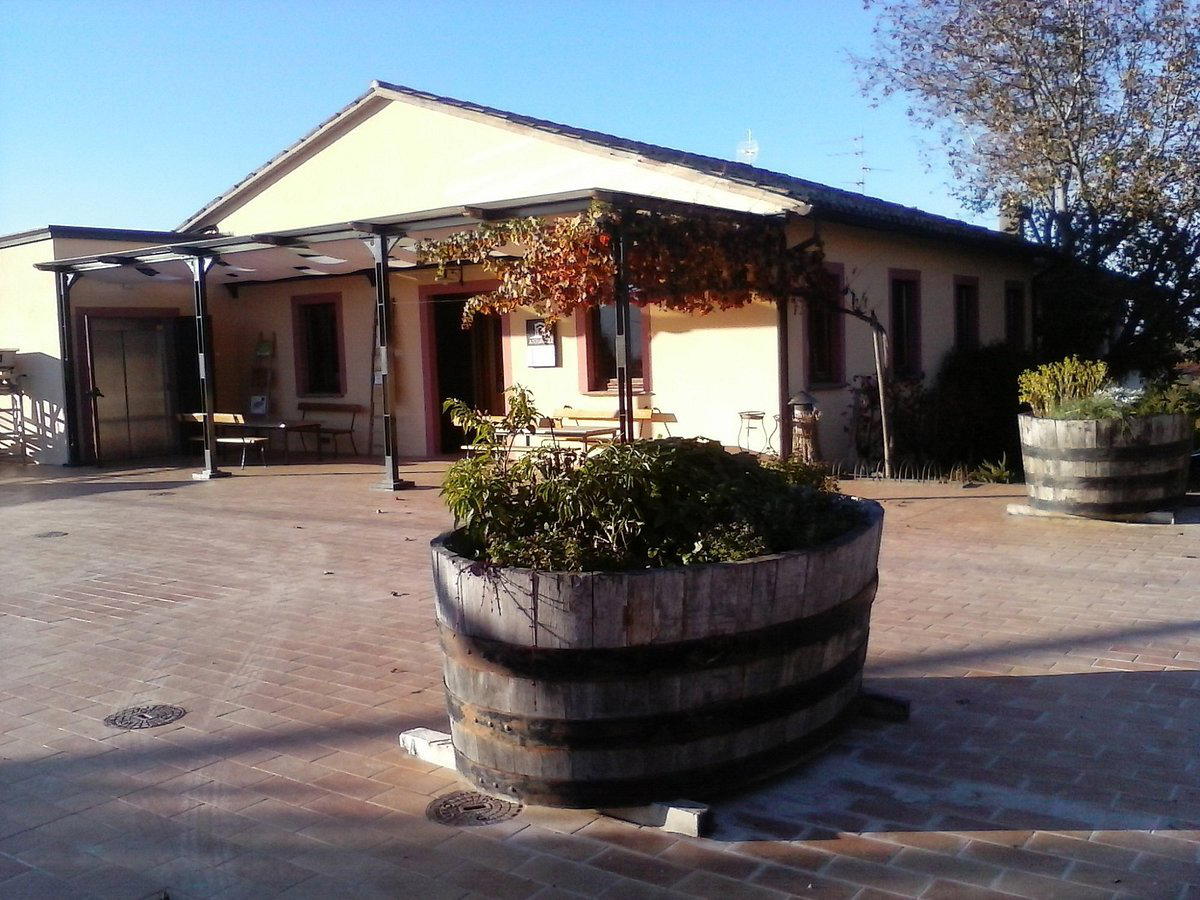
Welcoming with outdoor seating, ideal for enjoying gelato, coffee, and snacks in a delightful, family-friendly atmosphere.