
Domaine Louis Michel & Fils occupies a respected position among Chablis's estate producers, earning a Pearl 2 Star Prestige rating in 2025. The domaine operates from its address on the Boulevard de Ferrières at the heart of the appellation, working with the Kimmeridgian terroir that defines the region's mineral-driven style. It sits within a peer set that includes some of Chablis's most closely watched names.
 Discover on Pearl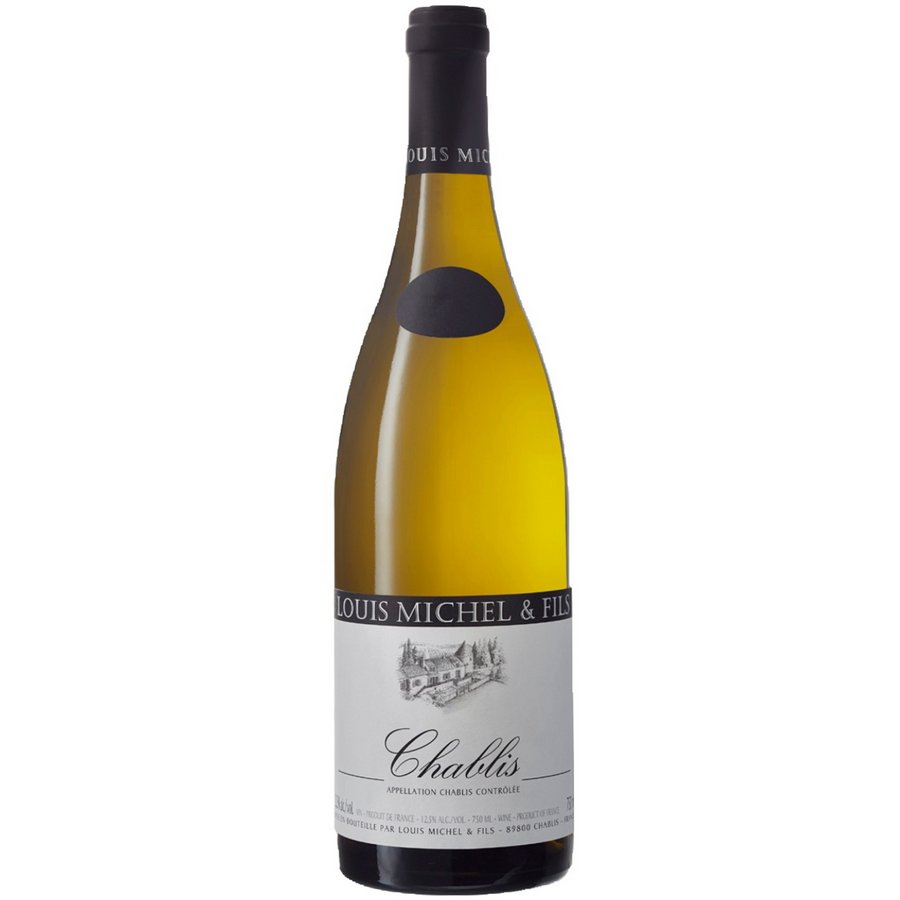
Walking into Chablis in Early Autumn
Arrive in Chablis after the September harvest and the town carries a particular kind of quiet industry. The Serein river runs low, the vines are stripped, and the cellars along Boulevard de Ferrières are doing what they do most of the year: waiting. Domaine Louis Michel & Fils is on that boulevard, at number 9, and the unhurried exterior gives little away about the decisions being made inside — which barrels to use, how long to rest the juice, when the wine is ready to leave.
That patience is not incidental. It is, in many ways, the central argument of the domaine's approach to Chablis, and the reason it holds a Pearl 2 Star Prestige rating from EP Club in 2025, placing it in the upper tier of the appellation's recognised producers.
What the Cellar Decides
In Chablis, the cellar conversation is always partly about stainless steel versus oak. The appellation sits at the cooler northern edge of Burgundy's white wine production, and the wines it makes from Chardonnay carry a mineral tension — often described in terms of flint, chalk, and salinity , that polarises winemakers on the question of wood. Use too much new oak and you flatten the thing that makes Chablis distinct from Meursault or Puligny-Montrachet. Use none and you risk wines that are precise but austere through their youth.
Domaine Louis Michel & Fils has long been associated with the restraint end of that debate. The domaine's commitment to stainless steel ageing preserves the Kimmeridgian character of its vineyard sources without the softening that barrel work introduces. This places it in a specific and committed philosophical position relative to its neighbours. Domaine Willian Fevre, for instance, employs oak at various levels across its range, while Domaine Dauvissat uses older barrels with a light touch. Louis Michel sits at a different point on that spectrum, and the wines read accordingly: taut, mineral-forward, requiring time in bottle to open fully.
For a wine buyer coming to the cellar door, this matters in practical terms. The Premier Crus and Grand Crus from this address are not wines to open young. They are built for patience, which aligns with what serious Chablis collectors expect from the appellation's more considered producers. Visitors who plan cellar purchases should factor that timeline into their selections , and understand that what they are tasting at the domaine in any given visit may be showing less than the finished wine will offer in three to seven years.
The Appellation Context
Chablis occupies a precise geographic and geological identity. The Kimmeridgian limestone soils , named for the Dorset village where the same seabed deposit surfaces , run through the slopes above the Serein and give the appellation's wines their characteristic mineral register. The hierarchy moves from generic Petit Chablis and Chablis AC through seventeen Premier Cru sites to the five Grand Cru lieux-dits on the right bank slope north of town: Blanchot, Bougros, Les Clos, Grenouilles, Valmur, Vaudésir, and La Moutonne.
Domaine Louis Michel & Fils holds parcels across this hierarchy, including in Grand Cru sites, which situates it within the group of estates whose full range rewards vertical comparison. The difference between a village-level wine and a Grand Cru from the same producer, aged under the same cellar conditions, teaches more about what Kimmeridgian terroir does across gradient and exposure than any tasting note can convey. That educational dimension is one reason collectors return to this address across vintages rather than treating it as a single-bottle discovery.
Among the estates working similar terroir with similar discipline, Domaine Billaud-Simon and La Chablisienne represent different models , the former an estate house with its own Grand Cru holdings, the latter a cooperative with broad appellation coverage at various price levels. Louis Michel sits outside both of those models: a family domaine of meaningful scale, working primarily its own vineyards, at a price point and quality tier that places it alongside the appellation's serious independent names.
Seasonal Timing and the Visit
The Chablis visit calendar follows the agricultural year with some predictability. Harvest in late September and early October means the cellars are active and often closed to casual visitors during that window. Spring, particularly April through June, is when the wines from the previous vintage are beginning to settle and when producers are most available to receive trade buyers and serious collectors. The summer months bring tourist traffic into the town, and appointment-based visits become more competitive to arrange.
For those planning a Burgundy circuit, Chablis sits roughly two hours by road from Beaune and makes more sense as a dedicated trip than as a detour. The town itself is compact enough to cover multiple domaine visits in a single day if appointments are arranged in advance. For dining and accommodation during a multi-day visit, our full Chablis restaurants guide and our full Chablis hotels guide cover the relevant options. Those looking to extend into other categories of experience in the appellation can also consult our full Chablis bars guide and our full Chablis experiences guide.
The domaine address at 9 Boulevard de Ferrières is findable without difficulty , the boulevard runs through the centre of town and the estate is among the more established presences there. Booking ahead is advisable, as with most serious producers in the appellation; walk-in visits to family domaines of this standing are not standard practice in Chablis.
Placing Louis Michel in a Wider Frame
Producers at this level in small appellations often get compared almost exclusively within their regional peer set, which limits the frame usefully. Across France's estate wine culture more broadly, the distinction between producers who work with minimal intervention in the cellar and those who shape wine more actively through wood and technique cuts across regions. Albert Boxler in Niedermorschwihr represents the Alsace version of serious, terroir-driven estate work, while Château Bastor-Lamontagne in Preignac and Abadía Retuerta in Sardón de Duero show what cellar discipline looks like in sweet Bordeaux and Spanish estate wine respectively. The comparison helps calibrate what Louis Michel's cellar choices actually mean: a commitment to the source material over the winemaker's visible signature.
For collectors already exploring other Burgundy domaines, Domaine François Lamarche in Vosne-Romanée offers a useful point of reference for how a family estate navigates the gap between village and Grand Cru expression within a single producer's range. The structural question is similar even if the grape variety and terroir are entirely different.
Those coming to Chablis from a wider spirits or fermented-drinks background may find it instructive to notice how much appellation identity depends on what producers choose not to do , not to use heavy oak, not to pick too late, not to intervene with acidification or concentration. Aberlour in Aberlour and Chartreuse in Voiron each carry their own versions of that restraint-versus-expression debate in different traditions. Seeing it play out in Chablis, where the argument is almost entirely about what the cellar preserves rather than what it adds, makes the region's minimalist producers particularly clear examples of the principle.
For a broader orientation to all of Chablis's serious producers, our full Chablis wineries guide maps the appellation's main estates across style, scale, and hierarchy.
Frequently Asked Questions
- What's the must-try wine at Domaine Louis Michel & Fils?
- The Grand Cru bottlings , drawn from the five classified slopes north of the Serein , are where the domaine's stainless-steel ageing approach produces the most instructive results. In Chablis's top tier, the combination of Kimmeridgian Grand Cru terroir and minimal-intervention cellaring produces wines that reward six or more years in bottle. The EP Club Pearl 2 Star Prestige rating in 2025 reflects the consistency the domaine maintains across its range, but the Grand Cru expressions are where the argument for this style of Chablis is made most completely.
- What's the standout thing about Domaine Louis Michel & Fils?
- Its position within Chablis's cellar-philosophy debate is as clear as any producer in the appellation. The commitment to stainless steel ageing across the range , at a domaine with Grand Cru holdings and a Pearl 2 Star Prestige rating from EP Club in 2025 , means visitors come not just to taste a wine but to understand a specific, sustained argument about what Chablis should express. That consistency of approach across decades, at an address in the centre of town on Boulevard de Ferrières, is the thing that places it in a distinct tier among Chablis independents.
- Should I book Domaine Louis Michel & Fils in advance?
- For a producer with EP Club's Pearl 2 Star Prestige recognition and Grand Cru holdings, advance contact is worth making before any visit. Family domaines of this standing in Chablis do not routinely receive walk-in visitors, and the most productive cellar appointments , particularly for those intending to purchase , happen when arranged ahead of arrival. Spring and early summer tend to offer more flexibility than the harvest-adjacent months. Contact details are leading confirmed through current channels before travelling.
- How does Domaine Louis Michel & Fils differ from other Chablis producers using stainless steel?
- The domaine's combination of Grand Cru holdings and a long-standing commitment to unoaked ageing puts it in a small peer group where the choice to avoid wood is not a cost decision but a philosophical one. Receiving a Pearl 2 Star Prestige from EP Club in 2025 alongside that approach confirms the quality argument holds at the appellation's most demanding tier. Where some Chablis producers use stainless steel selectively across their range while reserving oak for Premier and Grand Cru, Louis Michel applies the same discipline throughout, making vertical and horizontal comparisons within their own range unusually coherent.
Peer Set Snapshot
These are the closest comparables we have in our database for quick context.
| Venue | Awards | Notes |
|---|---|---|
| Domaine Louis Michel & Fils | Pearl 2 Star Prestige | This venue |
| Domaine Dauvissat | Pearl 2 Star Prestige | Vincent Dauvissat, Est. 1947 |
| Domaine Willian Fevre | Pearl 2 Star Prestige | Didier Séguier |
| Domaine Billaud-Simon | Pearl 2 Star Prestige | |
| Domaine Eleni & Edouard Vocoret | Pearl 2 Star Prestige | |
| Domaine François Lamarche | Pearl 3 Star Prestige | Nicole Lamarche |
Access the Cellar?
Our members enjoy exclusive access to private tastings and priority allocations from the world's most sought-after producers.
Get Exclusive Access