Château de Rougeon

Château de Rougeon sits in Bissey-sous-Cruchaud, a quiet commune in the Côte Chalonnaise where Burgundy's southern limestone belt shapes wines of genuine place. Selected as a Pearl prestige producer for La Paulée 2026, the estate operates within a peer set defined by terroir precision rather than volume or celebrity. For those tracing Burgundy's lesser-mapped appellations, it rewards attention.
 Discover on Pearl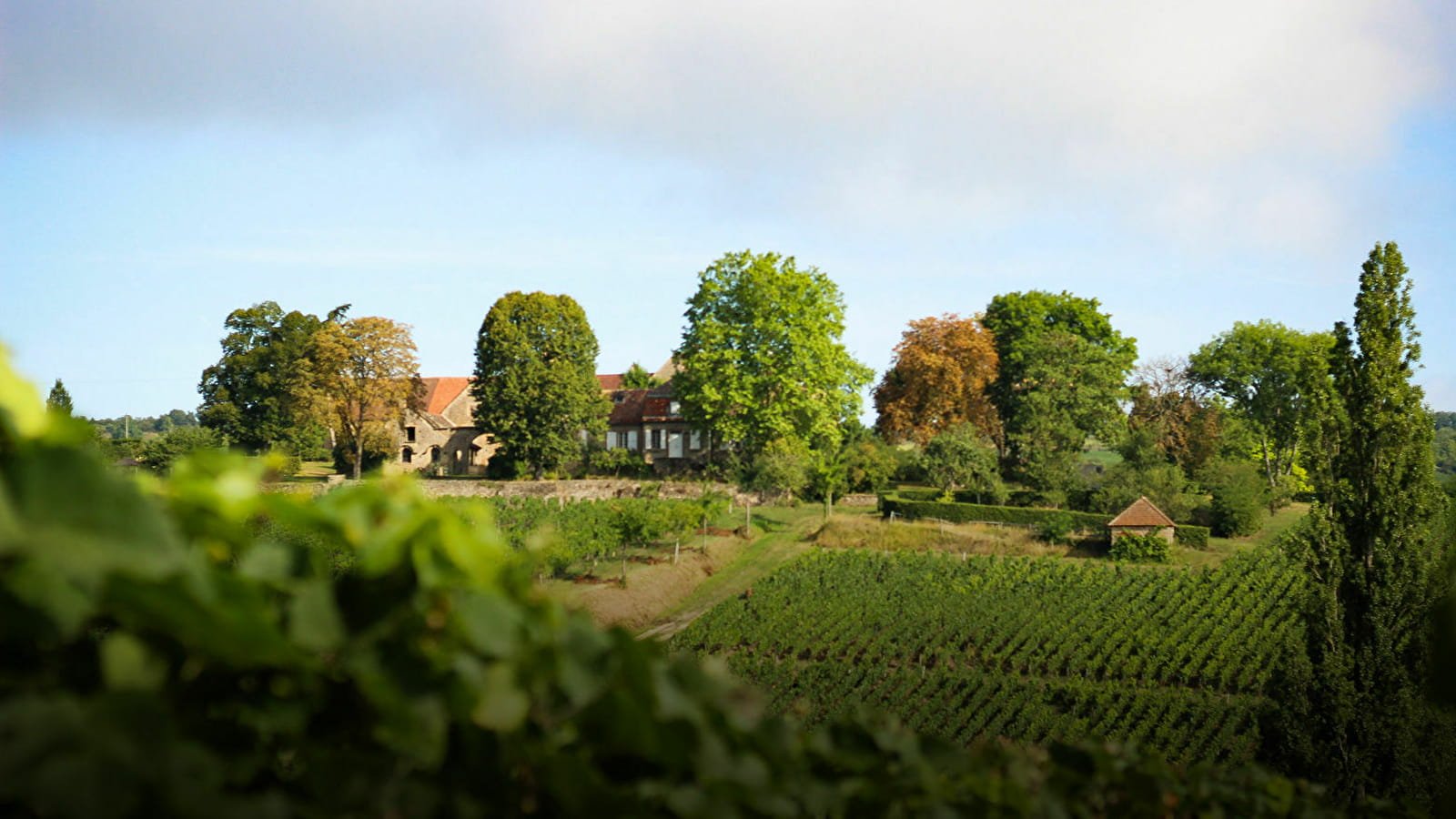
Limestone, Elevation, and the Côte Chalonnaise Argument
The Côte Chalonnaise does not announce itself the way the Côte de Nuits does. There are no grand processions of grand cru vineyards, no village names that function as international shorthand for prestige. What the region offers instead is a more compressed, harder-won expression of Burgundian terroir: thinner soils over Jurassic limestone, slightly cooler growing conditions than the Côte d'Or directly to the north, and a producing community that has historically worked without the price ceiling that Gevrey or Chambolle commands. Bissey-sous-Cruchaud sits inside that argument. Château de Rougeon is one of the addresses that makes it worth having.
The physical approach to Rougeon sets the register immediately. The commune is small, the roads narrow, and the surrounding countryside gives the impression of a place that has not reorganised itself around tourist traffic. That is not a complaint. In Burgundy, the estates that operate at a remove from the well-worn appellations tend to be the ones where the relationship between site and wine remains the organising principle rather than a positioning statement.
What Prestige Means at This Latitude
Château de Rougeon's selection as a Pearl prestige tier producer for La Paulée 2026 is the kind of institutional signal that carries weight precisely because La Paulée is not a promotional exercise. The event, which gathers producers from across the Burgundy spectrum for a formal celebration of the harvest, calibrates its invitations against a prestige distribution model that places estates in relation to their peers. A Pearl designation at that level positions Rougeon within a cohort defined by production quality and regional standing, not by appellation fame alone.
That context matters when you consider the Côte Chalonnaise's broader trajectory. The region's leading producers have spent the last two decades closing a credibility gap with the northern Côte d'Or, and the serious collector market has noticed. Estates in Mercurey, Givry, Rully, and the surrounding communes now appear in the same conversations as entry-level village Burgundy from Nuits-Saint-Georges or Beaune, at price points that still reflect the region's relative obscurity. Rougeon sits inside that shift.
For comparative framing: among prestige French wine estates covered by EP Club, the range runs from large-production classified châteaux like Château Bastor-Lamontagne in Preignac and Château Cantemerle in Haut-Médoc to smaller, terroir-focused estates that operate with a very different logic. Château Bélair-Monange in Saint-Emilion and Château Boyd-Cantenac in Cantenac each demonstrate how site-specific production in France's named appellations commands a particular kind of attention. Rougeon's position in the Côte Chalonnaise puts it closer to the latter logic, where the estate's identity is shaped by soil and elevation rather than classification tier.
The Land That Produces the Wine
Bissey-sous-Cruchaud occupies the southern portion of the Côte Chalonnaise, in the Saône-et-Loire département. The geology here is continuous with the broader Burgundian limestone belt: Jurassic-era sedimentary rock that drains well, retains heat during the day, and produces the kind of mineral tension that distinguishes Burgundy from warmer, richer-soiled regions. At this latitude, roughly midway between Beaune and Mâcon, the growing season is slightly shorter and the diurnal temperature swings more pronounced than on the Côte d'Or proper. The practical result is wines that tend toward freshness and acidity rather than weight, with a structural quality that rewards time in bottle.
The Côte Chalonnaise's primary appellations (Rully, Mercurey, Givry, Montagny) each reflect local variations on this geology, but estates outside those named village boundaries, operating under broader regional designations, can still draw from the same limestone substructure. What separates the serious producers from the volume houses is the attention paid to individual parcel character, and the willingness to work with what the site gives rather than engineering consistency through intervention.
La Paulée and the Producer Network
La Paulée functions as one of Burgundy's most concentrated annual gatherings of serious producers and collectors. Its 2026 edition, for which Château de Rougeon has been identified as a participating Pearl prestige producer, draws a cohort that spans the full prestige range of the region. Being calibrated against that distribution model is a meaningful signal about where the estate sits in the current producer conversation, independent of appellation or classification.
That kind of event-based recognition is increasingly how smaller Côte Chalonnaise estates reach audiences beyond their immediate regional market. Estates like Albert Boxler in Niedermorschwihr, operating in Alsace with a different grape palette but a similarly rigorous terroir focus, demonstrate how prestige event inclusion can anchor a producer's position in the minds of collectors who might not otherwise seek out a lesser-publicised appellation. The mechanism is the same: institutional validation that travels further than local reputation alone.
Planning a Visit to Bissey-sous-Cruchaud
Bissey-sous-Cruchaud is a working agricultural commune, not a wine tourism hub, and visits to estates in this part of the Côte Chalonnaise typically require advance contact and planning. The village sits in the Saône-et-Loire, accessible from Chalon-sur-Saône to the north or Mâcon to the south. Given the absence of published booking infrastructure for Château de Rougeon, reaching out through La Paulée's producer network or through specialist Burgundy wine merchants is the practical entry point for tasting visits or allocation access.
For those building a broader itinerary around the southern Côte Chalonnaise, EP Club's full Bissey-sous-Cruchaud wineries guide maps the regional producer set in more detail. For dining in the commune and surroundings, the Bissey-sous-Cruchaud restaurants guide covers the local options. Overnight stays are addressed in the hotels guide, and for a fuller picture of what the area offers beyond wine, the experiences guide and bars guide provide supporting context.
Elsewhere in the EP Club network, estates like Château Branaire Ducru in St-Julien, Château Batailley in Pauillac, and Abadía Retuerta in Sardón de Duero represent the kind of estate-scale, terroir-driven production that Rougeon's Pearl designation places it alongside in a prestige comparison, even if the appellation profiles differ substantially. The thread connecting them is a commitment to place as the primary editorial subject of the wine.
FAQ
Is Château de Rougeon more low-key or high-energy?
Low-key, by some distance. Bissey-sous-Cruchaud is a small agricultural commune without the wine tourism infrastructure of the Côte de Nuits or the Côte de Beaune. Château de Rougeon's Pearl prestige designation at La Paulée 2026 confirms its standing among serious producers, but the estate operates in a register more suited to collectors and engaged enthusiasts than to casual visitors seeking a high-volume tasting room experience. If low-key suits your travel style and you are prepared to arrange visits through specialist channels, that is precisely where the value lies. For comparison, similarly prestige-designated estates in higher-profile appellations tend to carry both higher prices and more structured visitor programmes.
What do visitors recommend trying at Château de Rougeon?
Specific tasting notes and current release details for Château de Rougeon are not available in EP Club's verified data at this time, and we do not speculate on wine character without a confirmed source. What the La Paulée 2026 Pearl prestige calibration does signal is that the estate's production meets a threshold of regional significance that makes it worth seeking out through allocated channels or specialist merchants. For those exploring the Côte Chalonnaise's limestone-driven Pinot Noir and Chardonnay, estates participating at La Paulée's prestige tiers are generally the most reliable starting point for understanding what the region can achieve at its upper range. The Bissey-sous-Cruchaud wineries guide provides additional producer context for planning a focused tasting itinerary in the area.
Peer Set Snapshot
These are the closest comparables we have in our database for quick context.
| Venue | Awards | Notes |
|---|---|---|
| Château de Rougeon | Pearl 2 Star Prestige: 0pts | This venue |
| Château Smith Haut Lafitte | 50 Best Vineyards #5 (2025); Pearl 4 Star Prestige | Fabien Teitgen, Est. 1365, 8,000 cases, Cru Classes de Graves |
| Ruinart | 50 Best Vineyards #8 (2025); Pearl 4 Star Prestige | Frédéric Panaïotis, Est. 1729, 1.7 million bottles, Premier Cru |
| Château d'Yquem | 50 Best Vineyards #9 (2025); Pearl 5 Star Prestige | Sandrine Garbay, 5,000 cases, Premier Cru |
| Château Pape Clement | 50 Best Vineyards #27 (2025); Pearl 4 Star Prestige | Jean-Philippe Fort (consultant), 7,500 cases, Cru Classes de Graves |
| Bollinger | 50 Best Vineyards #15 (2025); Pearl 4 Star Prestige | Gilles Descôtes, Est. 1829, 2.5 million bottles, Premier Cru |
Access the Cellar?
Our members enjoy exclusive access to private tastings and priority allocations from the world's most sought-after producers.
Get Exclusive Access