Where Aegean Air Meets Japanese Precision The approach to Cavo Tagoo sets the register before you sit down. White volcanic stone, the Aegean stretched flat to the horizon, and the low thrum of a sound system calibrated for a room that expects to...
 Discover on Pearl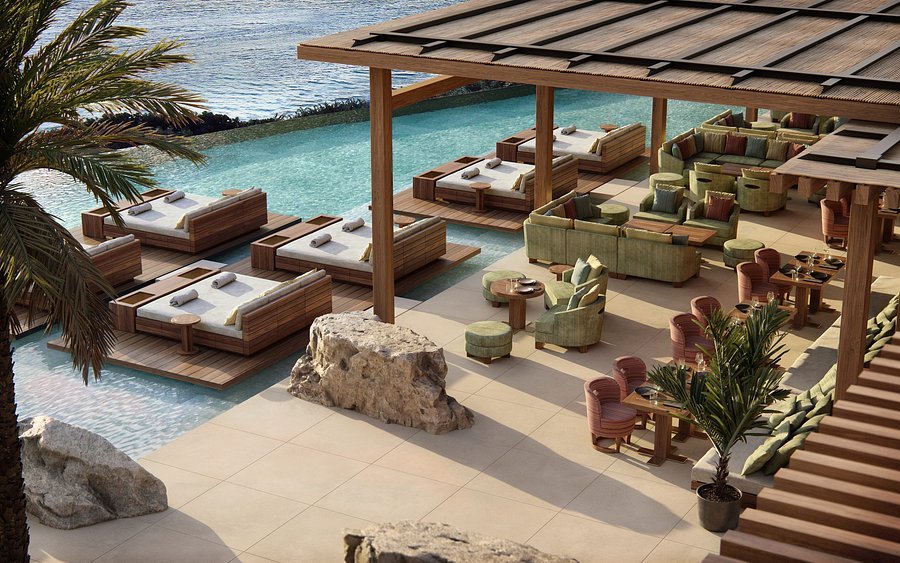
Where Aegean Air Meets Japanese Precision
The approach to Cavo Tagoo sets the register before you sit down. White volcanic stone, the Aegean stretched flat to the horizon, and the low thrum of a sound system calibrated for a room that expects to stay full until late. Zuma's Mykonos outpost occupies a position that many global restaurant brands have attempted in the Cyclades and few have sustained: high-production international format, embedded inside a luxury hotel, competing not against local tavernas but against the island's broader appetite for spectacle paired with something to eat.
Zuma belongs to the category of globally distributed Japanese restaurant concepts that treat the izakaya format as architecture rather than accident. The original London location opened in 2002, and the brand has since spread to cities including Dubai, Miami, Bangkok, and Rome. Each location operates the same core logic: a robata grill, a sushi counter, and a bar program running in parallel, with ingredients sourced to match the local market while the technique stays consistent. In Mykonos, that sourcing question is particularly pointed.
The shortlist, unlocked.
Hard-to-book tables, cellar releases, and concierge-planned trips.
Get Exclusive Access →The Sourcing Argument in the Aegean
The Cyclades are not, by geography, a natural home for the kind of fish that anchors a Japanese robata and omakase-adjacent menu. What the Aegean does produce is some of the cleanest, most mineral-forward seafood in the Mediterranean: sea bream, octopus, red mullet, urchin in season. The editorial tension at a venue like Zuma Mykonos is how a globally consistent format reconciles that regional ingredient reality with the brand's sourcing standards elsewhere.
Global Japanese concepts at this tier typically operate dual sourcing tracks: high-value proteins (certain tuna grades, Wagyu cuts, specific shellfish) arrive through established import relationships, while perishable Mediterranean catch is bought locally where quality meets the brief. That approach is now common across premium international restaurants operating in island markets, from Cacio e Pepe in Thira Municipality to Feredini in Σαντορίνη. The question is always whether the kitchen has the discipline to let local product lead when it should, rather than defaulting to imported formats regardless of seasonal availability.
Mykonos in July and August operates under a specific pressure: volume. The island receives a disproportionate share of its annual visitors between mid-June and mid-September, and restaurants at the luxury tier face the challenge of maintaining sourcing integrity under that load. The venues that manage it tend to run smaller menus with tighter daily purchasing. Whether Zuma's operational scale at Cavo Tagoo allows for that kind of agility is a question worth putting to the reservation team directly before you book.
The Format and What It Means for Your Evening
Izakaya, in its original Tokyo context, means something closer to a drinking room with food than a restaurant with a bar. The sharing-plate format, the robata grill as centrepiece, the rhythm of dishes arriving across the table in no fixed sequence: these are features of a social eating tradition rather than a service choreography borrowed for effect. Zuma codified that format for an international luxury audience without stripping out its functional logic, which is why it has held up better than many brands that attempted similar translations.
At the Mykonos location, that format intersects with Cycladic dinner timing, which runs later than most European capitals. Serious tables on the island rarely sit before nine; the kitchen at hotel-based venues like this one often peaks between ten and midnight. Practically, that means an early booking in August may feel quiet in a way that misrepresents the room. For the atmosphere the venue is designed to produce, arrivals between nine and ten are a more reliable read of what the space actually does.
The bar program at Zuma globally draws on the same Japanese-influenced cocktail vocabulary: yuzu, sake, shiso, matcha, ingredients that have moved from specialist import to standard bar shelf across the decade since the brand built its reputation. In a Mykonos context, where the cocktail offer at competing venues tends toward the generic, that specificity is worth factoring into how you structure the evening. Some guests treat the bar as a pre-dinner platform; others build the meal around it.
Where Zuma Sits in Mykonos
Mykonos dining has stratified sharply over the past decade. At the lower end, traditional tavernas like Avli tou Thodori (Αυλή του Θοδωρή) and Sakis hold their own against considerable pressure from concept restaurants targeting the summer spend. At the middle and upper tiers, a mix of Greek cuisine operating with more ambition and international formats occupies the space. Smash Tag represents the more casual end of that spectrum. Zuma operates at the upper tier, pricing and positioning against other hotel-embedded international concepts rather than against the island's traditional dining culture.
That peer set comparison matters for setting expectations. Guests comparing Zuma Mykonos against, say, Delta in Athens or globally recognised fish-focused formats like Le Bernardin in New York City are using the wrong reference frame. The correct comparison is other premium internationally branded restaurants in resort markets: consistent technical execution, strong bar program, a room calibrated for social density rather than contemplative dining. Within that peer set, the Zuma brand has maintained a standard across its locations that most competitors have not matched over a comparable time span.
For reference across the Greek islands more broadly, Aktaion in Firostefani, Bony Fish Santorini in Imerovigli, Black Rock Restaurant in Oia, and Alati in Megalochori represent different points on the Santorini dining spectrum. Mainland references worth holding alongside include Alykes in Palaio Faliro, Amber Cellar in Piraeus, Lake Vouliagmeni in Vouliagmeni, Beauvoir in Katakolo, and Cash in Kifisia. For Korean-influenced precision dining as a global reference point alongside Zuma's Japanese format, Atomix in New York City offers a useful contrast in how international culinary traditions translate across markets. See our full Μύκονος restaurants guide for broader coverage of the island's dining offer.
Planning Your Visit
Zuma sits within the Cavo Tagoo hotel on the outskirts of Mykonos Town. Non-hotel guests eat here regularly, and the venue does not function as a closed hotel amenity, but given the location outside the town's central circulation, arriving by taxi or arranged transfer is the practical approach rather than walking from the port. Reservations in peak season (late June through August) warrant booking well ahead, with several weeks' notice a minimum and further in advance preferable for prime weekend slots. The address at Cavo Tagoo Μύκονος, 846 00 Μύκονος, Κυκλάδες is your navigation anchor; the hotel's arrival sequence is distinct from the town centre and worth confirming with your accommodation.
Frequently Asked Questions
- Is Zuma okay with children?
- Zuma Mykonos is a late-night, high-energy venue operating in one of the Aegean's most party-oriented destinations. The room, the pricing, and the atmosphere are not designed around families with young children. It is not prohibited, but it is a poor fit.
- What should I expect atmosphere-wise at Zuma?
- If you arrive expecting the contemplative quiet of a small omakase counter, you are in the wrong room. Zuma Mykonos runs at a consistent volume, with a sound system and social density calibrated for a premium resort crowd. If you are comfortable in that register and the pricing matches your evening budget, the experience delivers what it promises.
- What's the signature dish at Zuma?
- Order from the robata grill and the cold kitchen in parallel. Across Zuma's global locations, the robata program has been the strongest editorial argument for the brand since its London opening. In Mykonos, where the ingredient supply includes strong local seafood options, the cold preparations are worth equal attention. Do not arrive expecting a single defining dish; the format is built around the table's collective order.
- Should I book Zuma in advance?
- Yes, and with more lead time than you might expect for a hotel restaurant. Mykonos at peak season runs at a different booking pressure than comparable venues in European capitals. Several weeks ahead is a working minimum; for August weekends, earlier is safer.
- What makes Zuma worth seeking out?
- The brand has maintained technical consistency across its locations in a way that few globally distributed restaurant concepts have managed. In a Mykonos market where the premium dining tier includes many venues with impressive views and inconsistent kitchens, a format with a demonstrable track record is not a given. That track record is the credible argument for booking here.
- How does Zuma Mykonos compare to other Zuma locations in terms of setting?
- Zuma's Mykonos outpost operates from within the Cavo Tagoo hotel, giving it a setting more directly integrated with the Aegean than most of the brand's urban locations. Where the Dubai or Bangkok venues are embedded in city-centre hotel towers, the Mykonos location ties the Zuma format to a genuinely coastal environment, which shapes both the sourcing logic and the tone of the room. That connection to place is a material difference rather than a cosmetic one, even within a globally consistent brand.
Peer Set Snapshot
These are the closest comparables we have in our database for quick context.
| Venue | Cuisine | Price | Awards | Notes |
|---|---|---|---|---|
| Zuma | This venue | |||
| Avli tou Thodori (Αυλή του Θοδωρή) | ||||
| Sakis | ||||
| Smash Tag |
Need a table?
Our members enjoy priority alerts and concierge-led booking support for the world's most difficult tables.
Get Exclusive AccessThe shortlist, unlocked.
Hard-to-book tables, cellar releases, and concierge-planned trips.
Get Exclusive Access →