
ZORA sits in Sapporo’s soup-curry conversation with unusually clear reputation signals: Tabelog Curry EAST “Tabelog 100” selections in 2019, 2020, 2023 and 2024, plus a city-centre format built around curry rather than broad café dining. For travellers mapping Hokkaido through its everyday food culture, it offers a low-price, recognition-backed counterpoint to Sapporo’s ramen and seafood circuits.
Pearl is the En Primeur Club membership app — saves, bookings, and concierge access live there. Same editors, same standards.
- Address
- Japan, 〒060-0061 Hokkaido, Sapporo, Chuo Ward, Minami 1 Jonishi, 7 Chome−12−5 大通パークサイドビル 1階
- Phone
- +81 11-231-4882
- Website
- zora2009.com
 Saves & bookings on Pearl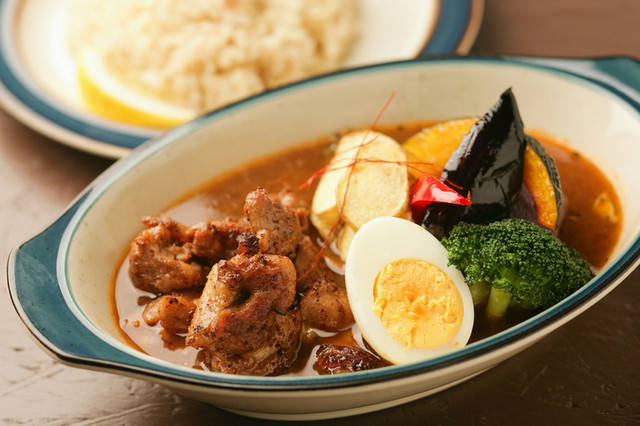
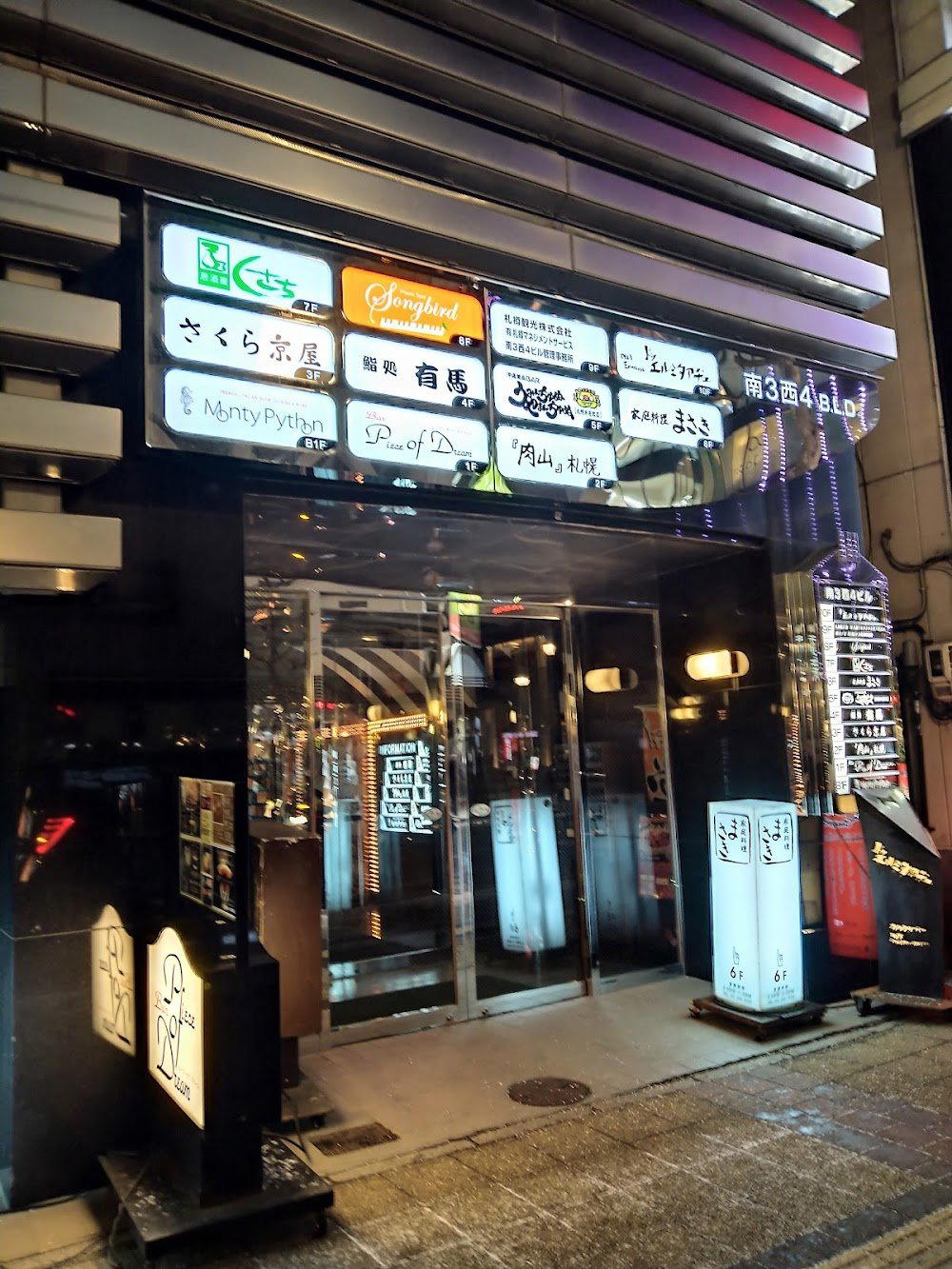
Odori’s grid gives Sapporo dining its rhythm: offices, department stores, underground passages, tram stops and small first-floor restaurants inside commercial buildings. Soup curry belongs to that pattern. It is not ceremony food or a tasting-counter hush; its appeal is urban, lunch-driven and local, built for cold weather, short breaks and regulars who know how they like spice, rice and toppings calibrated.
Within that category, ZORA carries more weight than its compact format suggests. The room is listed at 26 seats, and the category is soup curry, café and curry, but the stronger signal is critical repetition: selection for Tabelog Curry EAST “Tabelog 100” in 2019, 2020, 2023 and 2024. In Japan’s curry field, where neighbourhood loyalty can matter as much as national visibility, repeat inclusion places the restaurant inside a vetted curry circuit, not merely among convenient central Sapporo lunch stops.
Soup curry as Sapporo's everyday benchmark
Sapporo’s soup curry tradition differs from the thicker Japanese curry-rice model familiar nationwide. The local form is usually broth-led, with spice, vegetables and protein arranged around a soup base rather than folded into heavy roux. The category is unusually sensitive to balance: too thin and it reads weak; too heavy and it loses the lift that separates Sapporo soup curry from standard curry-shop comfort food.
ZORA’s reputation sits within that grammar. The kitchen is identified with soup curry rather than a pan-Japanese curry list, and that focus is the point. Sapporo has enough curry rooms for visitors to treat the dish as a checklist item, but repeat Tabelog recognition suggests a narrower judgment: consistency inside a crowded local genre. The 2024 Curry EAST selection is not a Michelin-style star system, yet it is useful because it compares curry restaurants within a specific regional field.
The price bracket also matters. A JPY 1,000 to JPY 1,999 range places the experience in the city’s everyday dining economy rather than the reservation-heavy end of Japanese gastronomy. Recognition here is not attached to luxury ingredients, rarefied service or a chef’s biography; it is attached to a popular category where precision must survive volume and regular trade.
Sapporo’s casual dining strength is not confined to curry. Ramen offers a parallel route into the city’s food culture, with 175°DENO Tantanmen Sapporo kitaguchi ten and Ramenya Kirita Seimen in a different noodle-led register. Curry specialists such as [Curry Senmon Ten] Maruyama Kyoju., Ajanta Indo Curry Ten and Ajanta Sohonke show how broad the city’s curry vocabulary has become, from specialist Japanese curry rooms to Indo-curry references. ZORA belongs in that conversation as a soup-curry address with repeat list recognition, not as a novelty stop.
Recognition without the fine-dining theatre
The more interesting reading of ZORA is not fame, but how Japanese food rankings validate modest formats. A 26-seat central Sapporo curry room and a formal dégustation restaurant are judged by different expectations, yet reputation works in both when the format is clear. Here it is compact, casual and category-specific.
That makes ZORA a useful counterweight to the city’s broader restaurant map. オステリア クロッキオ and テアトロ ディ マッサ point toward Sapporo’s Italian dining thread; Yum cha Haru no Sora sits in a Chinese daytime-to-evening register; ゴーシェ represents another small-room style of eating. None substitutes for soup curry, but together they reveal the city’s range: Sapporo’s food identity is not only seafood markets and ramen alleys. It is also built from small specialists serving tightly defined formats at accessible prices.
Travellers often misread Sapporo as a place where the main decisions are crab, miso ramen and beer. Those categories matter, but they flatten the city. Soup curry better tests local appetite because it is both everyday and place-specific. It asks less financially, yet more attention to texture, broth weight and spice structure. ZORA’s awards history is shorthand for reliability in a category where international visitors rarely have enough context to judge from the street.
The central location also changes how to use it. This is not an address that needs to anchor an entire evening. It fits into a day around Odori, shopping streets, museums or a first pass through central Sapporo before more formal dinners elsewhere. For broader planning, Our full Sapporo restaurants guide gives citywide context, while Our full Sapporo hotels guide, Our full Sapporo bars guide, Our full Sapporo wineries guide and Our full Sapporo experiences guide place the meal inside a fuller stay.
How to read its place in a Japan itinerary
ZORA is most convincing as part of Japan’s specialist casual-dining culture. The same trip logic that sends diners to a focused counter in Tokyo or a single-dish shop in Osaka applies here: the point is not breadth, but commitment to a category. That is why a soup-curry lunch in Sapporo can sit beside different Japanese addresses, from -Grilled beef Sukiyaki- KAMAKURA TANUKIAN 鎌倉 たぬき庵 in Kamakura to. 鮪と炭火焼き うお炭 秋葉原店 in Tokyo.cafe in Osaka.know in Kumamoto, (Shoku) Vietnam in Kawasaki and [ki:] in Kyoto. Each belongs to a different food conversation; the shared value is specificity.
For international readers comparing Japan with dining scenes abroad, the useful contrast is not luxury versus casual but how much identity a city can compress into a focused format. Los Angeles and Pasadena have their own specialist Japanese-adjacent routes through places such as Jōdo Saké Bar in Los Angeles and Onigiri Time in Pasadena. Sapporo’s soup curry does similar cultural work from the opposite direction: local, practical and built into daily urban life.
The editorial case for ZORA is precise. It is not a grand occasion restaurant, and does not need to be. Its value lies in the overlap of Sapporo specificity, accessible pricing and repeated recognition in a curry category with serious local competition. For a visitor who wants one curry meal that speaks clearly to the city rather than to a generic Japan itinerary, that combination is persuasive.
Cost Snapshot
Comparable venues by cuisine and category.
| Venue | Cuisine | Price |
|---|---|---|
| ZORAThis venue — the venue you are viewing | Not listed | $ |
| Go Maru Do | Chūō, Japanese Soup Curry | $ |
| Sapporo Menya Mitsuba | Nishi, Sapporo-style ramen shop | $ |
| Tokou An Shinkotoni | Kita, Japanese Ramen | $ |
| Sapporo Tsukemen Sapporo Ramen Furaido | Toyohira, Sapporo tsukemen and ramen | $ |
| Menya Keserasera | Kita, Japanese Ramen | $ |
Recognition history
Dated appearances from independent guides and award organizations, with the underlying list record or original source where available.
Tabelog 100 #6 · No. 6
Tabelog · Tabelog 100 - Curry - EAST - 2024
At a Glance
- Cozy
- Classic
- Solo
- Casual Hangout
- After Work
- Standalone
- Local Sourcing
Current opening hours
- Monday
- 11:30 AM–4:30 PM
- Tuesday
- 11:30 AM–4:30 PM
- Wednesday
- 11:30 AM–4:30 PM
- Thursday
- 11:30 AM–4:30 PM
- Friday
- 11:30 AM–4:30 PM
- Saturday
- 11:30 AM–4:30 PM
- Sunday
- Closed
Hours can change for holidays and private events. Last verified .
A small, vintage-leaning soup curry shop in central Sapporo, surrounded by office buildings, with a relaxed, everyday feel suited to workers taking a quiet break rather than a flashy destination restaurant.