
Yu Du Lao Wei Mian in Huangpu holds back-to-back Michelin Bib Gourmand recognition for 2024 and 2025, placing it among a small group of Shanghai noodle shops that have crossed from neighbourhood staple to critically acknowledged destination. At a single-yuan price point, it represents the category where craft and value converge most visibly in the city's noodle scene.
Pearl is the En Primeur Club membership app — saves, bookings, and concierge access live there. Same editors, same standards.
- Address
- China, CN 上海市 浦东新区 樱花路 80 80弄1~30号富荟广场2层206 邮政编码: 201204
- Phone
- +86 177 1780 1792
- Directions
- Get directions
 Saves & bookings on Pearl
Where the Queue Begins Before the Broth Does
Yu Du Lao Wei Mian (Huangpu) is a casual Shanghainese noodle shop in Pudong, Shanghai, recognized with Michelin Bib Gourmand awards in 2024 and 2025. The second floor of Fuhui Plaza on Yinghua Road is not the kind of address that announces itself. The mall corridor, the numbered unit, the modest shopfront, all of it belongs to the register of the everyday Shanghai noodle shop, a format so deeply embedded in the city's food culture that it barely registers as a dining destination until you notice the line. At Yu Du Lao Wei Mian, the line is the first signal. It forms before the kitchen is fully in motion and does not always clear by the time the last bowls go out. In Shanghai's noodle circuit, where turnover is the operating rhythm and sentiment runs on consistency, a sustained queue at a single-price-tier shop is a reliable indicator of quality.
The Noodle Shop as Shanghai Ritual
To understand Yu Du Lao Wei Mian, it helps to understand what the noodle shop means in Shanghai's food culture more broadly. This is not a casual category. The Shanghainese approach to noodles, particularly the wet, broth-based formats that define the city's breakfast and lunch hours, involves a specific grammar of rituals: how you order, whether you take your noodles dry (ban mian) or in soup (tang mian), how much time you spend eating versus waiting, and where the meal fits in the day's architecture. It is fast food in pace, but not in intent. The broth is typically long-cooked. The toppings are chosen with precision. The bowl arrives and is eaten without ceremony, but the accumulated care behind it is considerable.
This format sits at the affordable end of Shanghai dining, single-digit or low-double-digit yuan per bowl, and operates on volume. The economics require it. What separates the recognised shops from the merely functional ones is the depth of flavour achieved within those constraints: a broth that tastes reduced rather than diluted, noodles with the right resistance, and toppings that do not feel like afterthoughts. Yu Du Lao Wei Mian has earned consecutive Michelin Bib Gourmand awards in 2024 and 2025 precisely because it clears those bars reliably, not occasionally.
What the Bib Gourmand Signals Here
In the context of Shanghai's noodle scene, a Bib Gourmand is a meaningful credential. Michelin's Bib designation is awarded to restaurants offering quality cooking at prices below a defined threshold, it is explicitly about value at a specific standard. Among Shanghai's noodle houses, only a handful hold it in any given year, and the category is competitive: A Niang Mian Guan, Jingmei Wuxi Noodles (Jingan), Lao Di Fang Mian Guan, and Rongjia Noodles Soup with Yellow Croaker (Jingan) all occupy the same tier. That peer group tells you something: the Bib in this city is not easily held across consecutive years. Retaining it from 2024 to 2025 signals that the kitchen is not coasting.
Across the wider Chinese noodle canon, similar dynamics play out in other cities. A Bing Bao Shan Mian in Hangzhou and A Kun Mian in Taichung represent the same principle applied to different regional traditions: the noodle shop as a precision craft at a democratic price point. The category rewards repetition and discipline over spectacle.
Pacing, Etiquette, and What to Expect at the Table
First-time visitors to this format sometimes misread the pace as indifference. It is not. The noodle shop ritual in Shanghai operates on an understanding between kitchen and diner: the kitchen commits to speed and consistency; the diner commits to eating promptly and clearing the seat. Lingering is neither expected nor welcomed during peak hours. This is not rudeness, it is the social contract of a format built around communal access rather than individual comfort. Arriving slightly outside the main rush (before 11:30 for lunch, or after 13:30 if the timing allows) reduces wait time and occasionally earns a more relaxed seat.
The ordering process at shops in this tier is typically direct: a posted menu, cash or mobile payment, minimal English. At the ¥ price point, the entire experience is calibrated for efficiency. This is a feature, not a flaw. The soup arrives hot and is meant to be drunk hot. Noodle texture degrades within minutes in broth, which is why the rhythm of the meal, order, receive, eat, leave, is not incidental to the experience but central to it.
Where Yu Du Sits in the Shanghai Noodle Map
The Pudong address is a practical consideration. Much of Shanghai's Michelin-recognised noodle activity clusters in older neighbourhoods west of the Huangpu River, where the density of long-running shops is higher and foot traffic more habitual. Pudong's noodle culture is thinner on Bib-level names, which makes this address relatively isolated in its category, a noted shop in a district not typically associated with destination noodle dining. For visitors staying or working in Pudong, that is a concrete advantage; for those based in Jing'an or the French Concession, the journey requires deliberate intent.
Those wanting to map the full range of the city's Bib-level noodle options should also consider Wei Xiang Zhai on Yandang Road for a different stylistic register. For a broader view of where noodle shops sit within Shanghai's total dining picture, which spans from single-yuan broth to the four-figure tasting menus of fine Chinese restaurants like those reviewed in our guides to Xin Rong Ji in Beijing, Ru Yuan in Hangzhou, or the Cantonese formal dining at Imperial Treasure Fine Chinese Cuisine in Guangzhou, the full context is in our full Shanghai restaurants guide.
Planning Your Visit
Location: 2F, Unit 206, Fuhui Plaza, 80 Yinghua Road, Pudong New District, Shanghai. Cuisine: Zhoushan Seafood Noodles. Price range: ¥¥, around US$15 per person. Reservations: Walk-in friendly. Awards: Michelin Bib Gourmand 2024 and 2025.
Fast Comparison
Comparable venues nearby, for context on price, style, and recognition.
| Venue | Cuisine | Price | Awards | Notes |
|---|---|---|---|---|
| Yu Du Lao Wei Mian (Huangpu)This venue — the venue you are viewing | Zhoushan Seafood Noodles | $$ | Bib Gourmand | Not listed |
| Da Hu Chun (Middle Sichuan Road) | Traditional Shanghainese Shengjianbao | $$ | Bib Gourmand | Lan Ni Du |
| Rong Cuisine | Modern Taizhou Seafood | $$$ | Bib Gourmand | Lao Ximen |
| Lao Di Fang Mian Guan | Shanghainese Noodles | $ | Bib Gourmand | Lan Ni Du |
| A Niang Mian Guan | Shanghai-Style Noodles | $ | Bib Gourmand | Da Pu Qiao |
| Legend Taste (Jingan) | Yunnanese Folk Cuisine | $$ | Michelin Plate | Jing'an |
Recognition history
Dated appearances from independent guides and award organizations, with the underlying list record or original source where available.
Michelin Bib Gourmand
Michelin
Michelin Bib Gourmand
Michelin


At a Glance
- Intimate
- Cozy
- Classic
- Casual Hangout
- Solo
- Open Kitchen
- Local Sourcing
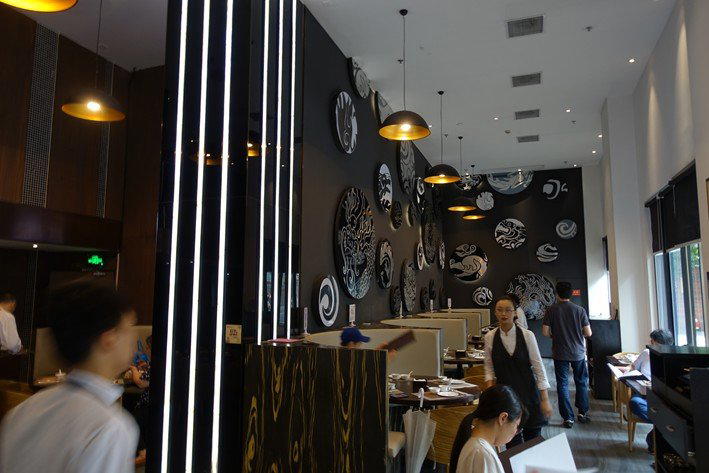
Unhurried, polished, and intimate with quiet precision service and low murmur of guests appreciating authentic craftsmanship.