
Tabelog 100
Our verdict
Ginza’s kissaten culture has a different rhythm from the district’s luxury dining rooms: daytime, compact menus, coffee-shop cooking, and a clientele that values consistency over ceremony. YOU belongs to that lineage, with Tabelog 100 Kissaten selections in 2021 and 2022, a 3.73 score, and a modest JPY 1,000–1,999 range that makes it a useful counterpoint to Ginza’s formal restaurant economy.

Pearl is the En Primeur Club membership app — saves, bookings, and concierge access live there. Same editors, same standards.
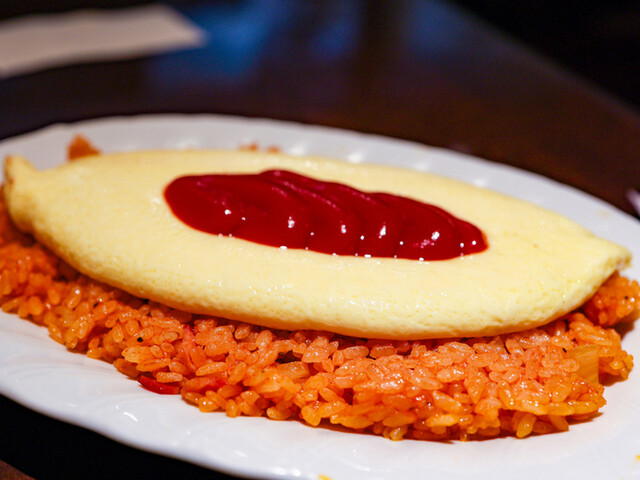
Approaching YOU in Tokyo, the mood is practical rather than ceremonial: polished urban dining gives way to the older habit of stopping for coffee-shop food instead of treating every meal as an occasion. This is where the kissaten remains useful. It is neither a third-wave café nor a restaurant chasing dégustation logic, but a compact urban format built around coffee-shop staples, sandwiches, rice dishes, and the kind of menu architecture that lets regulars decide quickly.
Tokyo’s kissaten tradition has always been partly about pacing. The room is not designed for lingering through multiple courses, and the menu does not need seasonal exposition to make sense. Categories do the work: coffee-shop staples, omurice, sandwiches, and practical dishes that suit lunch, late lunch, or a pause between appointments. In Tokyo, that structure matters because the surrounding dining economy can skew expensive and reservation-led. A kissaten with public recognition offers another reading of the city: less ceremonial, more daily-use, and often more revealing of how Tokyo actually eats between formal meals.
Omurice, sandwiches, and the logic of the Tokyo coffee shop
The useful way to read YOU is through category rather than chef narrative. It is listed as kissa, sandwich, and omurice, a trio that places it firmly inside the Japanese coffee-shop canon rather than the specialty-café circuit. Omurice carries the rice-dish side of the tradition, sandwiches point to the coffee-shop lunch format, and the kissa label frames the room around daytime eating as much as drinking coffee. That architecture is narrow, but narrowness is the point: the menu tells diners what kind of decision they are making before they sit down.
Recognition reinforces that position without turning the place into a luxury proposition. Its Tabelog Hyakumeiten recognition in 2022 puts it among visible examples of the genre, while the listed average spend of JPY 1,000–1,999 keeps the experience in the everyday bracket. That contrast is useful in Tokyo, where a visitor can move from a modest coffee-shop lunch to serious dining within the same city. Nearby comparisons make the spread plain in a broader sense: American, Godaime Hanayama Udon Ginza ten, and Kobikicho Tomoki all point to different ways Tokyo dining can be organized by format, pace, and intent.
The result is a menu that reads less like a statement and more like a civic utility. Tokyo has many restaurants that ask diners to submit to a format; the kissaten asks for a smaller decision. Coffee, a sandwich, omurice, and no elaborate progression. In a city associated internationally with sushi counters, French rooms, and brand-name retail, that restraint gives the category its force.
Why Tokyo gives this format extra weight
Tokyo is not only a stage for destination dining. It also has a daytime current shaped by station exits, offices, shopping streets, and visitors moving between appointments. Placing YOU simply within Tokyo is enough to explain the point: the shop belongs to that everyday movement rather than to a destination-dining island. The room functions as a practical stop rather than a detour.
The physical format also matters, though it is best understood by use rather than by statistics. A Tokyo coffee shop needs to handle quick solo visits, small-table meals, and regulars who know what they want before opening the menu. The category is public, casual, and structured for everyday use, not for discreet business entertaining. Coffee-shop food widens the audience without changing the basic identity.
There is a small continuity marker too. YOU carries enough public recognition to matter in a city where redevelopment constantly edits the street-level map. That does not make it a museum piece. It makes it a working example of how older food formats survive when they remain legible: short menu categories, accessible pricing, practical use, and recognition from a Japanese review culture that takes humble genres seriously.
How to place it in a Tokyo itinerary
The editorial case for YOU is strongest when it is treated as part of a Tokyo day rather than as a standalone pilgrimage. Use it before or between more formal meals, or slot it into an itinerary built around everyday food rather than only destination counters. The decision is sharper for travellers who want Tokyo food beyond counter sushi and tasting menus: kissaten cooking is one of the city’s quieter systems, and YOU frames that contrast clearly.
For broader planning, compare the city’s range through Our full Tokyo restaurants guide, then map adjacent categories with Our full Tokyo hotels guide, Our full Tokyo bars guide, Our full Tokyo wineries guide, and Our full Tokyo experiences guide. Within Tokyo restaurants, the spectrum runs from everyday coffee-shop cooking to more formal dining rooms, with venues such as American, Bistrot Vivienne, Godaime Hanayama Udon Ginza ten, Kabukizaura Masashi, Kobikicho Tomoki, and YOU showing how varied the city can be without needing every meal to follow the same script. For a wider Japan and overseas comparison, look more generally at other dining scenes rather than treating any one Tokyo stop as the whole story.
Frequently asked questions
What's the overall feel of YOU?
YOU reads as a classic kissaten in Tokyo. The format is practical rather than performative, and the JPY 1,000–JPY 1,999 price range keeps it within easy reach for a Tokyo stop.
What's the pricing like at YOU?
Pricing at YOU is listed as JPY 1,000 - JPY 1,999 JPY 1,000 - JPY 1,999.
Where do I go for YOU?
Tokyo.
Is YOU reservation-only?
Check the venue's official channels for the latest details. It is best approached as a practical kissaten in Tokyo.
What is YOU known for?
YOU is listed as a kissaten, sandwich, and omurice spot, and it was selected for Tabelog Hyakumeiten in 2022. That recognition places it among Tokyo coffee shops with enough local standing to merit a dedicated stop.
Same-City Peers
Side-by-side context: comparable cuisine and price.
| Venue | Cuisine | Price | Awards | Notes |
|---|---|---|---|---|
| YOUThis venue (the venue you are viewing) | Classic Japanese kissaten & omurice café | $10–20 | Tabelog 100 | Not listed |
| Bistrot Vivienne | French Bistro | $100–150 | Michelin Bib Gourmand | French |
| American | Classic Ginza kissaten & sandwich café | $10–20 | Tabelog 100 | JPY 1,000 - JPY 1,999 |
| Kabukizaura Masashi | Seasonal Japanese Omakase | $100–150 | Michelin Plate | Japanese |
| Godaime Hanayama Udon Ginza ten | Traditional Japanese Udon | $10–20 | Tabelog 100 #18 | JPY 3,000 - JPY 3,999 JPY 1,000 - JPY 1,999 |
| Kobikicho Tomoki | High-End Edomae Sushi Omakase | $300–500 | Tabelog 100 #51 | JPY 60,000 - JPY 79,999 |
Recognition history
Dated appearances from independent guides and award organizations, with the underlying list record or original source where available.
Tabelog 100
Tabelog · Tabelog 100 - Kissaten - 2026
Full recognition history (2 entries)
Tabelog 100 #75 · No. 75
Tabelog · Tabelog 100 - Kissaten - 2022


Continue exploring
More in Tokyo
Restaurants in Tokyo
All restaurants in Tokyo →

Bars in Tokyo
All bars in Tokyo →

Details
- Classic
- Cozy
- Well Known
- Casual Hangout
- Solo
- Family
- After Work
- Historic Building
- Standalone
- A La Carte
- Counter Dining
- Coffee